
Recording Rights: Legal Guide for Documenting Law Enforcement
Understand your constitutional right to record police and other individuals in public.
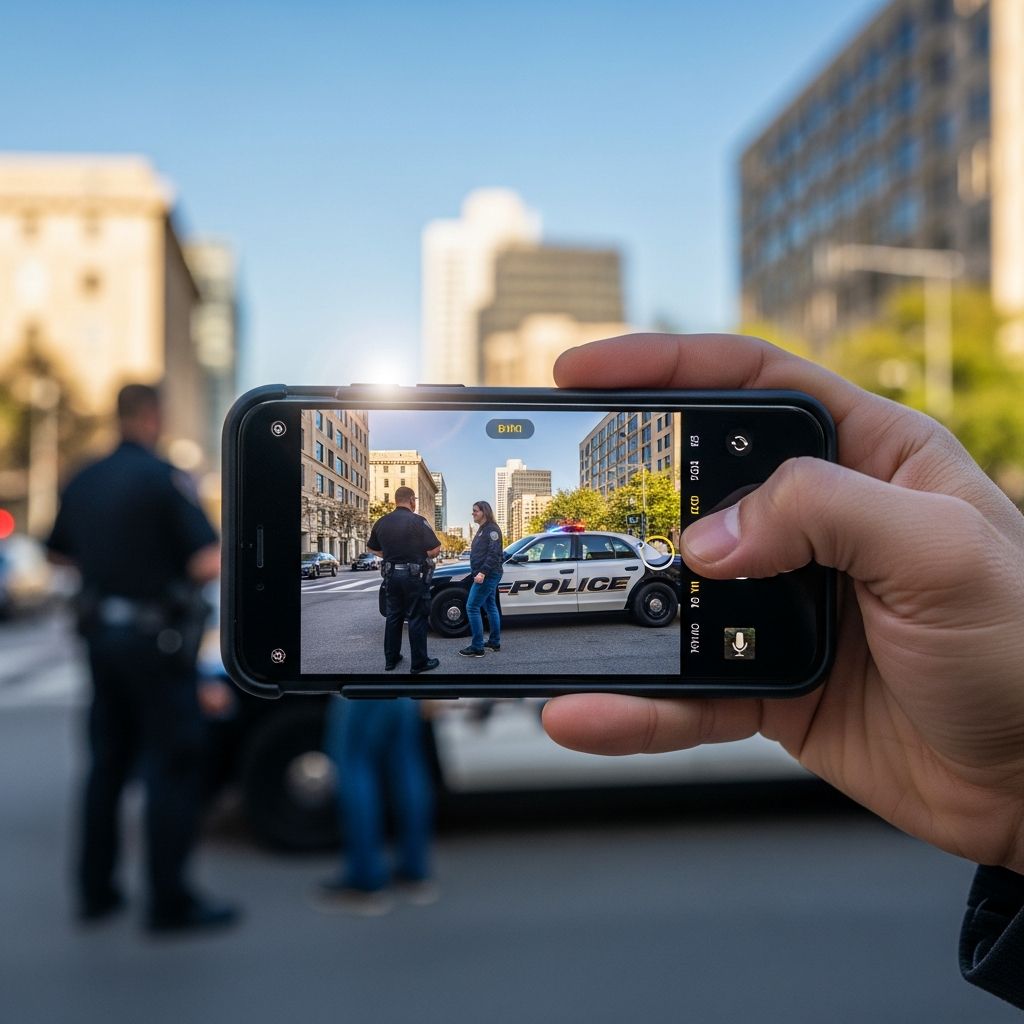
Understanding Your Constitutional Right to Document Law Enforcement
The ability to record interactions with government officials represents a cornerstone of democratic accountability. Citizens across the United States possess a constitutionally protected interest in documenting the actions of those in power, particularly law enforcement officers who exercise significant authority over public safety and individual liberties. This fundamental right, rooted in First Amendment protections, has been increasingly recognized by federal courts as essential to maintaining transparency and public oversight of governmental conduct.
The legal landscape surrounding recording police and other individuals, however, extends beyond simple constitutional principles. The intersection of privacy laws, state-specific statutes, and practical operational concerns creates a complex framework that individuals must navigate carefully. Understanding these nuances helps citizens exercise their rights responsibly while avoiding unintended legal complications.
First Amendment Foundations and Court Recognition
The First Amendment protects your right to record police officers performing their duties in public spaces. This protection has been upheld by numerous federal courts, which recognize that recording serves as a form of free speech and an essential tool for public accountability. The constitutional basis for this right stems from citizens’ fundamental interest in monitoring government officials and discussing matters of public concern.
Over half of the nation’s federal Courts of Appeals have affirmed this constitutional protection, including those in the First, Third, Fourth, Fifth, Seventh, Ninth, Tenth, and Eleventh Circuits. While the Supreme Court has not issued a definitive ruling on this matter, the overwhelming precedent established by lower courts provides substantial legal support for recording activities in public settings.
The First Amendment’s application to ordinary citizens mirrors its protections for professional journalists and members of the media. This means that you do not need to be affiliated with a news organization or possess media credentials to exercise this constitutional right. However, the practical exercise of this right remains subject to reasonable limitations based on time, place, and manner of recording.
When Recording Police is Protected Activity
Recording police officers is legally protected when conducted openly in public spaces where you have a lawful right to be present. Public areas such as streets, sidewalks, parks, and other outdoor locations where law enforcement operates generally provide an appropriate setting for recording activities. The key requirement is that your presence in that location must itself be lawful.
Important circumstances that support protected recording include:
- Open, visible recording where the officer can see you are documenting their actions
- Recording conducted from a location where you have legal authorization to stand or remain
- Documentation that does not physically interfere with ongoing law enforcement operations
- Recording at public events, demonstrations, or protests where officers are performing their duties
- Documenting interactions that occur in plain view without expectation of privacy
When you record openly and transparently, you provide clear notice of your documentation activities. This visibility protects your legal position by demonstrating that the officer cannot claim surprise or lack of awareness regarding the recording. Additionally, openly recording generally avoids triggering privacy-related statutes that may apply to covert or hidden recordings.
Privacy Expectations and Consent Requirements
One of the most significant variables affecting recording legality involves state-level wiretap and eavesdropping statutes. These laws vary considerably across jurisdictions and create divergent legal frameworks for audio recording.
Most states, approximately 38 in total, follow a one-party consent model for recording. Under this system, only one participant in a conversation needs to consent to the recording for it to be lawful. If you are a party to the conversation or are the person making the recording, your consent is sufficient even if the other person—including a police officer—is unaware of or does not approve of the recording. This framework substantially expands recording rights, particularly when you are directly interacting with law enforcement.
Approximately 12 states, including Massachusetts, Illinois, and Pennsylvania, operate under more restrictive all-party consent laws. These jurisdictions require that every participant in a conversation must know about and agree to recording before it becomes lawful. However, courts in these states have made important determinations that public officials performing their duties do not maintain a reasonable expectation of privacy. This distinction means that even in all-party consent states, openly recording police officers in public generally remains lawful, though covert or hidden recordings may create legal exposure.
For context, California law explicitly permits individuals to record public officers while performing their duties in public places. If you are lawfully present where recording occurs, the act of documenting police activity does not, in itself, violate state law or provide grounds for detention or arrest based on suspicious activity alone.
Limitations and When Recording May Create Legal Problems
Despite robust First Amendment protections, certain circumstances can transform recording activities from protected speech into illegal conduct. Understanding these boundaries is essential for exercising your rights without unintended legal consequences.
Interference with law enforcement duties represents the most significant limitation on recording rights. If your documentation activities physically obstruct or substantially hinder an officer’s ability to perform legitimate police work, the officer may order you to cease recording and may take enforcement action if you refuse. This limitation recognizes that law enforcement functions must continue even when subject to public scrutiny. Examples of interfering conduct include:
- Standing directly in an officer’s line of sight during an active arrest or investigation
- Using a recording device to physically block access or movement
- Deliberately positioning equipment to obstruct police operations
- Verbally engaging in ways that escalate situations or encourage resistance to lawful commands
- Recording in a manner that endangers officer safety or public welfare
Courts recognize that visible recording may sometimes encourage confrontational behavior or resistance to police authority. However, this concern alone does not justify stopping the recording; the officer must demonstrate actual interference with specific law enforcement functions.
Trespassing and property owner restrictions create another category of limitations. While you can record police activities in public spaces where you are lawfully present, recording on private property without the owner’s consent can expose you to trespassing charges. These charges remain valid even if your primary motivation was documenting police activities. Private property owners retain authority to set rules regarding photography and recording on their premises.
Certain states have enacted legislation imposing distance restrictions on police recording. Arizona, for example, previously prohibited recording within 8 feet of police officers, but courts struck down this law as unconstitutional. Journalists and citizens should remain aware of local legislation that may attempt to limit recording proximity, as such laws face significant constitutional challenges.
Recording can also implicate other criminal statutes unrelated to privacy or wiretapping. Harassment, stalking, and retaliatory conduct laws may apply to recording if the documentation constitutes part of a broader pattern of unlawful behavior. For instance, if recording is accompanied by threatening statements or is conducted as part of coordinated harassment, these additional charges may apply independently of recording legality.
Device Confiscation and Digital Privacy Protections
If law enforcement attempts to stop you from recording, you may face questions about your phone, camera, or recording device. Understanding device-related rights helps protect both your recordings and your digital privacy.
Police cannot delete your photographs or videos under any circumstances. This protection applies universally across jurisdictions. Government deletion of your lawful recordings constitutes a violation of constitutional protections against censorship and destruction of evidence.
If you are not under arrest, law enforcement officers cannot confiscate your device or access its contents without a warrant. Officers may not examine your photographs, videos, or other stored data based on suspicion or investigative interest alone. If officers demand to see your device, you can lawfully refuse and request clarification regarding whether you are free to leave. If you are detained or arrested, officers may take physical possession of your device, but this does not authorize warrantless searches of the device’s contents.
Even when you are arrested, police must obtain a warrant to search your phone or device. This protection extends to all digital storage and content, reflecting constitutional safeguards against unreasonable searches. In practice, this means your recordings remain protected even if your device is temporarily confiscated during police contact.
Recording Private Citizens and Consent Considerations
Recording police officers in public receives strong legal protection, but recording private individuals creates a different legal landscape governed primarily by state privacy and wiretapping laws. When you document private citizens without their involvement in your activities, consent requirements become controlling.
In one-party consent states, you may generally record private conversations where you are a participant without obtaining the other person’s consent. However, if you are recording a conversation between two other people to which you are not a party, consent requirements typically demand that at least one of those participants knows about and approves the recording. Some interpretations require that recording occur in settings without a reasonable privacy expectation.
In all-party consent states, recording conversations involving private individuals typically requires that everyone involved must consent. This applies even if the conversation occurs in a public place. Violations can result in both criminal charges and civil liability.
Recording in public spaces where no reasonable privacy expectation exists—such as general background noise during police interactions—typically receives legal protection even under all-party consent frameworks. The distinction centers on whether the person being recorded was reasonably expecting that their statements would remain private.
Practical Considerations for Responsible Recording
Legal rights and practical safety often require balancing. Several practices can help you exercise recording rights while minimizing confrontation and legal risk:
- Record openly and visibly so officers know you are documenting their actions, avoiding privacy violation accusations
- Maintain safe distance from police activities to demonstrate that your recording does not interfere with operations
- Know your location rights before recording to ensure you are lawfully present in the space
- Avoid verbal engagement that could escalate situations or be characterized as interference
- Research local laws in your jurisdiction regarding consent requirements and distance restrictions
- Decline searches politely but clearly if officers request access to your device without a warrant
- Preserve recordings by uploading or backing them up to secure locations away from your device
Special Circumstances: Borders and Federal Agents
Recording rights extend beyond local police to federal law enforcement and specific contexts like international borders. You may record ICE agents, FBI officers, National Guard troops, and other federal officials performing their duties in public spaces. The First Amendment protections applying to local police recording apply equally to federal law enforcement.
In 2020, the U.S. government entered into a binding settlement regarding recording at borders. This agreement prohibits customs and border patrol agents from infringing on the right to record law enforcement activity from publicly accessible outdoor areas, provided the recording does not interfere with lawful law enforcement operations. This protection applies to citizens and journalists documenting law enforcement activities at borders and international entry points.
Arrest and Retaliation Concerns
While recording police is protected activity, officers may nonetheless arrest individuals for recording. However, arrests undertaken primarily to suppress recording or in retaliation for documentation activities face significant legal challenges. Courts will review arrest circumstances carefully to ensure officers are not abusing authority to punish citizens for exercising First Amendment rights.
If an officer arrests you while you are recording, the validity of the arrest depends on whether separate and legitimate grounds for arrest existed. For example, if an officer arrests you for stalking or harassment while you are also recording, the recording itself may not defeat the charge. However, courts will scrutinize whether the arrest was pretextual—undertaken primarily to stop you from documenting police conduct.
If you believe your arrest was retaliatory or undertaken to suppress your recording, this becomes an important defense and may support claims of constitutional violation through malicious prosecution or civil rights litigation.
Frequently Asked Questions
Q: Can police demand that I stop recording them?
A: Police may order you to stop recording only if your recording genuinely interferes with their law enforcement duties. Mere visible recording or documentation from a distance generally does not constitute sufficient interference. If you believe an order to cease recording is unlawful, you can refuse but should be prepared for potential confrontation. Courts recognize that recording itself, without actual interference, cannot justify stopping documentation.
Q: What should I do if an officer tries to confiscate my phone?
A: Ask the officer whether you are free to leave or whether you are being detained. If you are not under arrest, inform the officer that you do not consent to searches without a warrant. You can refuse to unlock your phone or provide passwords. If the officer takes your device, do not resist, as this could result in additional charges. Instead, note the officer’s name and badge number, document the interaction, and contact an attorney.
Q: Is recording audio different from recording video when it comes to police?
A: In most states, audio recording police is legal, particularly in one-party consent jurisdictions where you are a participant in the conversation. However, audio recording creates additional complexity regarding privacy expectations. In all-party consent states, openly recording audio may still be protected if conducted in public without privacy expectations, but covert audio recording faces greater legal risk. Video recording generally receives stronger protection than audio recording across most jurisdictions.
Q: Can I be arrested simply for recording police?
A: Recording alone should not result in arrest if conducted lawfully and openly. However, officers may arrest if they reasonably believe recording interferes with their duties. Such arrests may not survive legal challenge, but to avoid confrontation, maintain safe distance and follow lawful orders. If arrested for recording, consult an attorney immediately, as you may have grounds for challenging the arrest’s legality.
Q: Do I have the same recording rights in private establishments?
A: No. Private property owners can restrict photography and recording on their premises. If you refuse to comply with a property owner’s rules, you can be asked to leave and arrested for trespassing if you refuse. Recording police in private locations requires the property owner’s permission unless you have a compelling reason to believe recording must occur for documentation purposes.
Q: What if I’m recording a police interaction involving someone else, not myself?
A: Your right to record as an observer remains substantially protected if you are in a public location lawfully. However, audio recording may create complications in all-party consent states unless the interaction occurs in a setting with no reasonable privacy expectations. Video recording from a public vantage point generally remains protected in most jurisdictions.
References
- Video or Audio Recording of Police Officers & Your Legal Rights — Justia. Accessed April 2026. https://www.justia.com/criminal/procedure/right-to-record-police-officers/
- Recording and Documenting Police and Federal Agents — American Civil Liberties Union (ACLU). https://www.aclu.org/know-your-rights/recording-and-documenting-police-and-federal-agents
- Guide to Legal Rights in the U.S. — Committee to Protect Journalists. July 2024. https://cpj.org/2024/07/guide-to-legal-rights-in-the-u-s-2/
- Your Right to Film Police — ACLU of Texas. https://www.aclutx.org/know-your-rights/your-right-film-police/
- Recording Laws: Audio Recording — Texas State Law Library. https://guides.sll.texas.gov/recording-laws/audio-recording
- Recording Law Enforcement: First Amendment Right or Arrestable Offense — Freedom Forum. https://www.freedomforum.org/recording-law-enforcement/
Similar Articles








Read full bio of medha deb




