Air travel offers convenience but comes with strict rules enforced by crew for safety and comfort. Airlines have broad authority to refuse boarding or remove passengers who pose risks, as outlined in federal regulations and carrier policies. Understanding these can prevent unexpected disruptions.
Understanding Airline Authority Over Passenger Conduct
Federal Aviation Administration (FAA) regulations grant flight crews ultimate decision-making power regarding passenger behavior. Crew members, trained extensively in safety protocols, prioritize the well-being of all on board. Disruptions can lead to delays, diversions, or legal consequences, affecting everyone involved.
Passengers agree to terms upon booking, including compliance with crew instructions. Non-adherence often results in removal before takeoff or, in severe cases, mid-flight diversion. Statistics from the FAA show thousands of unruly passenger incidents annually, underscoring the need for awareness.
Intoxication and Alcohol-Related Issues
Arriving intoxicated is a leading cause of removal. Airlines maintain zero-tolerance policies for passengers showing slurred speech, unsteady gait, or aggressive tendencies from alcohol. Crew assess at boarding; if unfit, passengers are denied entry to avoid in-flight problems.
- Pre-boarding checks identify visible impairment.
- Excessive drinking at airport bars heightens risks.
- In-flight intoxication from personal alcohol leads to immediate intervention.
Real incidents include passengers arrested after becoming disruptive mid-flight due to smuggled liquor. FAA data confirms alcohol fuels over 20% of unruly cases. To avoid this, limit intake and hydrate well before flights.
Aggressive or Threatening Behavior Toward Crew
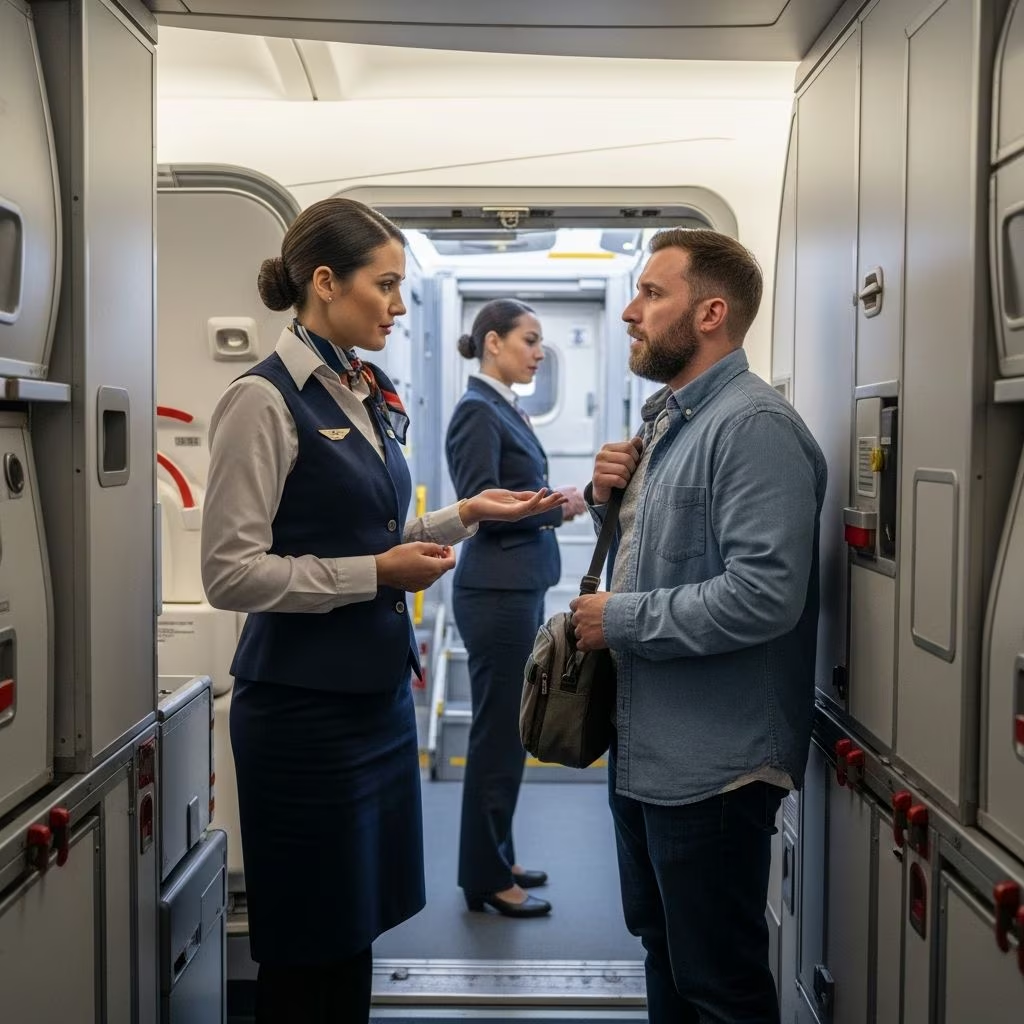
Verbal abuse or physical threats toward staff prompt swift action. Cursing, yelling, or ignoring instructions signals potential danger, leading to offloading during boarding. Crew training emphasizes de-escalation, but persistent hostility results in police involvement.
Even minor disrespect escalates quickly. A veteran flight attendant noted that profanity alone can bar boarding, as it constitutes a threat. Post-9/11 security protocols amplify zero-tolerance for aggression.
| Behavior Type | Common Response | Potential Outcome |
|---|---|---|
| Verbal abuse | Warning then removal | No-fly list addition |
| Physical contact | Immediate restraint | Flight diversion, arrest |
| Threats/jokes | Instant offload | FBI notification |
Non-Compliance with Safety Instructions
Refusing seatbelt use, phone stowage, or seat switches violates core safety rules. Crew instructions are non-negotiable; defiance disrupts operations and endangers others. Recent examples include passengers deplaned for bag placement arguments despite multiple warnings.
Flight attendants hold final authority, backed by FAA mandates. Ignoring directives, like during taxiing, halts flights until compliance or removal occurs. This ensures emergency preparedness for all.
Personal Hygiene and Odor Complaints
Extreme body odor affecting others’ comfort justifies removal. While subjective, crew act on multiple complaints to maintain cabin air quality. Cases involve passengers reseated or offloaded after reports from adjacent seats.
- Strong perfumes or unwashed clothing trigger issues.
- Medical conditions may warrant accommodation requests pre-flight.
- Proactive hygiene prevents rare but embarrassing ejections.
Airlines balance fairness; those unable to use full seats due to size may need extra purchases for equity.
Smoking, Vaping, and Prohibited Substances
Bathroom smoking or vaping activates detectors, prompting crew response. Violators face fines up to $4,000 per FAA rules, plus removal or arrest. Even electronic devices mimicking smoke draw scrutiny.
Zero-tolerance stems from fire risks in confined spaces. Incidents often lead to unscheduled landings, costing thousands in delays.
Seat and Space Disputes
Unauthorized seat switching, especially to premium areas, or hogging overhead space causes conflicts. Crew track assignments; caught “seat hoppers” return to seats or face removal if argumentative.
Bag placement in non-assigned bins sparks fights. Politely using nearby space avoids escalation. A UK case banned a repeat offender from an airline.
Provocative Attire and Political Statements
Clothing deemed offensive or revealing by crew standards can lead to denial. Airlines set dress codes; sagging pants or graphic tees have prompted removals. Free speech applies to government, not private carriers.
Examples include passengers in low-cut outfits or political slogans asked to change or leave. Comfortable, neutral attire sidesteps issues.
Handling Children and Family Dynamics
Uncontrolled crying or non-compliance from children rarely causes removal alone but escalates with parental refusal to manage. Crew prioritize safety; disruptive families may deplane pre-takeoff.
Preparation with snacks, toys, and patience is key. A compliant parent using a sippy cup diffused a potential incident.
Technology and Device Misuse
Refusing to power down devices, like in Alec Baldwin’s case, leads to ejection. Modern rules allow limited use, but pre-flight compliance is mandatory.
Fake tickets or lounge access fraud results in arrests for deception. Always verify passes.
Consequences and Legal Ramifications
Removals incur no refund, rebooking fees, and possible bans. Severe acts trigger FAA fines ($37,000 max per violation) or criminal charges. Diversions cost airlines $50,000+, passed indirectly to passengers.
FAA’s 2023 data logged 5,900+ incidents, up sharply, prompting stricter enforcement.
Essential Tips for Hassle-Free Air Travel
- Arrive sober and groomed.
- Follow all crew directives promptly.
- Respect personal space and staff.
- Pack light, use assigned areas.
- Prepare children for the journey.
Frequently Asked Questions (FAQs)
What happens if I’m removed from a flight?
You forfeit the ticket, may face fees or bans, and could be charged legally for disruptions.
Can airlines remove me for my opinion?
Yes, if expressed disruptively; private companies aren’t bound by First Amendment protections.
Is body odor a valid removal reason?
Yes, if it impacts others’ flight experience, per crew discretion.
What if I need extra space due to size?
Purchase an additional seat in advance for accommodation.
Do jokes about security get me kicked off?
Absolutely; any threat reference, even jest, triggers immediate removal and investigation.
References
- Things That Will Get You Kicked Off Your Next Flight — Business Insider. 2018-03-01. https://www.businessinsider.com/what-will-get-you-kicked-off-a-flight-2018-3
- 10 Shocking Reasons Airlines Can Kick You Off a Flight — YouTube (Travel Insights Channel). 2023-05-15. https://www.youtube.com/watch?v=u5BQSffTdwE
- Top 10 Tips for Getting Thrown Off Your Plane Flight — Travelers United. 2022-08-10. https://www.travelersunited.org/top-10-tips-for-getting-thrown-off-your-plane-flight/
- 10 Ways to Get Kicked Off a Plane — ABC News. 2012-06-20. https://abcnews.com/Travel/10-things-kicked-off-plane/story?id=14674939
- Unruly Passengers — Federal Aviation Administration (FAA). 2025-01-15. https://www.faa.gov/data_research/passengers_cargo/unruly_passengers