
Rap Lyrics in Court: Free Speech at Risk?
Examining how rap lyrics are weaponized in criminal trials, threatening artistic freedom and First Amendment rights.
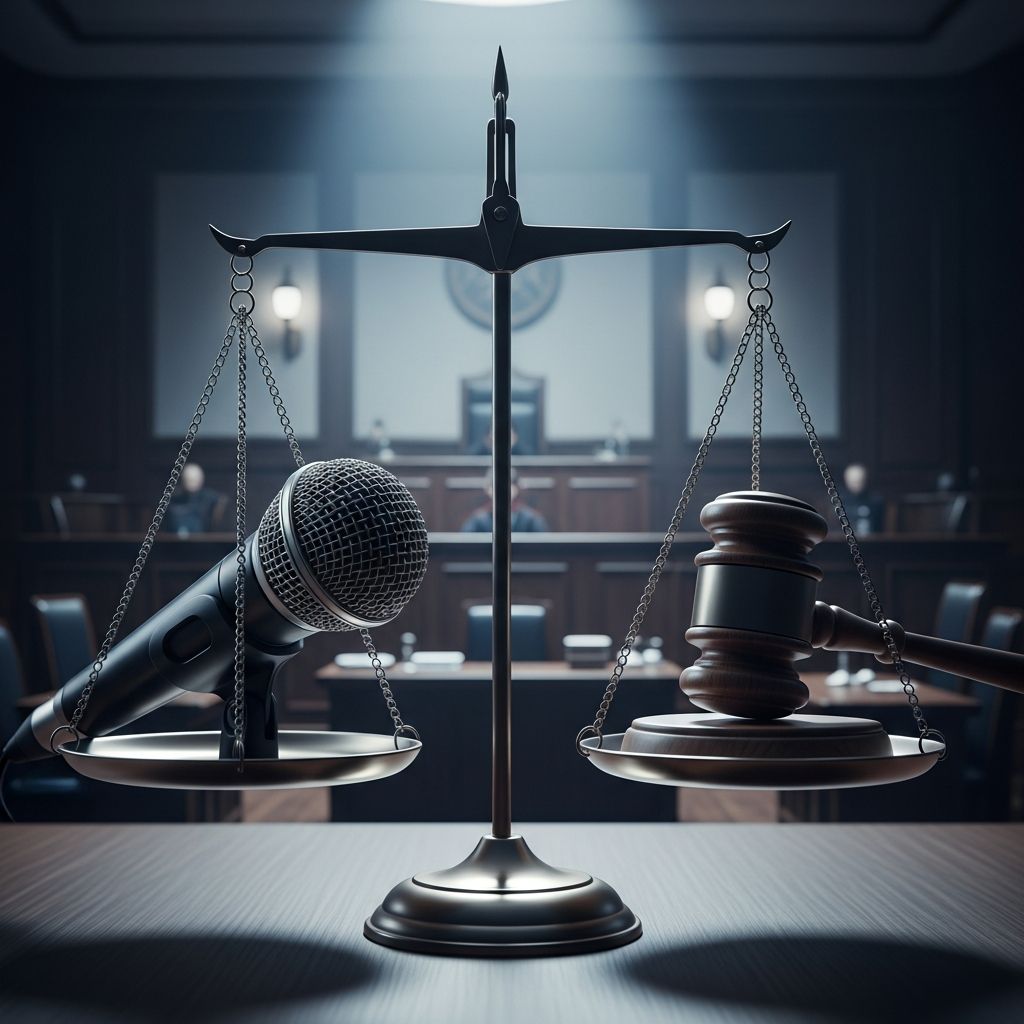
Rap music, a powerful form of cultural expression born from urban struggles, has long pushed boundaries with its raw depictions of violence, street life, and personal triumphs. However, in recent decades, these artistic lyrics have increasingly found their way into criminal courtrooms, where prosecutors wield them as damning evidence of guilt. This practice raises profound questions about the balance between justice and constitutional protections, particularly the First Amendment’s guarantee of free speech. As courts grapple with whether violent rhymes equate to confessions, artists face the chilling reality that their creative output could lead to lengthy prison sentences.
The Rising Tide of Lyrics as Legal Weapons
Prosecutors across the United States have turned rap lyrics into tools for securing convictions, arguing they reveal motive, intent, or even direct admissions of crimes. This trend has accelerated since the late 1980s, with studies documenting nearly 700 instances where such lyrics were introduced against defendants, predominantly in rap-related cases. The practice disproportionately affects Black and Brown artists, fueling accusations of racial bias in the justice system.
In one stark example, a New Jersey court permitted lyrics describing break-ins and gun ownership to bolster a home invasion charge, despite the defendant’s claims of pure artistry. The jury’s exposure to these lines contributed to a conviction, highlighting how lyrics can prejudice jurors against defendants perceived as embodying the ‘thug’ archetype portrayed in their music. Similarly, in high-stakes gang conspiracy trials, entire songs are dissected to link artists to criminal enterprises, blurring the line between fiction and fact.
- Key Factors for Admissibility: Courts often allow lyrics if they mirror crime specifics, name victims, or suggest premeditation.
- Common Charges: Murder, racketeering, drug trafficking, and gang-related offenses.
- Impact on Verdicts: Juries frequently request replays of songs, indicating strong influence on deliberations.
High-Profile Cases That Shook the Industry
Prominent rappers have borne the brunt of this evidentiary tactic, turning their chart-toppers into courtroom liabilities. Take the case of Young Thug, whose 2022 RICO indictment in Georgia heavily featured lyrics from songs like those glorifying ‘YSL shit’ and anti-police sentiments. Prosecutors portrayed his label, Young Stoner Life (YSL), as a criminal street gang, using bars about ‘killing 12’ (slang for police) and drug dealing to construct a narrative of ongoing criminality. A judge ruled the lyrics conditionally admissible, provided they tied directly to alleged acts, yet the trial—spanning into 2024—underscored the peril for artists.
Another flashpoint involved Gunna, Young Thug’s collaborator, who faced similar charges. His plea deal resulted in probation and community service, but only after lyrics and social media posts linked him to the gang. Meanwhile, the late Drakeo the Ruler and Bobby Shmurda saw their careers derailed by indictments citing violent rhymes. Snoop Dogg narrowly escaped a similar fate in his 1996 murder trial when prosecutors attempted to introduce ‘Deep Cover,’ referencing California’s Penal Code 187 for murder—though the court ultimately limited its use.
| Artist | Case Year | Lyrics Used | Outcome |
|---|---|---|---|
| Young Thug | 2022-2024 | YSL gang references, violence against police | Ongoing trial |
| Gunna | 2022 | Social media and song posts tying to gang | Plea: Probation, 500 hours service |
| Snoop Dogg | 1996 | ‘Deep Cover’ (187 on undercover cop) | Acquitted |
| Tommy Canady | 2016 | ‘I’m Out There’ depicting similar murder | 50+ years sentence |
These cases illustrate a pattern: even decades-old lyrics resurface, transformed from entertainment into ‘proof’ of predisposition to crime.
Legal Standards Governing Lyric Admissibility
Under Federal Rules of Evidence Rule 403, evidence must be relevant but not unduly prejudicial. Lyrics pass muster if they demonstrate ‘motive and intent’ rather than mere character flaws. State courts vary; New Jersey has admitted them in nearly 80% of reviewed cases, per ACLU analysis, often swaying outcomes. However, judges increasingly scrutinize for ‘false impressions,’ excluding lyrics that glorify violence without factual ties to the crime.
The Supreme Court’s 2023 Counterman v. Colorado decision bolstered protections against deeming lyrics ‘true threats,’ requiring proof of reckless disregard for causing fear. This ruling offers a shield when songs veer into provocative territory but stop short of genuine menaces. Still, prosecutors argue lyrics reflect real-life behavior, especially in gang contexts, creating a permissive environment for their use.
Racial Bias and Cultural Stereotyping in Prosecutions
A troubling undercurrent is the selective targeting of rap over other genres. Would Johnny Cash’s ‘Folsom Prison Blues’—with its shooting-a-man-just-to-watch-him-die line—be used against a country singer in a murder trial? Critics, including Boston University law professor Jasmine Gonzales Rose, argue no, positing that rap’s association with Black culture invites stereotypes of inherent criminality. This disparity echoes broader systemic biases, where artistic hyperbole in hip-hop is literalized, while similar expressions elsewhere are dismissed as metaphor.
Empirical data supports this: reliance on lyrics surges in cases involving minority defendants, potentially injecting prejudice and undermining fair trials.
Legislative Pushback and Protective Reforms
In response, states are enacting safeguards. California’s 2022 law broadly protects ‘creative expression,’ encompassing music, poetry, and art, from routine evidentiary use unless directly probative and not unduly prejudicial. It applies to all parties, allowing defendants to introduce anti-violence lyrics for mitigation. Advocates hail it as a model, addressing both racial bias and free speech erosion.
Other jurisdictions debate similar bills, signaling a shift. Defense attorneys now advise clients: your bars could be your bars—literal prison bars—urging separation of art from autobiography.
Broader Implications for Artistic Freedom
Beyond rap, this precedent endangers all expressive arts. Novelists detailing crimes, filmmakers scripting heists, or poets venting rage could face scrutiny if charged with related offenses. The First Amendment demands a high bar for punishing speech, yet lyrics-as-evidence lowers it, fostering self-censorship. Artists may sanitize content, diluting rap’s authentic voice and cultural impact.
Reform advocates call for uniform standards: lyrics should require ironclad factual nexus to crimes, with jury instructions clarifying artistic context. Until then, the maxim evolves: words can indeed hurt, landing creators behind bars.
Frequently Asked Questions (FAQs)
Can any rap lyrics be used against me in court?
Not automatically. They must be relevant to the specific crime, showing intent or motive, and not overly prejudicial. Judges weigh this under evidence rules.
Does the First Amendment protect violent rap lyrics?
Generally yes, unless they constitute true threats or incitement. Recent Supreme Court rulings strengthen this for non-literal expressions.
Are there laws preventing lyrics from being evidence?
California’s 2022 statute limits use of creative works, including rap, with similar proposals elsewhere.
Why are rap lyrics targeted more than other music?
Critics cite racial and cultural biases; similar violent themes in rock or country face less scrutiny.
What should artists do to protect themselves?
Consult lawyers early, document artistic intent, and avoid lyrics mirroring real events or people.
References
- Can Your Rap Lyrics Send You to Jail? — USC Spotlight. 2023. https://www.uscspotlight.com/issue7/can-your-rap-lyrics-send-you-to-jail
- Rap Lyrics in Evidence: Is It a Crime to Rhyme? — Criminal Defense Lawyer. 2024. https://www.criminaldefenselawyer.com/resources/rap-lyrics-evidence-is-it-a-crime-rhyme.htm
- Can Rap Lyrics Be Used as Evidence in Court? — Freedom Forum. 2024. https://www.freedomforum.org/rap-lyrics-evidence-in-court/
- Bars Behind Bars: When Song Lyrics Become Criminal Evidence — UCLA Law Review. 2025-10-17. https://uclawreview.org/2025/10/17/bars-behind-bars-when-song-lyrics-become-criminal-evidence/
- Judge rules rap lyrics can ‘conditionally’ be used as evidence in Young Thug trial — ABC News. 2023. https://abcnews.com/US/judge-rules-rap-lyrics-conditionally-evidence-young-thug/story?id=104760646
- Rap on Trial — State Court Report. 2024. https://statecourtreport.org/our-work/analysis-opinion/rap-trial
Similar Articles








Read full bio of medha deb




