
Radar Jammers: Legality and Risks Explained
Uncover the strict federal bans on radar jammers, state variations for detectors, and severe penalties for violations across the US.
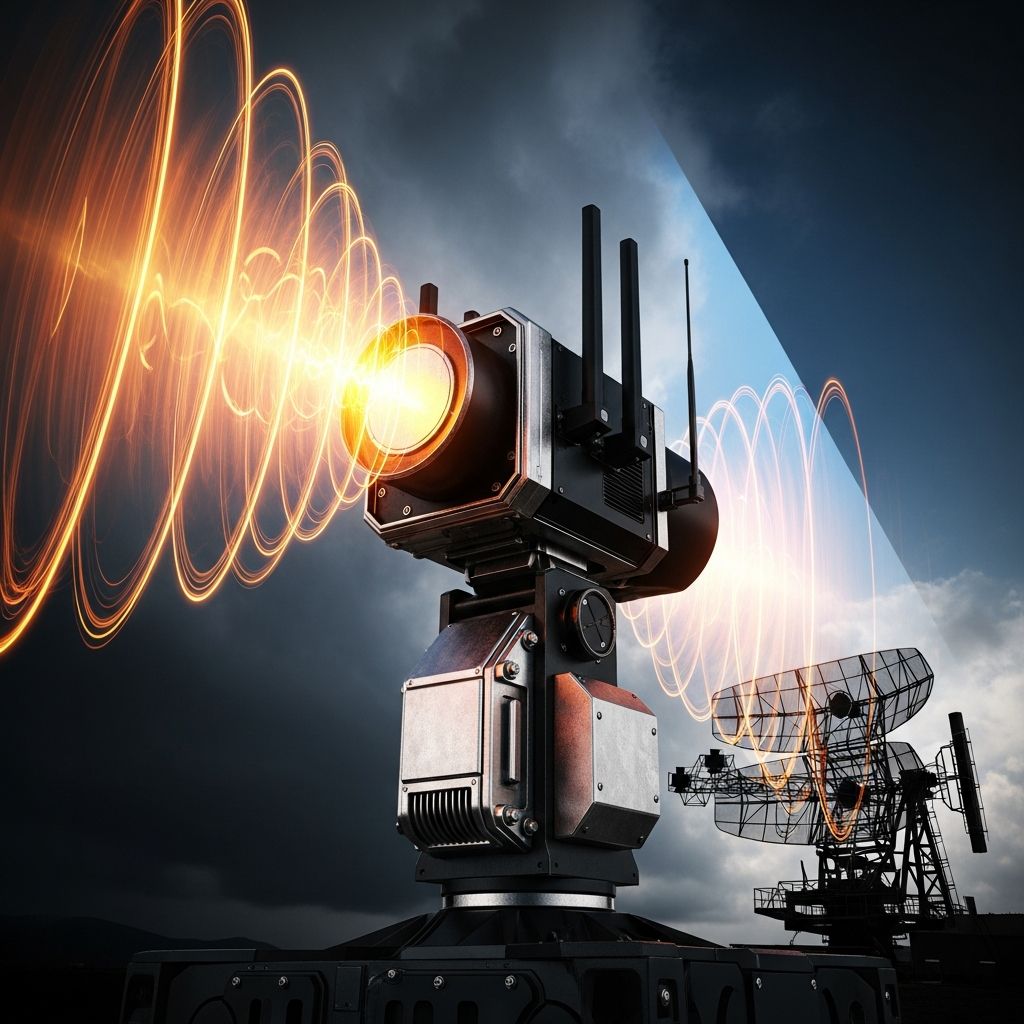
Radar jammers actively interfere with police speed-detection equipment, rendering them ineffective, but this capability comes with severe legal consequences across the United States. Unlike passive radar detectors, which merely alert drivers to radar presence, jammers transmit signals that disrupt enforcement tools, violating federal statutes enforced by the Federal Communications Commission (FCC).
Understanding Radar Technology in Traffic Enforcement
Police use radar guns emitting radio waves to measure vehicle speed via the Doppler effect, where the frequency shift of reflected waves indicates velocity. Radar detectors receive these waves and notify drivers, allowing them to adjust speed legally. Jammers, however, emit counter-signals to confuse or block the radar gun, preventing accurate readings—a direct challenge to law enforcement.
Laser-based systems (LIDAR) employ light pulses for precision speed measurement over shorter distances. Laser jammers respond by flooding the sensor with light pulses, delaying or preventing a lock-on. While radar jammers face blanket federal prohibition, laser jammers occupy a grayer area regulated differently.
Federal Prohibitions on Radar Jammers
Under 47 U.S.C. § 333 of the Communications Act, intentionally interfering with authorized radio communications, including police radar, constitutes a federal crime. The FCC oversees enforcement, imposing fines up to $112,500 per violation and potential criminal charges, including felony counts leading to imprisonment.
This nationwide ban applies uniformly to all vehicles and locations, with no exceptions for private use. Devices marketed as “detectors with jamming modes” still fall under prohibition if capable of active interference. Possession alone can trigger penalties, as authorities may seize and destroy equipment on sight.
Radar Detectors: Permissible in Most Cases
Radar detectors are legal for private passenger vehicles in 49 states, protected as personal property under the Communications Act of 1934. They passively receive public radio signals without transmission, evading FCC interference rules.
Key restrictions include:
- Commercial vehicles over 10,000 lbs: Federally banned nationwide, including trucks, buses, and large delivery vans.
- Virginia and Washington, D.C.: Total prohibition for all vehicles; confiscation and fines up to $1,000 possible.
- Additional commercial bans: Illinois, New York, New Jersey extend restrictions to lighter commercial vehicles like taxis and rideshares.
Mounting must not obstruct the driver’s view, per general vehicle code laws in all states.
Laser Jammers: State-by-State Breakdown
Lacking specific federal ban, laser jammers’ legality varies widely, as the FDA regulates laser safety rather than interference. They emit non-radio light beams, dodging FCC oversight, but many states criminalize them explicitly.
| State/Territory | Status | Typical Penalty |
|---|---|---|
| California | Illegal | Federal offense if jamming radar; state fine/seizure |
| Colorado | Illegal | Class 2 misdemeanor, $150-$300 fine, possible jail |
| Illinois | Illegal | Equipment violation |
| Minnesota | Illegal | Fine and seizure |
| Texas | Illegal | Infraction, up to $500 |
| Virginia | Illegal | Confiscation, fine |
| Washington D.C. | Illegal | Strict enforcement |
| Most Others | Legal (with caveats) | View obstruction tickets possible |
In legal states, jammers are often sold as “parking sensors” with disable options for border-crossing. Penalties in banned areas mirror equipment violations like illegal tint, rarely adding points but risking impoundment.
Penalties and Enforcement Realities
Violators face multifaceted consequences:
- FCC Fines: Civil penalties start at $10,000, escalating to $112,500 for repeat offenses; criminal prosecution possible.
- State Actions: Vehicle impoundment, license suspension, court fees; Virginia imposes $250+ fines for detectors.
- Criminal Charges: Felony in extreme cases, especially commercial misuse; jail terms up to 1 year federally.
- Insurance Impact: Convictions raise premiums; discovered jammers void coverage in accidents.
Enforcement focuses on highways with frequent patrols. Scanners detect jammer emissions, prompting pulls-overs. Online sales persist, but shipping to banned areas invites federal scrutiny.
Why Jammers Pose Public Safety Risks
Beyond legality, jammers undermine road safety by enabling unchecked speeding, increasing crash risks. Detectors encourage brief speed reductions upon alerts, preserving deterrence. Studies link excessive speed to 29% of fatal crashes, per NHTSA data, highlighting enforcement’s role.
Interference affects not just targeted vehicles but nearby traffic, potentially blinding officers to real threats. Ethical driving prioritizes compliance over circumvention.
Legal Alternatives for Speed Awareness
Drivers seeking alerts without risk opt for:
- App-Based Warnings: Waze, Radarbot use crowd-sourced police location data.
- Certified Detectors: Models like Escort Max 360c integrate GPS for fixed-camera alerts.
- Defensive Driving Courses: Reduce tickets legally.
- CB Radios: Truckers share real-time enforcement info.
These tools promote informed, lawful speed management without interference.
Frequently Asked Questions (FAQs)
Are radar jammers ever legal in the US?
No, radar jammers are federally illegal under FCC rules in all 50 states and territories, regardless of vehicle type.
Can I use a radar detector in my personal car?
Yes, except in Virginia, Washington D.C., and commercial vehicles over 10,000 lbs GVWR.
What happens if police find a laser jammer?
In banned states, expect seizure, fines ($100-$500 typically), and possible towing; no points usually.
Do jammers work against all police guns?
They may temporarily disrupt but risk detection and severe penalties outweigh benefits.
Are there international differences?
Canada mirrors US jammer bans; some provinces confiscate all detectors.
Navigating Modern Enforcement Challenges
Advancing technologies like instant-on radar and photo enforcement reduce jammer efficacy. Drones and aircraft-mounted systems further evade ground-based interference. Future FCC actions may target laser jammers federally, tightening the noose.
Drivers must weigh fleeting advantages against enduring repercussions. Compliance fosters safer roads; innovation should enhance, not evade, accountability.
References
- Are Radar Detectors Legal in California? — Omega Law Group. 2023-05-15. https://www.omegalaw.com/faqs/are-radar-detectors-legal-in-california/
- State Radar Detector and Laser Jammer Laws — RadarBusters. 2025-01-10. https://www.radarbusters.com/State-Radar-Detector-and-Laser-Jammer-Laws-s/2412.htm
- In What States Are Radar Detectors And Laser Jammers Illegal? — Jalopnik. 2024-08-22. https://www.jalopnik.com/in-what-states-are-radar-detectors-and-laser-jammers-il-1851759889/
- Are Laser Jammers Legal in the US? Laws by State (2026) — Vortex Radar. 2026-01-05. https://www.vortexradar.com/2017/11/are-laser-jammers-illegal-or-legal-in-the-usa-laser-jammer-laws/
Similar Articles








Read full bio of Sneha Tete




