
Pulled Over with Cannabis? Essential Legal Steps
Stay calm, know your rights, and avoid common pitfalls when police stop you with marijuana in your vehicle.
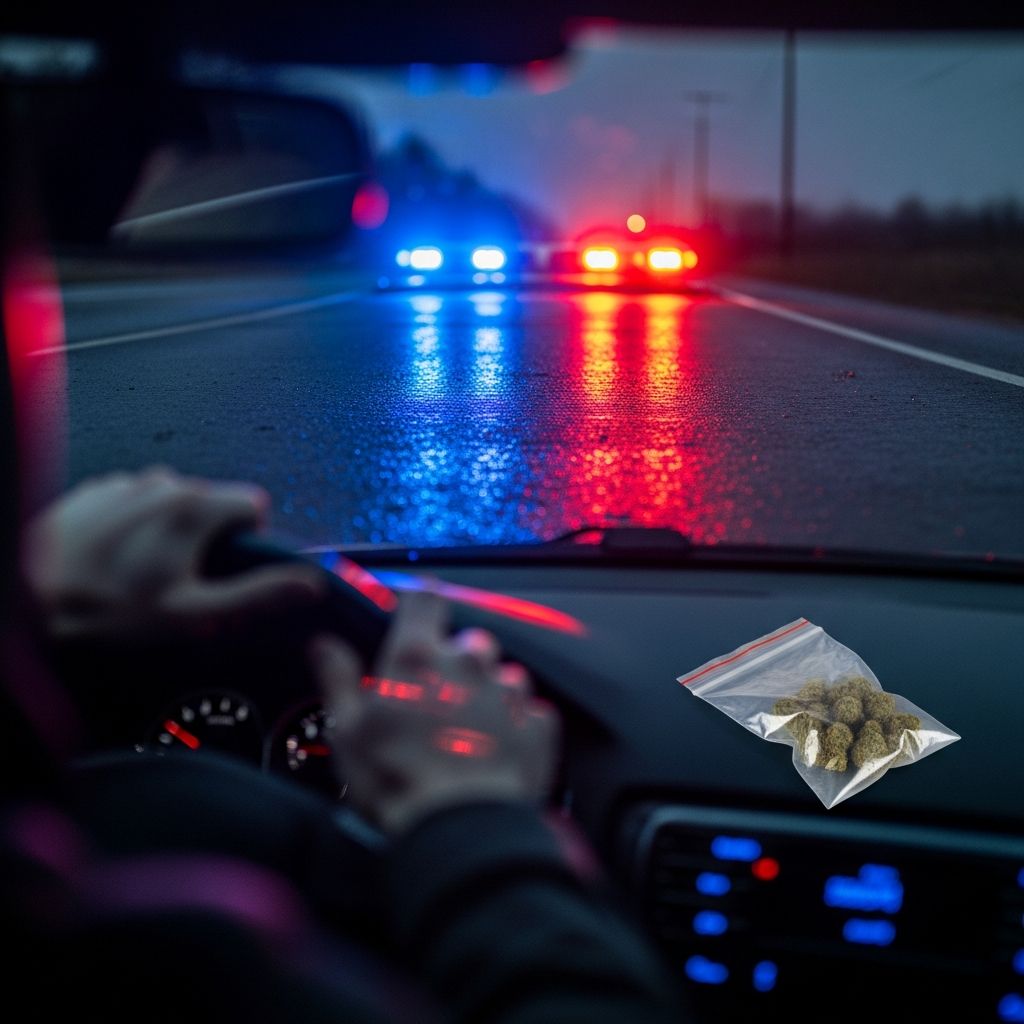
Navigating a traffic stop when you have cannabis in your vehicle requires a balance of cooperation, awareness of your constitutional protections, and knowledge of evolving state regulations. With marijuana legalization expanding across the U.S., encounters with law enforcement remain fraught with risks, from possession charges to DUI allegations. This guide equips drivers with practical strategies to minimize legal exposure while emphasizing prevention and preparedness.
Understanding the Legal Landscape of Cannabis and Driving
Cannabis laws vary significantly by state, creating a patchwork of regulations that impact traffic stops. In states like California and Colorado, recreational and medical use is permitted, but open containers in vehicles are prohibited, similar to alcohol rules. Federal law still classifies marijuana as a Schedule I substance, potentially complicating interstate travel.
Key distinctions include possession limits, medical card validity, and impairment thresholds. For instance, zero-tolerance policies for THC in blood exist in some areas, while others set specific nanogram limits. Drivers must verify local statutes to avoid unintentional violations.
| State Category | Possession Limit (Recreational) | Vehicle Storage Rules | DUI THC Limit |
|---|---|---|---|
| Legal (e.g., CA, CO) | 1 oz flower / 8g concentrate | Trunk or locked container | 5 ng/mL blood |
| Medical Only (e.g., FL) | Varies by card | Out of reach, sealed | Zero tolerance |
| Illegal (e.g., ID) | Any amount illegal | N/A | Any detectable THC |
This table summarizes common patterns; always consult state-specific resources for accuracy.
Preparation Before You Hit the Road
Proactive measures reduce the likelihood of issues during a stop. Maintain current vehicle registration, insurance, and tags to eliminate pretextual stops. Wear your seatbelt and obey speed limits—minor infractions often escalate when cannabis odor is detected.
- Secure Storage: Place cannabis in the trunk, a locked glovebox, or scent-proof container. Avoid passenger areas to prevent ‘plain view’ discoveries.
- Medical Patients: Carry a valid card alongside ID. Renew annually to maintain protections.
- Edibles and Concentrates: Use child-proof, opaque packaging. Open products signal intent to consume.
- Sobriety Check: Consume at home; impairment evidence like bloodshot eyes or odor can justify field tests.
Invest in odor-eliminating bags for long trips. Appoint a designated driver for events, as THC lingers in systems for hours, risking DUI even post-legalization.
Immediate Actions During the Traffic Stop
When lights flash, signal safely, pull over promptly, and turn off the engine. Keep hands visible on the wheel to de-escalate. Officers observe for impairment cues from the initial approach.
- Polite Compliance: Provide license, registration, and proof of insurance without volunteering extra information. Remain courteous but firm.
- Limit Interaction: Answer basic questions (name, destination) but avoid discussing cannabis use, possession, or recent consumption. Admissions are admissible in court.
- Present Medical Card if Applicable: If legal amounts and valid documentation exist, show it calmly after probable cause arises.
Do not exit unless instructed. Silence is protective—’I respectfully invoke my right to remain silent’ is a powerful phrase.
Your Rights: Searches, Tests, and Probable Cause
The Fourth Amendment safeguards against unreasonable searches. Officers need probable cause—like visible paraphernalia or strong odor—to search beyond a pat-down. Never consent: ‘I do not consent to any searches.’
Field sobriety tests (FSTs) are voluntary; politely decline. Drug Recognition Experts (DREs) assess via pupil dilation, pulse, and walk-and-turn tests, but results are subjective. Blood or breath tests require warrants in many jurisdictions post-Birchfield v. North Dakota (2016), though implied consent laws impose license penalties for refusal.
- Odor Alone: In legal states, burnt marijuana smell may not suffice for search if no impairment evidence exists.
- Canine Units: If deployed, they extend stops; remain silent.
- Arrest Threshold: Possession plus impairment proof leads to custody.
Responding to Escalation: Arrest and Booking
If searched and cannabis found, stay composed. Request a supervisor if rights are violated. Post-arrest, note badge numbers, patrol car details, and officer statements for your attorney.
At booking, invoke Miranda rights immediately. Do not discuss the case with anyone except counsel. Bail processes vary; medical patients may argue for release citing legal possession.
Post-Stop Strategies and Legal Recourse
Document everything: time, location, officer demeanor, and stop duration. Excessive delays without cause can suppress evidence via motions to suppress.
Contact a criminal defense attorney specializing in drug cases promptly. They can challenge:
- Stop Legality: Was probable cause for the initial pull-over valid?
- Search Warrant: Consent absent and no exigent circumstances?
- Impairment Proof: FSTs unreliable for cannabis; chemical tests need chain-of-custody validation.
Potential outcomes include dismissal, diversion programs, or reduced charges in decriminalized areas. Repeat offenses escalate penalties.
Preventing DUI-Marijuana Charges
Prosecutors must prove actual impairment, not just presence. Weaving, red-light runs provide driving evidence; otherwise, subjective observations dominate. THC metabolites persist days post-use, complicating defenses.
Avoid driving 4-6 hours after consumption. Use rideshares for safety and compliance.
State-Specific Considerations and Travel Tips
Interstate travel amplifies risks—federal agents patrol highways. In decriminalized but non-legal states, small amounts may yield civil fines.
- Florida Medical Patients: Keep in original packaging, out of reach.
- Kentucky: Any drugs trigger scrutiny; maintain vehicle impeccably.
Check apps like Leafly for real-time law updates before trips.
Frequently Asked Questions (FAQs)
Can police search my car just because they smell weed?
In legal states, odor alone may not justify a full search without additional factors like impairment signs. Always assert non-consent.
Should I take field sobriety tests if I have cannabis?
No, they are voluntary. Declining avoids potentially incriminating performance, though refusal has administrative consequences.
What if my medical card expired during the stop?
Protections lapse; you risk standard possession charges. Renew promptly to avoid this.
Is it okay to have edibles in my glove compartment?
No—store in trunk or locked areas. Open edibles mimic open alcohol containers.
How long does THC stay detectable for DUI?
Active THC clears in hours, but metabolites linger weeks. Impairment must be proven at driving time.
Final Thoughts on Safe Cannabis Mobility
Empowerment comes from knowledge: prepare, comply selectively, invoke rights, and seek counsel. Legalization progresses, but enforcement lags—prioritize caution for freedom on the road.
References
- What To Do If Pulled Over With Weed — Rudoi Law. 2023. https://rudoilaw.com/pulled-weed/
- Pulled Over And Have Marijuana In The Car? Follow These Tips — Susanne Gustin Law. 2023. https://www.susannegustinlaw.com/blog/pulled-over-and-have-marijuana-in-the-car-follow-these-tips/
- How Can A Kentucky Crime Lawyer Help Me If I Was Stopped With Drugs In My Car? — MSHJ Law. 2023. https://www.mshjlaw.com/how-can-a-kentucky-crime-lawyer-help-me-if-i-was-stopped-with-drugs-in-my-car/
- Navigating Cannabis Possession and Police Stops: Tips for Patients — DocMJ. 2023. https://docmj.com/navigating-cannabis-possession-and-police-stops-tips-for-patients/
- How Can the Police Prove Impairment in DUI Marijuana Cases? — Los Angeles Criminal Lawyer. 2023. https://www.losangelescriminallawyer.pro/how-can-the-police-prove-impairment-in-dui-marijuana-cases.html
- LAWYER: Cops Found Weed In Your Car. Now What? — YouTube (Legal Advice Video). 2023. https://www.youtube.com/watch?v=_uaz2hAWg68
Similar Articles








Read full bio of Sneha Tete




