
Public Urination Laws: Risks, Penalties, and Defenses
A practical guide to why public urination can trigger fines, misdemeanor charges, or worse.
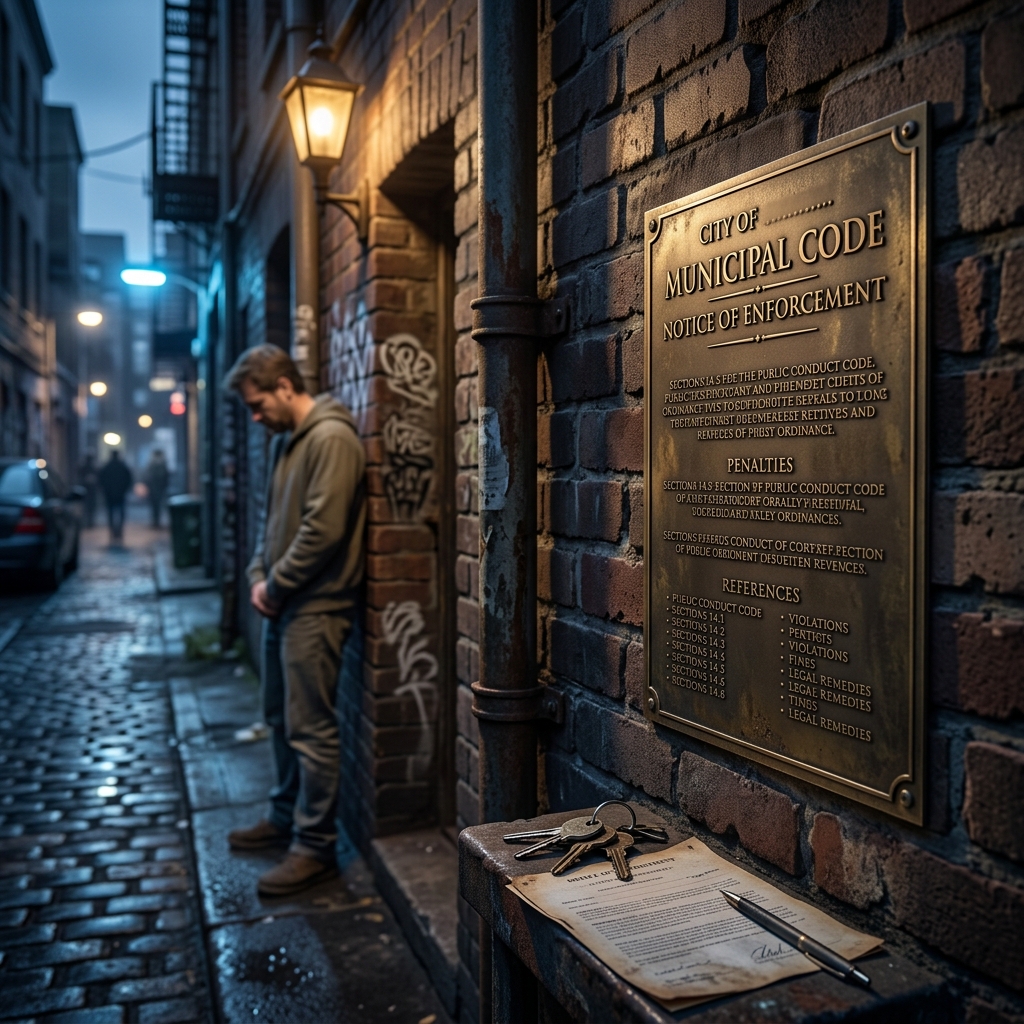
Public urination may seem like a minor lapse in judgment, but in many places it can lead to citations, misdemeanor charges, or additional offenses tied to public decency, disorderly conduct, or indecent exposure. The exact charge depends on local law, the setting, and whether anyone could see the act.
In practice, the legal consequences often turn on context. A hurried mistake behind a building may be treated differently from an incident near a school, transit station, park, or crowded street. Local ordinances frequently play a major role, and some jurisdictions treat the conduct much more seriously than others.
Why this conduct can become a criminal issue
Lawmakers and local officials usually regulate public urination for two reasons: sanitation and public order. When the conduct occurs where others can observe it, authorities may also view it as an affront to public decency or a disturbance affecting nearby people.
That means the same behavior can be charged under different legal theories. One city may use a specific ordinance banning urination in public places, while another may rely on disorderly conduct or a similar broad offense. In some circumstances, the facts may even support a more serious allegation if exposure, intoxication, or sexual intent is claimed.
- Sanitation concerns: The conduct may violate health or cleanliness rules.
- Public order concerns: Police may treat it as disruptive or offensive to others.
- Visibility concerns: If the act is seen by the public, penalties often become more likely.
- Location concerns: Transit systems, parks, schools, and government property are often regulated more strictly.
How prosecutors often charge the conduct
There is no single nationwide rule for public urination. Some states or cities have a direct prohibition, while others use existing offenses to reach the same behavior. That is why two people engaging in nearly the same conduct can face very different outcomes depending on where the incident occurs.
Common charges or ordinance violations include disorderly conduct, public nuisance, indecent exposure, public intoxication, lewd conduct, or a stand-alone public-urination offense. In some places, the citation may be treated as an infraction with a fine; in others, it may be a misdemeanor that creates a criminal record.
| Possible charge | Typical basis | Possible consequence |
|---|---|---|
| Ordinance violation | Specific local ban on urinating in public | Fine or civil penalty |
| Disorderly conduct | Behavior seen as disruptive, offensive, or reckless | Fine, probation, or misdemeanor exposure |
| Indecent exposure | Exposure of private parts in public view | Misdemeanor or more serious penalty |
| Public nuisance | Condition or act affecting the public | Fine or court-ordered conditions |
Why the location matters so much
Location often determines how a prosecutor frames the case. An act on a quiet, hidden corner may still violate a local rule, but if it occurs in a place where families, commuters, or children are likely to be present, the charge may become more serious. Public transit facilities and their surrounding platforms are especially common examples of tightly regulated places.
Some ordinances also extend beyond public property. A person may face consequences even on private property if the act is visible to the public or happens in a place not intended for restroom use. That distinction surprises many people, but visibility is often just as important as ownership.
- Street-facing areas: Sidewalks, alleys, and parking lots often create obvious exposure risk.
- Public buildings: Hallways, floors, and lobbies may be treated like public spaces.
- Transit property: Buses, platforms, and stations may trigger specific statutes.
- Private property visible to others: Visibility can still create liability.
Possible penalties if you are cited or arrested
The most common consequence is a fine, but that is not the only possible outcome. Depending on the jurisdiction and the charge, a person may face a misdemeanor record, probation, community service, mandatory classes, or even short jail exposure. Repeat conduct or aggravating facts can increase the stakes significantly.
In some places, a first offense is treated as a minor infraction with a relatively small monetary penalty. Elsewhere, prior convictions or surrounding circumstances can elevate the matter to a more serious misdemeanor. The same conduct may also create collateral consequences, such as employment concerns, court costs, or problems if a plea requires admission of a separate offense.
- Fines: Often the most immediate penalty.
- Probation: May be imposed for misdemeanor convictions.
- Community service: Sometimes used instead of, or in addition to, jail.
- Jail time: Usually reserved for elevated or repeat cases, or related offenses.
- Criminal record: A misdemeanor can have long-term consequences beyond the fine itself.
When the facts may make the case more serious
Not every public-urination incident is treated the same way. Certain facts can make a prosecutor more aggressive or create exposure to additional charges. If the conduct happens near children, in a heavily trafficked area, or in a setting where the person appears intoxicated or disruptive, the situation may shift from an embarrassing mistake to a criminal case with broader consequences.
Police may also look for signs that the exposure was intentional rather than accidental. If private parts were exposed and the surrounding circumstances suggest a sexual component, an indecent-exposure theory may arise. That possibility is one reason legal advice matters quickly when the facts are disputed.
- Children present: The presence of minors can raise the seriousness of the allegation.
- Repeated incidents: Prior offenses may increase penalties.
- Alcohol involvement: Intoxication can lead to added charges.
- Visible exposure: If body parts were exposed, indecent-exposure laws may apply.
Defenses that may be available
Potential defenses depend heavily on the facts and the wording of the local law. In some cases, the person may argue that there was no public visibility, that the area was not actually covered by the ordinance, or that the act was involuntary because of a medical emergency. Where the statute requires proof of specific exposure or intent, those elements may also be challenged.
Permission can matter too. If the property owner allowed the conduct and the area was not visible to the public, that may weaken the prosecution’s theory in some jurisdictions. A defense lawyer may also challenge whether the officer observed enough to establish the offense beyond a reasonable doubt.
- No public view: The act was not observable by the public.
- Wrong location: The area was outside the scope of the ordinance.
- Medical necessity: A health issue or uncontrollable condition caused the incident.
- Permission or privacy: The property owner consented and the act was not public.
- Lack of intent: If the charge requires intent, the prosecution may not be able to prove it.
How officers and courts may evaluate the evidence
Evidence in these cases is usually simple but important. Police reports, witness statements, body-camera footage, surveillance video, and the exact wording of the ordinance or statute may determine how the case is resolved. If a person was cited on the spot, the citation itself may identify the charge and the legal basis used by the officer.
Courts may focus on whether the government can prove the conduct occurred where the law says it cannot, whether anyone could see it, and whether the offense was actually completed. When a charge is based on a broader offense like disorderly conduct, the prosecution usually has more flexibility, but it still must prove the elements of the offense.
Practical steps after an accusation
If you are stopped or cited, the immediate goal is to avoid making the situation worse. Calm behavior matters. Arguments at the scene can lead to additional allegations, and unnecessary statements may later be used against you. Even when the matter feels minor, the long-term effect of a plea or conviction can be broader than expected.
After the incident, it is smart to save any documents, note the location, and remember who may have witnessed what happened. Small details can become crucial later, especially if the issue involves visibility, ownership of the property, or a claimed medical need.
- Stay calm: Escalation can create new problems.
- Read the citation carefully: The exact charge matters.
- Document the setting: Location and visibility can be important defenses.
- Consult counsel early: Early advice can affect how the case is handled.
How public-urination laws differ by jurisdiction
Local variation is one of the most important features of this issue. Some cities define the offense narrowly and impose a modest fine. Others combine it with broader public-decency laws or treat repeat conduct more severely. A city ordinance, county code, or state statute may all potentially matter at once.
This patchwork means there is no single universal penalty. A person traveling across city lines may encounter a different legal rule than at home. Because of that, it is risky to assume that a conduct that is tolerated in one area will be ignored in another.
Frequently asked questions
Is public urination always a crime?
No. In some places it may be handled as a civil infraction or local ordinance violation rather than a criminal misdemeanor. In other places, it can absolutely be prosecuted as a crime.
Can I be charged even if I was trying to stay hidden?
Yes. Visibility, not just intent, can matter. If someone could still observe the act, a charge may still be possible.
Does it matter if it happened on private property?
It can. Some laws reach conduct on private property if the act is visible to the public or occurs outside an area meant for restroom use.
Can alcohol make the situation worse?
Yes. Alcohol can lead to added charges or make the officer view the incident as part of a broader public-disorder problem.
Could this become more serious than a simple fine?
Yes. Depending on the jurisdiction and the surrounding facts, the matter can become a misdemeanor, involve probation, or be paired with another offense such as indecent exposure or disorderly conduct.
References
- § 132.11 Public Urination and Defecation Prohibited — City of East Liverpool Code via American Legal Publishing. 2022-06-21. https://codelibrary.amlegal.com/codes/lead/latest/lead_se/0-0-0-6375
- Public Urination in California — Eisner Gorin LLP. 2025-01-01. https://www.egattorneys.com/public-urination-california
- Public Urination in Texas: Laws, Penalties, and Defense Options — Carroll Troberman. 2024-01-01. https://www.carrolltrobermanlaw.com/blog/public-urination-what-you-need-to-know
- Can I get in trouble for urinating in public? — Gene Scott Law. 2025-03-01. https://www.genescottlaw.com/blog/2025/03/can-i-get-in-trouble-for-urinating-in-public/
- Public Urination and Texas Laws — Sharp Criminal Attorney. 2024-01-01. https://sharpcriminalattorney.com/blog/criminal-law/public-urination-and-texas-laws/
Similar Articles








Read full bio of Sneha Tete




