
Public Health and Prisons: A Crisis of State Inaction
How state inaction fueled a preventable carceral public health disaster.
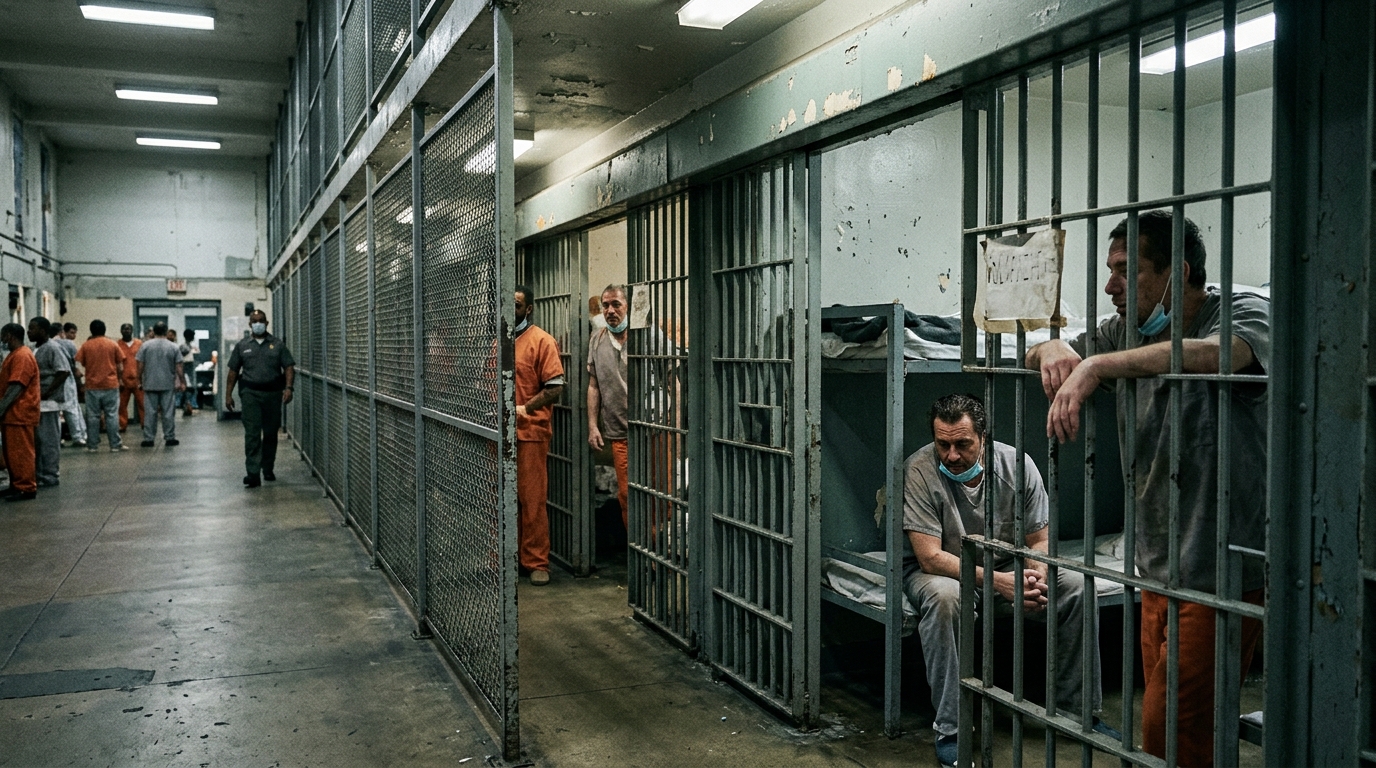
When a novel pathogen emerges, public health responses must be swift, comprehensive, and inclusive of all populations. However, the recent global health crisis exposed catastrophic vulnerabilities within the United States’ carceral system. State governments across the country were faced with an unprecedented challenge: protecting the millions of individuals housed in state prisons and local jails. Unfortunately, the response was largely marked by hesitation, bureaucratic inertia, and a fundamental failure to prioritize the lives of marginalized communities. The fallout from this inaction was not limited to the physical confines of correctional facilities; it spilled over into surrounding municipalities, exacerbating a public health disaster.
This critical examination explores how state-level administrative decisions, long-standing systemic flaws, and a reluctance to embrace decarceration culminated in a preventable tragedy. By analyzing the structural realities of prisons, the sluggish policy responses, and the interconnected nature of carceral and community health, we can draw vital lessons for future emergency preparedness and criminal justice reform.
The Architecture of Vulnerability: Why Correctional Facilities Become Epicenters
To understand the magnitude of the crisis, one must first recognize that prisons and jails are fundamentally incompatible with standard infectious disease control protocols. The architectural design and daily operations of these institutions create an environment where respiratory viruses can proliferate with alarming speed.
Overcrowding and Inadequate Infrastructure
Decades of punitive criminal justice policies have resulted in chronic overcrowding. In many state facilities, individuals are housed in open dormitories with dozens of other people, sleeping in bunks spaced mere feet apart. Even in cell-based housing, poor ventilation systems often recirculate stagnant air, facilitating the rapid airborne transmission of pathogens. Social distancing, the cornerstone of early public health guidance, is a physical impossibility in such dense environments.
Restricted Access to Hygiene
Furthermore, access to basic hygiene products is heavily restricted or commodified behind bars. Hand sanitizer, containing alcohol, is universally banned as contraband. Soap is often rationed or must be purchased from the commissary at exorbitant prices, making frequent handwashing unattainable for indigent populations. Shared sanitation facilities, including toilets and showers, are rarely cleaned with medical-grade disinfectants between uses. When these structural deficiencies met a highly contagious virus, the result was immediate and severe outbreaks.
Policy Paralysis: The Reluctance to Decarcerate
In the early months of the outbreak, public health experts and epidemiological models pointed to one unavoidable conclusion: rapidly reducing the prison population was the most effective strategy to save lives and preserve healthcare capacity . Yet, state governments exhibited a profound reluctance to embrace decarceration.
Bureaucratic Hurdles and Narrow Criteria
Instead of enacting broad, categorical releases of medically vulnerable individuals and those nearing the end of their sentences, governors and parole boards established overwhelmingly restrictive criteria. Emergency release protocols were frequently bogged down by layers of administrative review, requiring individualized risk assessments that took weeks or months to process. In many jurisdictions, any individual with a prior violent offense—regardless of how long ago it occurred or their current medical fragility—was categorically excluded from consideration.
The Cost of Inaction
This policy paralysis meant that the reduction in state prison populations was negligible during the most critical windows of opportunity. The National Academies of Sciences, Engineering, and Medicine concluded that decarceration was an essential component of public health mitigation, yet political fear of ‘being soft on crime’ superseded empirical scientific guidance . Consequently, tens of thousands of vulnerable individuals were left trapped in high-risk environments, leading to hospitalization and mortality rates that vastly exceeded those of the general public.
Inadequate Mitigation: Testing, Treatment, and the Misuse of Solitary Confinement
With populations remaining near capacity, correctional departments attempted to manage the virus internally. These efforts were consistently undermined by resource shortages and a reliance on punitive measures masquerading as public health interventions.
PPE and Testing Shortages
In the critical early phases, correctional officers and incarcerated people were routinely denied access to adequate personal protective equipment (PPE). Testing protocols were reactive rather than proactive. Mass surveillance testing, which is necessary to identify asymptomatic carriers and isolate outbreaks, was rarely implemented until the virus had already swept through entire cell blocks.
Medical Isolation vs. Punitive Confinement
Perhaps the most damaging institutional response was the conflation of medical isolation with solitary confinement. Lacking dedicated, non-punitive quarantine units, prison administrators placed symptomatic or exposed individuals in restrictive housing units. These cells, often identical to those used for disciplinary segregation, meant prolonged isolation, loss of communication with families, and severe psychological distress. Because reporting symptoms resulted in being sent to ‘the hole,’ many incarcerated people actively hid their illness, allowing the virus to spread undetected. This dynamic highlights a severe operational failure: utilizing the tools of punishment to address a medical emergency .
The Ripple Effect: Interconnected Health Outcomes
A pervasive myth surrounding incarceration is that prisons are closed ecosystems, entirely separate from the rest of society. The pandemic shattered this illusion, demonstrating conclusively that carceral health is public health.
Porous Borders and Daily Influx
Prisons are heavily trafficked institutions. Every day, thousands of correctional officers, medical staff, food service vendors, and administrative personnel cross the threshold. During a community outbreak, these staff members inadvertently brought the virus into facilities. Conversely, once an outbreak took hold inside a prison, staff carried the virus back to their homes and communities at the end of their shifts.
Driving Community Spread
Rigorous epidemiological studies have confirmed this reciprocal relationship. Research analyzing county-level data found that massive outbreaks within correctional facilities acted as epidemiological pumps, accelerating transmission rates in the surrounding municipalities . Counties housing large state prisons consistently experienced sharper spikes in community spread compared to matched counties without such facilities. Furthermore, the practice of transferring individuals between facilities during the crisis seeded new outbreaks across state lines, demonstrating a catastrophic failure of logistical oversight .
Disproportionate Impacts and the Amplification of Inequity
The failure of state governments to protect incarcerated populations cannot be decoupled from the deeply entrenched racial and socioeconomic disparities that define the justice system.
The Burden on Marginalized Communities
Because Black, Indigenous, and Hispanic individuals are disproportionately incarcerated in the United States, they disproportionately bore the brunt of these policy failures. The systemic neglect experienced during the pandemic amplified existing health inequities. Incarcerated individuals inherently have higher baseline rates of chronic illnesses—such as asthma, hypertension, and diabetes—due to lifelong exposure to systemic disadvantages and poor preventative care prior to incarceration.
By failing to mitigate the viral spread behind bars, state governments actively worsened the morbidity and mortality rates within communities of color, effectively transforming prison sentences into potential death sentences for the most vulnerable demographics.
Forging a Resilient Future: Redefining Justice Through a Health Lens
The disastrous handling of the recent health crisis must serve as a permanent catalyst for systemic reform. Returning to the pre-crisis status quo is untenable. Moving forward, state governments must fundamentally restructure the intersection of public health and criminal justice.
Independent Public Health Oversight
First, correctional healthcare must be wrested from the exclusive control of departments of corrections. Independent, civilian-led public health departments must be granted the authority to oversee prison conditions, mandate hygiene standards, and enforce infection control protocols. Prisons should be subject to the same health inspections and regulatory standards as hospitals and nursing homes.
Establishing Emergency Decarceration Protocols
Second, state legislatures must codify emergency decarceration protocols. In the event of a declared public health emergency, mechanisms must be in place for the immediate, categorical release of individuals who pose no imminent physical threat to public safety, especially those with severe medical vulnerabilities. These release valves cannot rely on the discretionary, slow-moving parole boards that failed so spectacularly in recent years.
Shifting the Paradigm
Ultimately, preventing future disasters requires a paradigm shift. Society must recognize that mass incarceration is a public health hazard. By shrinking the footprint of the carceral system and investing those resources into community-based healthcare, housing, and social services, governments can build resilient communities capable of weathering future crises without sacrificing their most marginalized members.
Frequently Asked Questions (FAQ)
Why couldn’t prisons just stop the spread by keeping inmates in their cells?
Lockdowns and prolonged cellular confinement do not stop airborne viruses when facilities share centralized, poorly filtered ventilation systems. Furthermore, keeping individuals in their cells 24/7 mimics solitary confinement, which causes severe psychological harm and discourages people from reporting symptoms due to fear of punitive isolation.
Did releasing incarcerated people during the pandemic cause a spike in crime?
No. Extensive data tracking the recidivism rates of individuals released via emergency decarceration protocols showed extremely low rates of re-offending. Most individuals released were elderly, medically vulnerable, or nearing the end of their sentences, demographics historically proven to have the lowest risk of recidivism.
How does an outbreak in a prison affect the surrounding town?
Prisons are not completely sealed environments. Correctional officers, medical personnel, and support staff commute between the facility and their homes daily. An uncontrolled outbreak inside a prison inevitably leads to staff infections, who then unwittingly transmit the virus at local grocery stores, schools, and within their households, thereby exacerbating the local community spread.
What is ‘medical isolation’ in a prison context?
Ideally, medical isolation involves moving a contagious patient to a dedicated healthcare unit with proper ventilation and medical care. In practice, many prisons lacked these facilities and instead used solitary confinement cells for quarantine. This punitive environment lacked adequate medical monitoring and severely restricted communication and privileges, violating fundamental human rights standards.
Can the government be held legally responsible for failing to protect incarcerated people?
Advocacy groups have filed numerous class-action lawsuits arguing that the deliberate indifference to the health and safety of incarcerated individuals violates the Eighth Amendment’s protection against cruel and unusual punishment. While some courts ordered population reductions, many legal battles regarding financial accountability and systemic institutional reform remain ongoing.
References
- Decarcerating Correctional Facilities during COVID-19: Advancing Health, Equity, and Safety — National Academies of Sciences, Engineering, and Medicine (NASEM). 2020-10-20. https://doi.org/10.17226/25945
- COVID-19 community spread and consequences for prison case rates — LeMasters K, Ranapurwala S, Maner M, Nowotny KM, Peterson M, Brinkley-Rubinstein L. / PLOS ONE. 2022-04-13. https://www.ncbi.nlm.nih.gov/pmc/articles/PMC9007412/
- Covid-19 in the California State Prison System: An Observational Study of Decarceration, Ongoing Risks, and Risk Factors — Wang EA, et al. / Annals of Internal Medicine. 2020-12-01. https://pubmed.ncbi.nlm.nih.gov/32897769/
- Effects of the COVID-19 pandemic on people experiencing incarceration: a systematic review — Kinner JA, et al. / PubMed Central (PMC). 2023-01-05. https://www.ncbi.nlm.nih.gov/pmc/articles/PMC9831780/
Similar Articles








Read full bio of medha deb


