
Proving Car Accident Claims: Essential Role of Witnesses
Discover if witnesses are mandatory for car accident claims and explore alternative evidence strategies to secure rightful compensation.
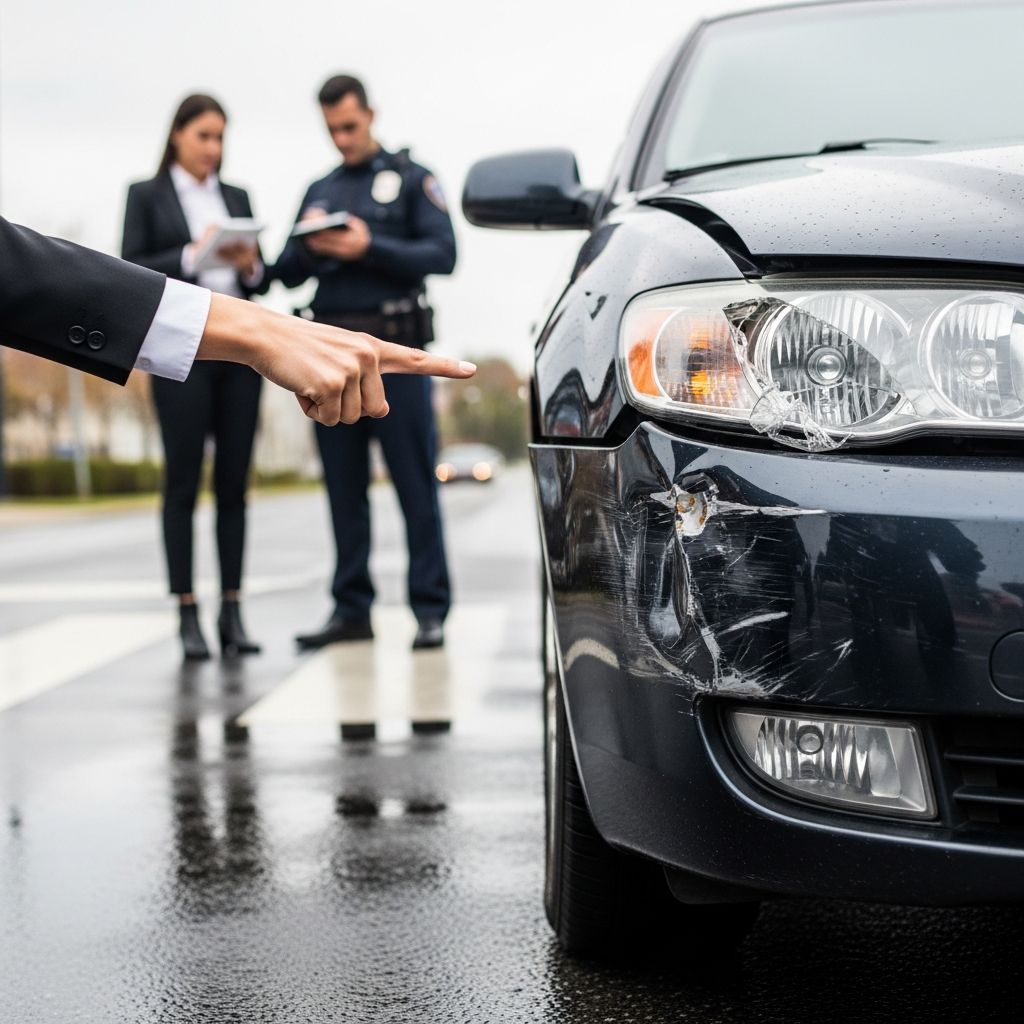
Successfully pursuing a car accident claim hinges on demonstrating that another party’s negligence caused your injuries and damages. While eyewitness accounts often play a pivotal role, they are not always mandatory, as various forms of evidence can substantiate liability and losses.
Understanding Liability in Vehicle Collision Cases
In personal injury law, establishing fault requires showing four key elements: duty of care, breach of that duty, causation, and resulting damages. Drivers owe each other a duty to operate vehicles safely, and violations like speeding or distracted driving constitute breaches. Witnesses can illuminate these breaches, but courts and insurers accept multifaceted proof.
Your own detailed recollection serves as primary testimony, admissible as a party’s statement. Combined with objective data, it forms a compelling narrative. Insurance companies scrutinize claims rigorously, often disputing liability without neutral corroboration, making comprehensive evidence gathering crucial from the outset.
Value of Eyewitness Accounts in Disputes
Independent observers provide unbiased perspectives that resolve conflicting driver stories, especially in “he said, she said” scenarios. Pedestrians, nearby motorists, or residents who viewed the incident can describe vehicle speeds, signaling failures, or erratic maneuvers.
Credible witnesses lack personal stakes, enhancing their reliability. Their statements should capture names, positions at the scene, sensory observations, and event timelines. Multiple consistent accounts significantly bolster case strength, influencing insurer settlements and court outcomes.
- Position and visibility: Exact location relative to the crash.
- Observed actions: Specific driver behaviors like swerving or running lights.
- Timing and sequence: Chronological breakdown of events.
- Conditions: Weather, traffic, or road factors noted.
Challenges and Limitations of Relying Solely on Witnesses
Human memory falters over time, introducing inaccuracies in details like distances or speeds. Insurers exploit this during cross-examinations, probing for biases, inconsistencies, or poor vantage points. Opposing parties may produce counter-witnesses, creating factual battles.
Witnesses might relocate, refuse cooperation, or face credibility attacks due to prior convictions. Thus, no single testimony suffices; it must integrate with physical and documentary proof. Experienced attorneys prepare witnesses meticulously for depositions to withstand scrutiny.
Powerful Alternatives When No Witnesses Are Available
Claims succeed routinely without third-party observers by leveraging other evidence types. Police reports document officer findings on scene conditions, skid measurements, and statements, though fault opinions carry limited weight.
| Evidence Type | Description | Strength in Proving Fault |
|---|---|---|
| Photographs | Damage patterns, debris fields, road marks | Reveals impact angles and speeds |
| Surveillance Video | Traffic cams, business footage | Objective visual reconstruction |
| Vehicle Data | Black box records, airbag sensors | Precise speed, braking data |
| Medical Records | Injury types, treatment timelines | Links harm to collision forces |
| Expert Analysis | Accident reconstructionists | Scientific fault determination |
Skid marks indicate braking distances, while damage analysis infers velocities and directions. Telematics from modern vehicles yield downloadable event data, often irrefutable. Cell records prove distractions in relevant cases. Your prompt scene documentation—photos before vehicles move—preserves vital visuals.
Integrating Multiple Evidence Streams for Maximum Impact
The strongest cases weave eyewitnesses with alternatives. For instance, a video showing a red-light run gains potency from a corroborating pedestrian statement. Medical bills quantify economic losses, while expert biomechanists connect crash dynamics to injury severity.
Police diagrams, though not conclusive on liability, support expert opinions on dynamics. In no-witness scenarios, forensic evidence like debris trajectories or yaw marks reconstructs events persuasively. Attorneys compile demand packages merging all elements to pressure fair settlements.
Strategic Steps to Document Your Claim Immediately
Act swiftly post-crash: exchange info, photograph everything, note witness details, and summon police for an official report. Seek medical evaluation promptly, even for minor symptoms, generating records tying injuries to the event.
Avoid insurer traps like recorded statements without counsel. Preserve evidence by not repairing vehicles prematurely, allowing inspections. Professional investigators can canvas areas for overlooked witnesses or footage.
Legal Expertise: Navigating Claims and Litigation
Personal injury attorneys excel at evidence assembly, witness interviews, and insurer negotiations. They counter lowball offers with comprehensive dossiers, often securing higher payouts without trials. In litigation, they shield witnesses from aggressive cross-examinations.
Statutes of limitations vary by state—typically 2-3 years—urging prompt action. Contingency fees align interests, with no upfront costs. Free consultations assess case viability early.
Frequently Asked Questions
Can I win a car accident case without any witnesses?
Yes, many claims prevail using police reports, photos, videos, and expert reconstructions when no third-party observers are present.
What makes a witness statement most effective?
Detailed, timely accounts from unbiased observers with clear visibility, including specifics on actions and conditions.
Do police reports decide fault in claims?
No, officer narratives aid reconstruction but lack legal weight on liability; they’re hearsay for conclusions.
How soon should I collect witness contacts?
Immediately at the scene, as memories fade and people disperse quickly.
Are my own statements enough evidence?
They contribute but require corroboration via documents, photos, or experts for credibility against denials.
Building a robust car accident claim demands proactive evidence collection beyond witnesses. Diverse proofs ensure insurers and courts recognize valid negligence, paving the way for deserved compensation.
References
- Is It Possible To File a Car Accident Claim Without Witnesses? — Tomeny | Best. 2023. https://tomenybest.com/blog/is-it-possible-to-file-a-car-accident-claim-without-witnesses/
- What Evidence Do You Need to Win Your Car Accident Case in Austin? — Lorenz & Lorenz. 2024-01-15. https://www.lorenzandlorenz.com/blog/evidence-to-win-car-accident-case-austin/
- Car Accident Claims & Witnesses — Staver Law. 2023-05-20. https://www.chicagolawyer.com/blog/car-accidents-claims-and-witnesses/
- The Importance of Witness Testimony in a Car Accident Claim — James Alexander Law. 2022-11-10. https://www.jamesalexanderlaw.com/blog/the-importance-of-witness-testimony-in-a-car-accident-claim/
- The Role of Witnesses in Texas Car Accident Claims — Hollingsworth Law Firm. 2024-03-05. https://hollingsworthlawfirm.com/the-role-of-witnesses-in-texas-car-accident-claims/
- What If There Were No Witnesses to My Austin Car Accident? — Thomas J. Henry Law. 2023-08-12. https://thomasjhenrylaw.com/blog/what-if-there-were-no-witnesses-to-my-austin-car-accident/
- What Evidence Is Needed to Support My Car Accident Claim? — Singleton Schreiber. 2024-02-28. https://www.singletonschreiber.com/theblog/what-evidence-is-needed-to-support-my-car-accident-claim
Similar Articles








Read full bio of medha deb




