
Can Processed Meats Lead to Cancer Lawsuits?
Uncover the legal implications of processed meat's cancer link: from WHO classifications to potential lawsuits and consumer protections.
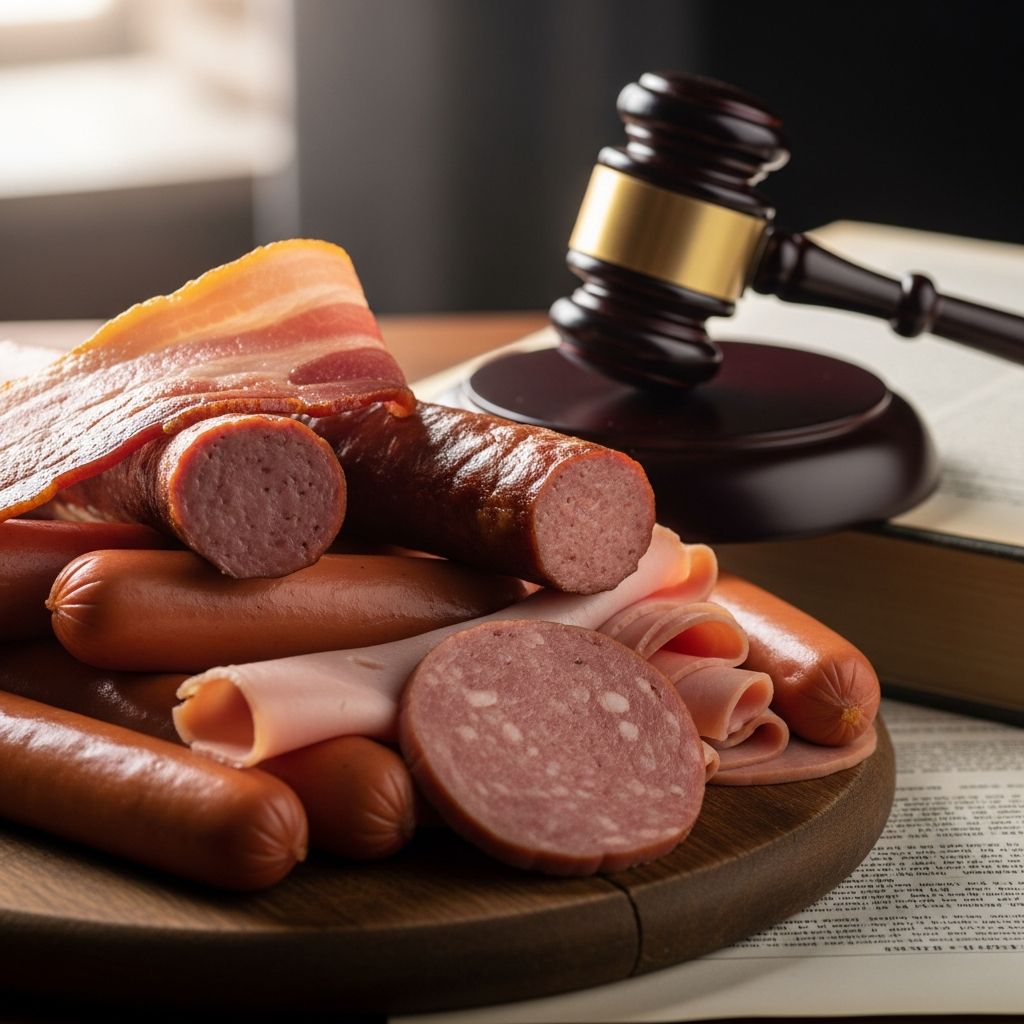
Processed meats such as bacon, sausages, and deli slices have been under scrutiny for their potential health risks, particularly their association with cancer. Classified as carcinogenic by leading health organizations, these everyday foods raise questions about consumer liability and legal recourse. This article delves into the scientific foundation, regulatory hurdles, and pathways for potential litigation when cancer may be linked to long-term consumption.
The Science Behind Processed Meat and Cancer Risk
Health authorities have long warned about the dangers lurking in cured and smoked meats. The International Agency for Research on Cancer (IARC), part of the World Health Organization (WHO), evaluated extensive epidemiological data in 2015. After reviewing over 800 studies by 22 experts from 10 countries, they categorized processed meat as a Group 1 carcinogen, indicating sufficient evidence that it causes colorectal cancer in humans.
This classification aligns processed meat with notorious substances like tobacco and asbestos. Specifically, consuming 50 grams daily—roughly two slices of bacon or one hot dog—increases colorectal cancer risk by 18%. Colorectal cancer ranks as the third most common cancer diagnosis and second leading cause of cancer deaths in the U.S., making this statistic particularly alarming.
Mechanisms include the formation of carcinogenic compounds like N-nitroso compounds (NOCs) during processing, which damage DNA. Additional risks extend to breast, prostate, pancreatic cancers, and overall mortality, supported by meta-analyses. Even moderate intake, like the average American’s 21.7 grams of processed pork daily, contributes to cumulative harm.
Regulatory Responses: California’s Proposition 65 Saga
California’s Proposition 65, enacted in 1986, mandates warnings for products exposing consumers to carcinogens above safe harbor levels. Following IARC’s 2015 findings, advocacy groups demanded processed meat’s inclusion on the state’s list.
In 2020, the Physicians Committee for Responsible Medicine sued California for inaction, arguing Prop 65 requires listing all IARC Group 1 agents. Despite new research reinforcing the link, a Superior Court ruling in 2025 dismissed the case, allowing the state to sidestep the mandate—a decision critics say endangers public health.
This ruling highlights tensions between state laws and federal oversight. The USDA regulates meat labeling and safety, potentially preempting Prop 65 warnings. Industry groups argue such labels could mislead consumers, likening the risk to everyday activities rather than acute toxins. Yet, advocates push for transparency, citing ongoing studies post-2015 that bolster the evidence.
| Substance | IARC Group | Cancer Link | Examples |
|---|---|---|---|
| Processed Meat | Group 1 (Carcinogenic) | Colorectal (18% risk per 50g/day) | Bacon, hot dogs, salami |
| Red Meat | Group 2A (Probable) | Colorectal, pancreatic, prostate | Steak, beef roasts |
| Tobacco | Group 1 | Lung, multiple others | Cigarettes |
| Asbestos | Group 1 | Mesothelioma, lung | Building materials |
Building a Personal Injury Claim from Food Consumption
While regulatory battles rage, individuals wondering about suing for diet-related cancer face steep challenges. Personal injury or toxic tort lawsuits require proving four elements: duty of care, breach, causation, and damages.
- Duty: Manufacturers or sellers must ensure products are safe or warn of risks.
- Breach: Failure to disclose known hazards, like carcinogens in processing.
- Causation: Direct link between consumption and cancer—hardest to establish amid multifactoral causes like genetics, lifestyle.
- Damages: Medical bills, lost wages, pain from diagnosis/treatment.
Unlike asbestos or benzene cases with clear occupational exposure, proving processed meat as the sole cause is elusive. Diets involve myriad factors, and relative risks (e.g., 18%) don’t guarantee individual outcomes. Courts demand robust evidence: medical records, consumption history, expert toxicology reports linking specific intake to disease.
Precedents and Comparisons to Other Toxic Exposures
Cancer lawsuits succeed in scenarios with concentrated, identifiable exposures. For instance:
- Asbestos: Workers sue employers for mesothelioma without warnings.
- Benzene: Leukemia claims against chemical firms.
- Glyphosate: Non-Hodgkin lymphoma suits against manufacturers.
- PFAS: Kidney/testicular cancer from contaminated water.
Processed meat differs—no single ‘smoking gun’ exposure, voluntary consumption, and warnings increasingly common (e.g., some grocers post signs). Critics mock ‘bacon as the new asbestos,’ noting no recalls or policy exclusions anticipated. Yet, if internal documents reveal suppressed risks, class actions could emerge.
Consumer Protections and Emerging Legal Strategies
Beyond lawsuits, protections include FDA oversight on additives (though not addressing core processing carcinogens). Advocacy suits compel agency action on food chemicals, underscoring systemic gaps. Health bodies like MD Anderson and AICR advise minimal processed meat intake.
Potential strategies for claimants:
- Document lifelong consumption via receipts, photos.
- Secure oncologist testimony on dietary factors.
- Pursue product liability if mislabeled ‘healthy.’
- Explore class actions for widespread exposure via school lunches or marketing to kids.
Success hinges on evolving science; recent studies (post-2020) strengthen colorectal links, possibly tipping future verdicts.
Health Guidelines to Mitigate Risks
While legal avenues limited, prevention empowers. Limit processed meat to rare occasions; opt for plant-based alternatives. The average diet exceeds safe thresholds—vigorous exercise, fiber-rich foods counter risks. Firefighters, with high processed meat intake, face amplified occupational cancer risks, prompting tailored advisories.
Frequently Asked Questions
Is bacon really as dangerous as cigarettes?
No, while both are Group 1 carcinogens, risks differ vastly. Processed meat poses probabilistic, dietary risk; tobacco delivers direct, massive exposure.
Will California require cancer warnings on bacon soon?
Unlikely post-2025 ruling, but appeals or legislation could revive Prop 65 mandates.
Can I sue a restaurant for serving processed meat?
Extremely difficult; patrons assume common food risks, no special duty without mislabeling.
What evidence proves my cancer came from hot dogs?
Medical history, biomarkers, exclusion of other causes via experts—challenging but possible in heavy consumers.
Are there successful lawsuits over diet-caused cancer?
Rare for food; more common for adulterated products or occupational toxins.
References
- Doctors Sue California for Failing to Add Processed Meat — Physicians Committee for Responsible Medicine. 2018-03-11. https://www.youtube.com/watch?v=3md8_HiOAXs
- California’s Bacon: The Legal Ramifications of the New WHO Study — University of Miami Law Review. 2015-10-26. https://lawreview.law.miami.edu/californias-bacon-legal-ramifications-study/
- California Court Ruling Endangers Public Health — Physicians Committee for Responsible Medicine. 2025 (approx., post-2020 suit). https://www.pcrm.org/news/news-releases/california-court-ruling-endangers-public-health-failing-require-processed-meat
- Was Your Cancer Preventable? Here’s When You Might Be Able to Sue — Morgan & Morgan. 2023 (recent update inferred). https://www.forthepeople.com/blog/was-your-cancer-preventable-heres-when-you-might-be-able-sue/
- Bacon is the New Asbestos! Really? — Goldberg Segalla. 2015-11 (post-IARC). https://www.goldbergsegalla.com/blog/asbestos-case-tracker/asbestos-litigation-analysis/bacon-is-the-new-asbestos-really/
- Advocates Sue FDA to Force Decision on Cancer-Causing Chemicals — Breast Cancer Prevention Partners. 2022 (approx.). https://www.bcpp.org/advocates-sue-fda-to-force-decision-on-cancer-causing-chemicals-in-popular-foods/
- Processed Meat and Cancer: What You Need to Know — MD Anderson Cancer Center. 2019-12-04. https://www.mdanderson.org/cancerwise/processed-meat-and-cancer-what-you-need-to-know.h00-159778812.html
Similar Articles








Read full bio of medha deb




