
Pool Slip and Fall Lawsuits: Legal Rights and Liability
Understand your legal options after a pool slip and fall injury and recover damages.
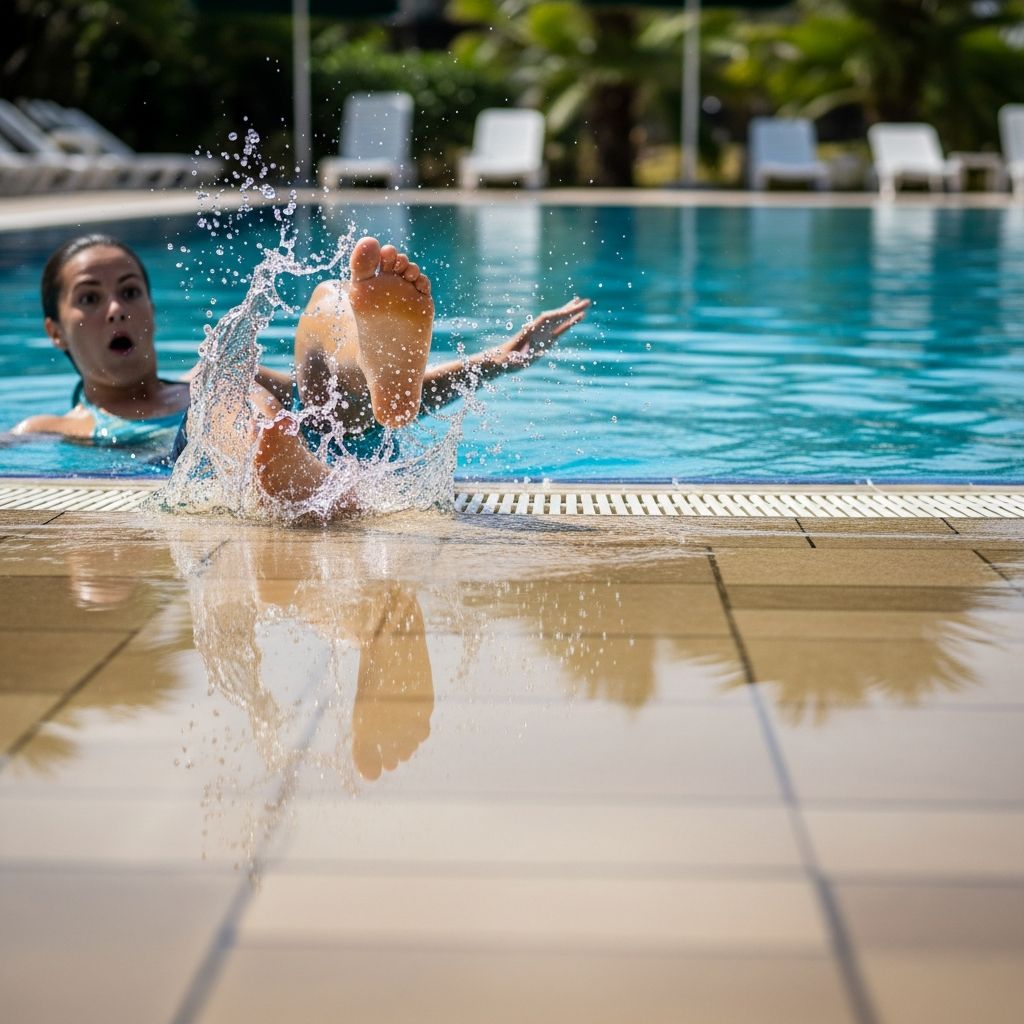
Understanding Premises Liability at Swimming Pools
Swimming pools are recreational destinations where families and individuals seek leisure and enjoyment. However, these facilities also present significant hazards that can lead to serious injuries. When a visitor suffers a slip and fall accident at a pool, legal questions arise about who bears responsibility for the incident and whether compensation can be recovered. The answer lies in a branch of law called premises liability, which establishes the legal obligations property owners have toward individuals on their premises.
Premises liability law creates a framework wherein property owners and operators are held accountable for accidents and injuries occurring on their land or facilities due to unsafe or negligently maintained conditions. At swimming pools specifically, this legal doctrine becomes particularly important because pools inherently involve hazardous elements including wet surfaces, chemical treatments, and specialized equipment. Understanding how this legal principle applies to your situation is essential if you have been injured at a pool facility.
The Foundation of Pool Owner Responsibilities
Property owners and pool operators maintain specific legal duties toward visitors and guests. These duties form the foundation upon which premises liability claims are built. The first and most fundamental duty is to maintain the premises in a reasonably safe condition. This means regularly inspecting the pool area, identifying potential hazards, and taking corrective action to eliminate or mitigate those risks.
A second critical duty involves providing adequate warnings about known dangers. When hazards cannot be completely eliminated, property owners must ensure that visitors are informed of these dangers through visible signage, verbal warnings, or other appropriate notification methods. Signage must be placed in locations where it is easily visible and written in language that is comprehensible to the typical visitor.
The third responsibility encompasses conducting regular maintenance and repairs. This includes:
- Maintaining non-slip surfaces on pool decks and surrounding areas
- Promptly removing water, debris, or other substances that create slip hazards
- Repairing damaged walkways, tiles, or other structural elements
- Ensuring proper drainage systems function correctly
- Applying non-skid coatings or installing safety mats where appropriate
- Testing and maintaining all pool safety equipment and drains
Different categories of property owners bear these responsibilities with varying degrees of intensity depending on the nature of the facility and the visitor’s status.
Distinguishing Between Public and Private Pool Facilities
The type of pool facility where an injury occurs significantly impacts liability determinations and the legal process for pursuing compensation. Public pools are typically operated by municipal governments or public agencies and serve the general population. Private pools may be owned by individuals, residential communities, hotels, or private clubs and usually restrict access to members or invited guests.
For public pools, liability typically falls on the government entity that operates and maintains the facility. These public agencies have elevated responsibilities because they manage facilities available to the general public, including children and individuals unfamiliar with the specific layout or hazards. Government entities must comply with state and local safety standards, undergo regular inspections by environmental health specialists, and maintain comprehensive maintenance records.
Private pool owners also bear significant responsibilities toward their invitees and guests. However, the specific duties may vary based on whether the injured party was a paying customer, an invited guest, or someone with a different relationship to the property. Generally, property owners must exercise reasonable care in maintaining their facilities and warning of known dangers.
Establishing Negligence in Pool Accident Cases
To successfully pursue a lawsuit following a pool slip and fall accident, you must establish that the property owner or operator acted negligently. Negligence in this context means the property owner failed to exercise the level of care that a reasonable person would apply under similar circumstances. Proving negligence requires demonstrating four distinct elements:
Duty of Care: The first element requires showing that the property owner owed you a legal duty to maintain safe conditions. This is typically straightforward in pool settings, as operators have clear legal obligations to visitors.
Breach of Duty: The second element involves proving that the property owner failed to fulfill their duty. This might include showing that they did not maintain non-slip surfaces, failed to repair known hazards, did not provide adequate warnings, or neglected regular inspections and maintenance.
Causation: The third element establishes a direct connection between the property owner’s breach and your injury. You must demonstrate that the unsafe condition the owner failed to address directly caused your slip and fall accident. This requires showing that the hazard was the actual cause of your injury.
Damages: The final element requires proof that you suffered actual damages as a result of the accident. These damages can include medical expenses, lost wages, pain and suffering, and other measurable harms resulting from your injuries.
Common Negligent Conditions at Pool Facilities
Slip and fall accidents at pools frequently result from specific negligent conditions that property owners should have addressed. Understanding these common hazards helps establish whether negligence occurred in your particular case. Typical negligent conditions include:
- Inadequately maintained deck surfaces that become excessively slippery when wet
- Failure to use non-slip coatings, anti-skid paint, or safety mats in high-traffic areas
- Inadequate drainage systems that allow water to accumulate on non-pool surfaces
- Poor maintenance leading to algae growth, slime, or mold on pool decks
- Missing, damaged, or illegible warning signs about wet surfaces or pool hazards
- Insufficient lighting in pool areas, particularly during evening hours
- Failure to promptly clean up spills, debris, or chemical residue
- Defective or broken pool equipment, including drains or diving boards
- Inadequate supervision or staffing levels at public facilities
- Negligent training of lifeguards or pool staff members
Comparative Fault and Visitor Conduct
While property owners bear significant responsibility for maintaining safe premises, injured visitors also have a responsibility to exercise reasonable care for their own safety. Courts in many jurisdictions recognize the concept of comparative fault, which acknowledges that accidents often involve negligence by multiple parties. In comparative fault systems, compensation may be reduced by the percentage of fault attributed to the injured party.
If you were injured in a pool slip and fall accident, the property owner may argue that your own conduct contributed to the accident. For example, they might claim you were running on the deck, were distracted by your phone, wore inappropriate footwear, or ignored visible warning signs. However, property owners cannot simply shift all responsibility to injured parties. Even if you were partly negligent, the property owner remains liable for their own failure to maintain safe conditions if that failure was a substantial factor in causing your injury.
Courts typically apply a reasonableness standard in evaluating visitor conduct. While property owners cannot guarantee visitor safety, they must account for the fact that pool areas are inherently wet and slippery. Reasonable visitors might slip even when exercising ordinary care, and property owners must maintain conditions that minimize risks despite this reality.
Government Tort Claims for Public Pool Injuries
If your slip and fall accident occurred at a public pool operated by a government entity, special procedural requirements apply. Before filing a traditional lawsuit, you must typically submit a formal tort claim notice to the appropriate government agency. This administrative requirement exists in most jurisdictions and must be followed precisely to preserve your right to sue.
The tort claim notice must include your personal information, a detailed description of the accident, information about your injuries and medical treatment, and other relevant facts about the incident. After receiving your claim, the government agency has a specific timeframe—typically 60 days—to respond. If the agency accepts liability, settlement negotiations may follow. If the agency denies your claim, you then have the right to pursue a traditional lawsuit through the court system.
The statute of limitations for personal injury claims, including pool slip and fall accidents, typically allows three years from the date of the accident to file a lawsuit. However, the government tort claim must be submitted much earlier, often within six months to one year of the incident. Failing to meet these deadlines can result in losing your right to pursue compensation entirely.
Gathering Evidence and Documenting the Scene
Building a strong slip and fall case requires thorough documentation of the accident scene and circumstances. If you are injured at a pool and can safely do so, take photographs and videos of the area where you fell. Capture images of any hazardous conditions that contributed to your accident, including slippery surfaces, missing or inadequate warning signs, poor lighting, or debris on the deck.
Immediately notify the pool management or property owner of your accident and request that an incident report be prepared and documented. This official record serves as important evidence in your case. Additionally, collect contact information from any witnesses who observed your accident. Witness testimony can prove invaluable in corroborating your account of what happened and supporting your negligence claim.
Seek medical attention promptly and maintain comprehensive records of all medical treatment related to your injury. Keep receipts for medical expenses, document any lost wages, and maintain records of ongoing treatment or rehabilitation. These documents collectively establish the extent of your damages and strengthen your compensation claim.
Do not delay in taking these actions, as evidence can disappear. Property owners sometimes remove hazardous conditions immediately after an accident, and witness memories fade over time. Acting quickly preserves critical evidence that supports your case.
Types of Compensation Available
If you successfully establish that a property owner acted negligently and caused your slip and fall injury, you may recover various forms of compensation. Economic damages include quantifiable financial losses such as:
- All medical expenses related to treating your injury
- Costs for rehabilitation, physical therapy, or ongoing treatment
- Lost wages and salary during your recovery period
- Reduction in earning capacity if your injury causes permanent disability
- Transportation costs for medical appointments
- Medical equipment or assistive devices required due to your injury
Non-economic damages compensate for subjective harms that do not have a clear dollar value. These may include:
- Pain and suffering experienced due to your injury
- Emotional distress and anxiety
- Loss of enjoyment of life activities you previously engaged in
- Scarring or permanent disfigurement
- Diminished quality of life
In rare cases involving gross negligence or willful misconduct, punitive damages may be awarded to punish the property owner and deter similar conduct in the future. However, punitive damages are uncommon in standard slip and fall cases.
Product Liability in Pool Defect Cases
In some pool slip and fall situations, the injury results not from negligent maintenance but from a defective product. For example, a malfunctioning pool drain, defective diving board, or faulty restraining belt on above-ground pools might cause injury. In these scenarios, you may pursue a product liability claim against the manufacturer or seller rather than solely against the property owner.
To succeed in a product liability claim, you must demonstrate that the product was defective, that the manufacturer or seller was aware of the defect or should have been aware of it, that they failed to take corrective action, and that the defect directly caused your injury. Product liability claims operate differently from negligence-based premises liability claims and may provide additional avenues for compensation.
The Role of Legal Representation
Pool slip and fall cases involve complex legal principles and procedural requirements that vary by jurisdiction. Consulting with a premises liability attorney early in the process provides significant advantages. An experienced attorney can evaluate your case’s strength, explain your legal rights and options, and guide you through the claim process.
Your attorney will investigate the accident, gather evidence, identify responsible parties, and determine the appropriate damages to claim. They understand the specific requirements for government tort claims, statutes of limitations, and procedural rules that apply in your jurisdiction. This expertise proves invaluable in navigating the legal system and maximizing your compensation.
Pool cases present unique challenges because property owners often attempt to remove evidence or correct hazardous conditions immediately after an accident. Your attorney can move quickly to preserve evidence and obtain the documentation necessary to support your claim. They can also engage expert witnesses if necessary to establish that the property owner’s conduct fell below applicable safety standards.
Frequently Asked Questions
Q: Can I sue a private pool owner if I was invited as a guest?
A: Yes, you may have grounds to sue a private pool owner if you were injured due to their negligence in maintaining safe conditions. Property owners owe a duty of care toward invited guests and must maintain their premises in a reasonably safe condition or warn of known hazards.
Q: What if I was partially responsible for my slip and fall accident?
A: In comparative fault jurisdictions, you may still recover compensation even if you were partially negligent, though your award will be reduced by your percentage of fault. The property owner remains liable for their own failure to maintain safe conditions.
Q: How long do I have to file a slip and fall lawsuit?
A: The statute of limitations for personal injury claims is typically three years from the date of your accident. However, if the injury occurred at a public pool, you must file a government tort claim much sooner, often within six months to one year.
Q: What should I do immediately after a pool slip and fall accident?
A: Seek medical attention if injured, photograph the accident scene and hazardous conditions, notify pool management and request an incident report, collect witness contact information, and consult with a personal injury attorney to understand your legal options.
Q: Can I recover compensation for pain and suffering in a pool slip and fall case?
A: Yes, non-economic damages including pain and suffering, emotional distress, and loss of enjoyment of life may be recovered if you successfully prove the property owner’s negligence caused your injury.
Q: Are there different rules for children injured in pool slip and fall accidents?
A: Property owners may owe enhanced duties toward children, recognizing that children are more vulnerable to certain hazards. The standard of care may be adjusted to account for children’s developmental stage and typical behavior at pool facilities.
References
- Slip and Fall at a Public Swimming Pool: Who Is Responsible? — Smiley Law. 2026. https://www.smileylaw.com/slip-and-fall-at-a-public-swimming-pool-who-is-responsible/
- Who Is Liable for Public Pool Slip and Falls? — NW Injury Law Center. 2026. https://www.nwinjurylawcenter.com/who-is-liable-for-public-pool-slip-and-falls/
- Slip and Fall Accidents at Pools: Liability and Lawsuits — Morgan & Morgan (For The People). 2025-01-27. https://www.forthepeople.com/blog/slip-and-fall-accidents-pools-liability-and-lawsuits/
- Swimming Pool Accidents Leading to Premises Liability Lawsuits — Justia. 2026. https://www.justia.com/injury/premises-liability/swimming-pool-injury/
- Swimming Pool Slip and Fall Accidents — Brandon J. Broderick. 2026. https://www.brandonjbroderick.com/swimming-pool-slip-and-fall-accidents
- Navigating Liability in Slip-And-Fall Accidents at Pools and Spas — Cohen Jaffe LLP. 2026. https://www.cohenjaffe.com/blog/navigating-liability-in-slip-and-fall-accidents-at-pools-and-spas/
- What Is A Slip And Fall Lawsuit? — Tor Hoerman Law. 2026. https://www.torhoermanlaw.com/legal-guides/slip-and-fall-lawsuit/
Similar Articles








Read full bio of Sneha Tete




