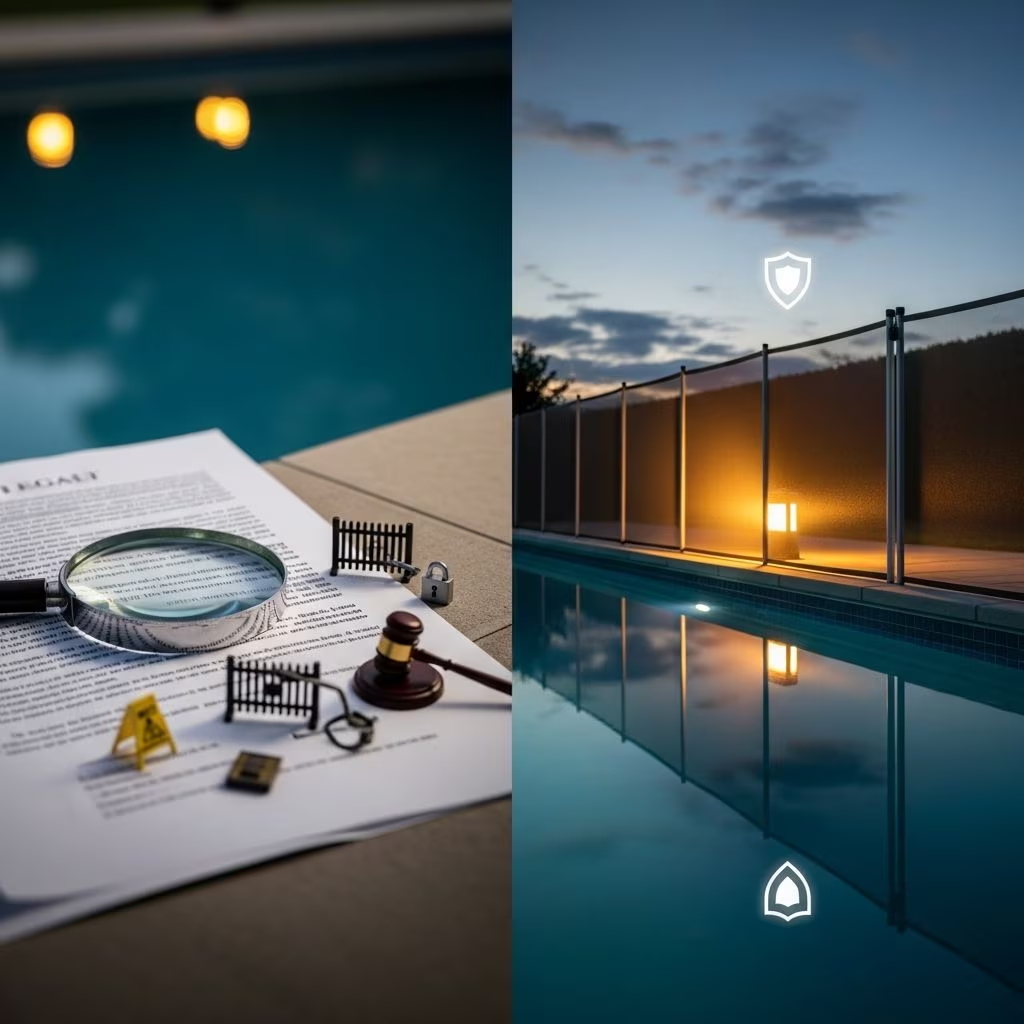
Backyard swimming pools offer endless summer fun for families, but they also introduce significant legal vulnerabilities that can lead to devastating lawsuits. Property owners bear responsibility for injuries occurring on their premises, particularly when pools act as attractive nuisances drawing unsupervised children. Drowning remains the top cause of death for young kids, with most incidents happening in residential settings. This comprehensive guide explores key liability triggers, preventive strategies, and practical steps to fortify your defenses against claims.
Understanding Premises Liability in Pool Contexts
Premises liability holds property owners accountable for harms stemming from unsafe conditions. Pools amplify this risk because they combine water hazards with accessibility issues. Even trespassers can sue if owners fail to implement reasonable safeguards, as courts often prioritize child safety under the attractive nuisance doctrine. This legal principle recognizes that kids are irresistibly drawn to pools, obligating owners to mitigate foreseeable dangers regardless of invitation status.
Common scenarios include slip-and-fall accidents on wet decks, suction entrapments from faulty drains, and unsupervised drownings. Statistics underscore the urgency: children under 5 face the highest drowning peril, often in familiar home environments. Failing to address these can result in multimillion-dollar verdicts, covering medical bills, lost wages, and pain and suffering.
Critical Safety Barriers: Fencing and Enclosures
The cornerstone of pool protection is robust fencing. Four-sided barriers isolating the pool from the home prevent impulsive access by children and pets. Self-closing, self-latching gates with locks add layers of security, complying with many local codes that mandate minimum heights of 4-5 feet.
- Privacy fencing: Obscures the pool from view, reducing its allure to neighborhood kids.
- Non-climbable materials: Avoid chain-link gaps; opt for solid panels or mesh without handholds.
- Gate alarms: Audible alerts for unauthorized openings, especially vital near schools or playgrounds.
Some jurisdictions enforce these via building permits, with non-compliance inviting fines or heightened lawsuit exposure. Regular inspections ensure hardware remains functional, as worn latches have figured in negligence cases.
Advanced Protection: Covers, Alarms, and Drains
Beyond fencing, mechanical aids like automatic covers seal pools when idle, thwarting accidental entries. Retractable systems operated via remote prevent drownings and deter trespassers, proving invaluable in liability defenses.
Pool alarms serve as early warning systems: surface-wave detectors signal disturbances, while door/gate sensors alert to approaches. For in-ground pools, anti-entrapment drain covers are non-negotiable. Powerful suction can pin swimmers underwater, leading to injuries or fatalities. Federal law mandates these on public pools, and savvy owners install them privately to avert claims.
| Feature | Benefits | Legal Impact |
|---|---|---|
| Automatic Cover | Blocks access; retains heat | Strong defense in trespasser suits |
| Drain Covers | Prevents suction entrapment | Complies with safety standards |
| Water Alarms | Detects falls; immediate alerts | Demonstrates due diligence |
Maintenance Obligations to Avoid Negligence Claims
Neglect turns pools into lawsuit magnets. Routine tasks like skimming debris, balancing chemicals, and inspecting equipment are mandatory. Imbalanced pH causes slips on algae-slick surfaces, while faulty pumps lead to electrical shocks. Chemical mishandling injures thousands annually, with kids overrepresented in ER visits.
Document upkeep with logs: test kits for sanitizer levels, professional servicing records, and photos of clean conditions. Toys left floating lure children over barriers, so store them away. Diving boards and slides demand secure anchoring and depth checks to prevent spinal injuries.
Insurance Essentials for Pool Owners
Standard homeowners’ policies may exclude pools or cap coverage inadequately. Disclose your pool to insurers for endorsements boosting liability limits to $500,000+. Umbrella policies provide excess protection, crucial since verdicts often exceed base amounts.
- Review annually post-installation or renovations.
- Seek pool-specific riders for equipment damage.
- Bundle with flood coverage if in prone areas.
Inadequate insurance leaves owners personally liable, eroding assets in protracted litigation.
Supervision Rules and Guest Protocols
Even with barriers, vigilance is key. Designate a sober adult watcher; never assume others are supervising their kids. Post rules: no glassware, no diving in shallows, life jackets for weak swimmers. CPR certification and reachable rescue gear (poles, rings) bolster claims of responsibility.
Host parties? Limit alcohol, enforce buddy systems, and clear the area if stepping away. These habits not only save lives but fortify court defenses by evidencing proactive care.
Navigating Local Regulations and Permits
Ordinances vary: Clark County, NV, boasts 200,000 residential pools under strict fencing mandates. Check municipal codes for setbacks, lighting, and alarms. Violations compound liability, as plaintiffs cite them as negligence proof. Consult attorneys or code officers pre-construction.
Case Studies: Lessons from Real Incidents
In one Florida case, absent fencing led to a toddler’s drowning, resulting in a $2.5M settlement under attractive nuisance. Another involved drain entrapment sans cover, yielding punitive damages. Conversely, compliant owners with covers and alarms have dismissed suits via summary judgment, highlighting prevention’s power.
Frequently Asked Questions
Does homeowners insurance automatically cover pool injuries?
No, pools require explicit listing on policies for liability extensions. Consult your agent to avoid gaps.
What is an attractive nuisance?
A hazardous feature alluring to children, like pools, imposing extra duties on owners to secure it.
Are trespassers suable for pool injuries?
Owners can still be liable if basic safeguards were absent, especially for foreseeable child intrusions.
How often should I inspect my pool?
Daily visuals, weekly chemistry tests, monthly equipment checks, and annual pro servicing.
Can alarms replace fencing?
No, they complement; codes typically demand both for full enclosure.
Proactive Steps for Long-Term Protection
Integrate safety into routines: educate family on rules, train in rescue techniques, and audit annually. Technology like app-monitored cameras adds remote oversight. By prioritizing these, owners transform pools from liabilities into safe havens.
Ultimately, diligence pays dividends. Courts reward evidence of exhaustive precautions, often deterring suits altogether. Invest now to safeguard your oasis and peace of mind.
References
- 3 Ways Homeowners Can Address the Liability Risk That a Pool… — Nathan Cobb Law. 2024-04. https://www.nathancobblaw.com/blog/2024/april/3-ways-homeowners-can-address-the-liability-risk
- Guidelines for Keeping Your Pool Safe and Healthy – CDC — Centers for Disease Control and Prevention. Accessed 2026. https://www.cdc.gov/healthy-swimming/safety/what-you-can-do-to-stay-healthy-in-swimming-pools.html
- Pool Safety: Five Steps to Protect You from Injury Claims — John Flaherty Law. Accessed 2026. https://www.johnsflaherty.com/blog/pool-safety-five-steps-to-protect-you-from-injury-claims
- Summer Swimming Accidents Land People in Hot Water — Paul Powell Law. Accessed 2026. https://paulpowell.com/blog/summer-swimming-accidents/
- Maximizing Pool Safety: Tips to Reduce Liability Risks — Acentria. Accessed 2026. https://acentria.com/maximizing-pool-safety-tips-to-reduce-liability-risks/