
Political Campaign Signs: Legal Protections and Criminal Penalties
Understanding the laws that protect campaign signs and the consequences of removal or damage.
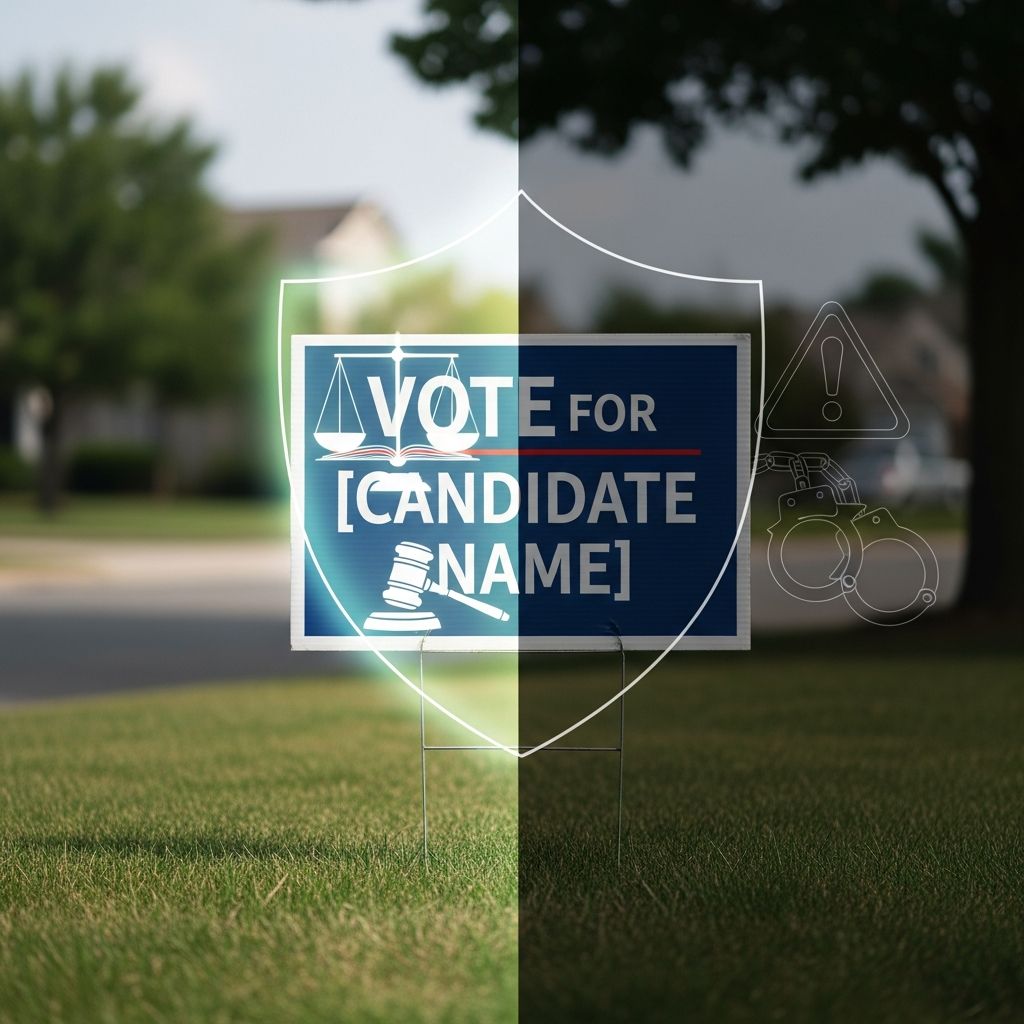
Understanding the Legal Framework Around Political Campaign Signs
Political campaign signs are a ubiquitous feature of the American electoral landscape, appearing in yards, on roadsides, and in public spaces during election seasons. While many people view these signs as temporary fixtures that can be freely removed or altered, the law treats them quite differently. The removal, theft, or vandalization of political campaign signs is subject to serious criminal penalties in all fifty states, despite the absence of federal legislation specifically addressing this issue.
The protection of political signs stems from broader property law principles rather than election-specific statutes in most jurisdictions. Campaign signs, once lawfully placed on property, are considered personal property belonging to the candidate or campaign organization that installed them. This classification means that interfering with them carries the same legal consequences as tampering with any other form of private property.
The Criminal Nature of Campaign Sign Interference
Stealing or vandalizing political campaign signs constitutes criminal conduct in every state across the nation. The specific charge typically falls under the category of misdemeanor offenses, which are less serious than felonies but still carry meaningful penalties. Most states classify the removal or damage of campaign signs as petty theft or property damage, depending on the value of the sign and the specific circumstances of the incident.
The criminality of these actions does not depend on the political affiliation of the candidate whose signs are targeted. Whether the signs promote a Republican, Democratic, or independent candidate, the legal protections remain identical. This equal treatment reflects the principle that the law should remain neutral regarding political speech and should protect all property rights regardless of the political message being conveyed.
State-Specific Legal Provisions and Statutes
While no federal statute prohibits the theft of campaign signs, individual states have enacted legislation specifically designed to protect political advertising. These state laws establish clear prohibitions against removing or defacing lawfully placed political materials, including yard signs and billboards. For example, Washington State’s Revised Code of Washington explicitly criminalizes the removal or defacement of political advertising without authorization, classifying such conduct as a misdemeanor.
The specificity of state legislation varies considerably. Some states maintain dedicated election codes that address campaign sign protection, while others rely on general property crime statutes to prosecute offenders. Regardless of the legislative approach, however, all states recognize the need to protect campaign materials from unauthorized interference.
State laws often define the temporal scope of protection, with many statutes applying heightened protections during specific periods surrounding elections. Some jurisdictions impose sign-tampering regulations only during designated windows before and after election day, providing enhanced legal protections during these critical periods while allowing greater flexibility at other times of year.
Criminal Penalties for Sign Theft and Vandalism
The consequences of stealing or vandalizing political campaign signs can include both monetary fines and incarceration. Offenders charged with these misdemeanors may face jail time ranging from a few days to several months, depending on jurisdiction-specific guidelines and the severity of the offense. Additionally, courts frequently impose financial penalties that can range from modest amounts to several hundred dollars.
The severity of penalties often correlates with the number of signs involved. Many state statutes specify that the removal or defacement of each individual sign constitutes a separate violation, meaning that stealing multiple signs can result in multiple criminal charges. This approach significantly increases the potential penalties for individuals who target numerous campaign signs in a single incident.
Beyond the criminal penalties, individuals convicted of campaign sign theft or vandalism may face additional consequences, including civil liability to the sign owner and potential restitution requirements. The sign owner may pursue civil damages separate from any criminal prosecution, seeking compensation for the cost of replacing the signs and any other losses resulting from the unauthorized removal or damage.
Charges Beyond Simple Theft
Prosecutors have multiple legal avenues available when pursuing charges against individuals who interfere with campaign signs. The most common charge is larceny or theft, which directly addresses the unauthorized taking of another person’s property. However, depending on the circumstances and the nature of the interference, additional charges may apply.
When campaign signs are damaged rather than stolen outright, defendants may face charges related to property damage or vandalism. These charges recognize the intentional destruction or defacement of property belonging to others. In some cases, particularly when signs are removed from locations where their placement is otherwise lawful, defendants may also face trespass charges if the removal occurred on someone else’s property without authorization.
The combination of potential charges means that individuals caught interfering with political signs may face multiple criminal counts stemming from a single incident. This multiplicative charging structure can result in significantly enhanced penalties compared to a single conviction.
Exceptions and Circumstances Allowing Sign Removal
While the general rule prohibits the removal of political campaign signs, important exceptions exist in certain circumstances. Many states recognize that signs placed in locations that pose safety hazards may be subject to removal by appropriate authorities. Signs that obstruct traffic, create visibility problems at intersections, or otherwise compromise public safety may be lawfully removed even without the permission of the sign owner.
Property owners retain the fundamental right to remove signs from their own property. If a campaign sign has been placed on someone’s property without authorization, that property owner may remove it without facing criminal liability. However, property owners should be cautious about signs placed with express or implied permission, as removing such signs could constitute conversion or theft.
Additionally, some jurisdictions impose temporal limitations on the protection afforded to campaign signs. These states may allow unrestricted removal of signs once specified periods have elapsed following an election. The rationale behind such limitations recognizes that campaign materials may lose their relevance and utility after an election concludes, at which point protecting them may no longer serve legitimate public interests.
Placement Requirements and Regulatory Compliance
To receive legal protection, political campaign signs must generally be lawfully placed in accordance with local ordinances and regulations. Most municipalities impose requirements regarding where signs may be positioned, including restrictions on placement in the public right-of-way. Signs must typically be positioned between sidewalks and property lines, or in other locations designated by local law, to receive full legal protection.
Jurisdictions frequently establish regulations limiting sign size, materials, lighting, and duration of display. Campaign signs that fail to comply with these regulations may be subject to removal by municipal authorities without triggering criminal liability. Property owners and campaign organizations must familiarize themselves with local sign ordinances to ensure their materials comply with applicable requirements.
The lawful placement of a campaign sign is a prerequisite for the legal protections discussed throughout this analysis. Signs placed in violation of local ordinances may not receive the same degree of protection as compliant signs, though interference with even non-compliant signs may still constitute criminal conduct in some jurisdictions.
Enforcement and Reporting Mechanisms
Law enforcement agencies bear responsibility for enforcing laws protecting political campaign signs. When signs are stolen or vandalized, victims should report the incidents to local police departments, providing detailed information about the location of the signs, the date and time of removal or damage, and any identifying information about potential perpetrators. Police departments maintain the authority to investigate these reports and pursue criminal charges against identified offenders.
Many communities have established specific reporting procedures for campaign sign-related incidents. Some municipalities maintain hotlines or online reporting systems dedicated to these crimes, allowing citizens to report suspicious activity or known violations without making phone calls to police departments. These streamlined reporting mechanisms facilitate the rapid response by authorities and help deter potential offenders by demonstrating community vigilance.
Surveillance footage from nearby properties or traffic cameras may provide valuable evidence in prosecuting cases involving campaign sign theft or vandalism. Communities are encouraged to maintain records of such incidents and to cooperate fully with law enforcement investigations.
The Intersection of Property Rights and Political Expression
The legal protection of campaign signs reflects the law’s effort to balance competing interests in property rights and political expression. While individuals possess First Amendment rights to express opposition to particular candidates or causes, those rights do not extend to destroying or removing others’ property. The law recognizes that protecting campaign signs does not limit anyone’s ability to express political views through lawful means, such as displaying counter-signs or engaging in peaceful political speech.
Some individuals argue that removing political signs constitutes political expression or protest. However, courts consistently reject this argument, holding that the destruction or theft of property cannot be justified as a form of protected expression. This legal principle applies equally regardless of the political message conveyed by the signs in question.
Practical Implications for Candidates and Campaign Organizations
Candidates and campaign organizations should take proactive steps to protect their yard signs and other campaign materials. This includes obtaining permission from property owners before placing signs, maintaining accurate records of sign locations, and promptly replacing or repairing signs that are damaged or removed. Regular monitoring of sign locations allows campaigns to respond quickly to incidents and to gather evidence useful in criminal prosecutions.
Campaign organizations should also educate their supporters about the legal protections afforded to campaign signs and discourage them from removing opposing candidates’ signs. Supporters who remove opposition signs without authorization expose themselves to criminal liability and potentially embarrass the candidates they support.
Common Questions About Campaign Sign Laws
Q: Is there a federal law against stealing political signs?
A: No federal statute specifically prohibits the theft of campaign signs. However, all fifty states have enacted laws protecting political advertising, including yard signs, and classifying unauthorized removal or defacement as criminal conduct.
Q: What is the typical punishment for stealing a campaign sign?
A: Most states classify campaign sign theft as a misdemeanor punishable by fines and potential jail time. Penalties typically include fines ranging from nominal amounts to several hundred dollars, along with possible incarceration lasting from a few days to several months.
Q: Can a property owner remove a campaign sign from their own yard?
A: Yes, property owners retain the right to remove signs from their own property without authorization from the campaign or candidate. However, if the sign was placed with express or implied permission, removal may constitute conversion or theft.
Q: Does the political affiliation of the sign affect its legal protection?
A: No, the law provides equal protection to all political campaign signs regardless of the candidate or party they promote. Campaign signs supporting any candidate or cause receive identical legal protections against theft and vandalism.
Q: Can municipal authorities remove campaign signs?
A: Yes, local authorities may remove signs that violate local ordinances, obstruct traffic, or pose safety hazards. However, compliant signs placed in authorized locations cannot be removed by municipal authorities without authorization.
Q: Is defacing a sign the same as stealing it legally?
A: No, defacing and stealing constitute separate offenses with distinct legal consequences. Defacing or vandalizing signs typically results in charges related to property damage, while theft charges apply when signs are removed entirely.
Q: How long do campaign sign protections last after an election?
A: The duration of protection varies by jurisdiction. Some states provide year-round protection for lawfully placed campaign signs, while others impose temporal limitations, allowing removal after specified periods following elections.
References
- RCW 29a.84.040: Political advertising, removing or defacing — Washington State Legislature. 2003. https://app.leg.wa.gov/rcw/default.aspx?cite=29a.84.040
- Reminder to Public on Campaign Signs — City of Jamestown, New York. 2023-09-08. https://www.jamestownny.gov/reminder-to-public-on-campaign-signs/
- Election Lawn Sign Theft — Connecticut General Assembly. 2010. https://www.cga.ct.gov/2010/rpt/2010-R-0462.htm
Similar Articles








Read full bio of Sneha Tete




