
Police Trash Searches: Legal Boundaries Explained
Understand when police can search your garbage without a warrant and how to protect your privacy under the Fourth Amendment.
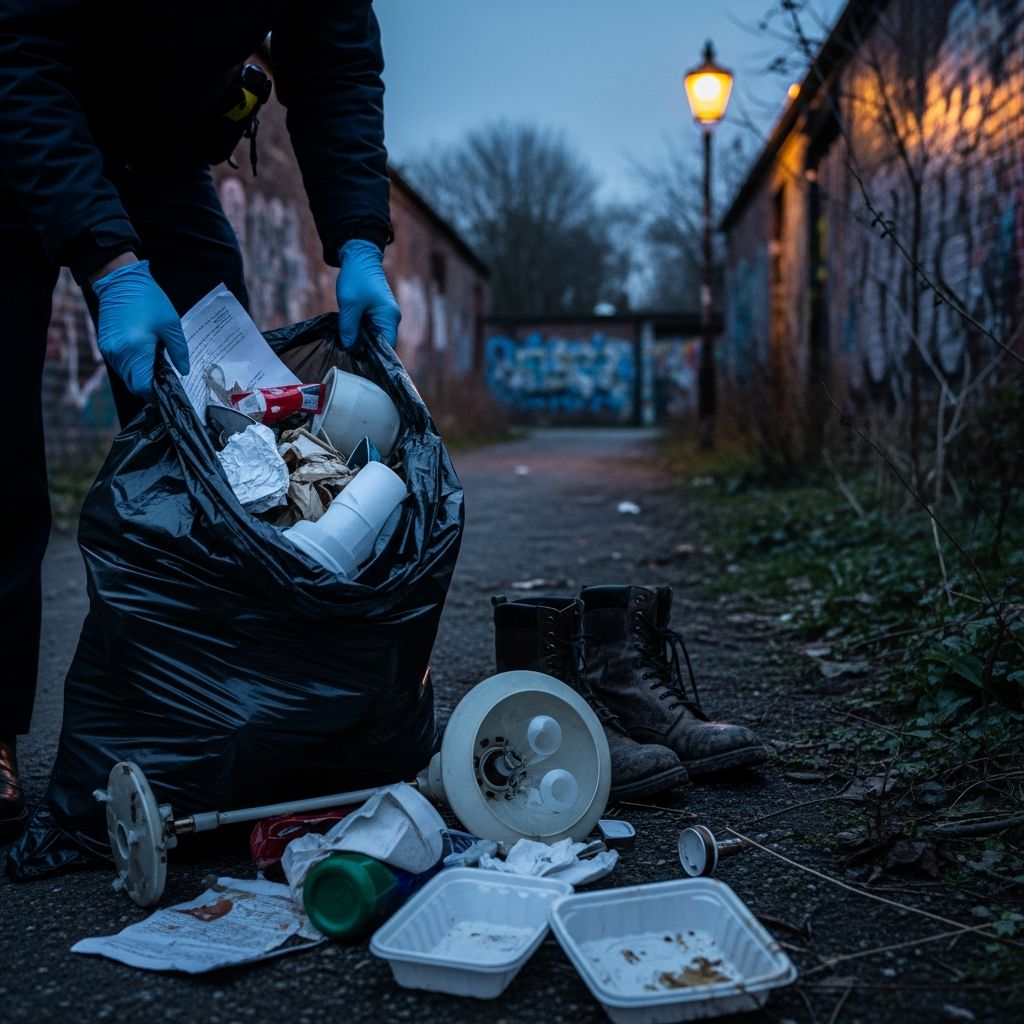
Law enforcement frequently uses discarded waste as a source of evidence in investigations, particularly for drug-related cases. The core question revolves around whether placing garbage curbside relinquishes all privacy rights, allowing unrestricted police access. Under U.S. law, trash left in public areas for collection generally lacks Fourth Amendment protection, enabling warrantless searches by officers.
The Fourth Amendment and Expectations of Privacy
The
Fourth Amendment
safeguards individuals from unreasonable searches and seizures, requiring warrants based on probable cause in most scenarios. However, this protection hinges on a ‘reasonable expectation of privacy.’ Courts assess whether society recognizes an individual’s legitimate privacy interest in the searched area or item.For household waste, privacy expectations diminish significantly once items are discarded for public pickup. This principle stems from the understanding that garbage becomes accessible to sanitation workers, scavengers, and others, undermining claims of seclusion.
- Key Factor: Abandonment – Discarding items signals intent to relinquish ownership and privacy.
- Public Accessibility – Curbside placement exposes contents to communal view.
- No Subjective Privacy Claim – Even sealed bags do not restore protection if left for collection.
Landmark Ruling: California v. Greenwood
The U.S. Supreme Court’s 1988 decision in
California v. Greenwood
(486 U.S. 35) established the precedent for trash searches. Investigators in Laguna Beach, California, received tips about drug activity at Billy Greenwood’s residence. Officers coordinated with trash collectors to retrieve and examine the household’s curbside garbage over several weeks.Analysis revealed drug paraphernalia, including syringes and residue-laden plastic bags. This evidence supported affidavits for search warrants, leading to arrests. Defendants argued the initial trash inspections violated the Fourth Amendment. The Court, in a 6-2 ruling, disagreed, holding that society does not recognize privacy in garbage set out for collection.
Justice Byron White, writing for the majority, noted: ‘It is common knowledge that plastic garbage bags left on or at the side of a public street are readily accessible to animals, children, scavengers, snoops, and other members of the public.’
Defining the Searchable Zone: Curbside vs. Private Property
Location critically determines legality. Trash at the curb or in public view falls outside protected spaces, but proximity to the home invokes ‘curtilage’ doctrine – the area immediately surrounding a dwelling afforded privacy akin to the interior.
| Location | Warrant Required? | Rationale |
|---|---|---|
| Curbside for collection | No | Abandoned property in public domain |
| Inside garage or home | Yes | Core private area under Fourth Amendment |
| Fenced backyard | Generally Yes | Curtilage protection; trespass risk |
| Porch or driveway (non-public) | Usually Yes | Reasonable privacy expectation |
Officers risk suppression of evidence if they trespass to access non-public trash. For instance, entering a closed yard or open garage without consent constitutes an unlawful search.
Practical Applications in Criminal Investigations
‘Trash pulls’ serve as a low-risk investigative tool, often preceding warrants for homes or vehicles. Police target suspected drug operations, recovering packaging materials, ledgers, or biological traces linking to crimes.
In one documented approach, officers monitor collection schedules, donning gloves to sift through bags methodically. A single incriminating item may not suffice for a warrant; courts demand ‘totality of circumstances’ – multiple indicators or corroboration.
- Drug Cases: Baggies, scales, pipes provide probable cause.
- Other Crimes: Documents, receipts, weapons components.
- High-Profile Examples: Used in cases like the Brian Kohberger investigation for trace evidence.
State Variations and Additional Protections
While Greenwood binds federal and most state courts, some jurisdictions interpret constitutions more stringently. However, no widespread state-level overrides exist; curbside trash remains searchable nationwide.
Local ordinances might regulate access, but they rarely impede police. Homeowners associations or private communities could impose rules, though enforcement against law enforcement is uncommon.
Protecting Yourself: Strategies to Minimize Risks
Though complete prevention proves challenging, residents can reduce exposure:
- Secure Storage: Keep bins in garages or behind locked gates until collection morning.
- Incineration or Shredding: Destroy sensitive documents and paraphernalia before disposal.
- Timing: Place cans curbside only hours before pickup to limit exposure windows.
- Legal Consultation: If charged based on trash evidence, challenge chain of custody or location compliance.
These measures do not guarantee immunity but complicate police efforts.
Challenging Trash Evidence in Court
Motions to suppress hinge on procedural errors: improper access, lack of probable cause linkage, or contamination. Successful challenges are rare absent clear violations, as Greenwood grants broad latitude.
Defense attorneys scrutinize whether trash truly belonged to the suspect residence and if officers maintained integrity during handling.
Frequently Asked Questions (FAQs)
Do police always need a warrant for trash searches?
No, not if the trash is curbside for collection; it’s deemed abandoned under California v. Greenwood.
What if my trash is still on my property?
Police typically require a warrant or consent if within curtilage, like a fenced yard or garage.
Can trash evidence alone convict someone?
Rarely; it often builds probable cause for further searches, but courts evaluate totality.
Are there exceptions in apartment complexes?
Communal dumpsters in public-access areas follow similar rules; private locked areas may protect contents.
Does sealing trash bags prevent searches?
No, opacity does not create privacy expectation once abandoned publicly.
Recent Developments and Ongoing Debates
Post-Greenwood, technology like DNA swabbing from cans has expanded trash utility without altering core rulings. Privacy advocates push for reevaluation amid surveillance growth, but no major shifts have occurred.
As of 2026, the precedent endures, balancing investigative needs against minimal privacy claims in waste disposal.
References
- Can Police Legally Search Your Trash Left by the Curb? — Roth Davies LLC. Accessed 2026. https://www.rothdavies.com/criminal-defense/frequently-asked-questions-about-criminal-defense/searches/can-police-legally-search-your-trash-left-by-the-curb
- Can the Police Legally Obtain Evidence from My Trash? — Bhawley Law. 2023-03-21. https://www.bhawleylaw.com/can-the-police-legally-obtain-evidence-from-my-trash/
- Trash as Evidence: Can Police Search Your Garbage for Drugs? — Henley Law. Accessed 2026. https://www.henleylaw.net/blog/trash-as-evidence-can-police-search-your-garbage-for-drugs
- Police Can Search Your Trash Without Infringing on Your Rights — Not Guilty Attorneys. Accessed 2026. https://www.notguiltyattorneys.com/police-can-search-your-trash-without-infringing-on-your-rights/
- Verify: Do police need a warrant to search your trash? — KREM 2 (YouTube). Accessed 2026. https://www.youtube.com/watch?v=YpOy2jGC5N4
- When Can Police Look in Your Trash? — Christopher A. Wellborn, PA. Accessed 2026. https://www.wellbornlawfirm.com/blog/when-can-police-look-in-your-trash/
Similar Articles








Read full bio of Sneha Tete




