
Police Searches of Containers: Your Legal Rights
Understand when police can legally inspect your water bottle or personal items, and how to protect your Fourth Amendment rights effectively.
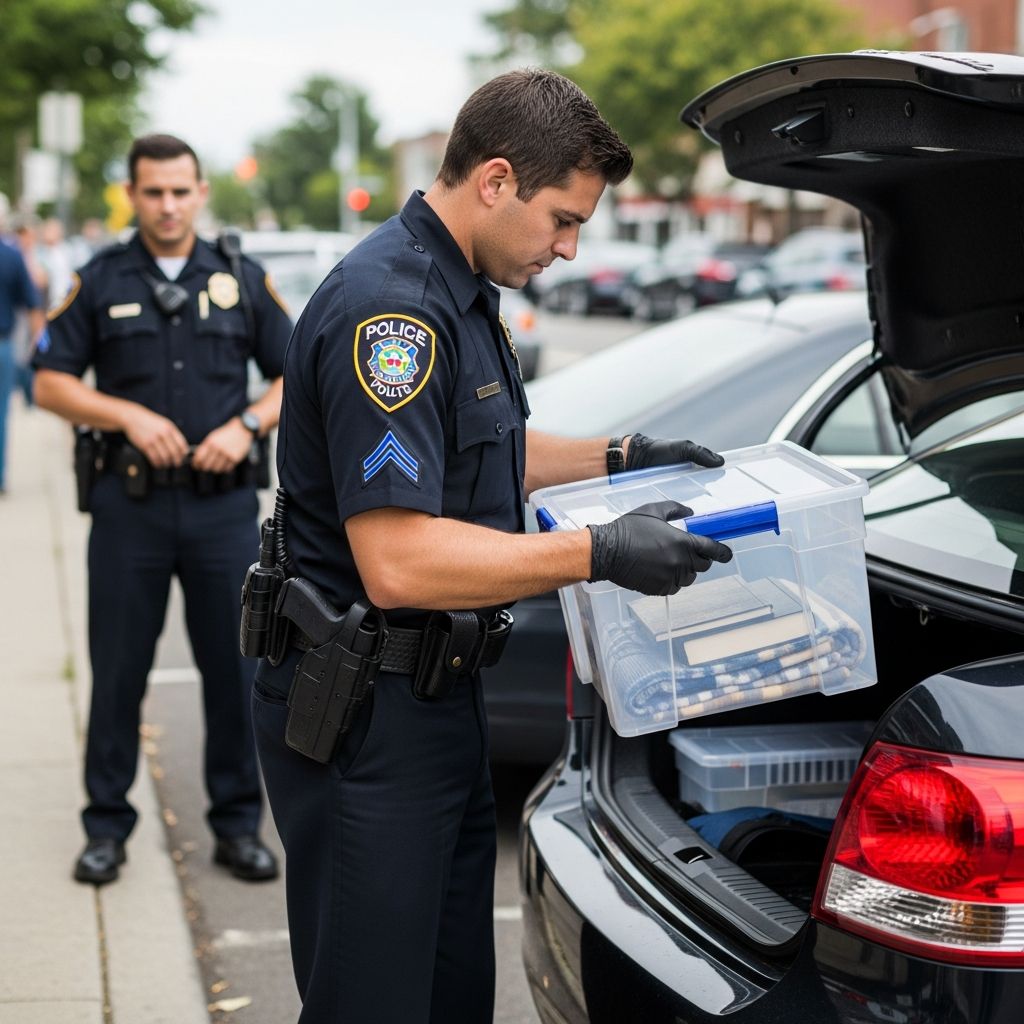
Everyday items like water bottles can become focal points in police encounters, raising critical questions about personal privacy and law enforcement authority. The Fourth Amendment safeguards against unreasonable searches, but exceptions allow officers to inspect containers under specific conditions. This article breaks down the legal framework, scenarios, and practical steps to navigate these situations confidently.
Foundational Legal Standards Governing Searches
The cornerstone of search legality is the Fourth Amendment, which protects individuals from unwarranted intrusions by government agents. For police to examine a closed container such as a water bottle, they typically require either consent, reasonable suspicion, or probable cause. Reasonable suspicion involves specific, articulable facts suggesting criminal activity, permitting brief investigative stops known as Terry stops. Probable cause, a higher threshold, justifies arrests or warrantless searches when facts would lead a prudent person to believe a crime has occurred or is imminent.
In practice, these standards prevent arbitrary fishing expeditions. Officers cannot search based on mere hunches; they must point to observable behaviors, odors, or circumstances. For instance, slurred speech or an alcohol smell might establish reasonable suspicion for inspecting a suspicious bottle in public. Without these, any discovered evidence risks suppression in court.
Navigating Police Requests in Public Spaces
Public areas like parks, beaches, or streets offer reduced privacy expectations compared to homes. Nonetheless, officers need reasonable suspicion to search personal belongings. If an officer observes you stumbling or detects liquor odor from a group, they may approach and request to check your water bottle. Politely declining consent preserves your rights, as non-consensual searches demand justification.
Refusal does not mandate compliance, but it may escalate the encounter. Officers might then seek a warrant or rely on probable cause. Evidence from improper searches can be challenged via a motion to suppress, potentially dismissing charges. Key advice: remain calm, assert ‘I do not consent to searches,’ and avoid physical resistance.
- Observe officer behavior for signs of reasonable suspicion, such as noted intoxication indicators.
- Document the interaction mentally or via bystander video if safe.
- Contact legal counsel immediately post-encounter to evaluate evidence admissibility.
Vehicle Stops and Container Inspections
Traffic stops heighten search risks due to automobile exception doctrines. While vehicles warrant less privacy, officers still need probable cause or consent for thorough searches. A water bottle in plain view during a DUI suspicion stop—say, after failing a field sobriety test—may prompt inspection if it appears tampered or smells of alcohol.
Post-arrest, inventory searches of impounded vehicles are routine and warrantless, covering all containers. Drivers should lock valuables out of sight beforehand. During stops, consent requests are common; declining can limit scope unless contraband is visible or smelled.
| Scenario | Required Legal Basis | Potential Outcomes |
|---|---|---|
| Plain view bottle during DUI stop | Probable cause from breath test (e.g., 0.09 BAC) | Legal search; open container charge possible |
| Routine traffic violation | Consent or probable cause | Limited to vehicle exterior unless escalated |
| Post-arrest inventory | No warrant needed | Full container access for cataloging |
Special Rules at Events and Venues
Concerts, stadiums, and festivals often feature bag checks via implied consent. By purchasing tickets and entering, attendees waive certain privacy rights, allowing security—sometimes police—to scan opaque containers for prohibited items like alcohol or weapons. This stems from private property rules and event policies, not direct Fourth Amendment application.
Unlike streets, refusal here may bar entry without further legal recourse. Transparent bottles or no containers sidestep issues. For alcohol-free venues, even water bottles might face scent checks if suspicion arises.
Consequences of Unlawful Searches
Violating search protocols leads to the exclusionary rule, barring tainted evidence from trials. Courts scrutinize officer justifications; vague claims like ‘it looked suspicious’ fail. Successful suppression motions not only drop cases but deter future abuses via the fruits of the poisonous tree doctrine, invalidating derivative evidence.
Recent cases underscore this: In a 2023 federal ruling, a bottle search absent odor or behavior evidence was deemed unconstitutional, freeing the defendant. Always consult attorneys to file timely motions, as deadlines are strict.
Practical Strategies to Protect Yourself
Knowledge empowers during encounters. Carry ID, know local open-container laws, and use clear bottles to minimize suspicion. If searched unlawfully, note details: time, location, officer name/badge, stated reasons.
- Stay composed: Agitation can create probable cause.
- Invoke rights: ‘I consent to no searches without a warrant.’
- Seek witnesses: Public settings aid corroboration.
- Post-incident: Retain a criminal defense specialist for review.
Beyond bottles, these principles apply to bags, cups, or coolers. Proactive awareness reduces risks.
State Variations and Emerging Trends
Laws differ by jurisdiction. Dry counties ban public alcohol outright, heightening scrutiny. Some states mandate field tests before container openings. Track local statutes, as marijuana legalization alters suspicion thresholds—odor alone may no longer suffice.
Body cameras and civil lawsuits push accountability, with qualified immunity shields waning in egregious violations.
Frequently Asked Questions
Can police search my water bottle without permission?
Generally no, unless they have reasonable suspicion or probable cause. Consent overrides this; decline politely to protect rights.
What if I’m just walking in public with a bottle?
Officers need articulable facts like intoxication signs. Random checks violate the Fourth Amendment.
Does a traffic stop allow automatic bottle searches?
No—probable cause or arrest required. Visible contraband or strong odors justify it.
What happens at concerts or sports events?
Implied consent via entry policies permits checks for safety.
Can I refuse and still avoid arrest?
Yes, refusal alone isn’t probable cause. Escalation depends on circumstances.
Is evidence from illegal searches usable?
Typically excluded via suppression motions, per exclusionary rule.
References
- Do Police Officers Have the Right to Search Water Bottles? — Camarata Law. 2018-02-16. https://www.camaratalaw.com/blog/2018/february/do-police-officers-have-the-right-to-search-wate/
- When Are Police Allowed to Search My Water Bottle? — Sam Shapiro Law Office. 2018-02. https://www.samshapirolawoffice.com/blog/2018/02/when-are-police-allowed-to-search-my-water-bottle/
- Can Police Check the Contents of Your Water Bottle? — Ashley Cannon Law. 2017-11-23. https://www.ashleycannonlaw.com/blog/can-police-check-the-contents-of-your-water-bottle/
- Probable Cause and Reasonable Suspicion — Maricopa County Government (.gov). Accessed 2026. https://www.maricopa.gov/5233/Probable-Cause-and-Reasonable-Suspicion
Similar Articles








Read full bio of Sneha Tete




