
Police Reform Backlash: Progress and Pushback
Exploring the nationwide tension between advancing police accountability and legislative resistance five years after George Floyd.
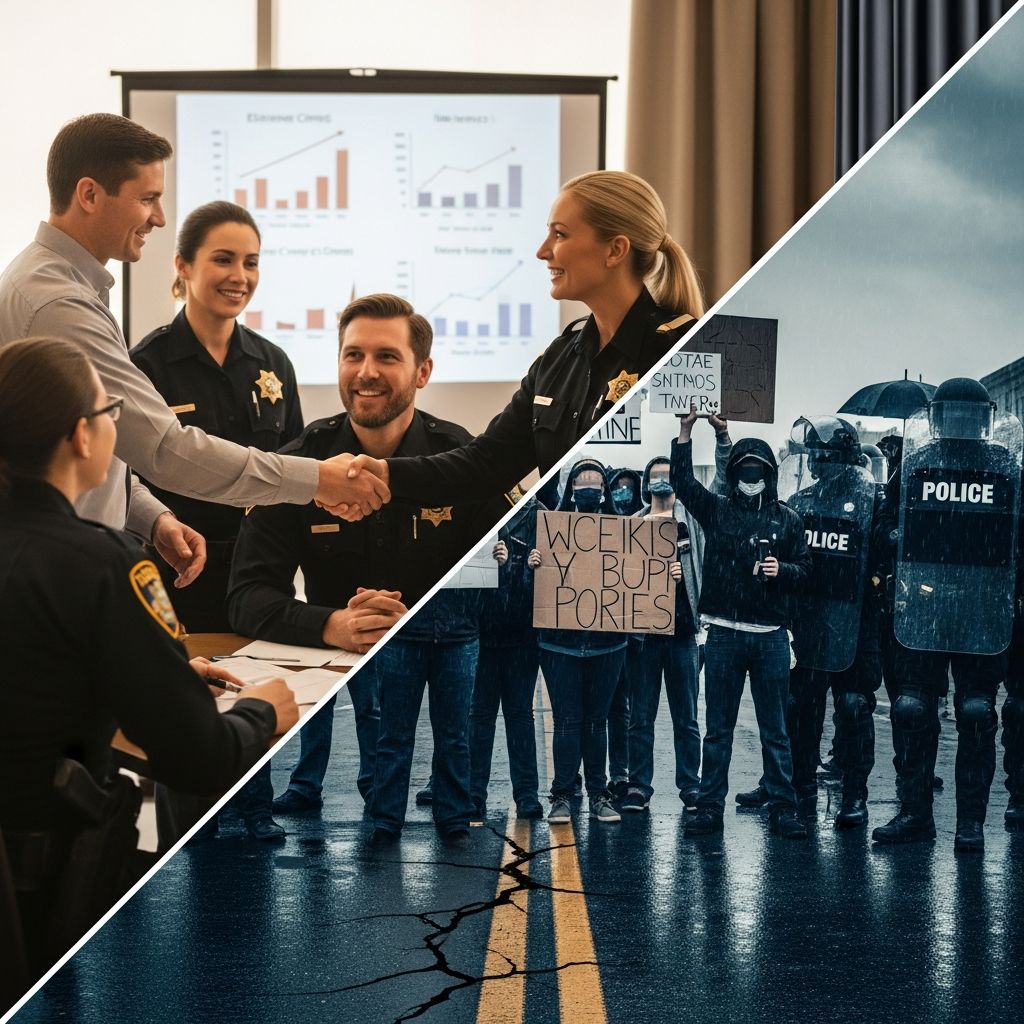
Five years after the tragic killing of George Floyd on May 25, 2020, the United States continues to grapple with profound questions about policing practices, accountability, and community trust. What began as a nationwide call for systemic change has evolved into a complex landscape of legislative victories, stalled initiatives, and notable backlashes. While some states have enacted meaningful reforms to enhance officer accountability and reduce excessive force, others are witnessing reversals driven by concerns over rising crime rates and law enforcement morale. This article delves into the current state of police reform, analyzing key developments, opposition dynamics, and future implications.
The Spark of 2020: From Protests to Policy Proposals
The death of George Floyd under the knee of Minneapolis police officer Derek Chauvin ignited unprecedented protests across the country, amplifying longstanding grievances about racial disparities in policing. These demonstrations, coupled with similar outrage over cases like Breonna Taylor and Philando Castile, pressured lawmakers at every level to address entrenched issues such as use of force, racial profiling, and lack of oversight.
In the immediate aftermath, at least 30 states and Washington, DC, passed statewide legislative reforms aimed at standardizing policing practices and bolstering accountability. Common measures included bans on chokeholds, mandates for body cameras, and requirements for officers to intervene in cases of excessive force by colleagues. For instance, reforms directly tied to Floyd’s killing addressed no-knock warrants, neck restraints, and duty-to-intervene protocols in 25 states and DC.
State-Level Advances: Michigan’s Lame-Duck Push
Michigan exemplifies the ongoing momentum for reform even as political windows narrow. As of late 2024, Democratic lawmakers raced against time in a lame-duck session to pass a comprehensive package before Republicans assumed control. Key bills proposed establishing a ‘duty to intervene,’ where officers must stop colleagues from using excessive force, alongside restrictions on no-knock warrants and expanded training requirements.
A coalition of 27 social justice organizations urged passage, arguing these changes would mitigate risks to unarmed individuals, curb bias, and rebuild community trust. Despite opposition from groups like the Michigan Sheriffs’ Association and Chiefs of Police, who criticized mandates like 24 hours of biennial training on implicit bias and crisis intervention, proponents like Sen. Chang noted this session marked the closest progress yet.
- Duty to Intervene: Officers required to stop unlawful force.
- No-Knock Restrictions: Limits on unannounced entries to prevent tragedies like Breonna Taylor’s.
- Training Mandates: Annual focus on de-escalation and behavioral health.
- Body Camera Rules: Criminal penalties for intentional failures to activate.
House Democrats advanced their package on party lines, but securing full caucus support remained uncertain, highlighting internal and bipartisan tensions.
Rollbacks and Reversals: A National Trend
While some areas push forward, many states are retreating from 2020-era ambitions. In Alabama, the ‘Back the Blue’ law expanded police immunity shortly after a flood of accountability proposals. West Virginia now allows officers to count school-based training toward mandates, reversing calls to remove police from schools. Minnesota’s prominent bail fund has scaled back, reflecting shifting priorities.
Civilian oversight boards, once a cornerstone of reform, face dismantling. New York’s Rochester board lost investigatory powers, limited to policy recommendations. Baltimore’s accountability board struggles with basic access to complaints,陷入 an identity crisis. Federal consent decrees, tools for systemic change, are jeopardized under shifting administrations, with DOJ pullbacks in New Orleans and stalled talks in Minneapolis.
| State | Reform Advance | Backlash Example |
|---|---|---|
| Michigan | Duty to intervene bills | Law enforcement opposition to training mandates |
| Alabama | Initial accountability push | Back the Blue immunity expansion |
| New York | Oversight boards created | Rochester board powers stripped |
| Illinois | Post-Floyd protests | Debates over defunding effectiveness |
Core Tensions: Accountability vs. Public Safety
Opposition often stems from fears that reforms undermine officer effectiveness amid rising crime. Law enforcement leaders argue measures like mandatory body camera activation could deter adoption, while intensive training burdens small departments. In Michigan, sheriffs opposed criminalizing body cam failures, claiming it disincentivizes technology.
Defunding debates further polarize: Advocates seek reallocations to social services for mental health and violence prevention, citing reduced over-policing risks. Critics point to reversals, like Minneapolis hiring more officers after failed disbandment attempts, as evidence of impracticality. Research reviews highlight mixed effectiveness, with high-profile incidents eroding trust but reforms’ impacts varying by implementation.
Federal Stalemate and Broader Implications
At the federal level, the George Floyd Justice in Policing Act (JPA) remains stalled, despite addressing profiling, force, and a national misconduct database. States have filled gaps on ‘wandering officers’ via decertification, but interstate mobility persists without federal incentives.
Recent Supreme Court rulings may ease civil suits against officers, potentially balancing accountability pushes. Ballot initiatives in 18 localities have strengthened oversight, showing citizen-driven progress.
Training and Oversight: Pillars Under Scrutiny
Mandatory training on implicit bias, procedural justice, and crisis intervention aims to humanize interactions, particularly with mentally ill individuals. Yet, groups like Michigan’s police associations decry the 24-hour biennial requirement as excessive. Oversight evolution—from robust civilian boards to neutered recommendatory roles—underscores backlash intensity.
Effectiveness studies urge evidence-based approaches: Reforms must pair accountability with resources to avoid unintended consequences like lowered morale or recruitment crises.
Public Opinion and Crime Concerns
Post-2020, support for reforms waned as crime spiked, fueling rollbacks in Louisiana, New York, and beyond. Youth detention rises coincide with stalled efforts, complicating narratives. Polls reflect divided views: Majorities back body cams and bans on chokeholds, but resist perceived ‘soft-on-crime’ measures.
Path Forward: Balancing Act Required
Sustainable reform demands compromise—enhancing accountability without crippling enforcement. Bipartisan wins, like Michigan’s potential Senate support, offer hope. Community investments, data-driven training, and national standards could bridge divides, ensuring lessons from 2020 endure.
Frequently Asked Questions (FAQs)
What triggered the recent wave of police reform efforts?
The killing of George Floyd in 2020 sparked nationwide protests, leading to legislative actions in over 30 states focusing on use of force and oversight.
Why are some reforms facing backlash now?
Rising crime concerns and law enforcement opposition to mandates like extra training have prompted rollbacks in states like Alabama and New York.
Are civilian oversight boards effective?
Many face legal challenges; Rochester’s lost investigatory power, showing political headwinds despite initial popularity.
What is a ‘duty to intervene’ policy?
It requires officers to stop colleagues using excessive force, part of packages in states like Michigan.
Has defunding the police worked?
Many cities reversed cuts, like Minneapolis recruiting more officers, with mixed research on outcomes.
References
- Four years after George Floyd, Michigan lawmakers push police reforms in lame duck — Bridge Michigan. 2024-12. https://bridgemi.com/michigan-government/four-years-after-george-floyd-michigan-lawmakers-push-police-reforms-lame-duck/
- Five Years After George Floyd’s Murder, Police Reforms Are Rolled Back — The Marshall Project. 2025-05-17. https://www.themarshallproject.org/2025/05/17/george-floyd-police-reforms-stall
- State Policing Reforms Since George Floyd’s Murder — Brennan Center for Justice. 2021. https://www.brennancenter.org/our-work/research-reports/state-policing-reforms-george-floyds-murder
- The Effectiveness and Implications of Police Reform: A Review of the Literature — Illinois Criminal Justice Information Authority. 2023. https://icjia.illinois.gov/researchhub/articles/the-effectiveness-and-implications-of-police-reform-a-review-of-the-literature
- Backlash on Reform Due to Concerns About Crime — The Marshall Project. 2025-03-29. https://www.themarshallproject.org/records/11987-backlash-on-reform-due-to-concerns-about-crime
Similar Articles








Read full bio of Sneha Tete




