
Police Questioning Minors: Parental Rights Explained
Understand when law enforcement can interrogate children without guardians present and how to safeguard your child's legal rights effectively.
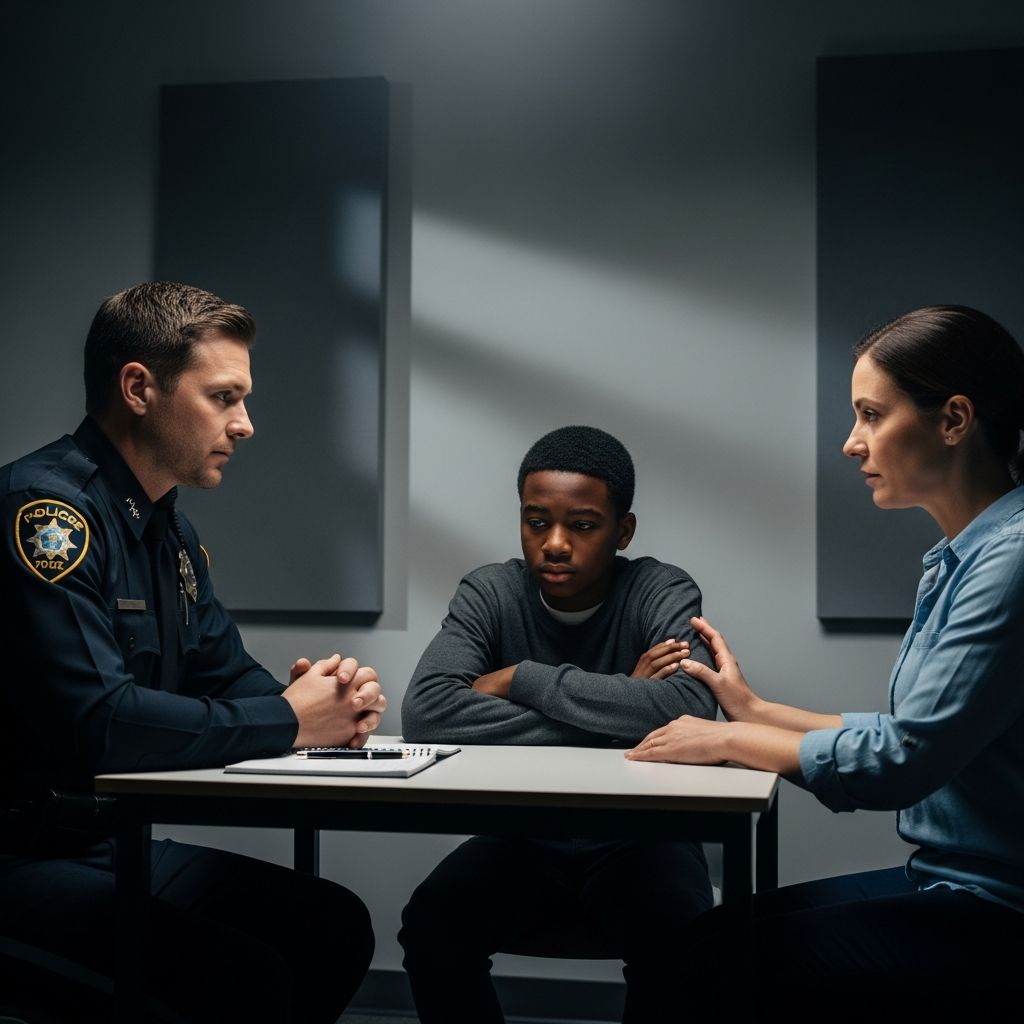
Law enforcement officers hold significant authority when investigating crimes involving young individuals, but strict legal boundaries govern interactions with minors. Parents often face anxiety upon discovering their child has been questioned by police without their knowledge or presence. This article delves into the legal framework surrounding these encounters, clarifying when officers may proceed independently, the protections afforded to children, and actionable strategies for guardians to navigate such situations.
Legal Foundations of Juvenile Interrogations
The U.S. Constitution extends core protections to all individuals, including those under 18, during police interactions. The Fifth Amendment safeguards against self-incrimination, while the Sixth Amendment guarantees the right to counsel. For minors, these rights are activated through the Miranda warnings, which must be administered if a child is in custody and subjected to interrogation.
According to established Supreme Court precedents, such as Miranda v. Arizona (1966), officers must inform suspects of their right to remain silent and to have an attorney present. Juveniles receive these advisements, but courts scrutinize waivers more closely due to their age and developmental stage. A child’s apparent understanding does not always equate to a valid waiver, especially if coercion or deception is involved.
When Can Officers Approach Children Without Guardians?
Police interactions with minors fall into distinct categories, each with varying requirements for parental involvement. Non-custodial conversations, such as casual inquiries at school or in public, generally do not necessitate parental notification or presence. Officers may ask basic questions to gather information without triggering Miranda requirements, provided the child feels free to leave.
Custodial interrogations—where a minor is detained and not free to go—demand stricter protocols. Here, Miranda warnings are mandatory. If the child waives these rights voluntarily, questioning can proceed without parents. However, validity hinges on factors like the child’s age, maturity, and whether officers used manipulative tactics.
- Non-Custodial Settings: Schools, parks, or streets—parents need not be present.
- Custodial Scenarios: Stations, detention—Miranda required; parental notification often follows but not always before questioning.
- School-Based Questioning: Officers can interview students on campus without consent in many states, especially for serious allegations.
State Variations in Protocols for Minors
While federal law sets the baseline, states impose additional safeguards. Some mandate parental notification before or during custodial questioning, others require consent for interviews under specific ages. For instance:
| State Example | Key Rule | Parental Role |
|---|---|---|
| California | Notification post-custody | Not required pre-questioning |
| Indiana | Hearing within 48 hours | Presence encouraged but not mandatory |
| Virginia | Allows school interviews | No prior consent needed |
| General U.S. | Miranda for custody | Waiver possible without parents |
These differences underscore the importance of local legal knowledge. Parents should consult jurisdiction-specific statutes to understand obligations.
Risks of Children Waiving Rights During Questioning
Minors often lack the judgment to grasp long-term consequences, making them susceptible to pressure. Officers may employ tactics like minimization (downplaying the offense) or maximization (exaggerating penalties) to elicit confessions. Statistics from juvenile defense analyses reveal that false confessions occur in up to 42% of wrongful conviction cases involving youth, highlighting vulnerability.
Once a statement is given, it can form the backbone of prosecution, even if later challenged. Parents must preemptively educate children: invoke silence, demand a lawyer, and request parental presence.
Practical Steps for Parents When Police Contact Occurs
Immediate action preserves rights. If notified of an investigation:
- Remain Calm and Assertive: Politely decline speaking until consulting an attorney.
- Instruct Your Child: Teach them to say, “I want my parent and a lawyer before answering questions.”
- Arrive Promptly: If at a station, go immediately but do not consent to questioning without counsel.
- Hire Juvenile Specialist: Seek attorneys experienced in youth cases for tailored defense.
- Document Everything: Note times, officers’ names, and details of interactions.
For school scenarios, inform administrators of your policy against unsupervised police talks. Some districts require parental consent for on-campus interviews.
Challenging Improper Juvenile Statements in Court
Not all confessions hold up. Defense attorneys frequently move to suppress statements via motions to suppress if:
- Miranda warnings were inadequate or omitted.
- The child was coerced through promises or threats.
- Waiver lacked voluntariness, considering age and intelligence.
- Parents were deliberately excluded in violation of state law.
Courts apply a “totality of circumstances” test, weighing these elements. Successful challenges can exclude evidence, weakening the prosecution’s case.
Special Circumstances: Abuse Investigations and CPS Involvement
In cases of suspected child abuse or neglect, officers or Child Protective Services (CPS) may interview minors privately to prevent coaching or intimidation by accused parents. Here, parental exclusion is standard and legally protected to ensure truthful disclosures. Refusal to cooperate with CPS can escalate to removal proceedings.
Parents in these situations should still secure counsel, as statements can influence both criminal and family court outcomes.
Educating Youth on Interactions with Law Enforcement
Proactive parenting includes role-playing scenarios. Teach children:
- Basic identification only—no details on events.
- The phrase: “I invoke my right to remain silent and want a lawyer.”
- That police may lie about evidence or parental presence to encourage talking.
Resources from legal aid organizations offer age-appropriate guides to reinforce these lessons.
Frequently Asked Questions (FAQs)
Can police question my 12-year-old at school without calling me?
Yes, in most states, officers can conduct non-custodial interviews at school without prior parental notification, particularly for witness statements or urgent matters.
What if my child already confessed—can it be thrown out?
Often yes, if Miranda was mishandled, coercion occurred, or the waiver was involuntary due to youth. A lawyer can file to suppress it.
Do all states require parental consent for minor interrogations?
No, federal law does not; some states do for custody, but many allow waivers without parents.
Should I let police search my child’s belongings?
Never consent without a warrant; politely refuse and contact an attorney.
How soon must I be notified if my child is detained?
Varies by state; often immediate reasonable efforts, with hearings within 24-48 hours.
Conclusion: Empowering Parents and Protecting Youth
Navigating police interactions with minors demands vigilance and knowledge. By understanding rights, state rules, and response protocols, parents can shield children from unintended legal pitfalls. Always prioritize legal representation—it’s the strongest defense in juvenile matters.
References
- Can police question kids w/o the parents present? — Shouse Law Group. 2023. http://www.shouselaw.com/juvenile-interrogation.html
- Can police question a child without a parent present? — Terry Sherman Law. 2024-10-15. https://www.terrysherman-law.com/can-police-question-a-child-without-a-parent-present/
- Can Police Question Your Children Without You There? — Rhodes Criminal Law. 2025-12-01. https://www.rhodescriminallaw.com/blog/2025/12/can-police-question-your-children-without-you-there/
- Is it appropriate for an officer to speak with a 10-year-old without a parent? — Justia Answers. 2026-03-03. https://answers.justia.com/question/2026/03/03/is-it-appropriate-for-an-officer-to-spea-1106164
- The Police Are Questioning Your Child – What Should You Do? — Nice Law Firm. 2024. https://nicelawfirm.com/resources/blog/the-police-are-questioning-your-child-what-should-you-do/
- What to Do If the Police Want to Question Your Child — Juba Law Office. 2023. http://jubalawoffice.com/what-to-do-if-the-police-want-to-question-your-child/
Similar Articles








Read full bio of Sneha Tete




