
Police Cooler Searches at the Beach: Know Your Rights
Understand when police can legally search your beach cooler and how to protect your Fourth Amendment rights during summer outings.
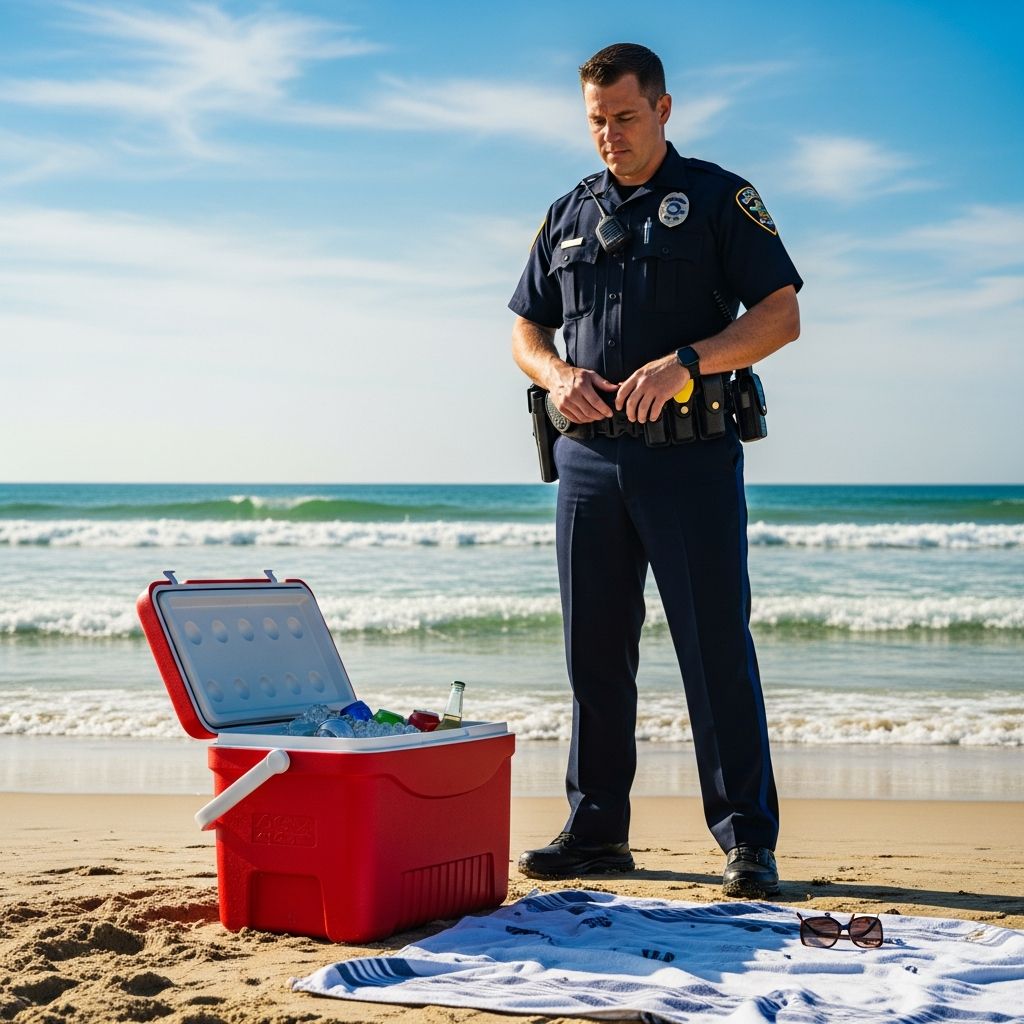
Public beaches offer relaxation and recreation, but encounters with law enforcement over personal items like coolers can turn a pleasant day sour. Understanding the legal boundaries of police authority is crucial for protecting your privacy and avoiding unnecessary confrontations. This article delves into the key principles governing such searches, drawing from constitutional protections and real-world applications.
Foundational Legal Protections Against Unreasonable Searches
The
Fourth Amendment
to the U.S. Constitution stands as the primary shield against unwarranted government intrusions into personal privacy. It explicitly prohibits unreasonable searches and seizures, requiring warrants supported by probable cause in most cases. This protection extends to personal belongings, including coolers at beaches, which are considered private property even in public settings.At public venues like beaches, the expectation of privacy is somewhat diminished compared to one’s home, but it does not vanish entirely. Courts have consistently ruled that individuals retain a reasonable expectation of privacy in closed containers such as coolers, bags, or bottles. Law enforcement must therefore justify any search under specific exceptions to the warrant requirement.
- Warrant Requirement Baseline: Absent exceptions, police need a judicial warrant describing the place or item to be searched.
- Public Space Nuance: Being in a public area lowers but does not eliminate privacy rights for sealed personal effects.
- Container Protection: Coolers are treated like luggage or purses—searches demand legal justification.
When Consent Unlocks Your Cooler
One of the most common pathways for police to search a beach cooler is through
voluntary consent
. Officers frequently request permission during routine interactions, such as checking for beach bans on alcohol or glass containers. Providing consent waives Fourth Amendment protections, allowing a full search without further justification.Importantly, consent must be knowing and voluntary, free from coercion. Courts evaluate factors like the officer’s tone, presence of weapons, and your freedom to leave. Simply saying “no” is your right and does not imply guilt.
| Scenario | Consent Implication | Recommended Response |
|---|---|---|
| Polite request during patrol | May be voluntary if no pressure | “I do not consent to any searches.” |
| After observing open alcohol | Consent not needed if probable cause exists | Comply calmly; challenge later |
| Multiple officers surrounding you | Potentially coercive | Politely decline and note details |
Refusing consent preserves your rights but may prompt officers to seek other grounds for a search. Always remain calm—escalation can lead to arrests for unrelated charges.
Probable Cause: The Threshold for Warrantless Searches
If consent is absent,
probable cause
becomes the next critical threshold. This legal standard requires specific, articulable facts suggesting that a crime has occurred or evidence of illegality is present in the cooler. Examples at beaches include visible alcohol consumption where prohibited, strong odors of marijuana, or erratic behavior indicative of intoxication.Probable cause must be more than mere suspicion; it demands objective evidence. For instance, spotting an open beer can nearby could justify searching your cooler if linked to you. However, a hunch or general beach patrol does not suffice.
- Common Triggers: Open containers, underage drinking signs, cannabis smells in legal/illegal contexts.
- Beach-Specific Rules: Many locales ban alcohol, glass, or fires, heightening enforcement.
- Scope Limitation: Search confined to suspected crime evidence, not fishing expeditions.
Search Incident to Arrest: Post-Detention Realities
Once arrested—even for minor infractions like public intoxication or beach ordinance violations—police gain broad authority to search your person and immediate surroundings, including coolers within your control. This “search incident to arrest” exception ensures officer safety and prevents evidence destruction.
The U.S. Supreme Court in cases like Chimel v. California defined the searchable area as within the arrestee’s immediate grasp. A cooler at your feet qualifies, allowing a thorough inventory without a warrant.
Key distinctions:
- Pre-Arrest: Higher barriers (consent or probable cause).
- Post-Arrest: Automatic for safety and evidence preservation.
- Inventory vs. Investigatory: Post-seizure inventories follow standardized procedures to protect property.
Beach Regulations and Their Impact on Police Actions
Local ordinances significantly influence search encounters. Numerous coastal areas prohibit alcohol, smoking, or certain containers to maintain public safety and cleanliness. Violating these can provide probable cause swiftly.
| Beach Type | Common Bans | Enforcement Level |
|---|---|---|
| State Parks | Alcohol, glass, fires | High; rangers patrol actively |
| Municipal Beaches | Alcohol after hours, dogs | Moderate; seasonal focus |
| Private Resorts | Varies; often stricter | Security + police |
Compliance avoids most issues. Research rules via local government sites before heading out.
Practical Strategies to Minimize Search Risks
Proactive steps empower beachgoers:
- Choose Compliant Items: Use plastic bottles; avoid banned substances.
- Secure Belongings: Lock coolers; keep valuables hidden.
- Know Local Laws: Check apps or signs for restrictions.
- Document Interactions: Film politely if safe; note badge numbers.
- Seek Counsel Promptly: If searched illegally, contact a defense attorney immediately.
Never physically resist—courts, not streets, resolve disputes.
Challenging Unlawful Searches in Court
If police search without valid consent, probable cause, or arrest, evidence may be suppressed via a motion to suppress. Success hinges on proving the violation, often requiring witness testimony, body cam footage, or legal expertise.
Outcomes include dismissed charges or plea bargains. Statistics from the Bureau of Justice show thousands of cases annually involve search disputes, with varying success based on jurisdiction.
Frequently Asked Questions (FAQs)
Can police search my cooler just because I’m at the beach?
No, they need consent, probable cause, or an arrest. General presence isn’t enough.
What if I say no to a search request?
You can refuse politely. Officers may then seek other grounds or end the interaction.
Does marijuana legalization change beach search rules?
Not necessarily—local bans may still apply, providing cause for searches.
Are private beaches different?
Yes, property owners can set rules and involve police more readily.
What should I do if arrested over a cooler search?
Invoke rights silently; request an attorney; avoid statements.
State Variations in Beach Enforcement
Laws differ by state. California beaches often enforce strict no-alcohol policies, while Florida permits in designated areas. Always verify specifics.
In summary, awareness of rights transforms potential conflicts into manageable situations. Enjoy the beach responsibly.
References
- Fourth Amendment to the United States Constitution — U.S. National Archives and Records Administration. Ratified 1791 (timeless authority). https://www.archives.gov/founding-docs/bill-of-rights-transcript
- Chimel v. California, 395 U.S. 752 (1969) — Supreme Court of the United States. 1969-06-23. https://www.oyez.org/cases/1968/812
- California v. Acevedo, 500 U.S. 565 (1991) — Supreme Court of the United States. 1991-05-30. https://www.oyez.org/cases/1990/89-120
- Beach Alcohol Regulations — National Park Service. 2024-01-15. https://www.nps.gov/subjects/beaches/alcohol.htm
- Probable Cause Standards — U.S. Department of Justice, Federal Bureau of Investigation. 2023-08-10. https://www.justice.gov/archives/jm/criminal-resource-manual-205-search-seizure-probable-cause
Similar Articles








Read full bio of medha deb




