
Can Police Open Your Mail: 5 Legal Exceptions And Protections
Unravel the legal limits on law enforcement's ability to inspect, open, or monitor your postal mail and packages without violating privacy rights.
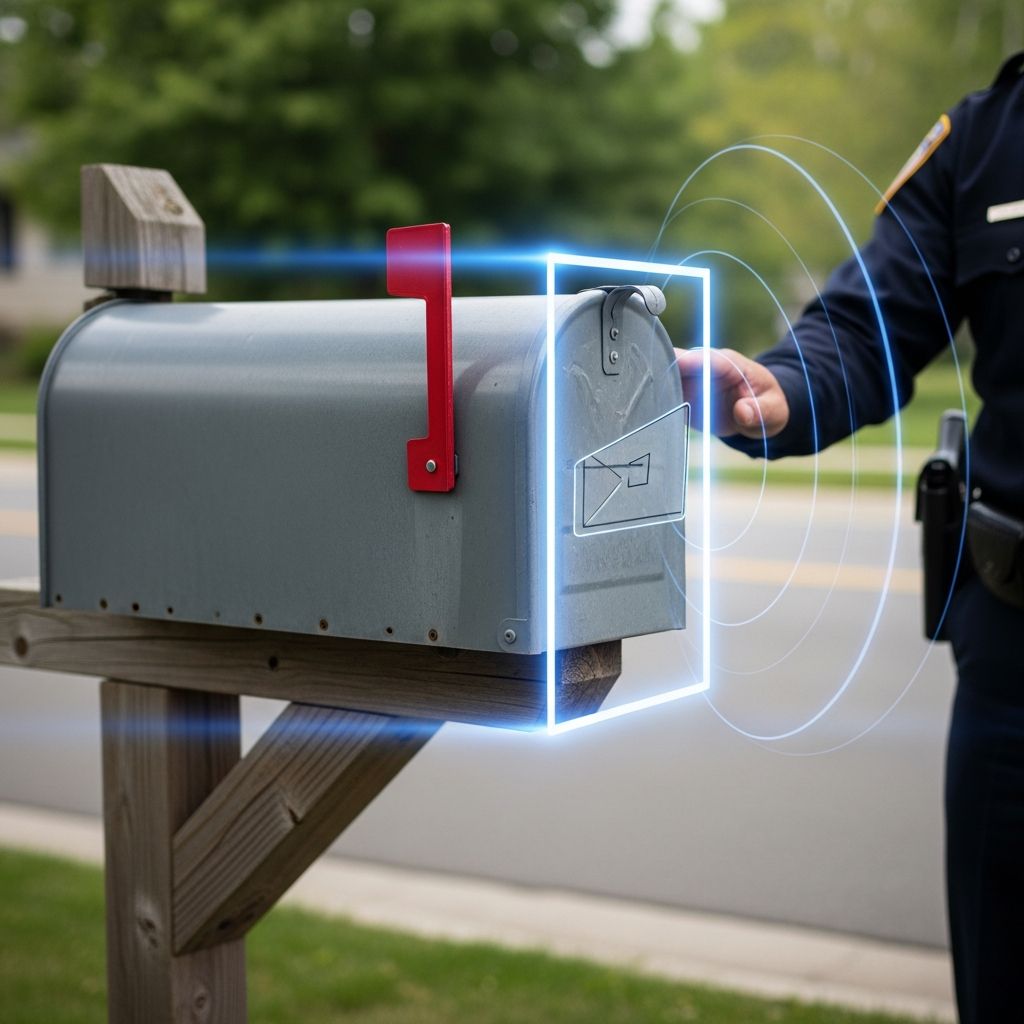
Law enforcement agencies in the United States are generally prohibited from opening or reading the contents of your sealed domestic mail without a judicial warrant, a protection rooted in the Fourth Amendment’s safeguards against unreasonable searches and seizures. However, numerous exceptions, surveillance methods, and procedural loopholes allow police to monitor external details or access mail under specific conditions, balancing public safety with individual privacy rights.
Foundational Legal Protections for Postal Privacy
The U.S. Constitution’s Fourth Amendment establishes the cornerstone of mail privacy by requiring probable cause and a warrant for most searches. Courts have long recognized that individuals hold a reasonable expectation of privacy in the contents of sealed letters and first-class mail sent through the U.S. Postal Service (USPS). This principle dates back to early Supreme Court rulings affirming that tampering with sealed correspondence constitutes an unlawful intrusion.
For instance, first-class mail and sealed packages enjoy heightened protection compared to other classes like media mail or bulk parcels, which may lack the same privacy presumption. Opening such protected mail without authorization can elevate minor offenses to felonies for postal workers or officials. Police must demonstrate specific probable cause to a judge, detailing why the mail likely contains evidence of a crime, before obtaining a search warrant.
Yet, this protection applies primarily to domestic mail. The exterior of any mail—envelopes, labels, postmarks, and return addresses—carries no expectation of privacy, as this information is voluntarily displayed for routing purposes. Law enforcement can freely observe and record these details during routine handling.
Warrantless Surveillance: The Mail Covers Program
One of the most pervasive tools for monitoring mail is the USPS mail covers program, which permits agencies to request detailed records of a target’s incoming and outgoing mail exteriors without judicial approval. Under this initiative, every piece of mail passing through USPS facilities has its outside imaged and stored digitally since expanded post-2001 protocols. Agencies like the FBI, IRS, and local police submit requests, typically approved for 30 days and extendable to 120 days, for criminal investigations or national security matters.
Annually, thousands of such requests—ranging from 15,000 to 20,000—are processed, revealing patterns in communications without ever touching contents. Prohibited targets include attorney-client mail, but the program’s low barrier (no subpoena needed) has sparked debates over its scope. This surveillance can expose financial ties, personal networks, medical providers, or political affiliations indirectly through sender/recipient data.
- Key Data Captured: Sender/recipient names and addresses, postmarks, mail class, and drop box info.
- Requesting Agencies: FBI, US Postal Inspection Service, DHS, IRS.
- Approval Rate: Over 97% of submissions granted.
- Duration: Initial 30 days, renewable up to 120 days.
Exceptions Allowing Warrantless Mail Inspections
While sealed domestic first-class mail demands a warrant, several scenarios permit police or federal agents to open packages without one. These exceptions hinge on diminished privacy expectations or urgent public safety needs.
| Exception Type | Description | Legal Basis |
|---|---|---|
| Exigent Circumstances | Hazardous indicators like leaking fluids, smoke, or odors signaling danger (e.g., explosives or chemicals). | Immediate threat overrides warrant requirement. |
| International Mail | US Customs and Border Protection (CBP) inspects inbound foreign packages for contraband, with limits on reading private contents. | Border search doctrine; 19 U.S.C. § 482. |
| Abandoned Mail | Lost, undeliverable, or discarded items in carrier facilities or trash, treated as public domain. | No privacy in voluntarily abandoned property. |
| Private Carriers | Partial access to UPS/FedEx via company policies or third-party reports, though USPS rules stricter. | Contractual terms and FISA provisions. |
| FISA Emergencies | Attorney General authorization for mail to/from foreign agents in national security cases. | 50 U.S.C. § 1801 et seq. |
Trash pulls represent a common tactic: once mail hits curbside bins, it’s legally abandoned, allowing officers to sift through discarded envelopes for evidence like drug residue or incriminating notes.
Distinctions Between Mail Classes and Carriers
Not all mail receives equal protection. USPS classifies certain types—such as periodicals, catalogs, or unsealed media—as non-private, openable without warrants by inspectors. Private couriers like UPS or FedEx operate under different rules; while they can’t arbitrarily open packages, they may comply with law enforcement subpoenas or inspect for safety/shipping violations, potentially reporting suspicious contents.
Outgoing mail poses similar constraints: police cannot rifle through your mailbox or unsealed letters without consent or a warrant. Standing firm against such requests upholds your rights, as affirmed in legal discussions where officers overstep into intimidation tactics.
Implications for Privacy in a Digital Age
Mail surveillance intersects with broader privacy erosions, akin to phone metadata collection. While contents remain shielded, external tracking can map relationships, habits, and transactions—painting intimate portraits without intrusion. Privacy advocates argue this chills free expression, especially for sensitive matters like health records or activism.
Financial trails from bill payments, medical referrals, or religious mailings become visible, potentially fueling unwarranted investigations. In national security contexts, FISA expansions post-9/11 have broadened emergency access, though oversight remains contentious.
Protecting Your Mail from Unlawful Scrutiny
To minimize exposure:
- Use sealed first-class mail or registered services for sensitive items.
- Opt for private carriers with strong privacy policies for domestic shipments.
- Avoid discarding revealing documents; shred and mix with trash.
- Employ remailers or P.O. boxes to obscure origins.
- Consult legal counsel if suspecting surveillance; challenge improper warrants.
If mail tampering occurs, document evidence and report to USPS Inspection Service. Criminal defense attorneys can contest illegally obtained evidence in court, potentially suppressing it under the exclusionary rule.
Frequently Asked Questions (FAQs)
Can police open my mailbox without permission?
No, mailboxes are private property. Accessing them requires a warrant or consent, akin to home searches.
Is international mail fully protected?
No, CBP can inspect inbound foreign mail without warrants under border authority, though personal letters have some limits.
What if police search my trash for mail?
Legal if trash is curbside; considered abandoned. Keep sensitive items indoors until collection.
Does the mail covers program require court approval?
No, just an agency request to USPS, making it a low-threshold surveillance tool.
Can private carriers like FedEx open my package?
They can for policy violations or safety, and may share with police upon suspicion.
Navigating Mail Privacy in Investigations
When facing charges involving mail evidence, understanding these nuances is crucial. Prosecutors must prove chain-of-custody and warrant validity; violations can dismantle cases. For example, if surveillance yields leads for a warrant, courts scrutinize the ‘fruit of the poisonous tree’ doctrine to exclude tainted evidence.
Recent trends show increased use amid drug trafficking and fraud probes, underscoring the need for vigilance. Always invoke your rights calmly and seek professional advice promptly.
References
- Can the Government Open Your Mail Without a Warrant? — Wirth Law Office. 2018-06-01. https://www.wirthlawoffice.com/tulsa-attorney-blog/2018/06/can-the-government-open-your-mail-without-a-warrant
- Can a Police Officer Open Your Outgoing Mail? — Avvo Legal Answers. 2019-01-15. https://www.avvo.com/legal-answers/can-a-police-officer-open-your-out-going-mail–4934783.html
- Understanding Mail Surveillance — Miami Criminal Lawyer. 2023-05-20. https://www.miami-criminal-lawyer.net/blog/understanding-mail-surveillance
- 18 U.S.C. § 1703 – Delay of mail by officer — U.S. Code (via Cornell Law). 2024-01-01. https://www.law.cornell.edu/uscode/text/18/1703
- 39 CFR § 233.3 – Mail covers — Electronic Code of Federal Regulations. 2025-03-15. https://www.ecfr.gov/current/title-39/chapter-I/part-233/section-233.3
Similar Articles








Read full bio of Sneha Tete




