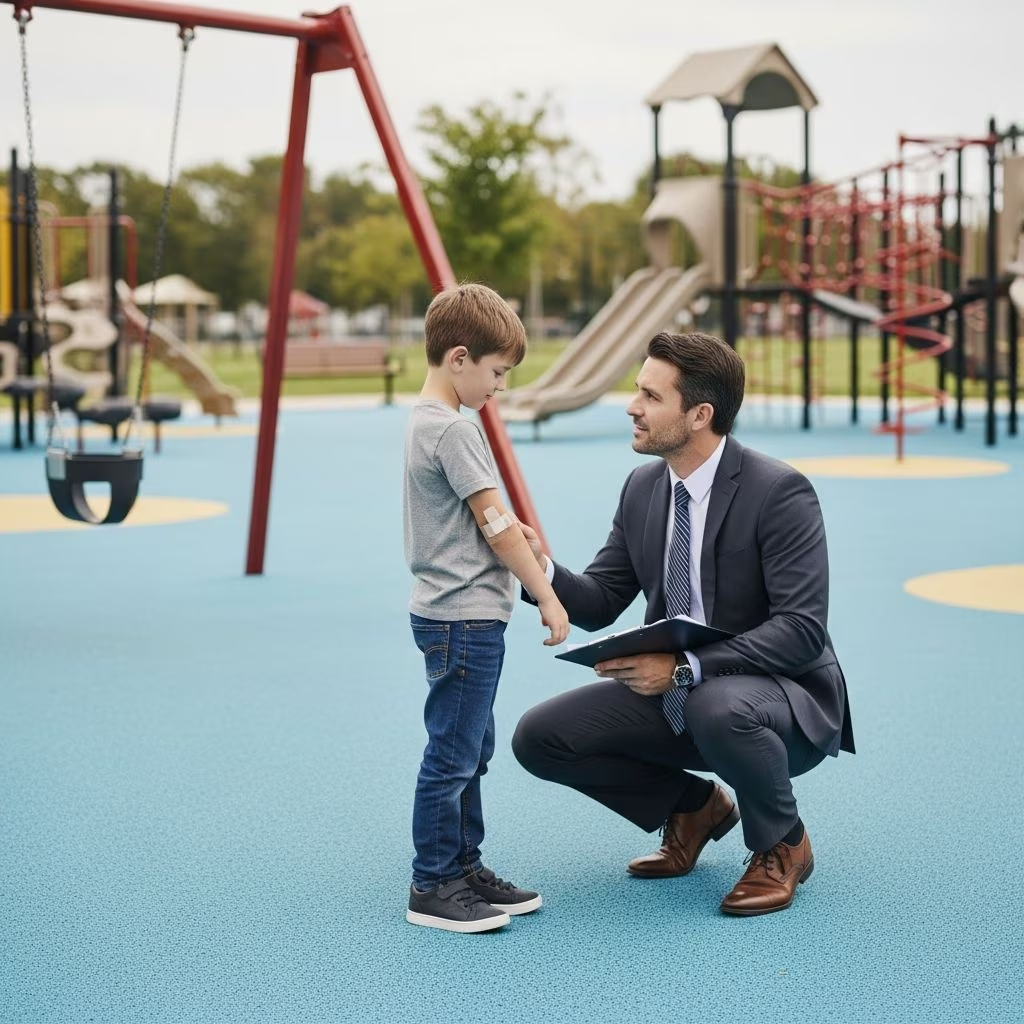
Pursuing Legal Remedies When Your Child Is Injured at Play
Playgrounds are meant to be spaces where children can enjoy outdoor recreation and physical activity without fear of harm. However, accidents happen, and sometimes these accidents result from the negligence or carelessness of property owners, operators, or supervisors. When your child suffers an injury due to unsafe conditions, inadequate maintenance, or poor supervision, you may have the legal right to seek compensation. Understanding when and how to pursue a playground injury claim is essential for protecting your child’s interests and holding responsible parties accountable.
Determining When a Playground Injury Becomes a Legal Matter
Not every scraped knee or minor bump on the playground constitutes grounds for legal action. The critical distinction lies in whether the injury resulted from negligence or an inherent risk of play. When a child gets hurt during normal playground activities—such as falling while running or losing balance on equipment—these are typically considered ordinary accidents that come with play.
However, when injuries stem from preventable hazards, unsafe conditions, or failures to maintain proper supervision, the situation changes significantly. Injuries that qualify for legal action include those caused by broken or deteriorated equipment, inadequate ground surfacing that fails to cushion falls, lack of necessary supervision, or defective products. If your child required medical treatment, surgery, or ongoing care due to the injury, this suggests negligence serious enough to warrant legal consideration.
Identifying Responsible Parties in Playground Accidents
Determining who bears legal responsibility for your child’s playground injury is often the first step in pursuing a claim. Multiple parties may share liability depending on the circumstances and location of the accident.
Municipal and Public Property Managers
When injuries occur at public parks or playgrounds maintained by local governments, the municipality typically bears responsibility for ensuring safe conditions. These entities have a legal duty to conduct regular inspections, maintain equipment in good repair, and provide adequate surfacing materials. Failures in these obligations can result in municipal liability.
Schools and Educational Institutions
Schools and daycare facilities have significant legal responsibilities regarding playground safety. These institutions must maintain safe equipment, conduct regular maintenance, and provide adequate supervision during outdoor play periods. When staff fails to supervise children appropriately or ignores known hazards, the institution may be held liable for resulting injuries.
Private Property Owners and Operators
Private entities that maintain playgrounds—including apartment complexes, churches, recreation centers, and private schools—must keep their facilities reasonably safe for children allowed to use them. Property owners have a legal duty under premises liability law to either repair known hazards or warn visitors about them.
Equipment Manufacturers and Suppliers
If defective equipment caused the injury, the manufacturer, distributor, or supplier may be liable under product liability laws. This includes liability for design defects, manufacturing defects, or failure to provide adequate warnings or safety instructions. Liability can exist even if the equipment was properly installed and maintained.
The Legal Framework: Understanding Negligence and Premises Liability
Playground injury claims typically rest on negligence principles or premises liability law. To establish a valid claim, you must generally prove four essential elements:
- Duty: The property owner or operator had a legal responsibility to maintain safe conditions
- Breach: They failed to fulfill that duty through inadequate maintenance, supervision, or hazard correction
- Causation: The breach directly caused your child’s injury
- Damages: Your child suffered quantifiable harm—physical, emotional, or financial
Property owners owe different levels of duty depending on the visitor’s status. Invited guests receive the highest level of protection, as owners must maintain premises reasonably safe and warn of known hazards. Trespassers receive minimal protection. Understanding your child’s legal status as a visitor helps determine the applicable standard of care.
Building Your Case: Essential Evidence and Documentation
Successfully proving negligence requires compelling evidence that demonstrates unsafe conditions and the owner’s failure to address them.
Photographic and Physical Evidence
Immediately photograph the equipment, hazardous conditions, and surrounding area following the injury. Document broken components, deteriorating surfaces, missing safety features, or inadequate spacing between equipment. Photographs create objective records that demonstrate the condition at the time of the incident before repairs might occur.
Witness Statements
Gather contact information from anyone who witnessed the incident. Their accounts can corroborate what happened and support your description of unsafe conditions. Witnesses may testify about inadequate supervision, known hazards, or prior incidents at the location.
Medical Documentation
Maintain comprehensive records of all medical treatment related to the injury. This includes emergency room visits, specialist consultations, diagnostic imaging, surgical procedures, and rehabilitation therapy. Medical records establish the severity of the injury and create a clear connection between the incident and your child’s health consequences.
Maintenance and Inspection Records
Request records from the property owner or operator showing maintenance history, inspection schedules, and reports of hazards. If these records are incomplete or absent, it suggests inadequate maintenance. Records showing known hazards that were never repaired strengthen negligence claims significantly.
Expert Analysis
Experienced attorneys often consult safety experts who can evaluate whether the playground met established safety standards. The Consumer Product Safety Commission publishes comprehensive guidelines for playground design, equipment selection, and surface materials. Expert testimony about violations of these standards can be persuasive in establishing negligence.
Common Types of Playground Hazards
Understanding common causes of playground injuries helps identify whether negligence likely played a role in your child’s accident.
| Hazard Type | Description | Responsibility |
|---|---|---|
| Defective Equipment | Broken components, sharp edges, loose bolts, or structural failures | Property owner/Equipment manufacturer |
| Inadequate Surfacing | Hard ground, insufficient padding, or deteriorated safety surfaces | Property owner/Operator |
| Poor Maintenance | Rust, decay, splinters, or damage left unrepaired | Property owner/Operator |
| Unsafe Design | Inappropriate equipment, improper spacing, or hazardous configurations | Equipment manufacturer/Property owner |
| Inadequate Supervision | Insufficient staff, inattentive monitoring, or absent supervision | School/Daycare/Operator |
| Environmental Hazards | Debris, standing water, unprotected openings, or accessibility issues | Property owner/Operator |
Calculating Compensation and Damages
When negligence causes a playground injury, various types of compensation may be available to help your family recover.
Medical Expenses
Recoverable medical costs include emergency room treatment, specialist consultations, diagnostic testing, surgical procedures, physical therapy, occupational therapy, and any ongoing medical care necessitated by the injury. If your child requires future treatment or monitoring, these anticipated expenses may also be included.
Lost Income and Caregiver Expenses
Parents who miss work to care for injured children may recover lost wages. If the injury requires ongoing care or assistance, compensation can cover caregiver expenses or modifications to your home to accommodate your child’s needs.
Pain and Suffering
Beyond tangible economic losses, your child may receive compensation for physical pain, emotional distress, psychological trauma, or diminished quality of life. These non-economic damages recognize the broader impact of the injury on your child’s wellbeing.
Permanent Disability Damages
Serious injuries resulting in permanent disability warrant substantial compensation. This includes costs for adaptive equipment, specialized education, ongoing therapy, vocational training, or lifetime assistance services. The calculation considers your child’s earning capacity and lifetime care needs.
Special Considerations for Government Playgrounds
Playgrounds operated by municipalities or government entities involve specific legal procedures and limitations that differ from private property claims. Government entities typically enjoy certain protections under sovereign immunity laws, which limit liability exposure. However, most jurisdictions allow claims against government entities under specific conditions.
When pursuing a claim against a municipality, strict notice requirements usually apply. Many jurisdictions require written notice of the injury within a defined timeframe—often six months—specifying the location, nature of the injury, and details of the claimed negligence. Failure to provide timely notice may bar your claim entirely. Additionally, damage caps may limit the maximum compensation available against government entities. An experienced attorney familiar with local government claims procedures is essential for navigating these complexities.
The Timeline: From Injury to Resolution
Playground injury cases follow specific procedural timelines that vary by jurisdiction. Most states impose statutes of limitations—deadlines for filing claims. For children, these limitations periods often begin when the child reaches the age of majority, providing an extended timeframe for parents to pursue claims. However, waiting too long creates evidentiary problems, as witness memories fade and conditions change.
After gathering evidence and consulting an attorney, the process typically begins with demand letters to responsible parties. Many cases settle during negotiation phases without proceeding to trial. When settlements cannot be reached, litigation may follow, involving discovery, expert testimony, and ultimately trial proceedings.
Defenses Property Owners May Raise
Understanding defenses available to playground operators helps you prepare for potential counterarguments. Property owners often argue that the child assumed the risk of injury through participation in playground activities. They may contend that the injury resulted from ordinary play rather than negligence, or that the child was partly responsible through careless behavior.
Some jurisdictions apply comparative negligence principles, which reduce your recovery based on your child’s percentage of fault. If your child was found 20 percent responsible for the injury through carelessness, your compensation might be reduced by that percentage. This makes establishing that negligent conditions—not child behavior—caused the injury critically important.
Frequently Asked Questions About Playground Injury Claims
Q: Can I sue if my child was injured at a school playground?
A: Yes, if the injury resulted from the school’s negligence in maintaining equipment, failing to supervise, or ignoring known hazards. However, specific notice requirements and damage limitations may apply, depending on your state’s laws regarding claims against educational institutions.
Q: What if my child was partially at fault for the injury?
A: In comparative negligence jurisdictions, your recovery may be reduced proportionally to your child’s fault. Even if your child bears some responsibility, you may still recover damages if the property owner’s negligence was a substantial contributing factor.
Q: Do I need to report the injury immediately to pursue a claim?
A: While not always strictly required, notifying the property owner or operator of the injury creates important documentation. For government entities, timely notice is often legally mandatory. Prompt reporting also prevents the property owner from disputing the injury or claiming it occurred elsewhere.
Q: What if the equipment had warning labels?
A: Presence of warning labels does not absolve property owners of maintaining safe equipment or properly supervising children. If warnings were inadequate, illegible, or if the hazard was so obvious that warnings were insufficient, liability may still exist.
Q: How long do I have to file a playground injury claim?
A: Statutes of limitations vary by state, typically ranging from two to six years. For minors, the clock often begins when the child reaches adulthood. Consult your state’s laws and an attorney promptly to ensure you meet applicable deadlines.
Q: Can I recover damages if my child had a minor injury that healed quickly?
A: Minor injuries may still support claims if they resulted from clear negligence. However, the compensation available for minor injuries is typically lower. Claims are stronger when injuries require significant medical treatment or have lasting effects.
Taking Action: Next Steps for Your Family
If your child suffered a playground injury you believe resulted from negligence, taking prompt action protects your legal rights. Document the incident thoroughly through photographs and written descriptions while details remain fresh. Preserve all medical records and obtain witness contact information. Report the incident to the property owner or operator, creating official documentation of the event.
Consulting with a personal injury attorney experienced in playground accident cases is advisable. These specialists understand the legal nuances, local procedures, and negotiation strategies that maximize your recovery. Many offer free initial consultations, allowing you to assess your claim’s viability without financial obligation.
Your child’s safety and recovery should be your priority. When negligence contributes to playground injuries, pursuing legal remedies ensures that responsible parties are held accountable and your family receives the resources needed for proper healing and rehabilitation.
References
- Can You Sue for a Playground Injury? What Parents Should Know — Misny Law. Accessed April 2026. https://misnylaw.com/can-you-sue-for-a-playground-injury/
- What Legal Options Do Parents Have After a Playground Injury? — Hill Justice. Accessed April 2026. https://www.hilljustice.com/what-legal-options-do-parents-have-after-a-playground-injury/
- Understanding Playground Injuries and Your Legal Rights — Daniel Stark. Accessed April 2026. https://www.danielstark.com/blog/understanding-playground-injuries-and-your-legal-rights/
- How Does Liability Work for Playground Accident Injuries? — Admiralty Law. Accessed April 2026. https://www.admiralty.com/articles/how-does-liability-work-for-playground-accident-injuries/
- Playground Accidents & Legal Claims — Justia Personal Injury Law Center. Accessed April 2026. https://www.justia.com/injury/child-injury/playground-accidents/
- Who Is Liable In A Playground Injury Accident? — Bryant Law Center. Accessed April 2026. https://www.bryantpsc.com/who-is-liable-in-a-playground-injury-accident/