Personal Property in a Pennsylvania Will
Learn how Pennsylvania wills handle personal property, specific gifts, and probate distribution.
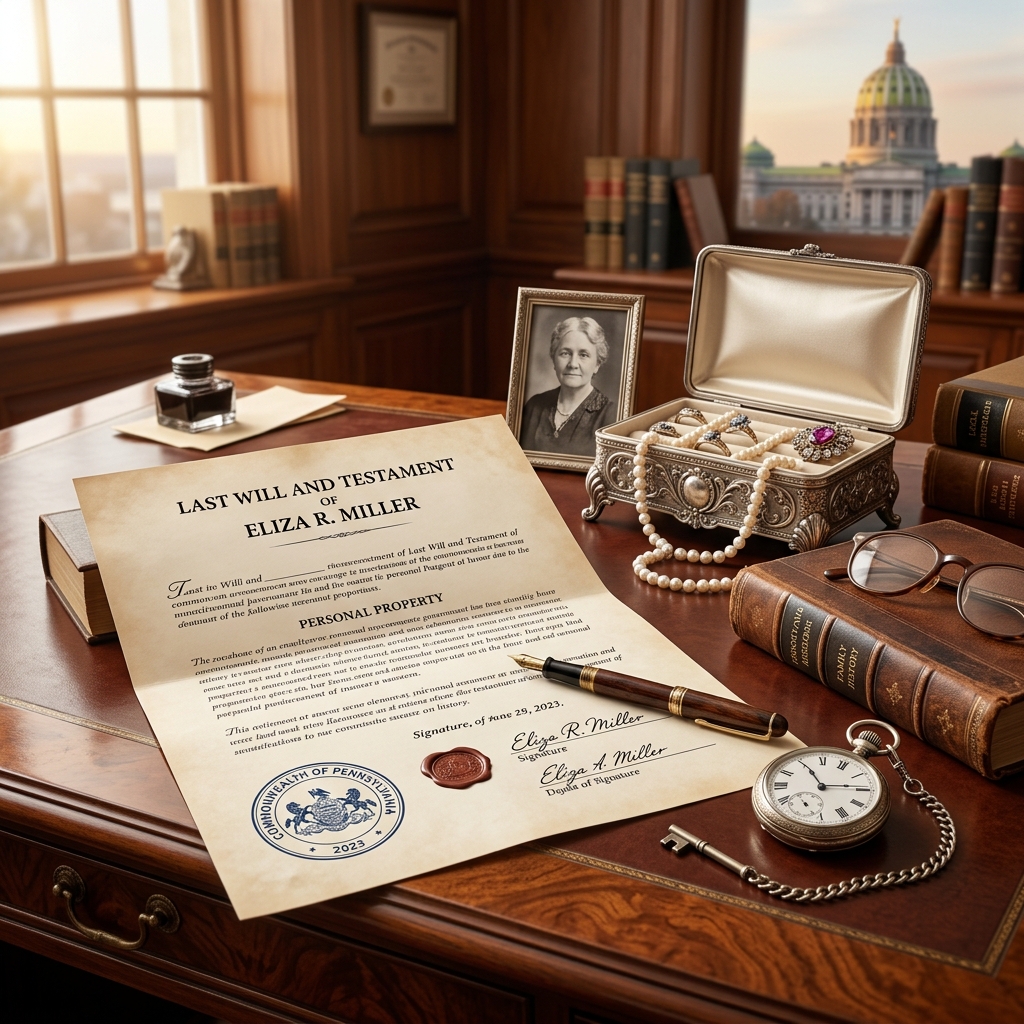
Personal property is often where estate plans become most personal. In Pennsylvania, a will can be used to pass items such as jewelry, furniture, collections, vehicles, and other movable possessions to chosen beneficiaries, but the wording of the document matters. Clear instructions can reduce family conflict, limit confusion in probate, and make sure treasured items go to the people you intended.
This article explains how personal property works in a Pennsylvania will, what types of assets are commonly covered, how specific gifts are usually drafted, and which practical issues should be considered before a will is finalized.
What Counts as Personal Property
Personal property generally means property that is not land or permanently attached to land. It can include both tangible items you can physically touch and intangible rights that have value. In estate planning, the most common examples are everyday possessions and sentimental belongings.
- Household furniture and furnishings
- Jewelry, watches, and clothing
- Art, photographs, and family heirlooms
- Vehicles, boats, and recreational equipment
- Books, collections, and memorabilia
- Cash-like assets and certain financial interests, when they are part of the probate estate
For will-writing purposes, the most disputed items are usually the ones that carry emotional value rather than high market value. A modest object may matter more to a family than an expensive asset, which is why careful wording is so important.
How a Will Controls Personal Property
A Pennsylvania will directs who receives the property that passes through probate at death. If personal property is owned solely in the deceased person’s name and does not transfer by another legal method, the will can determine its destination.
That means a will can be used to leave a favorite painting to one child, a watch to a spouse, or a collection to a friend. If the will does not mention a particular item, that property usually falls into the residuary estate, which is the portion left over after specific gifts and expenses are handled.
It is also important to understand the limit of a will: not all property is controlled by it. Assets that pass by beneficiary designation, survivorship ownership, or trust terms may transfer outside the will. A good estate plan should match the will with the way property is titled.
Common Ways to Give Personal Property
There are several common ways to leave personal property in a will. The best choice depends on whether you want to gift particular items, divide a group of assets, or keep things flexible for future changes.
| Method | How It Works | Best For |
|---|---|---|
| Specific gift | Names a particular item and a particular beneficiary | Sentimental or unique possessions |
| Class gift | Leaves a category of items to one or more people | Groups of similar property |
| Residuary gift | Passes whatever remains after other gifts are satisfied | Leftover property or items not separately listed |
Specific gifts are the most precise, but they can become outdated if you sell or replace an item. Class gifts are broader and may be easier to administer. Residuary gifts are essential because they catch property that was not separately addressed.
Why Clarity Matters in Drafting
Ambiguous language is a common source of disputes. If a will says “my jewelry goes to my daughter,” questions may arise about whether that includes costume jewelry, watches, or items kept in a safe deposit box. Similar uncertainty can occur with terms like “family heirlooms,” “collectibles,” or “household goods.”
Precise descriptions help prevent conflict. Identifying the item, the recipient, and any conditions attached to the gift can reduce the chance that relatives disagree later. When possible, include enough detail to make the gift recognizable without turning the will into a long inventory.
- Name the item with enough detail to distinguish it from similar property
- Identify the recipient by full name or clear relationship
- State whether related accessories or contents are included
- Use fallback language for gifts that no longer exist at death
Sentimental Items and Family Harmony
Personal property often creates emotional tension because it represents memories, not just value. A dining table, an engagement ring, or a grandfather’s tool collection may carry family history that cannot be measured in dollars. For that reason, thoughtful planning can help preserve relationships as well as property.
Some testators leave a memorandum or separate list for smaller items they may want to adjust over time. Others give the executor discretion to divide certain items fairly among family members. Another approach is to let beneficiaries choose items by agreement after the decedent’s death. Each method has advantages, but the main goal is to reduce friction by making the process predictable.
What Happens When the Will Is Silent
If a will does not address a particular item of personal property, the item usually becomes part of the remainder of the estate. It may then be distributed under the residuary clause or, if there is no effective residuary clause, through the rules that govern intestate succession.
That result can be very different from what the deceased person intended. A person might assume a family photo album will naturally stay with one branch of the family, but unless the will says so, the item may be treated like any other estate asset. Silence can be especially risky when the item has symbolic meaning.
How Probate Affects Personal Property
Probate is the court-supervised process used to administer property that passes under a will. The executor collects assets, pays debts and expenses, and distributes what remains according to the document’s terms. Personal property that is part of probate may need to be inventoried, appraised, stored, or sold before distribution.
Some items are easy to deliver, while others may require more effort. A large collection might need cataloging. A vehicle might need title transfer paperwork. High-value artwork may need appraisal or insurance protection while the estate is open. These practical steps matter because they affect both fairness and administrative cost.
Joint Ownership, Beneficiaries, and Nonprobate Transfers
Not every personal asset passes under a will. Some property is transferred automatically by operation of law or by contract. For example, a bank account with a payable-on-death beneficiary, or property held jointly with survivorship rights, may pass directly to the named person or surviving co-owner.
This distinction is crucial because a will cannot override a separate transfer arrangement. If a person wants a specific item or account to pass by will, they must make sure the ownership or beneficiary setup does not point somewhere else. Estate plans work best when titles, beneficiary designations, and will provisions all align.
Practical Drafting Tips for Pennsylvania Residents
A strong will is not only legally valid; it is also practical. When personal property is involved, the following drafting habits can make administration much smoother.
- List high-value or high-emotion items individually
- Use a residuary clause for everything not specifically mentioned
- Review the will after major purchases, gifts, or life changes
- Keep the will consistent with account titles and beneficiary forms
- Tell the executor where the original will is stored
It is also wise to think about how family members will interpret your instructions. A gift that appears simple to the writer may be confusing to others years later. Re-reading the document with fresh eyes can reveal terms that need more precision.
When a Separate Memorandum May Help
Some people prefer not to revise a formal will every time they change their mind about smaller items. In those situations, a separate memorandum may be useful if it is permitted and incorporated properly under the governing law and the estate plan. This can be a helpful way to update gifts of modest personal items without rewriting the full document.
Even when a separate list is used, the estate plan should still be coordinated carefully. A memorandum should not conflict with the will, and it should be kept in a location where the executor can find it. The simpler the system, the easier it will be for the family to follow.
Frequently Asked Questions
Can a Pennsylvania will leave furniture and jewelry to different people?
Yes. A will can divide personal property among multiple beneficiaries, including by naming specific items for different people.
What if I sell an item I already gave away in my will?
If the item no longer exists at death, the gift usually fails because there is nothing to transfer. The property may then pass under the residuary clause or another applicable rule.
Do I need to list every single possession in my will?
No. Many people only list especially important or valuable items and then use a residuary clause for the rest.
Can I leave personal property to someone who is not family?
Yes. A will can leave property to any legally permitted beneficiary, including friends, charities, or other chosen recipients.
What happens if two people claim the same item?
The executor must follow the will’s language and the probate process. If the wording is unclear, the dispute may need to be resolved through legal interpretation or court involvement.
Final Planning Considerations
Personal property can be one of the most meaningful parts of an estate plan because it often carries stories, family history, and personal attachment. A Pennsylvania will gives you a way to decide who receives those items, but the plan should be drafted with enough detail to avoid uncertainty.
Thoughtful language, a well-placed residuary clause, and regular updates after major life changes can make a significant difference. When personal property is handled carefully, the will does more than distribute belongings—it also helps preserve relationships and honor the wishes of the person who made it.
References
- Making a Will in Pennsylvania — Nolo. 2025. https://www.nolo.com/legal-encyclopedia/pennsylvania-make-will-31750.html
- What to Consider When Making a Will in Pennsylvania — Lebovitz Law. 2025. https://lebovitzlaw.com/what-to-consider-when-making-a-will-pennsylvania/
- Chapter 25. Title 20 – Decedents, Estates and Fiduciaries — Pennsylvania General Assembly. 2025. https://www.palegis.us/statutes/consolidated/view-statute?txtType=htm&ttl=20&div=0&chapter=25
- Register of Wills — Pennsylvania Department of Revenue. 2025. https://revenue-pa.custhelp.com/app/categories/detail/c/312/~/register-of-wills
Similar Articles







Read full bio of Sneha Tete