
Payment Plan Settlements: Pros, Cons, and Best Practices
Explore the advantages, risks, and strategies for negotiating payment plan settlements in lawsuits effectively.
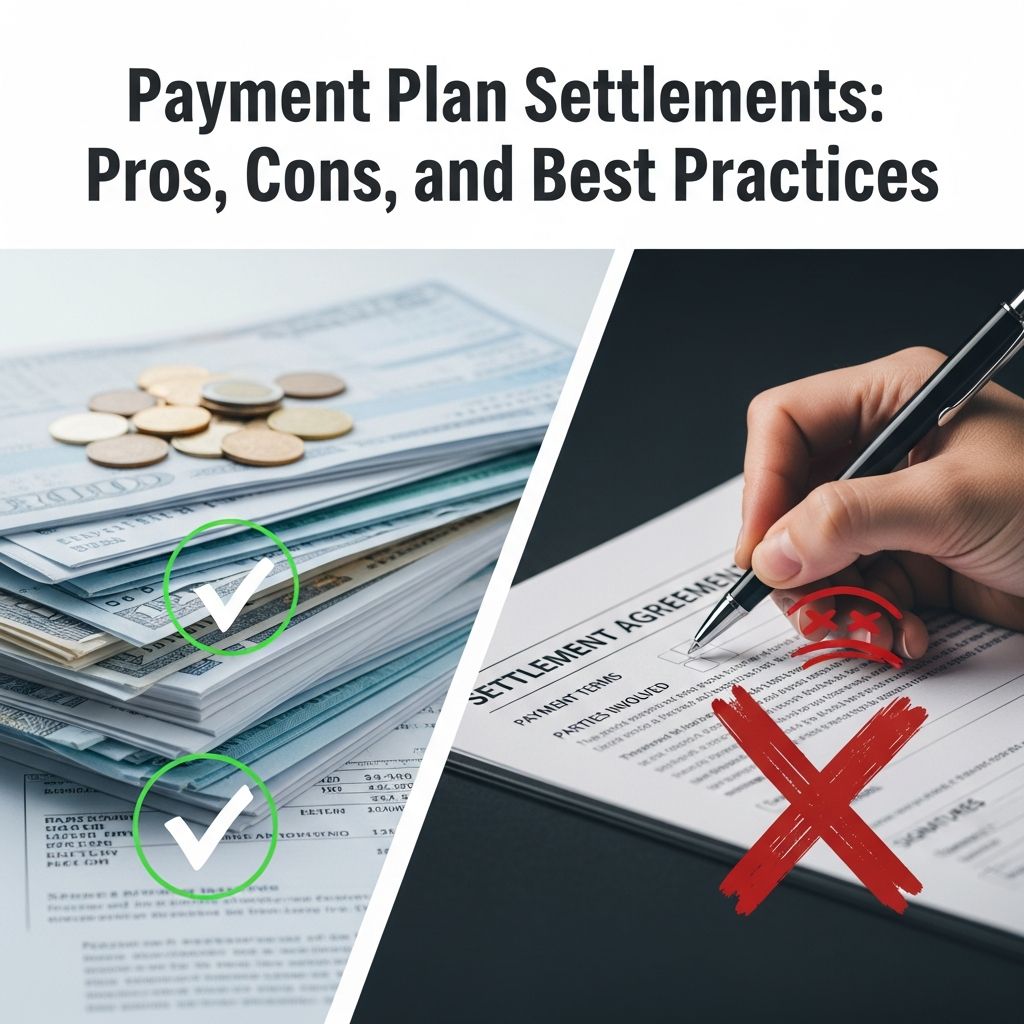
Payment plan settlements have become a common resolution in civil lawsuits, particularly those involving debt collection, personal injury claims, or contract disputes. These arrangements allow parties to avoid immediate full payment while resolving legal matters, but they come with significant considerations. This article delves into the mechanics, advantages, drawbacks, and strategic approaches to these agreements, helping you navigate them wisely.
Understanding the Basics of Structured Settlement Payments
Structured settlement payments, often called installment plans, involve agreeing to pay or receive funds over time rather than in a single lump sum. In defendant scenarios, this means spreading out owed amounts into manageable monthly installments. For plaintiffs, it could mean periodic payouts from insurers or defendants. The process begins after negotiations, where both sides draft and sign an agreement specifying the total amount, schedule, interest (if any), and consequences of default.
Courts sometimes require approval for these plans, especially in cases with minors, class actions, or large sums. Once approved, payments flow from the paying party—typically via their insurer—to the recipient’s attorney, who deducts fees, liens, and costs before disbursement. Delays of 4-8 weeks are standard due to processing, but structured plans extend this over months or years.
Key Benefits of Opting for Installment Agreements
Installment agreements offer breathing room for cash-strapped defendants. They prevent immediate financial ruin, allowing budget integration without asset liquidation or wage garnishment. For plaintiffs, structured payouts provide steady income, potentially shielding portions from taxes and ensuring long-term financial stability.
- Financial Flexibility: Defendants pay smaller amounts monthly, avoiding lump-sum hardship.
- Avoids Enforcement Actions: Proactive plans sidestep judgments, bank levies, or property liens.
- Steady Income for Recipients: Plaintiffs receive reliable funds for ongoing needs like medical bills.
- Closure Without Trial: Both parties resolve disputes faster and cheaper than litigation.
Businesses benefit too, maintaining cash flow while settling commercial debts through tailored plans monitored for compliance.
Hidden Risks and Drawbacks of Payment Plans
While appealing, these plans carry traps. Creditors often secure agreements with consent judgments, activating full amount pursuit—including interest and fees—upon any missed payment. A $6,000 debt at $100/month spans five years; one slip triggers garnishment or asset seizure.
Tax implications arise if forgiven debt counts as income, and agreements may restart statutes of limitations, admitting debt validity and waiving defenses or FDCPA claims. Credit impacts linger, with reports possibly not reflecting “paid as agreed” without monitoring.
| Risk Factor | Potential Consequence | Mitigation Tip |
|---|---|---|
| Default Clause | Full judgment entry | Build buffer into budget |
| Exemption Waiver | Loss of protected assets | Consult attorney before signing |
| Credit Reporting | Prolonged negative marks | Verify reports post-payment |
| Statute Restart | Extended collection window | Negotiate explicit terms |
Negotiation Strategies for Favorable Terms
Effective negotiation starts with professional advice. Attorneys assess case facts to propose realistic plans, ideally lump-sum first, then installments. Key tactics include:
- Propose low minimums backed by income proof to demonstrate affordability.
- Insist on no-judgment clauses or staggered enforcement.
- Cap interest and exclude attorney fees from triggering defaults.
- Include credit repair language ensuring positive reporting.
For plaintiffs, push for annuity-backed structures via insurers for security. Always review drafts: creditor-favoring terms often waive rights or ignore tax effects.
Legal Processes After Agreement Signing
Post-signature, release forms bar further claims. Payments process through attorneys: defendants send to plaintiff’s counsel, who clears liens before netting plaintiff funds. Monitoring ensures compliance; tools track payments, alerting to creditor changes.
If defendants default, plaintiffs file enforcement motions, potentially garnishing wages or seizing assets. Courts compel adherence, but prevention via clear terms is ideal.
Real-World Scenarios: When Plans Work or Fail
In debt suits, a consumer facing $10,000 credit card judgment negotiates $150/month over 5 years without judgment entry, preserving assets. Success hinges on steady income.
Contrast: Post-service voluntary plan with creditor leads to hidden judgment; missed payment due to job loss triggers garnishment. Personal injury settlements favor lump sums for immediacy, but severe cases use structures for lifelong care.
Commercial debts see law firms crafting monitored plans, disputing unfair mid-stream changes.
Tax and Credit Implications in Depth
Settled debt over $600 may trigger 1099-C forms, taxing forgiveness as income—consult IRS guidelines. Structured injury settlements often escape taxes if qualified. Credit-wise, plans may not erase marks; post-completion disputes ensure accurate reporting. AnnualCreditReport.com verifies updates.
Alternatives to Traditional Payment Plans
- Lump Sum with Discounts: Negotiate reductions for immediate payment.
- Debt Consolidation Loans: Lower-interest refinancing.
- Bankruptcy: Last resort discharging eligible debts.
- Mediation: Neutral third-party facilitated terms.
Frequently Asked Questions (FAQs)
What if I miss a payment in my settlement plan?
Most agreements allow full judgment entry, interest, and fees; courts may garnish wages or seize assets.
Should I sign a creditor-drafted agreement?
No—review with an attorney; they favor creditors, waiving exemptions and claims.
How long do structured settlements take to start?
4-8 weeks post-agreement for first payment, then per schedule.
Do payment plans improve my credit?
Possibly, if reported positively; monitor and dispute inaccuracies.
Can I renegotiate after signing?
Difficult; file answers promptly if sued, seek modifications via court.
Expert Recommendations Before Committing
Always engage counsel—unrepresented parties overlook pitfalls like exemption waivers under Florida Statute 222.11(2)(b). Budget conservatively, document everything, and prioritize lump sums when feasible. Informed choices protect finances long-term.
References
- Lawsuit Settlements: When and How You’ll Get Paid — Morgan & Morgan. 2025-10-28. https://www.forthepeople.com/blog/lawsuit-settlements-when-and-how-youll-get-paid/
- Can I Use a Legal Payment Plan to Make the Lowest Monthly Payments for a Lawsuit? — David McKenzie Law Firm. N/A. https://www.davidmckenzielawfirm.com/faqs/can-i-use-a-legal-payment-plan-to-make-the-lowest-monthly-payments-for-a-lawsuit/
- Entering a Voluntary Payment Plan with Your Creditor After Being Served with a Lawsuit — Shepley Law. N/A. https://shepleylaw.com/articles/debt/entering-a-voluntary-payment-plan-with-your-creditor-after-being-served-with-a-lawsuit-may-not-be-your-best-solution/
- How is a Settlement Paid Out? — Emmanuel Sheppard & Condon. N/A. https://www.esclaw.com/how-is-a-settlement-paid-out/
- Debt Settlement in Florida: What You Need to Know Before Starting — Garcia Hernandez, P.A. N/A. https://hhlawflorida.com/debt-settlement-in-florida-what-you-need-to-know-before-starting/
- Real Solutions for Debt Settlement and Payment Plans in New York — Horn Wright, LLP. N/A. https://www.hornwright.com/commercial-litigation/commercial-debt-collection/debt-settlement-and-payment-plans/
- Negotiating A Settlement Agreement in Court — New Economy Project. N/A. https://www.neweconomyproject.org/our-work/legal-power-for-financial-justice/know-your-rights/lawsuits/negotiating-a-settlement-agreement-in-court/
Similar Articles








Read full bio of medha deb




