
Can a Parrot Testify in Court? Animal Evidence Explored
Unraveling the legal puzzle: Can a parrot's words solve an elder abuse mystery and stand as courtroom evidence?
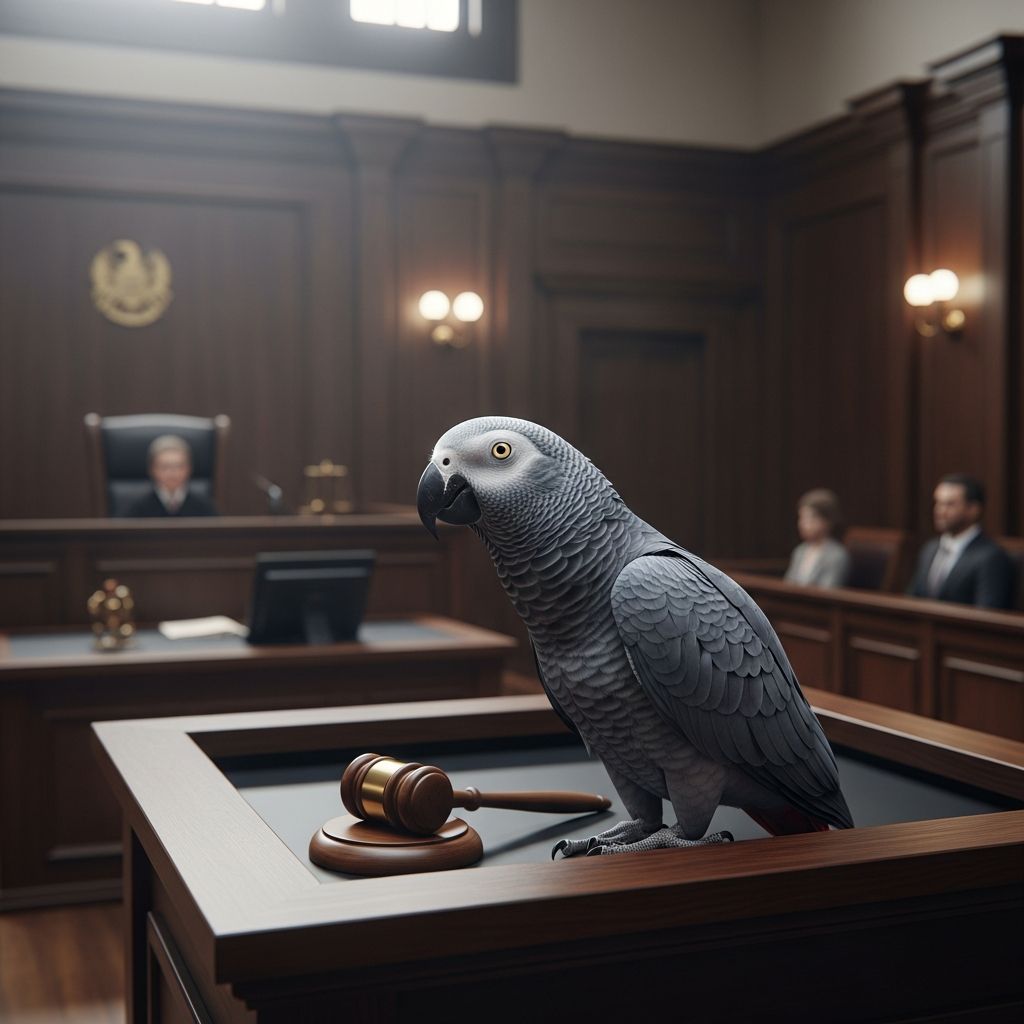
In the realm of criminal justice, evidence typically comes from human witnesses, documents, or forensic analysis. But what happens when a feathered companion holds the key to unraveling a crime? A chilling elder abuse case in South Carolina brought this question to the forefront, where a parrot’s eerie cries of distress ignited a nationwide debate on the role of animals in legal proceedings. This article delves deep into the incident, the legal hurdles faced, and the broader ramifications for using animal vocalizations as courtroom proof.
The Disturbing Discovery: A Parrot’s Cry for Help
Authorities responded to a welfare check in a quiet South Carolina neighborhood, uncovering a heartbreaking scene. A 98-year-old woman lay deceased in her home, her body marred by untreated bedsores and signs of prolonged neglect. The air was thick with the stench of decay, and amidst the squalor sat a green-cheeked Amazon parrot in a grimy cage. What made this discovery particularly haunting was the bird’s behavior: it repeatedly squawked ‘Don’t do that!’ and ‘Help me!’ before erupting into maniacal laughter.
Investigators noted the parrot’s phrases mirrored the victim’s likely final pleas. The bird’s owner, the victim’s granddaughter, faced charges of elder abuse and neglect. She claimed her grandmother had fallen and hit her head, but the parrot’s utterances painted a darker picture of ongoing torment. This wasn’t mere coincidence; parrots, especially Amazons, are renowned for their mimicry skills, capable of retaining and replaying human speech with uncanny accuracy after years of exposure.
Legal Framework: Hearsay and the Quest for Admissibility
At the heart of this case lies the evidentiary rule of hearsay—out-of-court statements offered to prove the truth of the matter asserted. In most U.S. jurisdictions, parrot squawks would initially be deemed inadmissible hearsay. However, prosecutors argued for exceptions, such as the ‘excited utterance’ doctrine, where statements made under stress of a startling event bypass hearsay barriers.
The defense countered that animals lack the cognitive capacity for truthful testimony. Parrots mimic without comprehension, potentially parroting phrases from television or past conversations unrelated to the crime. Courts must weigh reliability: Could the bird’s words reliably indicate abuse, or were they random echoes? Federal Rules of Evidence Rule 403 allows exclusion if probative value is substantially outweighed by risks of unfair prejudice, confusion, or misleading the jury.
| Evidentiary Challenge | Prosecution Argument | Defense Rebuttal |
|---|---|---|
| Hearsay Rule | Excited utterance exception applies as bird captured victim’s real-time pleas | Animals can’t form intent; mimicry isn’t a ‘statement’ |
| Reliability | Parrot lived with victim for 10+ years, phrases match abuse context | No way to cross-examine; phrases could be from unrelated sources |
| Prejudice | Anthropomorphic appeal strengthens abuse narrative | Jury sympathy for bird distracts from facts |
Expert Insights: Avian Behavior Meets Forensic Linguistics
Ornithologists and animal behaviorists entered the fray, offering testimony on parrot cognition. Green-cheeked Amazons possess vocal learning abilities akin to human children, storing thousands of words and associating them with emotions or events. Studies show these birds replay phrases contextually, especially under stress.
Forensic linguists, who analyze speech patterns in human cases, adapted their methods. They examined audio recordings of the parrot, noting tonal inflections matching human distress calls. One expert posited the laughter as a conditioned response to the victim’s pain, a morbid mimicry developed over time. Yet, skeptics highlighted variables: diet, health, and environment influence vocalizations, potentially distorting evidence.
Precedents and Parallels: Animals in the Courtroom
This isn’t the first time animals have brushed against legal boundaries. In a Michigan murder case, a prosecutor sought to admit a parrot’s utterances as circumstantial evidence, arguing they corroborated witness accounts. Though not directly testimonial, such cases set informal precedents.
- Service Animals: Dogs alerting to seizures have influenced custody battles, their behaviors documented via video.
- Wildlife Forensics: Insect activity timelines murders; animal tracks place suspects at scenes.
- Domestic Pets: Scratch marks or bite patterns serve as physical evidence in abuse trials.
Parrots represent a leap: vocal evidence blurs lines between witness and exhibit. Internationally, a 2000s Australian case used a dog’s bark patterns to infer intruder presence, admitted under novel evidence rules.
Prosecutorial Strategy: From Birdcage to Witness Stand
The lead prosecutor planned a multi-pronged approach: seize the parrot for protected custody, record controlled vocalizations, and present before a sympathetic judge. Videotaped demonstrations showed the bird repeating phrases on cue, bolstering claims of reliability. Public interest surged, with media dubbing it the ‘Parrot Prosecutor’ saga.
Ethical dilemmas arose—should the bird be stressed for evidence? Animal welfare laws mandated veterinary oversight, ensuring humane treatment. This case spotlighted tensions between justice pursuits and animal rights.
Judicial Rulings and Outcomes: A Mixed Verdict
The judge permitted recorded parrot audio as circumstantial evidence but barred live testimony, citing inability to cross-examine. The jury convicted the granddaughter on lesser neglect charges, swayed partly by the recordings’ emotional weight. Appeal courts upheld, noting no reversible error.
This ruling opens doors: future cases might use AI-enhanced audio analysis to filter parrot speech, enhancing admissibility. Yet, it cautions against over-reliance on non-human sources without corroboration.
Broader Implications for Elder Abuse Prosecutions
Elder abuse affects 1 in 10 Americans over 60, per CDC data, often hidden in homes. Cases like this underscore pets as silent sentinels. Parrots, dogs, even cats exhibit distress signals when owners suffer. Integrating animal evidence could boost conviction rates, but demands standardized protocols.
Legislative pushes emerged post-case: bills proposing ‘animal witness’ guidelines, requiring behavioral experts and reliability thresholds. Training for law enforcement now includes pet interaction modules.
Ethical and Technological Horizons
Advancements in bioacoustics promise refined analysis—AI deciphers species-specific stress vocalizations. Ethically, consent issues vanish with animals, but exploitation risks persist. Philosophers debate: If machines transcribe parrot speech accurately, does it elevate animals to quasi-witnesses?
In elder care, smart devices already monitor via voice; pet cams could evolve into forensic tools. This fusion of tech, law, and nature redefines evidence paradigms.
Frequently Asked Questions
Can animals legally testify in court?
No, animals cannot testify under oath due to lacking comprehension, but their behaviors or recordings can serve as circumstantial evidence if deemed reliable.
What type of parrot was involved?
A green-cheeked Amazon parrot, known for exceptional mimicry and emotional vocal associations.
Did the parrot’s evidence lead to conviction?
Yes, recordings contributed to a neglect conviction, though not solely decisive.
Are there other animal evidence cases?
Yes, including a Michigan parrot in a homicide and dogs in abuse detections.
How reliable is parrot mimicry as evidence?
Moderately reliable with context and expert validation, but prone to misinterpretation without corroboration.
References
- Prosecutor Wants Foul-Mouthed Parrot to Give Evidence — Tennessee Bar Association Law Blog. 2016-10-12. https://www.tba.org/?pg=LawBlog&blAction=showEntry&blogEntry=25271
- Talking Parrot Provides Clues in Chilling Elder Abuse Case — Farr Law Firm. 2010-12-08. https://www.farrlawfirm.com/talking-parrot-provides-clues-in-chilling-elder-abuse-case
- Parrot’s Cries May Be Clue in Alleged Elder Abuse — WPDE. 2010-12-08. https://wpde.com/news/local/parrots-cries-may-be-clue-in-alleged-elder-abuse
- Police: Parrot Echoed Pleas of Dying SC Mother — Police1. 2010-12-08. https://www.police1.com/bizarre/articles/police-parrot-echoed-pleas-of-dying-sc-mother-sCA6hej0p946AZaE/
- Parrot’s Cries May Be Clue in Alleged Elder Abuse — ABC Columbia. 2010-12-08. https://www.abccolumbia.com/2010/12/08/parrots-cries-may-be-clue-in-alleged-elder-abuse/
Similar Articles








Read full bio of Sneha Tete




