
Parking Lot Accident Liability: Legal Rights & Recovery
Navigate parking lot accident liability: understand fault determination, property owner responsibilities, and compensation options.
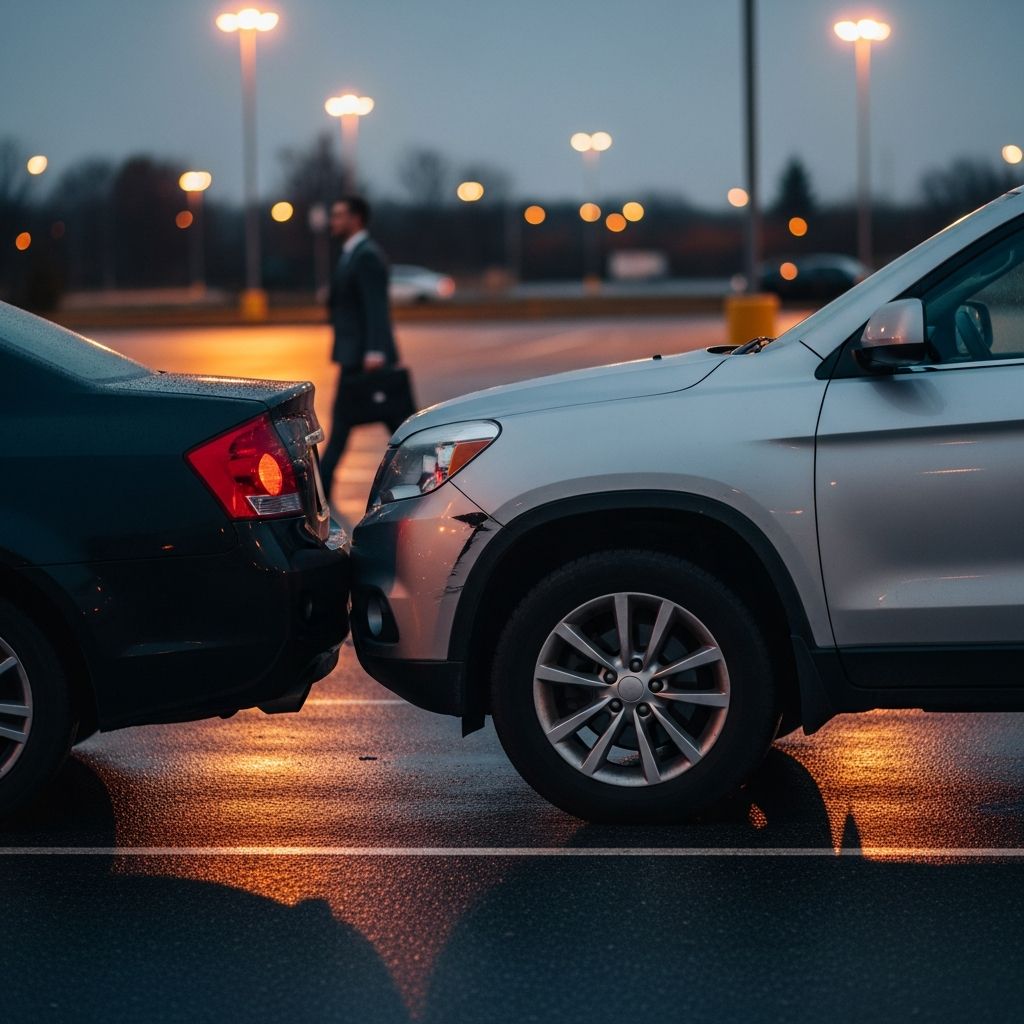
Understanding Liability Framework in Parking Lot Collisions
Parking lot accidents present unique legal challenges that differ significantly from collisions occurring on public roadways. When a vehicle collision happens in a parking area, determining who bears financial responsibility requires understanding multiple layers of legal accountability. Unlike accidents on regulated public streets where government entities maintain and oversee traffic patterns, private parking facilities create distinct liability considerations that involve drivers, property owners, and maintenance contractors.
The foundation for establishing liability in parking lot incidents rests on the legal principle of negligence. This framework requires demonstrating that a party owed a duty of reasonable care, failed to exercise that care, and directly caused damages through that failure. Understanding this structure helps accident victims identify all potentially responsible parties and pursue appropriate compensation channels.
The Four-Element Test for Establishing Negligence
Successfully proving liability in parking lot accidents requires satisfying four distinct legal elements. Each element must be established through concrete evidence to support a claim for damages.
- Duty of Care: The defendant must have owed the plaintiff a legal obligation to exercise reasonable caution. In parking lots, this duty extends to drivers toward other motorists and pedestrians, and to property owners toward visitors on their premises.
- Breach of Duty: The defendant’s conduct must have fallen below the standard expected of a reasonably careful person in similar circumstances. This could include aggressive driving, failure to yield, or a property owner’s neglect in maintaining safe conditions.
- Causation: A direct causal connection must exist between the defendant’s breach and the plaintiff’s injuries or damages. The breach cannot merely be tangential; it must be the direct cause of the accident.
- Damages: The plaintiff must suffer quantifiable harm, whether through medical expenses, property damage, lost wages, or pain and suffering.
Identifying Potentially Liable Parties
Parking lot accidents can involve multiple parties bearing varying degrees of responsibility. Identifying each liable party expands compensation opportunities for injured victims.
Driver Negligence and Traffic Violations
Other drivers represent the most obvious source of liability in parking lot collisions. When a driver fails to exercise reasonable caution—through distracted driving, excessive speed, failure to yield, or improper backing—they breach their duty of care to other motorists and pedestrians. Drivers in parking lots are legally expected to maintain awareness of their surroundings and anticipate other vehicles and pedestrians, even in low-speed environments.
The backing-up rule establishes that drivers reversing from parking spaces bear heightened responsibility for collisions. Since forward-moving vehicles have greater difficulty avoiding stationary or slowly backing vehicles, the reversing driver must constantly monitor their mirrors and surroundings. Drivers coming down parking lanes have a lower burden since they move forward with forward visibility.
Property Owner and Operator Liability
Property owners and operators bear responsibility for maintaining reasonably safe premises for visitors. This extends beyond simple negligence by other drivers to encompass the property itself. When parking lot design, maintenance, or conditions contribute to accidents, owners may share liability under premises liability theory.
Property owners must address specific hazardous conditions:
- Poor facility design with confusing traffic patterns and missing directional markers
- Inadequate or faded lane markings and signage that create confusion
- Insufficient or malfunctioning lighting that obscures visibility at night
- Obstructed sight lines from overgrown landscaping or misplaced structures
- Maintenance failures such as unrepaired potholes, oil accumulations, or drainage problems
- Inadequate security measures or lack of traffic control personnel
Third-Party Contractors and Service Providers
Maintenance companies, landscaping contractors, and security services hired to manage parking facilities may bear liability for accidents resulting from their negligent performance. If a contractor’s failure to maintain pavement, trim vegetation, or repair hazardous conditions directly contributes to an accident, the injured party may pursue claims against both the property owner and the contractor.
How Fault Determination Works in Practice
Establishing fault in parking lot accidents involves systematic analysis of available evidence and application of traffic rules adapted for private property contexts.
Evidence Used in Fault Investigations
Insurance companies and attorneys rely on multiple evidence sources to reconstruct accident circumstances:
- Surveillance footage: Security camera recordings provide objective documentation of vehicle movements, speeds, and driver actions before impact
- Witness testimony: Statements from individuals who observed the accident help establish sequence of events and driver behavior
- Incident reports: Documentation prepared by property management or security personnel immediately after accidents
- Police reports: Official records when law enforcement responds, though police involvement in private property accidents remains uncommon
- Expert accident reconstruction: Specialists analyze vehicle damage, road conditions, and physics to determine how the collision occurred
- Vehicle maintenance records: Documentation demonstrating whether vehicles had functional brakes, lighting, and other safety systems
- Traffic pattern analysis: Assessment of parking lot design and typical vehicle flow patterns
Right-of-Way Principles in Parking Areas
While parking lots are private property, right-of-way principles generally mirror public road rules, with important distinctions. Vehicles moving forward through parking lanes typically have right-of-way over vehicles backing out of spaces. Drivers entering or exiting parking rows must yield to through traffic. Left-turning vehicles must yield to oncoming traffic from the opposite direction.
However, the “duty to see what’s there to be seen” requires all drivers to observe and avoid visible hazards regardless of who technically has right-of-way. The defense that “the other vehicle came out of nowhere” rarely succeeds in litigation because drivers have a legal obligation to maintain awareness of reasonably visible conditions.
Comparative Negligence and Shared Fault
Many parking lot accidents involve shared responsibility between multiple parties. Comparative negligence laws, adopted in most states, allow injured parties to recover damages even when partially at fault, though the amount recovers adjusts based on fault percentage.
In states following “pure comparative negligence,” plaintiffs can recover damages proportional to their fault level regardless of how much responsibility they bear. However, in “modified comparative negligence” jurisdictions like Massachusetts and Illinois, plaintiffs whose fault exceeds 50% or 51% respectively cannot recover any damages.
Consider a scenario where a driver backing from a parking space fails to check mirrors adequately while another driver speeds through the parking lot distracted by their phone. Both drivers share negligence; comparative fault analysis would assess what percentage each contributed to the collision. If the backing driver was 60% at fault and the moving driver 40% at fault in a modified comparative negligence state, the moving driver could recover 60% of damages while the backing driver would receive nothing.
Property Owner Responsibilities and Safety Standards
Property owners fulfill their duty of care through proactive measures designed to prevent accidents and protect visitors.
Infrastructure and Maintenance Obligations
- Regular inspection and maintenance: Systematic reviews of pavement condition, drainage systems, and structural elements to identify and repair hazards before accidents occur
- Adequate lighting systems: Functional illumination throughout the facility, particularly in remote areas and along pedestrian pathways, reducing visibility-related accidents
- Clear signage and markings: Visible directional signs, stop signs, yield indicators, speed limit postings, and clearly painted lane markings guiding traffic safely
- Pedestrian safety measures: Designated crosswalks, curb markings, and traffic-calming features protecting foot traffic from vehicles
- Traffic flow control: One-way designation, parking lane width optimization, and junction design minimizing conflict points between vehicles
Compliance with Local Regulations
Parking facility owners must comply with local building codes, traffic ordinances, and accessibility requirements. State-specific traffic laws often apply to parking lot operations even on private property, influencing liability determinations in insurance claims and litigation. Property owners who ignore applicable regulations face enhanced liability exposure when accidents result from non-compliance.
Insurance Coverage and Claims Process
Multiple insurance mechanisms may apply to parking lot accident damages, depending on individual policy provisions and fault allocation.
Standard Liability Coverage
When another driver bears primary fault, that driver’s liability insurance should cover your damages. However, liability policy limits may prove insufficient for substantial medical bills, lost wages, and property damage. Texas and most states require drivers to carry liability insurance to cover damages they cause.
Uninsured and Underinsured Motorist Coverage
When the at-fault driver carries insufficient insurance or lacks coverage entirely, uninsured/underinsured motorist (UM/UIM) coverage on your own policy provides backup protection. This coverage bridges gaps between accident damages and the other driver’s liability limits, protecting your financial recovery.
Personal Injury Protection
Many states, including Texas, recognize personal injury protection (PIP) coverage that pays medical bills and lost income regardless of accident fault. PIP provides immediate coverage while liability claims process, reducing financial stress during recovery periods.
Premises Liability Claims
When property owner negligence contributes to accidents, injured parties may file premises liability claims against property owners’ insurance policies. These claims require proving the owner knew or should have known about hazardous conditions and failed to address them reasonably.
State-Specific Variations in Parking Lot Law
Legal principles governing parking lot accidents vary by state, affecting liability determinations and recoverable damages. California and Texas apply state-specific traffic regulations to parking lot collisions while respecting the private property context that complicates standard enforcement. Massachusetts and Illinois employ modified comparative negligence, limiting recovery for plaintiffs exceeding certain fault thresholds.
Understanding your state’s approach to comparative negligence, liability insurance requirements, and premises liability standards becomes crucial when evaluating your accident claim and potential recovery.
Frequently Asked Questions About Parking Lot Accidents
Q: Is fault always split equally in parking lot accidents?
A: No. Fault depends entirely on specific circumstances including vehicle movements, visibility conditions, signage quality, and each driver’s actions. Insurance companies and courts analyze evidence to assign precise fault percentages based on comparative negligence principles rather than assuming 50/50 splits.
Q: Can I pursue legal action against a business for a parking lot accident?
A: Yes, if the business’s maintenance negligence, inadequate lighting, dangerous design, or poor signage contributed to your accident, you may file a premises liability claim. You must demonstrate the owner knew or should have known about the hazardous condition and failed to correct it reasonably.
Q: Do police typically respond to private parking lot accidents?
A: Police often decline to issue citations or file detailed reports for private property accidents unless significant injuries or crimes occur. This means accident documentation relies heavily on surveillance footage, witness statements, and insurance investigation rather than official police reports.
Q: What should I do immediately after a parking lot collision?
A: Prioritize safety by moving vehicles to safe locations if possible and activating hazard lights. Exchange insurance information with all involved drivers, document the scene with photographs, identify and collect witness contact information, and report the accident to your insurance company promptly. Avoid admitting fault or making statements about the accident’s cause.
Q: How does the backing-up rule affect fault determination?
A: The backing-up rule establishes that drivers reversing from parking spaces bear heightened responsibility for collisions with forward-moving vehicles. Since the reversing driver has better ability to control their movement and monitor surroundings, they typically receive primary fault assignment unless the forward-moving driver was substantially negligent through speeding or distraction.
Protecting Your Legal Rights After a Parking Lot Accident
Parking lot accidents require systematic documentation and prompt legal action to protect your rights. Gather evidence while fresh, including photographs of vehicle damage, facility conditions, and accident location from multiple angles. Obtain detailed written statements from witnesses before memories fade. Request incident reports from facility management and surveillance footage if available. Report accidents to your insurance company immediately and consider consulting with a personal injury attorney before accepting settlement offers, particularly when injuries or significant damages are involved.
Understanding liability frameworks, fault determination methods, and available insurance coverage empowers you to pursue fair compensation. The complexity of parking lot accident litigation, involving multiple potential defendants and nuanced property owner responsibilities, justifies professional legal guidance to maximize your recovery.
References
- Parking Lot Liability Guide — Rob Levine Law. Accessed 2026. https://roblevine.com/parking-lot-liability-guide/
- Texas Parking Lot Laws: Who is Responsible for My Car Crash? — Crosley Law. Accessed 2026. https://crosleylaw.com/blog/parking-lot-crashes-who-has-the-right-of-way-and-who-is-to-blame/
- Parking Lot Accidents in Texas: Rules & Rights — Reyes Law. Accessed 2026. https://www.reyeslaw.com/blog/parking-lot-accident-rules-in-texas/
- Who’s Liable in a Parking Lot Accident? Fault & Compensation Guide — JJ Legal. Accessed 2026. https://jjlegal.com/blog/parking-lot-accidents-causes-liability/
- Understanding Liability In Parking Lot Collision Cases — HN Lawyers. Accessed 2026. https://www.hn-lawyers.com/blog/understanding-liability-in-parking-lot-collision-cases/
- Parking Lot Car Accidents & Potential Legal Claims — Justia. Accessed 2026. https://car-accidents.justia.com/types-of-car-accidents/parking-lot-accidents/
- Who Is at Fault for a Parking Lot Accident? — Nolo Legal Encyclopedia. Accessed 2026. https://www.nolo.com/legal-encyclopedia/who-is-at-fault-for-a-parking-lot-car-accident.html
Similar Articles








Read full bio of medha deb




