
Panhandling And The First Amendment: Key Court Rulings For 2025
Exploring whether begging on streets is shielded by the First Amendment amid ongoing legal battles and regulations.
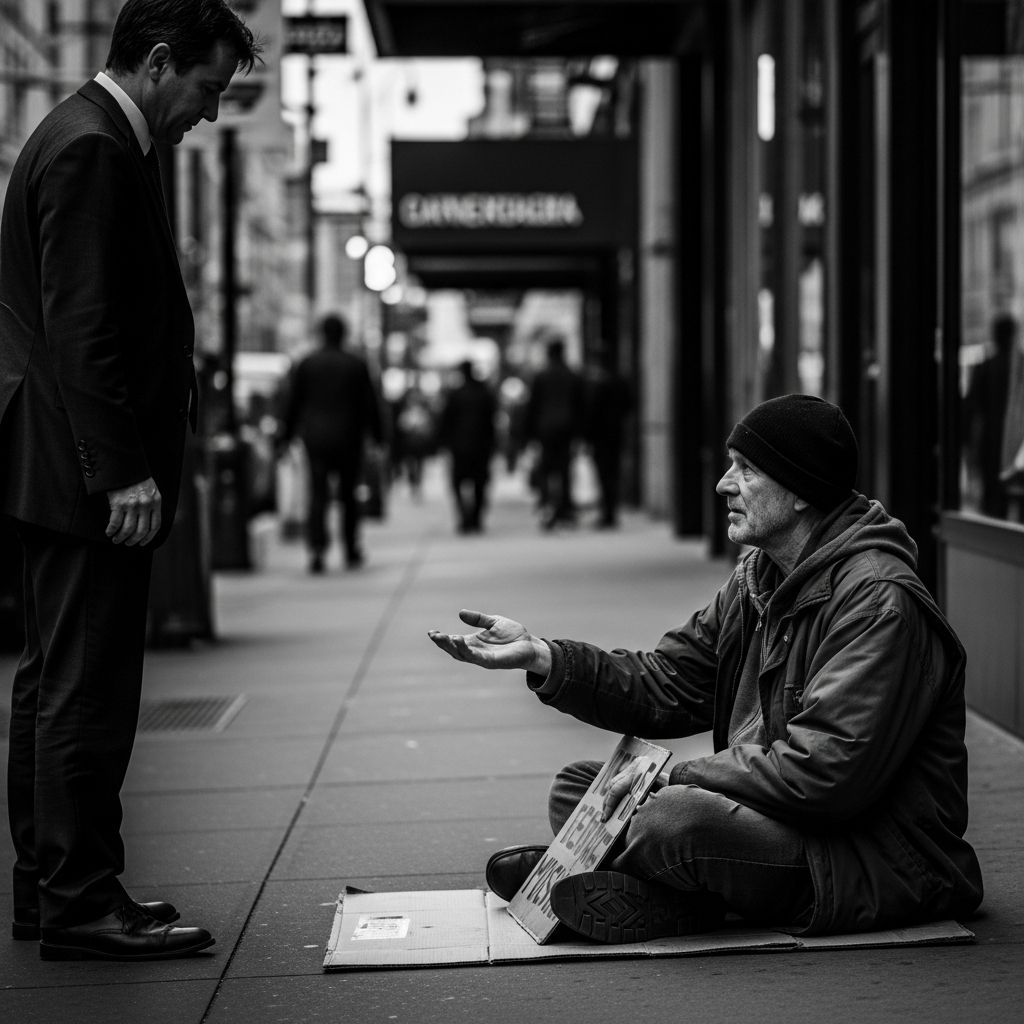
Panhandling, the act of soliciting money or aid from strangers in public spaces, sits at the intersection of personal desperation and constitutional protections. Across the United States, courts have grappled with whether this practice qualifies as speech safeguarded by the First Amendment. While not absolute, panhandling enjoys significant legal backing, prompting cities to craft narrow regulations rather than outright bans. This article dissects the evolving jurisprudence, landmark cases, permissible restrictions, and practical implications for both solicitors and communities.
Historical Foundations of Panhandling Protections
The roots of panhandling’s legal status trace back to broader First Amendment principles protecting expressive conduct in public forums. Early Supreme Court rulings on charitable solicitations laid groundwork, equating personal appeals for help with organized fundraising. Although the highest court has not directly ruled on individual begging, lower federal circuits have filled the gap, affirming that verbal requests, signs, or gestures seeking alms constitute protected expression.
In public areas like sidewalks and parks—traditional forums for speech—governments face strict scrutiny when restricting such activities. This stems from the recognition that silencing the disadvantaged based on content or viewpoint undermines democratic discourse. Panhandling often conveys messages of need, inequality, or survival, amplifying marginalized voices in society.
Key Court Victories for Panhandlers
Federal judges have repeatedly invalidated broad anti-panhandling laws, emphasizing their chilling effect on speech. A pivotal example came in a Louisiana case where a district court struck down Slidell’s ordinance requiring permits for solicitation anywhere in city limits. The ruling highlighted that licensing schemes for core protected activities are presumptively unconstitutional, as they grant officials undue discretion.
Similarly, in New Hampshire, the ACLU successfully challenged Manchester’s practices, securing a federal injunction and settlement. The court deemed peaceful requests for aid indistinguishable from charitable appeals, rejecting distinctions based on the solicitor’s appearance or cause. These outcomes underscore a pattern: ordinances targeting panhandling broadly fail unless tailored to non-expressive harms.
- Slidell, LA (2017): Permit requirement overturned; city suspended enforcement.
- Manchester, NH: Anti-panhandling ordinance struck; $89,000 settlement.
- Hudson, NH (2015): Harassment practices ended; $37,500 payout and training mandate.
Aggressive vs. Passive Solicitation: Drawing the Line
Not all panhandling receives blanket protection. Courts distinguish passive holding of signs or cups from aggressive tactics like following, touching, or blocking paths. The former aligns with pure speech, while the latter implicates conduct regulable under assault or harassment statutes.
Seven states explicitly ban “aggressive panhandling,” but these focus on behavior, not the message. For instance, laws prohibiting non-consensual contact survive scrutiny because they target actions, not words. Recent proposals in Louisiana and Arizona refined restrictions post-2021, aiming for constitutionality amid rising urban concerns.
| Type | Protected? | Legal Basis | Example Regulations |
|---|---|---|---|
| Passive (signs, silent cup) | Yes | First Amendment speech | Time/place limits only |
| Verbal polite ask | Yes | Expressive solicitation | No content-based bans |
| Aggressive (touching, pursuing) | No | Conduct, not speech | Assault/harassment laws |
Time, Place, and Manner Restrictions: What Holds Up
Governments may impose content-neutral rules on when, where, and how panhandling occurs, provided they serve significant interests like safety and leave ample alternatives. A notable upheld example involved a median ban justified by traffic hazards. The court noted the plaintiff could relocate mere feet away, preserving speech channels while addressing risks.
However, post-Reed v. Town of Gilbert (2015), scrutiny intensified. Regulations distinguishing based on subject matter—like banning immediate cash requests but allowing signs—risk invalidation for content discrimination. The Seventh Circuit in Norton v. City of Springfield (2016) voided such a law for overbreadth, as it silenced oral pleas while permitting written ones.
In April 2025, the Eleventh Circuit declared Alabama’s begging bans unconstitutional, reinforcing that total prohibitions impermissibly burden protected expression. Cities like Madison, Wisconsin, responded by revising codes to emphasize neutrality.
Supreme Court Shadows: Guidance Without Direct Mandate
The U.S. Supreme Court has sidestepped a definitive panhandling ruling, but precedents shape the landscape. Village of Schaumburg v. Citizens for Better Environment protected charitable asks, which circuits extended to personal pleas. Recent decisions like Thayer v. Worcester apply stricter content-neutrality tests, dooming many ordinances.
Scholars argue Reed signals most panhandling laws cannot withstand review, urging balanced approaches protecting “captive audiences” from intrusion without muting solicitors. This tension persists, with urban areas pushing safety amid homelessness surges.
State and Local Variations in Approach
Panhandling legality varies widely. While federal courts set baselines, states enforce differently. Private property owners, like store proprietors, can bar solicitation absent state constitutional overrides. Public transit and highways often prohibit it for safety.
Post-Norton, leagues like the League of Wisconsin Municipalities advised content-neutral drafting: define panhandling narrowly, apply uniformly, and justify with evidence. Successful models target fraud or obstruction, not poverty-driven appeals.
Broader Societal Impacts and Debates
Beyond legality, panhandling reflects deeper issues: housing crises, mental health gaps, and economic disparity. Critics view it as disruptive, linking it to crime perceptions; defenders see suppression as elitist, favoring charity over individual pleas.
Courts balance these by upholding regs proven necessary, like those near ATMs or schools, while striking viewpoint-based ones. Ongoing litigation ensures evolution, with 2025’s Eleventh Circuit win signaling strengthened protections.
Frequently Asked Questions
Is all panhandling protected speech?
No, only peaceful, non-aggressive forms. Touching or intimidating crosses into regulable conduct.
Can cities ban panhandling entirely?
Rarely; total bans violate the First Amendment unless narrowly tailored to non-speech harms.
What about private property?
Owners can prohibit it, as First Amendment binds governments, not businesses.
Do permits for panhandling pass muster?
Generally no; they enable discretionary suppression of disfavored speech.
How recent are these rulings?
Key cases span 2015–2025, with 2025 affirming bans’ unconstitutionality.
Practical Advice for Cities and Individuals
For municipalities: Document safety data, draft neutral laws, provide alternatives. For panhandlers: Stay passive, avoid high-risk zones, know local rules. Legal aid like ACLU often assists challenges.
This framework fosters coexistence, honoring expression while safeguarding order. As homelessness persists, expect further refinement.
References
- Court Affirms First Amendment Rights of Panhandlers — ACLU. 2017. https://www.aclu.org/press-releases/court-affirms-first-amendment-rights-panhandlers
- Are Panhandling and Solicitation Protected Free Speech? — Freedom Forum. 2025. https://www.freedomforum.org/panhandling-first-amendment/
- Panhandling is protected free speech — ACLU of New Hampshire. N/D. https://www.aclu-nh.org/news/panhandling-protected-free-speech/
- Panhandling Laws — First Amendment Encyclopedia, MTSU. N/D. https://firstamendment.mtsu.edu/article/panhandling-laws/
- PANHANDLING REGULATION AFTER REED V. TOWN OF GILBERT — Columbia Law Review. 2016. https://columbialawreview.org/content/panhandling-regulation-after-reed-v-town-of-gilbert/
- Panhandling Ordinances after Reed and Norton — League of Wisconsin Municipalities. 2019-03. https://www.lwm-info.org/DocumentCenter/View/2759/Panhandling-Ordinances-after-Reed-and-Norton-2019-03
Similar Articles








Read full bio of Sneha Tete




