
Prioritizing Essentials in Office Fire Emergencies
Discover critical items to grab and safety steps to follow when fire strikes your workplace for maximum protection.
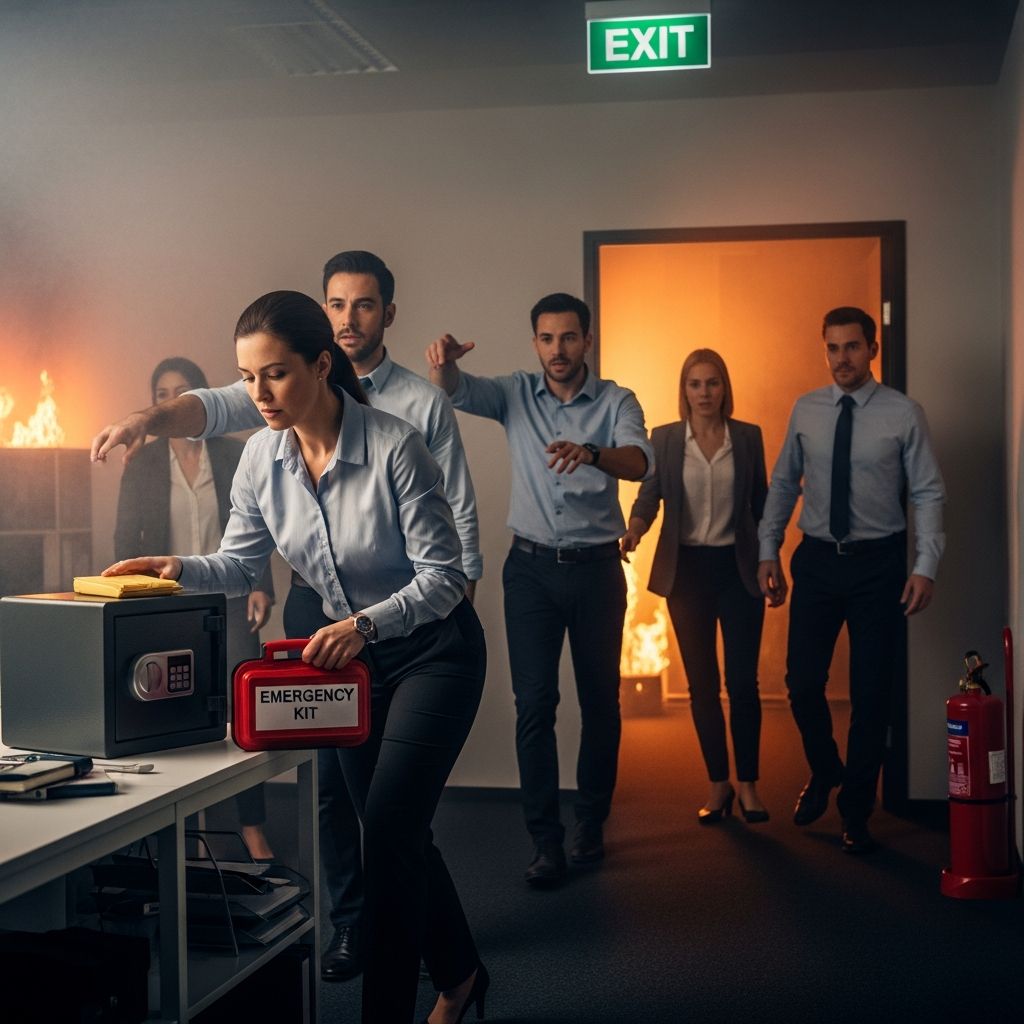
In the chaos of an office fire, split-second decisions determine outcomes for lives, property, and business continuity. While human safety always comes first, knowing what critical items to retrieve can minimize long-term disruptions. This guide outlines preparation strategies, immediate response actions, and recovery planning to help professionals navigate such crises effectively.
Understanding Workplace Fire Risks
Office environments face unique fire threats from electrical faults, overheated equipment, and cluttered spaces. In 2020, U.S. office and store fires numbered 16,500, inflicting $932 million in property damage, underscoring the need for vigilance. Common igniters include frayed cords, overloaded outlets, and unattended heaters, which can escalate rapidly in shared workspaces.
Prevention starts with routine checks: inspect wiring for wear, maintain clear pathways around heat sources, and enforce no-smoking policies near buildings. Employers must install functional smoke alarms and sprinklers, posting visible escape maps on every floor. Employees benefit from regular drills to build muscle memory for high-stress scenarios.
Life Safety: The Absolute First Priority
Before touching any possession, activate alarms and evacuate. Pull the nearest fire alarm to alert the building, enabling swift collective escape. Assess exit routes using pre-established plans—avoid elevators, feel doors for heat before opening, and use stairs. Clear obstacles like furniture or boxes to ensure unobstructed paths.
If flames are small and contained, employ the PASS method for extinguishers: Pull the pin, Aim at the base, Squeeze the handle, Sweep side-to-side. However, if smoke thickens or fire spreads, abandon suppression efforts—personal safety trumps all. Once outside, assemble at designated rally points and await professional responders.
Critical Items to Secure During Evacuation
Grabbing essentials should take seconds, focusing on irreplaceable assets. Prioritize based on your role: executives target financial records, IT staff secure data drives, while legal teams clutch client contracts. Here’s a categorized list:
- Digital Backups: USB drives or cloud-synced laptops with offsite data copies—vital for restoring operations quickly.
- Legal and Financial Documents: Incorporation papers, tax returns, insurance policies, and active contracts to prove business legitimacy post-disaster.
- Client Files: Hard copies or encrypted drives of sensitive case details, avoiding breaches during chaos.
- Personal Identification: Wallets, IDs, passports, and emergency contacts for post-evacuation logistics.
- Keys and Access Codes: Office, safe, or vehicle keys to re-enter or relocate swiftly.
Store these in a “grab-and-go” fireproof bag near your desk, tested during drills for quick access.
Building Your Office Emergency Kit
Proactive preparation includes desk-side kits for immediate needs. Essential components draw from expert recommendations:
| Item | Purpose | Why Essential |
|---|---|---|
| Flashlight with batteries | Illuminate dark exits during power loss | Prevents trips in smoke-filled areas |
| Bottled water | Hydration or wound rinsing | Sustains during lockdowns |
| First aid supplies | Treat minor burns or cuts | Bandages, ointments for initial response |
| Portable radio | Receive local alerts | Cell networks may fail |
| Emergency blanket or towel | Smoke protection | Cover face to filter fumes |
| Whistle | Signal for help | Amplifies calls in noisy environments |
Customize kits for your team’s needs, refreshing perishables like medications quarterly. Employers should provide building-wide supplies, integrating them into safety training.
Business Continuity Planning
Beyond immediate grabs, robust plans ensure survival. Offsite backups via cloud services like secure servers protect against total data loss. Designate recovery teams with roles: one handles insurance claims, another communications with stakeholders.
Conduct annual audits of physical and digital assets, prioritizing high-value items like proprietary software or patent filings. Partner with IT for automated backups, and legal for document digitization. Post-incident, activate business interruption insurance promptly to cover lost revenue.
Legal and Insurance Implications
Fires trigger liability questions: Did negligence contribute? Employers must comply with OSHA standards on fire safety equipment and training. Document pre-fire conditions with photos of hazards to counter claims. Notify insurers immediately, compiling inventories of losses for reimbursement.
For solo practitioners or small firms, secure leases with fire safety clauses and review policies for coverage gaps. In multi-tenant buildings, coordinate with management on shared systems like sprinklers.
Post-Fire Recovery Steps
After evacuation, assess damage professionally—avoid re-entering without clearance. Inventory salvaged items, photographing for claims. Communicate transparently with clients via email trees, outlining timelines.
Rebuild with enhanced measures: upgrade wiring, install smart smoke detectors, and retrain staff. Use the event as a catalyst for resilience, potentially qualifying for safety grants from local authorities.
Frequently Asked Questions (FAQs)
What should I grab first in an office fire?
Nothing—evacuate immediately after sounding the alarm. If time allows, take pre-packed bags with IDs and backups.
How do I use a fire extinguisher correctly?
Follow PASS: Pull pin, Aim low, Squeeze handle, Sweep nozzle.
Are office desks required to have emergency kits?
Not federally mandated, but recommended for preparedness. Employers should provide building-wide options.
What causes most office fires?
Electrical issues like faulty outlets and cords.
How often should we practice fire drills?
At least annually, per safety best practices.
Enhancing Prevention Through Daily Habits
Incorporate fire awareness into routines: unplug devices nightly, avoid cord daisy-chaining, and report suspicious odors. Foster a culture where safety reports are encouraged without reprisal. Technology aids too—IoT sensors detect heat spikes early, integrating with alarm systems.
For remote-hybrid workers, extend principles homeward, mirroring office kits. Overall, preparedness transforms potential catastrophe into manageable disruption, preserving livelihoods and legacies.
References
- What Should I Keep At My Desk for an Emergency? — Electro Industries. Accessed 2026. https://www.electroind.com/keep-desk-emergency/
- 4 Things to Do if You Have a Fire in the Workplace — AllFire Services LLC. Accessed 2026. https://www.allfireservicesllc.com/blog/fire-in-the-workplace/
- Workplace Fire Safety — U.S. Fire Administration (USFA.FEMA.gov). 2020 data, accessed 2026. https://www.usfa.fema.gov/prevention/workplace-fires/
Similar Articles








Read full bio of medha deb




