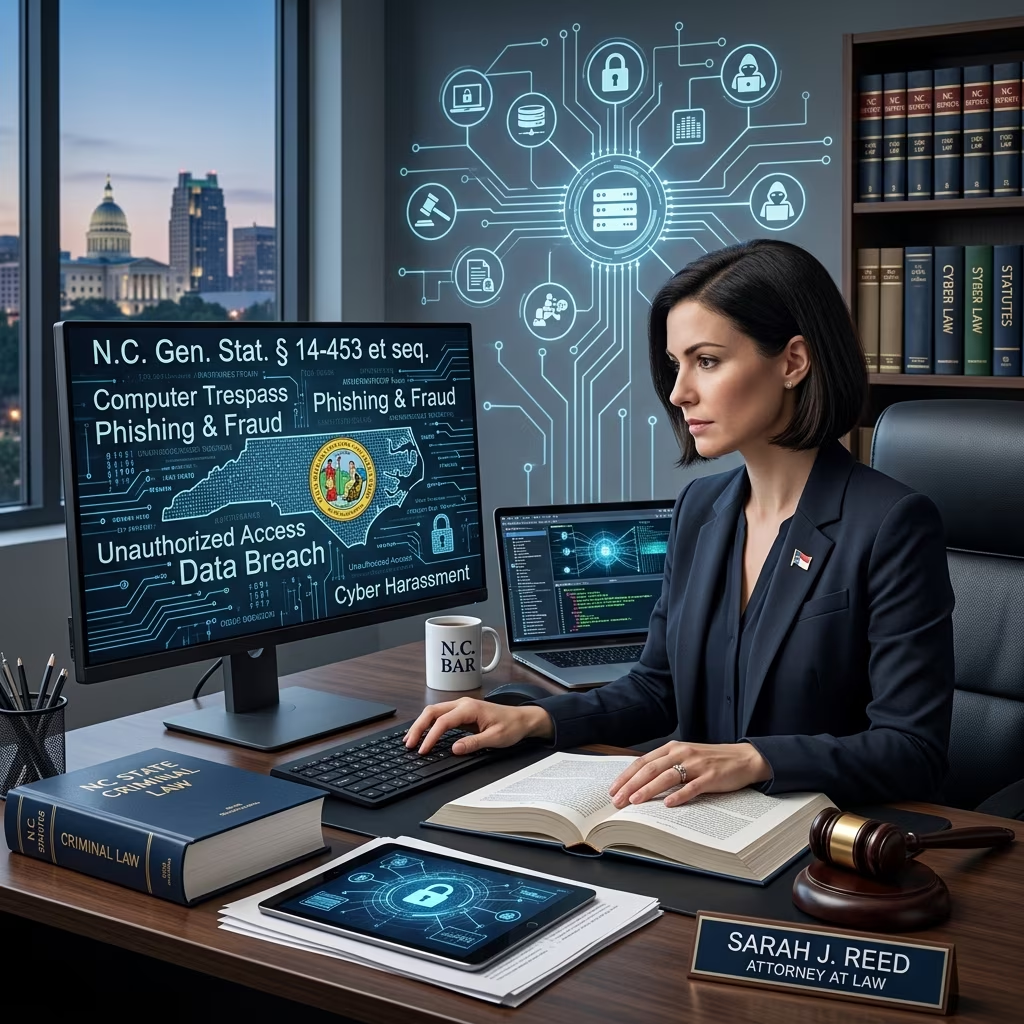
North Carolina has a detailed set of laws that govern how computers, networks, and digital information may and may not be used. These rules are primarily found in Article 60 of Chapter 14 of the North Carolina General Statutes and cover everything from basic unauthorized access to sophisticated fraud and cyberbullying. Understanding these statutes is essential for individuals, businesses, educators, and government agencies that rely on technology every day.
This guide explains the core computer crime offenses, highlights how they are classified and punished, and offers practical context for everyday situations such as workplace access, online harassment, and use of government systems. It is not legal advice, but it can help you recognize potential risks and know when to seek professional counsel.
Legal Framework for Computer Crimes in North Carolina
North Carolina treats computer crimes as distinct offenses, rather than just extensions of traditional theft or fraud. The legislature created a dedicated article to address misconduct involving computers, networks, and digital information. These laws apply whether the device is a desktop, laptop, smartphone, server, or cloud‑hosted system, as long as it falls within the statutory definition of a computer or computer network.
- Article 60, Chapter 14 – Main group of computer‑related offenses, including access, damage, denial of service, and misuse of networks.
- Related statutes – Identity theft, cyberstalking, and certain harassment offenses may be charged alongside Article 60 crimes.
- Government-specific provisions – Separate rules apply when the computer involved belongs to or is operated by a government entity.
In practical terms, this means that conduct which once might have been seen only as fraud or vandalism can now lead to computer‑specific charges if a digital system is involved.
Key Definitions: Access, Authorization, and Computer Systems
Many computer crime cases turn on what it means to access a system and whether that access was authorized. North Carolina law defines these concepts broadly, recognizing both direct and indirect use of technology.
What Counts as “Access”?
Under North Carolina statutes, “access” includes not only sitting at a keyboard and logging into a system, but also causing a computer to be used—for example, by giving information that staff then enter into a government computer. Courts have held that presenting fraudulent documents to a public office that must process them electronically can qualify as accessing a government computer.
- Direct access: Logging into a system, using credentials, or connecting a device to a network.
- Indirect access: Causing an employee or automated system to input, process, or store information as part of a scheme.
Authorization and Misuse of Permission
Authorization is usually based on the owner’s consent, workplace policies, or legal rights. A person may start with legitimate access but commit a crime if they exceed what they are allowed to do—such as accessing confidential files outside their job role or changing records for personal gain.
- Authorized use: Activities clearly permitted by policy or by the system owner.
- Unauthorized use: Access without permission, or use that violates explicit rules or legal restrictions.
- Exceeding scope: Using legitimate credentials for improper purposes, like stealing data or altering grades.
Major Categories of Computer Crimes
Article 60 organizes computer misconduct into several major categories. While each offense has its own elements, most fall into one of four broad groups.
| Category | Core Conduct | Typical Severity |
|---|---|---|
| Fraudulent Computer Access | Using or causing access to computers to defraud or obtain property/services by false pretenses. | Misdemeanor or felony, depending on value of loss. |
| Unauthorized Access & Trespass | Using a computer or network without authority, often to disrupt or view protected data. | Ranges from Class 3 misdemeanor to Class I felony based on damage amount. |
| Damage & Denial of Service | Altering, damaging, destroying, or denying services from computers or networks. | Class 1 misdemeanor to Class F or G felony, especially for government systems. |
| Cyberbullying & Related Misconduct | Using computers or networks to intimidate, torment, or harass minors or others. | Typically misdemeanor, with serious consequences for minors and adults. |
Fraud and Computer‑Based Schemes
One of the most significant computer offenses in North Carolina involves using computers to carry out fraud or obtain property or services through false pretenses. This can include classic phishing schemes, fraudulent online applications, or manipulating electronic records to gain something of value.
Elements of Computer Fraud
For a fraud‑related computer crime, prosecutors must typically show:
- A wilful act to access or cause access to a computer or network.
- A scheme or plan designed to deceive or mislead.
- An effort to obtain property, services, or other benefits through false pretenses.
- In some cases, the value of loss or gain, which determines whether the offense is a misdemeanor or felony.
When the amount involved exceeds a statutory threshold—commonly around one thousand dollars—the offense can rise to a Class G felony, bringing more serious sentencing consequences.
Accessing Government Computers
North Carolina treats misconduct involving government computers especially seriously. Separate provisions make it a crime to access government systems for fraud, to alter or damage them, or to interfere with their operation.
Fraud Involving Government Systems
Accessing a government computer to carry out a fraudulent scheme or obtain property or services can be charged as a Class F felony Examples include: Willfully altering, damaging, or destroying a government computer or related system is a separate offense, usually treated as a Class F felony due to the public impact and sensitivity of the data involved. This covers both physical damage and electronic interference that corrupts data or disrupts services. Not all computer crimes involve fraud or government systems. Many cases arise from unauthorized access, installation of malware, or disruption of another person’s computer without consent. These offenses are sometimes referred to as computer trespass or misuse of a computer network. North Carolina law makes it a crime to use a computer or network without authority with certain harmful intents, such as removing or disabling data, causing a system to malfunction, or creating unauthorized access routes. Depending on resulting damage, this conduct can be charged as: Separately, it is unlawful to willfully and without authorization alter, damage, or destroy a computer, program, system, or network. The severity depends on the financial impact of the damage: Another set of offenses focuses on denying computer services to authorized users. This can resemble a denial‑of‑service attack or intentional disruption aimed at interrupting business or government operations. North Carolina law makes it a crime to willfully and without authorization deny or cause the denial of computer or network services to somebody who is otherwise allowed to use them. This might involve overwhelming systems with traffic, disabling server access, or cutting off essential communication channels. Consequences typically include: North Carolina has specific provisions addressing cyberbullying of minors, recognizing the harm that electronic harassment can cause. These laws focus on using computers, websites, and digital communications to intimidate or torment young people. Prohibited conduct includes, among other acts: Depending on the age of the accused and the nature of the conduct, cyberbullying may be charged as a Class 1 or Class 2 misdemeanor. Even though these are not felonies, a conviction can have lasting consequences for education, employment, and future opportunities. Computer crimes in North Carolina are classified across the full range of misdemeanor and felony levels. The exact penalty depends on the statute violated, the seriousness of harm, and sometimes the dollar value of loss. Computer‑related offenses can lead to penalties such as fines, probation, and incarceration. Examples include: Beyond sentencing, a computer crime conviction can have long‑term effects: North Carolina law enforcement uses specialized units to investigate computer crimes. For example, the State Bureau of Investigation maintains a Computer Crimes Unit that assists local agencies with complex digital evidence and crimes involving online exploitation. Because many computer offenses depend on intent and authorization, simple precautions can reduce the risk of accidentally crossing legal boundaries. Yes. North Carolina law allows charges when you cause a computer to be accessed, even indirectly—for example, by submitting fraudulent documents that must be processed in electronic systems. Physical interaction with the device is not always required. It can be, if the system owner or governing policy prohibits sharing and the friend uses the credentials in a way that violates authorization or causes harm. Context matters, and even seemingly harmless sharing can create legal risk. Cyberbullying of minors is a criminal offense that can lead to misdemeanor charges and a lasting record. The law targets fake profiles, harmful postings, and repeated electronic communications intended to torment or intimidate a minor. Yes. Prosecutors focus on the scheme and intent to defraud, not just the final amount obtained. Even unsuccessful attempts may be charged if the elements of the offense are met. You should promptly consult a qualified criminal defense attorney licensed in North Carolina. Computer crime statutes are complex, and early legal guidance is often critical to protecting your rights. Avoid destroying data or attempting to alter systems, as that can create additional charges.
Damage to Government Computers
Unauthorized Access, Computer Trespass, and Damage
Basic Unauthorized Use
Altering, Damaging, or Destroying Computers
Denial of Service and Interference with Computer Services
Cyberbullying and Harassment Involving Minors
Common Cyberbullying Behaviors
Penalties, Collateral Consequences, and Enforcement
Misdemeanor vs. Felony Computer Offenses
Collateral Consequences
Investigation and Enforcement
Practical Tips to Avoid Computer Crime Liability
Frequently Asked Questions about North Carolina Computer Crimes
1. Can I be charged with a computer crime if I never touched a computer?
2. Is sharing a password with a friend a crime?
3. How serious is cyberbullying under North Carolina law?
4. If no money is stolen, can a computer fraud case still be filed?
5. What should I do if I think I am under investigation for a computer crime?
References