
Landlord Liability for Unsafe Common Stairways
Understand when landlords are legally responsible for accidents on shared stairways, how liability is determined, and what injured tenants can do.
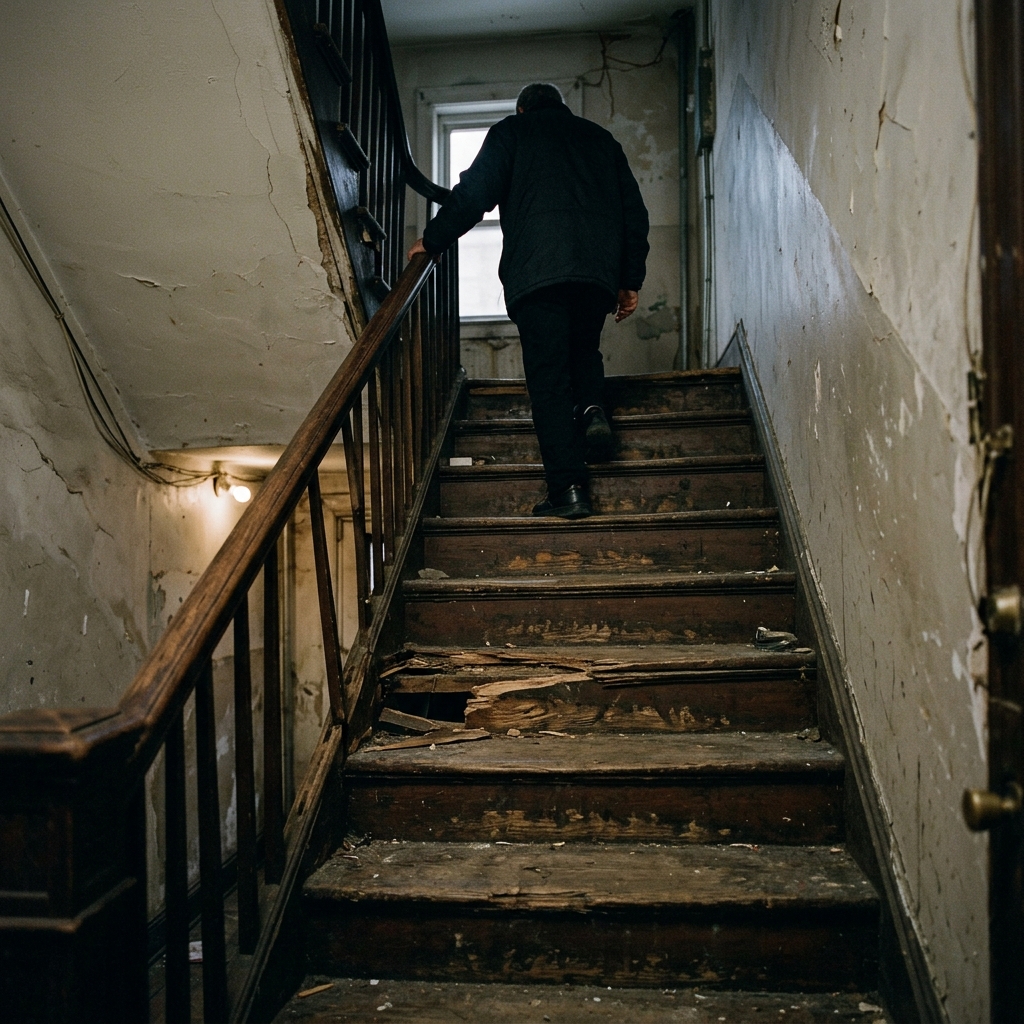
Stairways in apartment buildings and multi-unit properties are used every day by tenants, guests, delivery workers, and others who have a lawful reason to be on the premises. When those stairs are poorly designed, badly maintained, or simply neglected, serious injuries can result. In many situations, the law places responsibility on the landlord or property owner to keep common stairways reasonably safe and to answer for preventable accidents that occur there.
What Makes Common Stairways Legally Different?
In landlord–tenant law, a key distinction is whether an area is under the tenant’s control or remains under the landlord’s control. Common areas—such as stairwells, hallways, lobbies, and entrances—typically remain the landlord’s responsibility. Tenants do not have authority to repair or alter these spaces, so courts generally hold owners accountable for their condition.
- Common stairways are routes everyone in the building must use for entry, exit, and emergency egress.
- Because they are shared, tenants cannot reasonably be expected to fix defects or control how they are lit, cleaned, or maintained.
- Landlords retain control and therefore bear a legal duty of care toward people using these spaces.
This control-based distinction is central to premises liability law: the party who controls the area is usually the party charged with keeping it safe.
Core Legal Duty: Reasonable Care in Common Areas
Most courts follow a general rule: a landlord must exercise reasonable care to maintain common areas—including stairways—in a condition that is reasonably safe for lawful users. This duty does not require perfection, but it does require proactive attention to hazards.
Reasonable care for stairways commonly includes:
- Regular inspections to identify loose steps, missing handrails, poor lighting, and other dangers.
- Timely repairs or remediation once a dangerous condition is discovered or should have been discovered.
- Clear warning signs or barriers if immediate repair is not possible.
- Compliance with building codes, fire codes, and local safety regulations governing stair dimensions, railings, and lighting.
Courts frequently ask whether a landlord’s actions match what a reasonably prudent property owner would have done in similar circumstances.
Common Hazard Types on Stairways
When courts have found landlords liable for injuries on stairways, they often point to recurring types of hazards as evidence of negligence.
| Type of Hazard | Examples | Why It Matters Legally |
|---|---|---|
| Structural defects | Broken steps, loose treads, rot, rust, collapsing stairs. | Show long-term neglect or inadequate inspections; often clear violations of safety codes. |
| Handrail problems | Missing handrails, loose railings, improper height or length. | Codes frequently require stable railings; absence or instability makes falls more foreseeable. |
| Lighting deficiencies | Dim corridors, burned-out bulbs, unlit exterior stairs. | Poor visibility increases risk; owners may be liable when they ignore known lighting issues. |
| Surface hazards | Slippery finishes, water accumulation, snow and ice, uneven surfaces. | Slip risks that persist without reasonable maintenance can support negligence claims. |
| Obstructions and debris | Items left on stairs, clutter, trash, misplaced mats. | Obstacles on stairs create foreseeable trip hazards, especially if routine cleaning is lax. |
Not every imperfection creates liability. Courts look for conditions that pose an unreasonable risk of harm beyond the ordinary dangers of using stairs.
Elements of a Stairway Negligence Claim Against a Landlord
To prevail in a lawsuit against a landlord after a stairway fall, an injured person usually must prove several key elements rooted in negligence and premises liability law.
- Duty – The landlord owed a duty to maintain the stairway in a reasonably safe condition for tenants and other lawful visitors.
- Breach – The landlord failed to meet that duty—for example, by ignoring obvious structural problems or not repairing issues within a reasonable time.
- Notice – The landlord knew about the hazard or reasonably should have known (constructive notice) through inspections or reports.
- Causation – The dangerous condition was a substantial factor in causing the fall and resulting injuries.
- Damages – The injured person suffered actual harm, such as medical expenses, lost income, or pain and suffering.
Establishing each element usually requires evidence: photographs, maintenance records, building code provisions, witness testimony, and medical documentation.
Actual Notice vs. Constructive Notice
Notice—what the landlord knew or should have known—is often the most contested issue in stairway injury cases. Courts commonly distinguish between two types:
- Actual notice exists when the landlord is directly aware of the hazard—for example, through tenant complaints, inspection reports, or personally seeing the condition.
- Constructive notice arises when a danger has existed long enough or was so obvious that a reasonably diligent owner would have discovered it through inspections or ordinary care.
Many courts recognize that the duty of reasonable care includes a duty to find problems, not just to fix those that are reported. Persistent defects—such as long-term rot in stair supports or repeated complaints about lighting—often strengthen a claim that the landlord should have known.
Special Rules for Trespassers and Non-Tenants
Property owners typically owe their highest duty of care to tenants and invited guests. The duty toward trespassers—people who are on the property without permission—is more limited. However, certain conditions can still create liability.
Courts may hold a landlord or property owner responsible for harm to trespassers when all of the following are present:
- The owner created or maintained a dangerous condition on the property.
- The condition posed a high likelihood of serious injury or death.
- The owner did not warn about the danger, despite knowing that people might enter the area.
In practice, many stairway claims involve tenants, their household members, or invited visitors, who are owed a fuller duty of care than trespassers.
Municipal and Government Stairways: Limited Liability
When a stairway is part of public infrastructure—such as stairs in a public park, public building, or municipal transit facility—different rules may apply. Many states have statutes that provide governmental immunity or limit suits against municipalities for injuries arising from public stairways.
Some jurisdictions treat the construction and maintenance of public stairways as a core governmental function, which can shield the city or town from ordinary tort claims. Where claims are allowed, they may require special procedures, such as notice-of-claim requirements or shorter filing deadlines, that differ from standard landlord–tenant cases.
Defenses Landlords Commonly Raise
Even when a tenant alleges negligence, landlords often respond with defenses aimed at reducing or eliminating liability. Several recurring themes appear in stairway litigation.
- Reasonable maintenance – The landlord may argue that they conducted regular inspections, complied with codes, and promptly handled reported issues, thereby satisfying their duty of care.
- Lack of notice – Owners often contend they did not know and could not reasonably have known about the defect before the accident.
- Open and obvious danger – Some jurisdictions reduce liability if the hazard was clearly visible and the injured person failed to exercise ordinary caution.
- Comparative negligence – States that use comparative fault rules may allocate responsibility between landlord and tenant. For instance, an injured person might be found partly at fault for running on stairs or ignoring warning signs.
- Intervening causes – Landlords sometimes claim that another party’s actions (such as a contractor or another tenant) were primarily responsible for the hazard or the injury.
Despite these defenses, many courts emphasize that common areas are subject to a non-delegable duty, meaning the landlord remains legally responsible even if maintenance is contracted out to third parties.
Practical Steps for Injured Tenants
Tenants who suffer a stairway injury on rental property often have both immediate health concerns and longer-term legal decisions to make. While specific rights depend on state law, several practical steps are commonly recommended.
- Seek medical care promptly – Documenting injuries soon after the incident helps both recovery and future claims.
- Report the accident in writing – Tenants should notify the landlord or property manager in writing, keeping copies of all correspondence.
- Collect evidence – Photographs of the stairway, lighting, and any debris, as well as witness statements, can be crucial later.
- Preserve records – Keep medical bills, lost wage documentation, and any official inspection reports.
- Consult legal counsel – Premises liability and landlord–tenant rights can be complex; an attorney can evaluate negligence and possible remedies.
Some tenants may also have non-injury remedies, such as repair-and-deduct options, rent withholding, or the right to terminate a lease due to serious habitability violations, depending on local law.
Frequently Asked Questions (FAQs)
1. Is my landlord automatically liable if I fall on a stairway?
No. A fall on stairs does not automatically create liability. Courts generally require proof that the landlord failed to use reasonable care, knew or should have known about a dangerous condition, and that this failure directly contributed to the injury.
2. Does it matter if the staircase is inside my unit rather than in a hallway?
Yes. Stairways inside an individual unit can be treated differently than common-area stairs. Common stairways typically remain under the landlord’s control, giving rise to a clear duty to maintain them. Interior stairs within a rented unit may involve overlapping responsibilities depending on the lease and local law, though landlords usually must still meet basic habitability and safety standards.
3. What if I told my landlord about the problem and they did nothing?
Written complaints can be powerful evidence of actual notice. If a landlord receives reports of dangerous stairs and fails to act within a reasonable time, courts are more likely to find negligence, especially when the condition violates safety codes or creates a clear risk of serious harm.
4. Can I be partly at fault for my own stairway injury?
In many states, comparative negligence rules allow courts to assign a percentage of fault to each party. An injured tenant might have damages reduced if they were running on the stairs, intoxicated, or ignoring visible hazards. In some jurisdictions, being more than a certain percentage at fault (for example, more than 50%) can bar recovery entirely.
5. Are landlords responsible for snow and ice on outdoor stairs?
Often yes, although the details vary by jurisdiction. Many courts and local codes treat snow and ice removal from access stairs and sidewalks as part of the landlord’s duty to keep common areas reasonably safe. Failure to address accumulated ice on steps, especially over time, can support a negligence claim.
6. Does government immunity affect claims in my apartment building?
Typically no. Government immunity statutes mainly apply to public entities and publicly owned facilities, such as municipal buildings or public transit infrastructure. Private landlords and property owners generally do not benefit from those protections and remain subject to ordinary premises liability rules.
Key Takeaways for Tenants and Property Owners
- Landlords who retain control of stairways have a legal duty to keep them reasonably safe for tenants and lawful visitors.
- Common hazards—such as broken steps, missing handrails, poor lighting, and slippery surfaces—often form the basis of successful claims when ignored.
- Liability generally turns on whether the landlord used reasonable care and had actual or constructive notice of a dangerous condition.
- Tenants who are injured should act promptly to secure medical care, report the incident, gather evidence, and seek legal advice.
- Where stairways belong to municipal governments, special immunity rules and procedures may limit or shape possible claims.
References
- Landlord Liability for Defective Common Stairways — LegalMatch. 2024-01-15. https://www.legalmatch.com/law-library/article/landlord-liability-for-defective-common-stairways.html
- Defective Staircases in Apartments and Landlord Liability — Noonan & McGee, Boston Injury Lawyers. 2023-06-20. https://www.noonanlawma.com/blog/defective-staircases/
- Dangerous Stairways in Bay Area Rentals — Wolford Wayne LLP. 2023-09-05. https://wolford-wayne.com/dangerous-stairways-bay-area-apartment/
- Falls in Apartment Building Common Areas and Landlord Liability — Maggiano, DiGirolamo & Lizzi. 2022-11-10. https://www.maggianolaw.com/blog/falls-in-apartment-building-common-areas-and-landlord-liability/
- Trip & Falls on Stairs: Is My Landlord Liable For My Stairway Fall? — Maynard Injury Law. 2023-04-12. https://www.maynardinjurylaw.com/landlord-liable-stairway-fall/
- Can I Sue a Landlord for Poor Lighting or Broken Stairs? — Bailey Law Firm. 2022-08-30. https://baileylawfirmsc.com/blog/can-i-sue-a-landlord-for-poor-lighting-or-broken-stairs/
- How to Prevent Slip & Fall Accidents and Liability: Actionable Tips for Apartment Owners — American Apartment Owners Association. 2021-03-22. https://american-apartment-owners-association.org/property-management/how-to-prevent-slip-fall-accidents-and-liability-actionable-tips-for-apartment-owners/
Similar Articles








Read full bio of Sneha Tete


