
No-Fee Retainers: Ethical Limits on Free Legal Claims
Unpacking the ethics of marketing no-fee retainers as free services: rules, risks, and compliant strategies for attorneys.
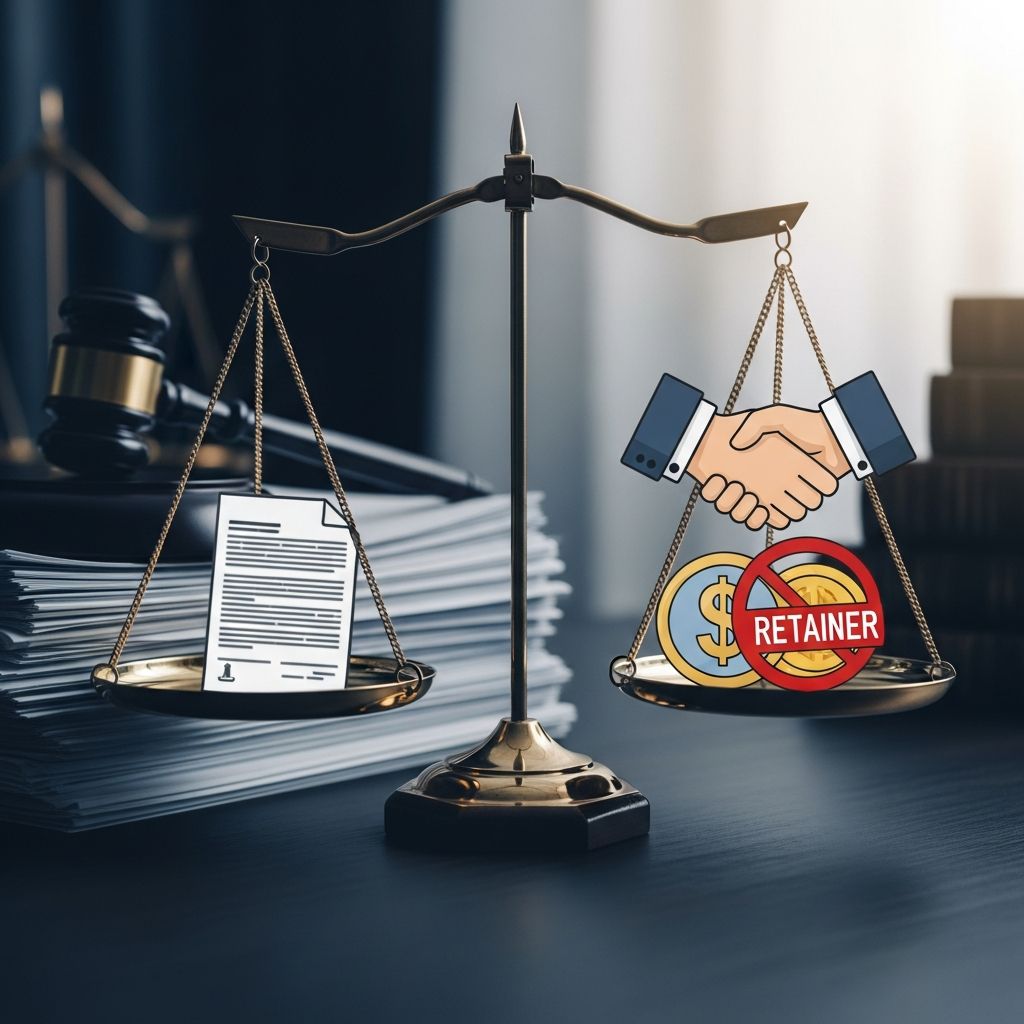
Attorneys often seek innovative ways to attract clients amid competitive markets, with no-fee retainers emerging as a popular tool. These arrangements promise upfront payments without immediate service costs, but labeling them as “free legal services” raises serious ethical flags under professional conduct rules. This article examines the nuances of such marketing, drawing on authoritative ethics opinions to guide compliant practices.
Understanding No-Fee Retainer Fundamentals
No-fee retainers, sometimes called advance fees or prepaid commitments, involve clients paying lawyers upfront to secure availability or future work. Unlike traditional retainers earned through billable hours, these can appear cost-free to clients if no additional charges apply. However, ethics regulators scrutinize them closely to prevent deception.
Core to these arrangements is the distinction between earned and unearned fees. Bar associations mandate refunds for unearned portions, prohibiting truly nonrefundable structures. For instance, clients must receive back any prepaid amount not justified by services rendered, ensuring fairness.
- Key Components: Upfront payment secures lawyer’s commitment; services billed separately or covered flat; refund obligations if representation ends early.
- Common Uses: Family law, estate planning, or consultations where ongoing availability matters.
- Risks: Mischaracterizing as “free” can imply no cost at all, misleading potential clients.
Ethical Rules Governing Fee Sharing and Advertising
Professional rules like ABA Model Rule 5.4(a) ban fee-sharing with nonlawyers, except narrow exceptions. Platforms splitting client payments with attorneys risk violations if nonlawyers take a cut, as seen in New York State Bar Association Opinion 1271. There, an online bidding service deducting 15% from client fees was deemed impermissible fee-sharing.
Advertising restrictions under Rule 7.2 further complicate matters. Payments for recommendations are forbidden if services claim to vet lawyers’ skills, turning marketing into unethical endorsements. Transparent flat fees for leads are permissible only if mechanical matching occurs, without discretionary praise.
| Rule | Prohibition | Implication for No-Fee Retainers |
|---|---|---|
| Rule 5.4(a) | No fee-sharing with nonlawyers | Bans third-party cuts from client retainers |
| Rule 7.2(a) | No payment for recommendations | Limits platform marketing claims |
| Rule 1.5(d)(4) | No nonrefundable fees | Requires refunds of unearned retainers |
| Rule 1.16(d) | Refund unearned fees on termination | Mandates prompt returns post-discharge |
Distinguishing True Pro Bono from No-Fee Arrangements
True pro bono services target indigent clients via nonprofits or approved programs, with explicit no-cost confirmations in retainers. California’s Pro Bono Practice Program requires organizations to detail zero fees and pro bono attorney involvement, ensuring transparency. Legal aid groups similarly provide free help for low-income, non-fee-generating cases, avoiding any retainer pretense.
Contrast this with no-fee retainers in for-profit practices: these often involve eventual billing, making “free” labels deceptive. Ethics opinions stress clear disclosures to avoid implying gratis services when costs may accrue later.
Marketing Pitfalls and Compliance Strategies
Promoting no-fee retainers as “free legal services” invites discipline for false advertising under Rule 7.1. Regulators view such claims as potentially misleading if clients face hidden costs or nonrefundable risks. Instead, attorneys should emphasize “no upfront fees” or “refundable advances,” detailing terms upfront.
Best practices include:
- Written agreements specifying refund conditions and earning triggers.
- Avoiding absolute “free” language; use qualifiers like “no initial retainer required.”
- Segregating funds in trust accounts until earned.
- Consulting state bar ethics hotlines for jurisdiction-specific guidance.
Recent ABA Formal Opinion 505 reinforces that advance fees cannot be nonrefundable, aligning with Model Rule 1.16(d). Even “availability retainers” demand actual commitment, rare in modern practice.
Case Studies in Ethical Breaches
Consider online platforms where clients pay into escrow, split with services: NYSBA Opinion 1271 ruled this fee-sharing, as nonlawyers profited from legal work without exceptions applying. No refund mechanisms for early terminations compounded violations under Rule 1.5.
In pro bono contexts, mislabeling paid retainers erodes trust. Oregon’s legal aid explicitly rejects fee-generating cases, preserving nonprofit integrity. Attorneys blending models risk blurring lines, prompting bar scrutiny.
State Variations in Regulation
While ABA models guide, states adapt rules. New York’s strict fee-sharing bans exceed some jurisdictions, targeting lead-gen services. California’s pro bono approvals demand malpractice proof and fee-free retainers. Attorneys must review local opinions, as marketing one state may violate another’s rules for interstate clients.
| State/Body | Key Stance on No-Fee Retainers | Pro Bono Distinction |
|---|---|---|
| New York (NYSBA) | Bans nonlawyer splits; mandates refunds | Strict advertising rules |
| California (State Bar) | Approves nonprofits with no-cost retainers | Requires mission, insurance docs |
| ABA (Model Rules) | No nonrefundables; refund on termination | Guides pro bono via LSC funding |
| Oregon (OSBar) | Legal aid avoids fee cases | Nonprofit focus on indigent |
Practical Tools for Ethical Marketing
To thrive ethically, integrate compliance into client intake:
- Fee Agreements: Detail retainer nature, earning basis, refund policy.
- Website Disclosures: Use disclaimers: “No-fee retainers subject to terms; not free services.”
- Client Consults: Verbally explain distinctions from pro bono.
- Audit Ads: Review for Rule 7.1 compliance pre-publication.
Law firms can leverage certified referral services, which operate no-fee panels ethically. These provide leads without fee-splitting risks.
Frequently Asked Questions (FAQs)
Can attorneys market no-fee retainers as completely free?
No, such claims risk misleading clients under Rule 7.1. Specify refundable advances and potential costs.
What makes a retainer nonrefundable, and why is it banned?
Nonrefundables lock fees regardless of work done, violating Rules 1.5 and 1.16. All advances must refund unearned portions.
Are online lead services safe for no-fee arrangements?
Not if they share fees or recommend via vetting claims, per Rule 5.4 and 7.2.
How do pro bono retainers differ from commercial ones?
Pro bono confirms zero cost for indigent clients via approved nonprofits; commercial retainers involve payments.
What if a client terminates early—must I refund?
Yes, immediately refund unearned fees per Rule 1.16(d).
Building Client Trust Through Transparency
Ethical marketing prioritizes clarity over hype. By avoiding “free” overstatements, attorneys foster long-term relationships and sidestep grievances. Regular ethics training and bar updates keep practices aligned, turning compliance into a competitive edge.
In competitive fields, transparent no-fee options attract clients seeking security without deception. Pair with value propositions like fixed pricing or consultations to differentiate ethically.
References
- Ethics Opinion 1271: Sharing of Legal Fees with Non-Lawyer — New York State Bar Association. 2023. https://nysba.org/ethics-opinion-1271-sharing-of-legal-fees-with-non-lawyer/
- Nonrefundable Retainer Fees Are Unethical? – ABA Formal Ethics Opinion 505 — American Bar Association. 2023-05. https://www.americanbar.org/content/dam/aba/administrative/professional_responsibility/aba-formal-opinion-505.pdf
- Pro Bono Practice Program: FAQ — The State Bar of California. 2024. https://www.calbar.ca.gov/access-justice/volunteer-pro-bono/pro-bono-practice-program/pro-bono-practice-program-faq
- Legal Aid – Oregon State Bar — Oregon State Bar. 2024. https://www.osbar.org/public/ris/lowcostlegalhelp/legalaid.html
- Legal Aid and other Low-Cost Legal Help — LawHelp.org. 2024. https://www.lawhelp.org/resource/legal-aid-and-other-low-cost-legal-help
- I Need Legal Help | Legal Services Corporation — Legal Services Corporation. 2024. https://www.lsc.gov/about-lsc/what-legal-aid/i-need-legal-help
Similar Articles








Read full bio of Sneha Tete




