
Safeguarding Innovations: NDAs for Invention Protection
Discover how non-disclosure agreements shield your inventions from theft during pitches, partnerships, and early development stages.
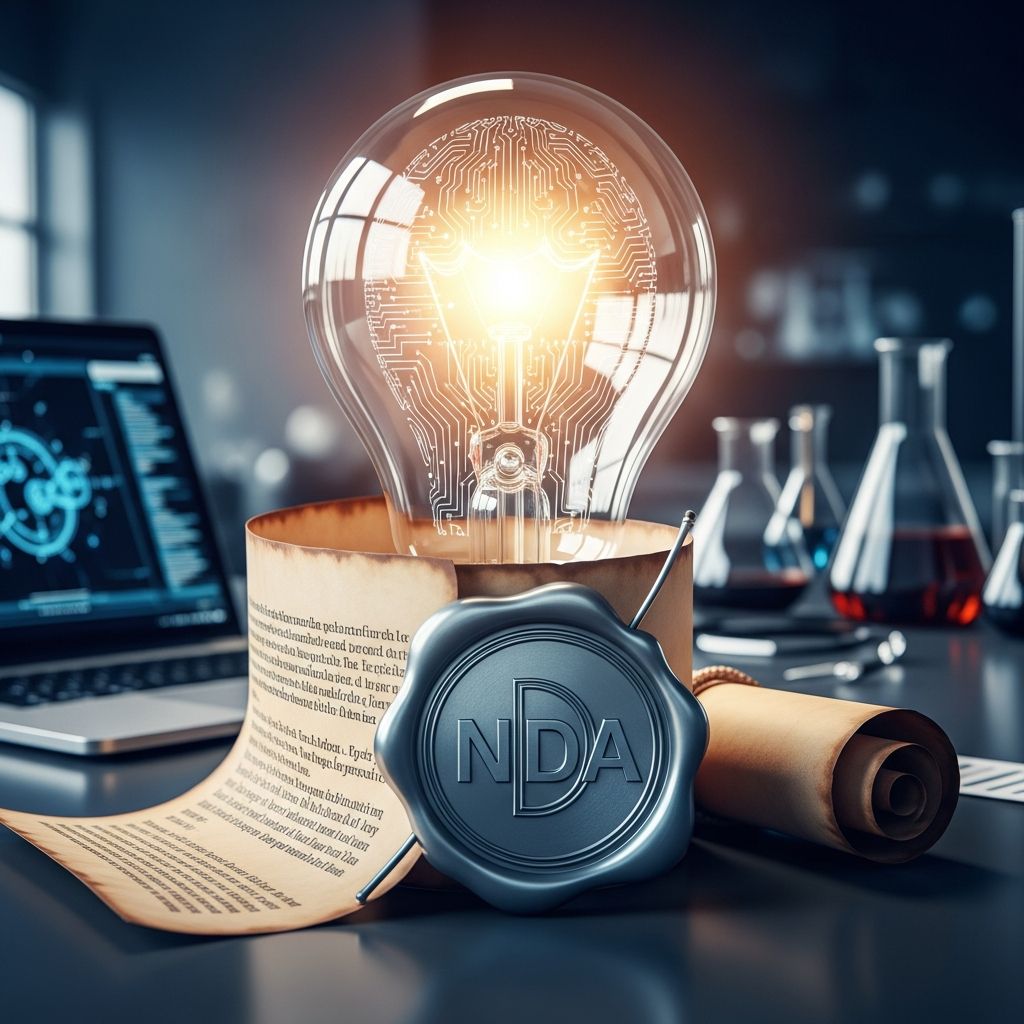
In the fast-paced world of innovation, small business owners and inventors face significant risks when sharing ideas with potential partners, investors, or collaborators. A non-disclosure agreement (NDA) serves as a critical legal tool to maintain confidentiality, ensuring that sensitive details about an invention remain protected until formal intellectual property rights, such as patents, can be secured. This comprehensive guide delves into the mechanics of NDAs, their role in invention safeguarding, essential components, and strategic implementation for optimal protection.
Understanding the Role of NDAs in Innovation Security
NDAs create a binding contractual obligation between parties, compelling the recipient of confidential information to refrain from disclosing or misusing it. For inventors, this is particularly vital during preliminary discussions where pitching an idea could otherwise lead to theft or premature public disclosure, jeopardizing patent eligibility under first-to-file rules. Unlike patents, which offer time-limited exclusivity, NDAs provide immediate, flexible protection for trade secrets, prototypes, and developmental concepts that may not yet qualify for statutory IP rights.
By establishing a confidential relationship, NDAs deter unauthorized use and provide a clear pathway for legal recourse if breached. They are especially useful in scenarios where inventors seek licensing deals, funding, or manufacturing partnerships without fully revealing the invention’s inner workings upfront. Research from legal experts emphasizes that without an NDA, public disclosures can render an invention unpatentable, as novelty is lost once information enters the public domain.
Types of NDAs Tailored for Invention Discussions
Selecting the appropriate NDA type depends on the nature of the interaction. Unilateral NDAs protect information disclosed by one party to another, ideal for inventors pitching to investors or manufacturers where only the inventor’s details are shared. Mutual NDAs, conversely, safeguard exchanges between both parties, suitable for joint ventures or collaborative R&D where reciprocal confidentiality is needed.
- Unilateral NDA: One-way protection; common in investor pitches or employee hires.
- Mutual NDA: Two-way safeguards; essential for partnerships.
- IP-Specific NDA: Focused on inventions, explicitly covering prototypes, formulas, and designs.
Hybrid variations can incorporate arbitration clauses for private dispute resolution, avoiding public court proceedings that might expose secrets further.
Core Elements of a Robust NDA for Inventions
A well-drafted NDA must precisely delineate protected information to withstand legal scrutiny. Key provisions include:
| Element | Description | Purpose for Inventions |
|---|---|---|
| Definition of Confidential Information | Explicitly lists trade secrets, designs, processes, and data as protected | Prevents ambiguity in what constitutes misuse of invention details |
| Exclusions | Public domain info, independently developed data, or required disclosures | Balances fairness while focusing protection on novel aspects |
| Obligations of Recipient | Non-use, non-disclosure, secure storage requirements | Ensures invention data isn’t reverse-engineered or shared |
| Duration | Typically 2-5 years or perpetual for trade secrets | Matches invention lifecycle, extending beyond patent pendency |
| Breach Remedies | Damages, injunctions, attorney fees | Provides swift enforcement against theft |
These elements form the backbone of enforceability, with courts upholding NDAs that demonstrate clear intent and reasonable scope.
When to Deploy an NDA: Critical Scenarios
Timing is crucial; NDAs should precede any substantive disclosure. Common triggers include:
- Pitching to venture capitalists or angel investors seeking proof-of-concept demos.
- Negotiating with manufacturers or suppliers for prototyping.
- Onboarding contractors, freelancers, or employees involved in development.
- Exploring licensing opportunities with established companies.
Refusal to sign often signals high risk—reputable partners view NDAs as standard practice. In high-stakes tech sectors, combining NDAs with provisional patent applications (PPAs) offers dual-layer defense: PPAs secure a filing date, while NDAs prevent interim leaks.
Limitations and Complementary Protection Strategies
NDAs are not infallible. They cannot prevent independent invention or information already public, and enforcement requires proof of breach. Moreover, overly broad NDAs risk invalidation for unreasonableness. To bolster them:
- File Provisional Patents: Establishes priority date for up to one year, allowing safe disclosures.
- Trademark and Copyright: Protects branding and expressions tied to the invention.
- IP Insurance: Covers litigation costs from infringement claims, complementing NDA remedies.
- Implied Confidentiality: As a last resort, but harder to prove without writing.
Best practices advocate a multi-tiered approach: NDA first, followed by formal IP filings.
Enforcing NDAs: From Breach Detection to Remedies
Upon suspected violation, swift action preserves rights. Steps include cease-and-desist letters, followed by litigation for injunctions halting misuse and monetary damages compensating losses. Courts award exemplary damages for willful breaches, reinforcing deterrence. Arbitration clauses expedite resolutions confidentially. Statistics from IP law firms indicate high success rates for well-documented NDA claims, underscoring proactive drafting.
Best Practices for Small Businesses Implementing NDAs
- Customize Templates: Adapt to industry specifics, avoiding generic forms.
- Require Signatures Pre-Disclosure: Never share details without executed agreements.
- Train Teams: Educate staff on NDA protocols and handling.
- Review Periodically: Update for legal changes or business evolution.
- Integrate into Workflows: Make NDAs routine for all external engagements.
Small businesses benefit immensely, as NDAs level the playing field against larger competitors with deeper legal resources.
Frequently Asked Questions (FAQs)
What if a party refuses to sign an NDA?
Proceed cautiously; gauge their reputation but limit disclosures to high-level overviews to spark interest toward signing.
Can NDAs protect patent-pending inventions?
Yes, they prevent leaks that could invalidate novelty, especially pre-PPA filing.
How long should an NDA last for trade secrets?
Indefinitely, as trade secret status persists without public disclosure.
Are verbal NDAs enforceable?
Rarely; written agreements with specifics are essential for court viability.
Does breaching an NDA affect patent rights?
No, but the breacher’s actions could lead to independent claims; your NDA breach suit stands separately.
Conclusion: Empower Your Innovations with Proactive Protection
Integrating NDAs into your innovation strategy transforms vulnerabilities into strengths. By thoughtfully deploying these agreements alongside patents and insurance, small businesses can confidently navigate collaborations, secure funding, and commercialize inventions without fear of misappropriation. Consult legal professionals to tailor NDAs to your unique needs, ensuring your breakthroughs remain yours.
References
- Does an NDA Cover Intellectual Property Rights? — Allen Dyer. 2023. https://allendyer.com/does-an-nda-cover-intellectual-property-rights/
- How to Protect Your Invention From Theft When Pitching It — Nolo. 2023. https://www.nolo.com/legal-encyclopedia/how-protect-invention-when-pitching-30208.html
- How NDAs Protect Your Intellectual Property: A Business Guide — Klausner & Cook. 2023. https://www.klausnercook.com/blog/how-ndas-protect-your-intellectual-property-a-business-guide
- How non-disclosure agreements can protect your vital business ideas — Thrings. 2023. https://www.thrings.com/blog/how-non-disclosure-agreements-can-protect-your-vital-business-ideas
- How to Legally Protect an Invention Before Getting a Patent — Justia. 2023. https://www.justia.com/intellectual-property/patents/protecting-an-invention-before-getting-a-patent/
Similar Articles








Read full bio of Sneha Tete




