
Navigating Private Judge Meetings: Best Practices
Master the art of conducting effective in-chambers conferences with judges while maintaining professionalism.
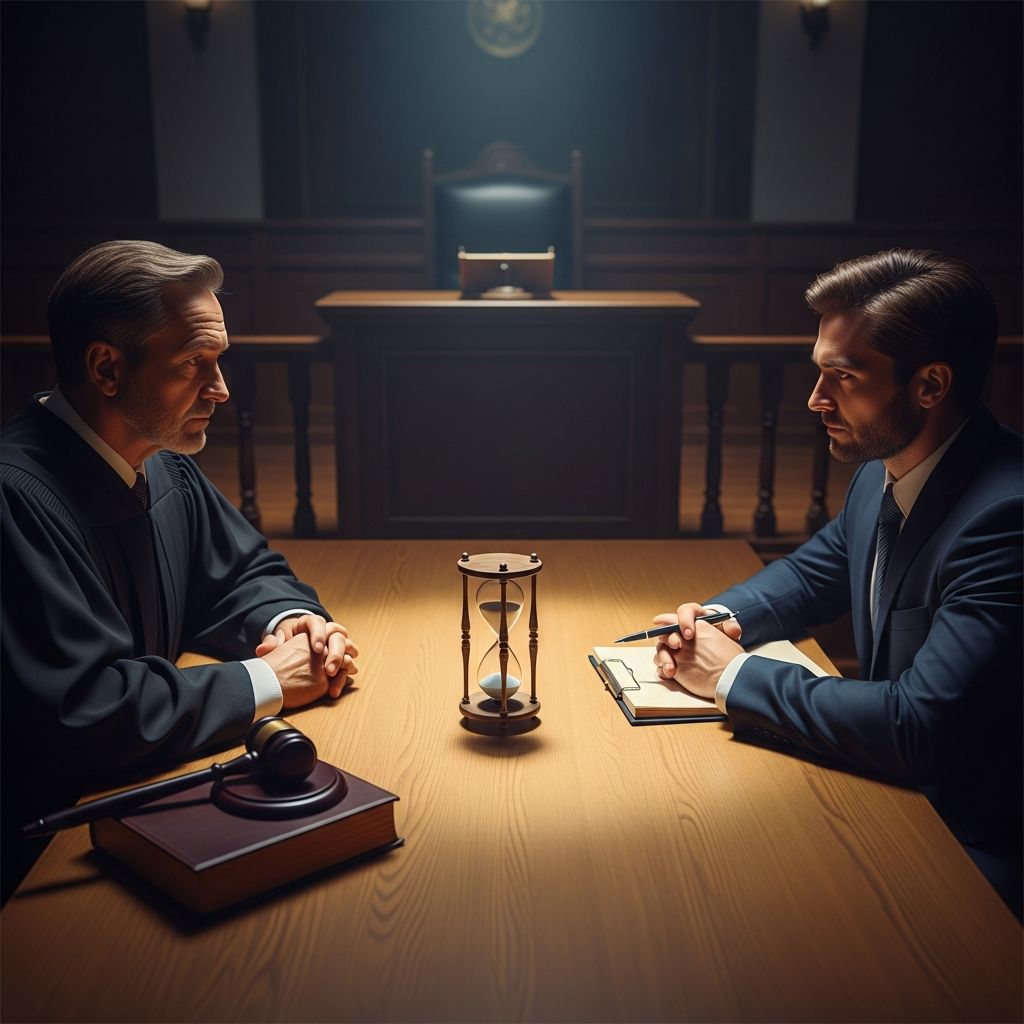
Understanding the Nature of In-Chambers Conferences
Private meetings between attorneys and judges in chambers have become an established practice within the American legal system. These confidential sessions occur outside the formal courtroom setting and typically happen without the presence of opposing counsel or the parties themselves. While such conferences are permissible under most jurisdictional rules, they require careful navigation to ensure compliance with ethical standards and judicial expectations.
The fundamental purpose of chambers conferences is to facilitate informal discussions about case management, discovery disputes, and potential settlement opportunities. Judges often utilize these private moments to explore whether parties can resolve contentious issues without consuming valuable court time. However, the informal nature of these meetings does not diminish the importance of maintaining professional decorum and adhering to established guidelines for attorney conduct.
Understanding what chambers conferences are—and what they are not—forms the foundation for engaging in them appropriately. These sessions are distinct from formal hearings, though orders may result from discussions held during them. The absence of a courtroom audience and formal record does not mean that conduct during chambers conferences is irrelevant or inconsequential to a case’s outcome.
The Critical Role of Good Faith Conferral
One of the most significant responsibilities attorneys face when meeting privately with judges is the obligation to engage in good faith conferral. Federal Rules of Civil Procedure and many state rules explicitly require that parties attempt to resolve disputes cooperatively before filing motions with the court. This requirement serves multiple purposes: it reduces judicial workload, encourages settlement, and promotes professionalism within the legal system.
Good faith conferral means approaching chambers conferences with a genuine intention to understand the opposing party’s position and work toward resolution. It requires listening actively, responding thoughtfully to concerns raised by opposing counsel, and presenting your client’s position in measured, professional language. When attorneys enter these meetings with predetermined conclusions and unwillingness to engage meaningfully, courts take notice and often respond with sanctions.
Courts scrutinize whether attorneys have satisfied their conferral obligations before ruling on contested motions. Judges want evidence that the parties genuinely attempted to narrow their differences and that the attorney approaching the court has exhausted reasonable efforts to reach agreement. When conferral appears perfunctory or adversarial in tone, judges may view subsequent motions as premature and punish the attorney responsible for failing to confer properly.
Professional Conduct Standards in Private Settings
The informal environment of chambers conferences does not provide an exception to professional conduct rules. Attorneys must maintain the same level of courtesy, honesty, and decorum in private meetings with judges as they would demonstrate in open court. The fact that no court reporter is present and no public record exists does not justify behaving unprofessionally or making statements that misrepresent facts to the court.
Courts have articulated clear expectations for how attorneys should comport themselves during chambers conferences. Professionalism includes arriving on time, being prepared to discuss the relevant issues substantively, listening respectfully to opposing counsel’s arguments, and refraining from personal attacks or inflammatory language. Judges notice when attorneys attempt to dominate conversations, refuse to acknowledge valid points made by the other side, or use the informal setting to make threats or demands.
One particularly problematic conduct pattern involves attorneys who impose unusual conditions on their willingness to participate in conferral. For example, insisting that a meeting only occur if it is recorded, or refusing to meet in person and demanding video conferencing with special arrangements, can signal bad faith and unwillingness to engage genuinely. Such obstruction of the normal conferral process may result in judicial findings that an attorney failed to meet and confer appropriately.
Common Pitfalls That Lead to Court Sanctions
Several recurring mistakes create situations where judges find that attorneys have mishandled chambers conferences and issue sanctions accordingly. Understanding these pitfalls enables attorneys to avoid them in their own practice.
Misrepresenting Conferral Efforts: One of the most serious mistakes occurs when an attorney tells a judge that the parties have met and conferred in good faith when, in reality, meaningful conferral never took place or was inadequate. Courts view such misrepresentations as violations of professional responsibility and potential contempt of court. If an attorney represents that conferral occurred when opposing counsel disputes this claim, the judge will investigate further and may find the attorney’s account unreliable.
Confrontational Tone and Adversarial Posturing: Approaching chambers conferences as combat situations where one side must dominate rather than as problem-solving opportunities creates unnecessary tension. Attorneys who escalate conflicts during private meetings, use threatening language, or take rigid positions without acknowledging the other side’s legitimate concerns signal bad faith engagement to judges. This confrontational approach contradicts the cooperative spirit that chambers conferences are designed to foster.
Inadequate Preparation: Attending chambers conferences without having reviewed relevant case materials, discovery issues, or factual details suggests the attorney lacks commitment to genuine resolution. Judges expect attorneys to be sufficiently prepared to discuss substantive issues intelligently and to understand their client’s positions regarding disputed matters. An unprepared attorney cannot engage in meaningful conferral.
Failure to Understand ESI Obligations: In contemporary litigation, many chambers conferences involve electronically stored information (ESI) disputes. Attorneys must possess sufficient knowledge about their clients’ ESI systems, preservation obligations, and discovery capabilities to discuss these matters competently. Blindly following firm protocols or generic discovery checklists without understanding the underlying principles often leads to problematic positions that courts reject.
Establishing Clear Internal Guidelines and Training
Law firms that establish comprehensive internal guidance regarding chambers conferences and discovery obligations create better outcomes for their clients. However, the mere existence of written guidelines is insufficient without accompanying attorney training that ensures lawyers understand the principles behind the guidance and can apply them flexibly to varying circumstances.
Internal policies should address how attorneys should approach conferral, what tone and language are appropriate, and what preparation is necessary before meeting with judges. These guidelines should emphasize that rigid adherence to checklists or forms cannot substitute for thoughtful analysis of each case’s unique requirements. Attorneys need to understand why the guidelines exist and how to exercise judgment in applying them.
Training programs should incorporate concrete examples of effective and ineffective chambers conference conduct. Rather than presenting generic best practices, firms can demonstrate how different communication approaches might be received by judges and what consequences follow from various conduct patterns. Attorneys who understand the reasoning behind professional standards internalize them and apply them more consistently than those who view them as arbitrary rules to follow.
Moreover, firms should emphasize that ESI knowledge is not optional or delegable to support staff. Attorneys representing clients in modern litigation must possess sufficient understanding of their clients’ electronic systems, preservation obligations, and the technical aspects of ESI production to discuss these matters credibly with judges and opposing counsel. Gaps in this knowledge become apparent during chambers conferences and undermine attorney credibility.
Maintaining Judicial Impartiality and Fairness
While chambers conferences are permitted, courts must be cautious to ensure that private meetings do not compromise judicial impartiality or create unfair advantages for one party. The judge must treat both sides equitably and ensure that both attorneys have equal opportunity to present their positions and be heard. When conducting chambers conferences, judges typically follow specific protocols to protect against bias allegations.
If a judge holds a chambers conference with one attorney without the other party or opposing counsel present, the judge should generally inform all parties of what transpired and provide opposing counsel the opportunity to respond. Ex parte communications—communications with one party in the absence of the other—are generally prohibited in litigation because they create opportunities for improper influence and undermine the appearance of fairness essential to judicial legitimacy.
Attorneys should understand that judges have professional obligations to prevent chambers conferences from becoming opportunities for improper ex parte contact. If a judge suggests that certain information be kept confidential from the opposing party, or if a judge appears to be hearing detailed arguments from one side without allowing equal presentation from the other, attorneys should exercise caution and ensure that the proceedings remain fair to all parties.
The Importance of Honest Representation to the Court
Honesty in all communications with the court ranks among the most fundamental obligations attorneys owe to the legal system. This obligation extends to chambers conferences, where informal settings might create an illusion that accuracy and candor matter less than in formal proceedings. In reality, judges view any misrepresentation to the court—whether made in chambers or in open court—as a serious breach of professional responsibility.
Specific representations that attorneys frequently make during chambers conferences include claims about the adequacy of conferral efforts, the reasonableness of the client’s positions, the facts of the case, and the status of discovery. Each of these representations must be accurate. If an attorney claims that the parties have conferred adequately when they have not, or represents that the client’s position is reasonable when the attorney knows evidence contradicts this claim, the attorney breaches the duty of candor owed to the court.
The consequences of misrepresentation extend beyond sanctions. Judges lose confidence in attorneys who make false statements, and that lost confidence affects how judges view all future representations from that attorney. An attorney’s credibility, once damaged, becomes difficult to restore and may adversely affect the attorney’s effectiveness in representing current and future clients.
Balancing Advocacy with Cooperation
A common tension that attorneys face involves balancing zealous advocacy for clients with the cooperative approach that chambers conferences require. Some attorneys fear that engaging cooperatively with opposing counsel or being flexible regarding discovery might disadvantage their clients. However, courts increasingly recognize that adversarial posturing in contexts designed to encourage settlement and cooperation contradicts the purpose of chambers conferences and violates professional norms.
Effective advocacy includes understanding when flexibility serves client interests better than rigid positions. Settlement discussions, discovery negotiations, and case management conferences all benefit from an approach that acknowledges opposing viewpoints, seeks common ground, and proposes creative solutions. An attorney who can present the client’s position persuasively while demonstrating understanding of legitimate concerns raised by the other side typically achieves better outcomes than an attorney who reflexively opposes every suggestion or request.
The adversarial nature of litigation does require attorneys to protect client interests vigilantly. However, this vigilance operates most effectively when attorneys understand the distinction between different contexts and adjust their approach accordingly. Chambers conferences are not the venue for hardline positions and confrontational tactics; they are forums for problem-solving and exploration of settlement possibilities. Attorneys who maintain this perspective contribute to more productive interactions with judges and opposing counsel.
Responding to Judicial Expectations and Practices
Individual judges often establish published practices and procedures that govern how attorneys should handle various matters, including chambers conferences and discovery disputes. Some judges require parties to jointly contact chambers to schedule informal status conferences for discovery issues. Others have specific protocols for how discovery disputes should be presented and what level of conferral must precede any motion to compel.
Attorneys have a responsibility to learn a judge’s individual practices before appearing in that judge’s court. Failure to follow established practices, either from negligence or deliberate choice, can result in adverse rulings or sanctions. When a judge has published expectations about how attorneys should approach chambers conferences, that judge will evaluate attorney conduct against those explicit standards.
Additionally, judges expect attorneys to identify appropriate persons within their organization who possess knowledge about client matters and can facilitate discussion about discovery issues and ESI obligations. Bringing attorneys to chambers conferences who lack authority to make decisions or who cannot discuss ESI systems competently frustrates the conference’s purpose and suggests that the attorney is not taking the proceeding seriously.
Frequently Asked Questions About Chambers Conferences
Q: Are chambers conferences mandatory, or can attorneys refuse to attend them?
A: While judges generally encourage chambers conferences and may schedule them to address discovery disputes or settlement possibilities, the specific requirements depend on local court rules and individual judge practices. Attorneys should not reflexively refuse to attend chambers conferences, as doing so may prejudice their position with the court. However, if a judge suggests an improper ex parte communication, an attorney should seek clarification and protect the client’s right to fair proceedings.
Q: What should an attorney do if a judge makes a statement during a chambers conference that seems biased or improper?
A: If a judge says something concerning during a chambers conference, the attorney should take careful notes, request that the statement be clarified, and consider whether to request that the matter be placed on the formal record. If the attorney believes bias exists, consulting with senior attorneys in the firm and considering whether recusal is appropriate may be necessary. In rare situations, the attorney may need to move for the judge’s recusal.
Q: Can an attorney record a chambers conference with the judge?
A: Recording is generally not permitted without the judge’s express permission and the consent of all parties present. In fact, insisting on recording when the judge prefers informal discussion may be viewed as bad faith refusal to engage in genuine conferral. Attorneys should ask the judge about recording rather than making unilateral demands.
Q: What is the difference between a chambers conference and a formal hearing?
A: Chambers conferences are informal, off-the-record discussions typically held in the judge’s private office. Formal hearings occur in the courtroom or on the record, with court reporters present and a written record created. Orders may result from chambers conferences, but the informal setting and absence of a formal record distinguish them from hearings.
Q: How can an attorney prepare effectively for a chambers conference regarding ESI disputes?
A: Attorneys should thoroughly review their clients’ ESI systems, understand preservation obligations, know what ESI has been produced, and be prepared to discuss any technical limitations or costs associated with ESI discovery. The attorney should also understand the other party’s positions regarding ESI and be ready to discuss potential compromises or solutions. Bringing a knowledgeable representative from the client’s organization may facilitate productive discussion.
References
- Federal Rules of Civil Procedure Rule 26(f) and Rule 37 — United States Courts. 2024. https://www.uscourts.gov/rules-policies/federal-rulemaking/civil-rules
- How Failing to Meet and Confer Effectively Can Lead to Sanctions — Minerva26. 2024. https://minerva26.com/episode-170-how-failing-to-meet-and-confer-effectively-can-lead-to-sanctions/
- Judge Heil Chambers Rules — United States District Court, Northern District of Oklahoma. 2024. https://www.oknd.uscourts.gov/oknd/JudgesInformation/JFH_Chambers_Rules.pdf
- California Rules of Professional Conduct on Ex Parte Communications — State Bar of California. 2024. https://www.calbar.ca.gov/
Similar Articles








Read full bio of Sneha Tete




