
Navigating Equality: The Shifting Terrain of LGBTQ+ Rights in the American South
Exploring the demographic realities, legislative battles, and grassroots resilience of LGBTQ+ communities in the Deep South.
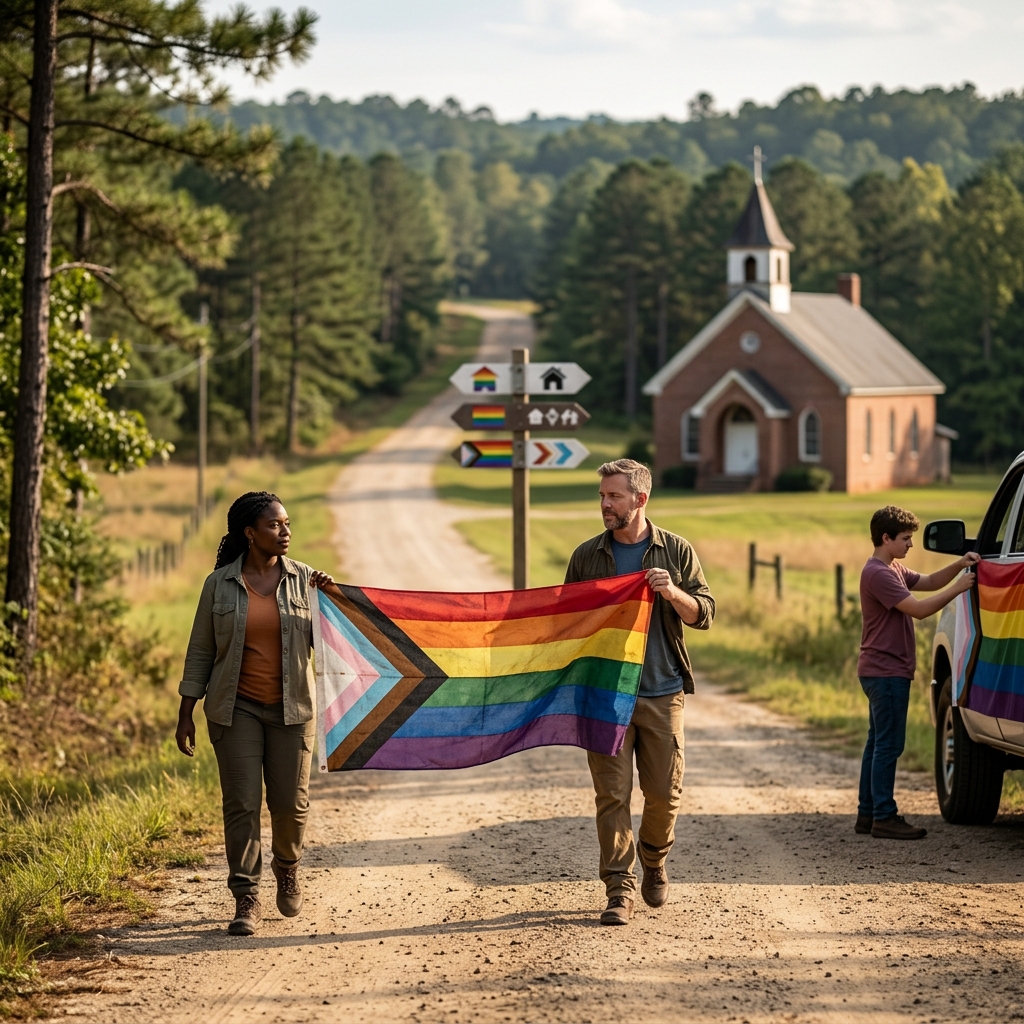
The American South is frequently depicted through a monolithic lens of conservatism, particularly when it comes to matters of civil rights and social justice. However, beneath the surface of these traditional political narratives lies a vibrant, deeply resilient, and rapidly growing LGBTQ+ community that continually challenges the status quo. The struggle for LGBTQ+ rights in the Deep South is not a new phenomenon, but it has entered a highly visible and contentious new chapter in the mid-2020s. While activists and legal organizations fight tirelessly to secure equal protections, state legislatures have concurrently advanced an unprecedented wave of bills designed to limit the civil liberties of sexual and gender minorities.
This dynamic creates a complex battleground where profound community resilience meets staunch systemic resistance. Understanding the current state of LGBTQ+ rights in the South requires looking beyond simplistic coastal assumptions. It demands a nuanced examination of demographic realities, landmark federal rulings, evolving state legislations, and the grassroots organizing that sustains marginalized populations. The narrative of the Southern LGBTQ+ experience is not just one of hardship; it is fundamentally a story of endurance, coalition-building, and the ongoing pursuit of fundamental human rights in the face of steep legislative odds.
The Demographic Reality: Defying Coastal Myths
When discussing LGBTQ+ advocacy in the United States, media coverage and public perception often skew toward coastal metropolises like New York City, San Francisco, or Los Angeles. This coastal bias obscures a critical demographic reality: the American South is home to the largest population of LGBTQ+ individuals in the nation. According to comprehensive data released by the Williams Institute at the UCLA School of Law, approximately 5.5% of all adults in the United States identify as LGBT. Most strikingly, 36% of all LGBT adults in the U.S.—totaling around 5 million people—reside in the South. This makes the Southern United States the demographic epicenter of the modern queer experience.
Despite this robust presence, the socio-economic conditions for LGBTQ+ Southerners are uniquely challenging. The intersection of regional poverty, systemic racism, and anti-LGBTQ+ bias creates a compounding effect on marginalized individuals. Research indicates that 24% of LGBT adults in the South live in poverty, representing the highest rate among all U.S. regions. This economic vulnerability is even more pronounced among transgender individuals and LGBTQ+ people of color, who face disproportionate rates of workplace discrimination, housing insecurity, and unequal access to competent healthcare.
The high concentration of LGBTQ+ individuals in a region historically resistant to expanding civil rights underscores why the South is arguably the most critical battleground for equality today. The legal and political outcomes in states like Mississippi, Alabama, Tennessee, and Arkansas do not merely affect a small subset of the population; they dictate the lived reality for millions of Americans. Recognizing the South as a stronghold of LGBTQ+ life is the first step in understanding why the push for equitable public policy in this region is so urgently necessary. Advocates emphasize that achieving national equality is impossible without securing the rights, safety, and economic stability of the millions of queer individuals who call the Southern states their home.
Legislative Tides: The Wave of Healthcare and Educational Restrictions
In recent years, the legislative environment in many Southern states has become increasingly hostile, particularly targeting transgender residents. State capitols across the region have witnessed a flurry of anti-LGBTQ+ legislation, shifting the focus from marriage equality—settled by the Supreme Court in 2015—to the bodily autonomy and public existence of transgender youth and adults. These legislative efforts primarily manifest as bans on gender-affirming healthcare, restrictions on transgender participation in school sports, and policies that criminalize the use of public facilities aligning with a person’s gender identity.
The legal battles surrounding these laws have been fierce and highly publicized. In June 2023, LGBTQ+ rights advocates celebrated a significant, albeit isolated, victory when a federal district court judge in Arkansas permanently struck down the state’s ban on gender-affirming care for transgender youth. The court ruled that the ban violated the Equal Protection Clause, the Due Process Clause, and the First Amendment of the U.S. Constitution, marking the first final merits ruling in the country against such a law. This landmark victory provided a temporary beacon of hope for families and medical providers across the South, suggesting that the federal judiciary might serve as a reliable firewall against state-level discrimination.
However, the broader judicial landscape has proven to be incredibly volatile. The momentum gained in Arkansas was severely tested by subsequent federal rulings. Most notably, in June 2025, the United States Supreme Court upheld a Tennessee law that severely restricts access to gender-affirming medical care, including puberty blockers and hormone therapy, for transgender minors. This ruling sent shockwaves through the region, as numerous other Southern states had already enacted or were preparing to enact similar bans. The Supreme Court’s decision to side with Tennessee has effectively validated these restrictive frameworks at the highest level of the judiciary, leaving thousands of transgender youth and their families scrambling for out-of-state medical solutions and facing unprecedented anxiety about their futures and well-being.
Landmark Protections: The Enduring Legacy of Bostock v. Clayton County
While state-level legislation has predominantly sought to restrict rights, federal courts have periodically provided crucial shields against discrimination. The most enduring of these protections in recent memory stems from the United States Supreme Court’s landmark 2020 decision in Bostock v. Clayton County. The case originated in Georgia, where Gerald Bostock, a long-time child welfare services coordinator, was fired shortly after joining a gay recreational softball league. His termination catalyzed a legal battle that would fundamentally alter the employment landscape for LGBTQ+ Americans across the country, but particularly in the Deep South, where state-level employment protections were largely nonexistent.
In a historic 6-3 decision, the Supreme Court ruled that Title VII of the Civil Rights Act of 1964, which prohibits employment discrimination “because of sex,” inherently protects employees from being fired for being gay or transgender. The Court’s rationale was straightforward yet revolutionary: it is impossible to discriminate against a person for their sexual orientation or gender identity without penalizing them for traits or actions that would be tolerated in a person of another sex. The ruling effectively modernized civil rights jurisprudence to reflect the realities of the LGBTQ+ workforce.
For the American South, the Bostock ruling was nothing short of transformative. Prior to 2020, in many Southern states, it was entirely legal to fire an employee, evict a tenant, or deny service to a customer simply because they were LGBTQ+. By interpreting Title VII to include sexual orientation and gender identity, the federal government effectively established a baseline of economic security for millions of queer Southerners. They could no longer be legally dismissed from their livelihoods merely for existing openly. However, while Bostock firmly secured employment protections, its application to other domains—such as public accommodations, education, and healthcare—remains the subject of fierce ongoing litigation. Advocates continue to cite the logic of Bostock in federal lawsuits challenging state-sponsored discrimination, attempting to stretch the umbrella of federal civil rights to cover every aspect of LGBTQ+ life.
Grassroots Advocacy: The Heartbeat of Southern Resilience
The true engine of progress in the Deep South is not found exclusively in federal courthouses or state legislative chambers; it is driven by relentless grassroots advocacy. Southern LGBTQ+ organizations, mutual aid networks, and local community centers operate on the frontlines of the fight for equality, often with a fraction of the funding available to national coastal organizations. These grassroots advocates understand that policy changes alone cannot dismantle decades of entrenched stigma, and they work tirelessly to fill the gaps left by apathetic or hostile state governments.
Local organizers in states like Mississippi, Alabama, and Georgia focus heavily on intersectional advocacy. They recognize that the fight for LGBTQ+ rights cannot be decoupled from the fights for racial justice, reproductive freedom, and economic equity. By building broad, multi-racial coalitions, Southern activists are creating comprehensive support systems that provide tangible assistance to those most affected by discriminatory laws. This grassroots mobilization takes many vital forms.
- Mutual Aid and Healthcare Access: Organizing transportation and financial support for youth and families needing to travel out-of-state to receive gender-affirming healthcare.
- Legal Assistance: Funding and operating legal clinics to help transgender individuals navigate the complex and often hostile processes of name and gender marker changes on state IDs.
- Emergency Housing: Establishing safe housing networks for displaced queer youth who face high rates of family rejection and homelessness in conservative rural areas.
- Public Education: Running localized campaigns to educate voters and bridge the gap of understanding between conservative lawmakers and the LGBTQ+ constituents they serve.
This deep-rooted community resilience challenges the narrative that LGBTQ+ Southerners are merely victims of their political environment. Instead, they are active architects of their own liberation. Their work ensures that even in the face of hostile state governments and fluctuating federal protections, the community not only survives but finds ways to thrive and support one another in deeply meaningful ways.
The Path Forward: Building an Inclusive South
Securing comprehensive equality for LGBTQ+ individuals in the American South will require a multi-faceted approach. Federal legislation remains a critical missing piece of the puzzle; comprehensive civil rights frameworks would codify protections across all areas of public life, eliminating the reliance on varying judicial interpretations of existing laws. Until such federal mandates exist, the burden of protection falls on a patchwork of local ordinances and corporate policies.
Corporate allies and educational institutions operating in the South must step up to enforce inclusive policies, using their economic and cultural leverage to push back against state-level discrimination. Furthermore, the future of LGBTQ+ rights in the South depends on sustained national attention and equitable funding for local grassroots organizations. True equality will be achieved when the burden of fighting for basic human dignity is lifted from the shoulders of marginalized individuals, allowing them to live openly, safely, and authentically in the Southern communities they proudly call home.
Key Demographic and Legal Milestones in the South
| Milestone / Statistic | Description | Impact Area |
|---|---|---|
| 5 Million Adults | The estimated number of LGBT adults living in the American South (36% of the national LGBT population). | Demographics & Representation |
| 24% Poverty Rate | The percentage of LGBT adults living in poverty in the South, the highest regional rate in the U.S. | Economic Justice |
| Bostock v. Clayton County (2020) | Supreme Court ruling that Title VII protects employees from being fired for being gay or transgender. | Workplace Equality |
| Arkansas Federal Ruling (2023) | A federal judge permanently struck down Arkansas’s ban on gender-affirming care for youth. | Healthcare Access |
| Tennessee SCOTUS Ruling (2025) | The Supreme Court upheld a Tennessee law banning gender-affirming care for transgender minors. | State-Level Restrictions |
Frequently Asked Questions (FAQs)
What is the significance of Bostock v. Clayton County for Southern workers?
Bostock v. Clayton County is a landmark 2020 Supreme Court decision establishing that Title VII of the Civil Rights Act of 1964 protects employees from discrimination based on sexual orientation and gender identity. This is particularly vital in the South, where many states previously lacked any statewide workplace protections for LGBTQ+ individuals, meaning workers could be fired simply for their identity.
How many LGBTQ+ people live in the American South?
According to research from the Williams Institute, approximately 5 million LGBT adults reside in the South. This accounts for roughly 36% of the total LGBT adult population in the United States, representing the largest regional concentration of queer individuals in the country.
How are recent Supreme Court rulings affecting transgender healthcare?
Recent judicial decisions have created a complex and volatile landscape. While lower federal courts have sometimes struck down state bans on gender-affirming care—such as a notable 2023 ruling in Arkansas—the U.S. Supreme Court upheld a Tennessee law banning such care for minors in June 2025. This ruling allows states greater latitude to enforce severe restrictions on medical treatments for transgender youth.
Why is poverty disproportionately high among Southern LGBTQ+ individuals?
A combination of historical and systemic factors contributes to this economic disparity. Weak labor protections, a lack of comprehensive statewide anti-discrimination laws prior to federal interventions, lower regional minimum wages, and the compounded intersection of racial inequality all contribute to economic instability. Consequently, 24% of LGBT adults in the South live below the poverty line.
References
- Adult LGBT Population in the United States — Williams Institute – UCLA. 2023-12-06. https://williamsinstitute.law.ucla.edu/publications/adult-lgbt-pop-us/
- 24% of LGBT adults in the South live in poverty — Williams Institute – UCLA. 2019-12-12. https://williamsinstitute.law.ucla.edu/press/lgbt-poverty-press-release/
- Federal Judge Overturns Arkansas’ Ban on Gender-Affirming Care for Transgender Youth — American Civil Liberties Union. 2023-06-20. https://www.aclu.org/press-releases/federal-judge-overturns-arkansas-ban-on-gender-affirming-care-for-transgender-youth
- Supreme Court upholds Tennessee law banning gender-affirming care for transgender minors — PBS News. 2025-06-18. https://www.pbs.org/newshour/show/supreme-court-upholds-tennessee-law-banning-gender-affirming-care-for-transgender-minors
- 17-1618 Bostock v. Clayton County (06/15/2020) — Supreme Court of the United States. 2020-06-15. https://www.supremecourt.gov/opinions/19pdf/17-1618_hfci.pdf
Similar Articles








Read full bio of medha deb


