
Montana Computer Crime Laws: Guide To Penalties And Deepfakes
A practical guide to Montana’s computer crime statutes, penalties, and recent digital privacy protections for residents and businesses.
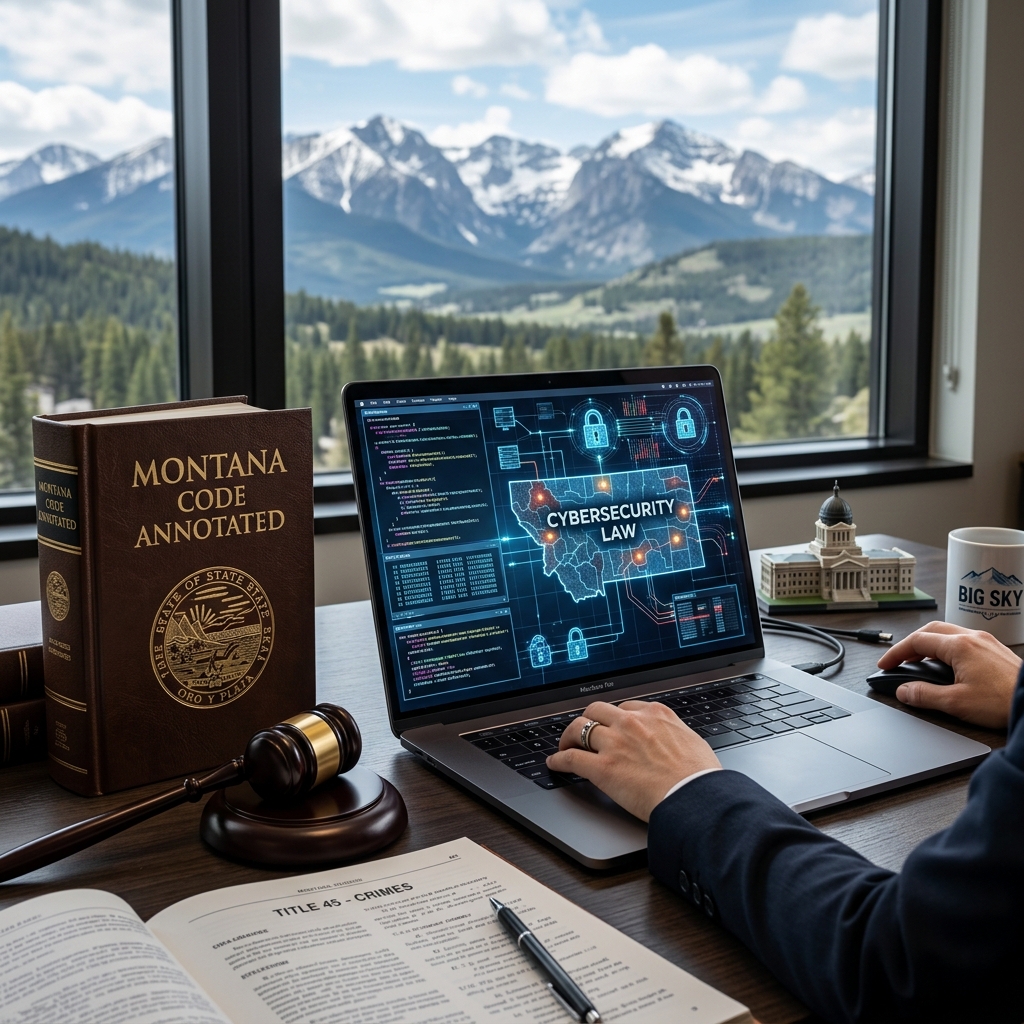
Montana has built a comprehensive legal framework to address computer-related misconduct, ranging from simple unauthorized access to serious schemes involving fraud, data destruction, and AI-generated explicit content. These laws are designed to protect individuals, businesses, and public institutions from the financial and privacy harms that accompany modern cybercrime.
As more activities move online, Montanans face increased risk from hacking, phishing, digital extortion, and computer-enabled crimes. State lawmakers have responded by refining traditional property and fraud statutes, creating specific computer crime provisions, and adding new protections for intimate imagery and synthetic media. This overview explains the key concepts, penalties, and practical implications of Montana computer crime law.
Core Legal Concepts Behind Computer Crime in Montana
To understand how computer crimes are prosecuted in Montana, it is important to grasp two foundational ideas: mental state and wrongful conduct. These concepts appear across Montana’s criminal code and determine when computer use crosses the line into criminal activity.
Mental State: Knowingly and Purposefully
Montana’s computer crime statutes generally require that the accused act knowingly or purposefully. In practice:
- Knowingly means the person is aware of their conduct and the circumstances, such as realizing they are accessing a system without authorization.
- Purposefully indicates a conscious objective, like intending to defraud someone or damage computer equipment.
Accidental mis-clicks or unintentional access are usually treated differently from deliberate attempts to penetrate a system or steal information. However, once someone crosses into knowing or purposeful misconduct, even relatively small harm can carry criminal consequences.
Types of Wrongful Computer-Related Conduct
Montana law targets several kinds of computer misuse that commonly arise in cybercrime cases:
- Unauthorized access to a computer, network, program, or data.
- Schemes to defraud involving computers, such as online investment scams or phishing campaigns.
- Alteration, damage, or destruction of hardware, software, or stored data.
- Computer-enabled theft, where a computer is the tool for larceny or deception.
- Digital extortion and misuse of intimate images, including AI-generated deepfakes and synthetic media.
Even when traditional offenses like fraud or theft are involved, the use of computers can trigger special statutes and enhance penalties, particularly where the harm is large or impacts many victims.
Statutory Framework: Key Montana Provisions
Montana relies on a combination of general criminal code provisions and specific computer-related statutes. While exact wording is found in the Montana Code Annotated (MCA), several sections are central to computer crime enforcement.
| Area of Law | Representative Statutes (MCA) | Typical Focus |
|---|---|---|
| General definitions & culpability | § 45-2-101 | Defines mental states like “knowingly” and “purposefully” used in computer crime provisions. |
| Computer-related theft and fraud | § 45-6-310, § 45-6-311 | Prohibits unauthorized computer access, fraudulent schemes, and damage to systems or data. |
| Privacy in communications & intimate images | HB 514 (2023 amendments) | Criminalizes threats and nonconsensual distribution of real and digitally fabricated explicit media. |
| Crimes against children & computer-generated content | HB 82 | Expands sexual abuse of children statutes to include computer-generated child pornography. |
| Deepfake disclosure and synthetic media | SB 413 | Addresses explicit synthetic media and deepfakes, particularly around identity and consent. |
Together, these provisions allow Montana authorities to address both classic hacking incidents and newer threats involving AI, synthetic imagery, and complex digital fraud schemes.
Misdemeanor vs. Felony Computer Crimes
Montana distinguishes between misdemeanor and felony computer crimes primarily by the amount of damage caused and, in some newer privacy laws, by the number of offenses.
Damage Thresholds and Traditional Computer Misuse
Under computer-related theft and fraud sections, the value of loss or damage plays a major role:
- Misdemeanor computer crimes typically involve damages of less than $1,000.
- Felony computer crimes generally arise when damages are $1,000 or more.
This damage can represent stolen funds, destroyed data, impaired hardware, or other measurable financial losses. Because cyber incidents can scale quickly, a single intrusion against a business or government system may reach felony-level damage even if the act itself seems simple.
Montana computer crime statutes consider the following behaviors when applying misdemeanor or felony classifications:
- Unauthorized access to a computer or network.
- Access combined with a scheme to defraud.
- Intentional alteration, damage, or destruction of hardware or software.
Graduated Penalties for Privacy and Deepfake Offenses
Recent legislative changes addressing intimate images and synthetic media use a different mechanism: graduated penalties based on repeat offenses.
- First offense under the updated privacy in communications laws (HB 514) is generally treated as a misdemeanor.
- Second or subsequent offenses can be charged as a felony, carrying up to five years in prison and fines up to $25,000.
These graduated penalties reflect the seriousness of digital extortion and repeated exploitation, especially when intimate images—real or AI-generated—are involved.
Special Topics: Privacy, Deepfakes, and AI-Generated Content
Montana is among the states actively updating laws to confront emerging technology risks, including deepfakes, synthetic media, and AI-generated explicit content. These developments matter for both potential victims and those who work with AI tools.
Nonconsensual Intimate Images and Digital Extortion
Under recent amendments, Montana criminalizes the possession and threat to disclose intimate images—whether real photographs or digitally fabricated content—when used to extort money or valuables.
Key features of these privacy protections include:
- Threats alone can be punishable, even if the images are never actually published or shared.
- AI-generated deepfakes are explicitly recognized as tools of harassment and extortion.
- Nonconsensual distribution of explicit media is covered under the updated “privacy in communications” provisions.
- There are narrow exemptions for disclosures made in law enforcement, medical, educational, or valid public interest contexts.
Computer-Generated Child Exploitation Material
Montana has also amended its laws on crimes against children to include computer-generated child pornography within existing sexual abuse provisions. This reflects national concern that synthetic media could be used to exploit or depict children without traditional photo or video sources.
By incorporating computer-generated imagery into child sex abuse statutes, Montana aligns with broader efforts to ensure that digital tools cannot be used to evade legal protections for minors.
Regulating Deepfakes in Elections and Public Life
Beyond strictly criminal offenses, Montana has begun to regulate the use of deepfakes and synthetic media in election communications and broader identity-related contexts. Certain statutes create penalties for disclosing explicit synthetic media and address unauthorized use of individuals’ names, voices, and visual likenesses.
These measures aim to preserve trust in public discourse and reduce the risk that AI tools will be misused to manipulate voters or impersonate individuals in harmful ways.
Enforcement and Support: How Montana Addresses Cybercrime
Enforcement of computer crime laws in Montana involves multiple agencies and specialized units. Given the technical nature of cybercrime, state authorities have invested in training and coordination.
Montana Office of the Attorney General – Computer Crime Unit
The Montana Office of the Attorney General maintains a Computer Crime Unit that assists law enforcement statewide in dealing with technology-driven offenses.
- Provides training to law enforcement officers on computer crime investigation and digital evidence handling.
- Develops outreach programs for schools and parent organizations to promote safe internet and computer use.
- Supports investigations involving complex cyber incidents, often in coordination with federal partners.
Internet Crimes Against Children (ICAC) Task Force
Montana participates in the national Internet Crimes Against Children (ICAC) program, coordinated through the state’s Division of Criminal Investigation.
The ICAC Task Force:
- Investigates online exploitation, including child pornography and enticement cases.
- Collaborates with local, state, and federal agencies to identify offenders and rescue victims.
- Provides public information and training to reduce children’s exposure to online predators.
Economic Impact of Cybercrime in Montana
Computer crime laws are not purely theoretical; Montana residents and businesses experience significant financial losses from cyber incidents each year. Recent data illustrates the growing impact.
According to information derived from FBI and Federal Trade Commission data, losses to cyber crimes in Montana have quintupled since 2021. In one recent year, statewide losses increased from about $31.6 million to nearly $53.2 million.
Investment scams alone accounted for roughly one-fifth of all reported losses, showing how online fraud can substantially affect Montanans’ financial security. These figures underscore why state lawmakers and enforcement agencies treat computer crime as a serious public safety and economic issue.
Compliance Tips for Individuals and Businesses
While legal language can be complex, several practical steps can reduce the risk of committing or becoming a victim of computer crime in Montana.
For Everyday Users
- Respect access controls: Do not attempt to bypass passwords, encryption, or permissions on any device or network you do not own or explicitly control.
- Avoid sharing or threatening to share intimate images without consent, including AI-created or edited content. Such behavior can now carry criminal penalties under Montana’s privacy laws.
- Be cautious about online investment offers and unsolicited messages, especially if they request money or sensitive information; many cyber losses stem from fraudulent schemes.
- Report suspicious activity to local law enforcement or appropriate state agencies, particularly if children or vulnerable individuals may be at risk.
For Businesses and Organizations
- Implement robust cybersecurity controls, including access management, logging, and incident response plans. Unauthorized access can quickly escalate into felony-level losses.
- Train employees on acceptable computer use and legal risks of data misuse, including improper handling of customer information or intentional system damage.
- Review AI and synthetic media practices to ensure marketing, training, or internal tools do not inadvertently violate privacy, deepfake, or child exploitation laws.
- Consult legal counsel when developing new digital services or content that rely on user data, monitoring, or automated decision-making.
FAQs: Montana Computer Crime Laws
Is attempting to hack a computer a crime in Montana?
Under the computer crime provisions referenced above, Montana focuses on completed conduct like unauthorized access, damage, or fraud. The referenced summary materials indicate that mere attempt is not always charged as a separate computer crime offense. However, other general attempt statutes or related charges may still apply. Anyone considering “testing” systems without consent should be aware of significant legal risk.
Can victims sue civilly for computer crimes in Montana?
The overview of Montana computer crime statutes indicates that these provisions are primarily criminal in nature and do not themselves provide an independent civil lawsuit mechanism. That said, victims may pursue civil remedies under other legal theories, such as negligence, contract breach, or specific privacy claims, depending on the situation and advice from counsel.
Are AI-generated deepfakes treated differently from real images?
Montana’s recent privacy and deepfake legislation explicitly recognizes digitally fabricated and AI-generated intimate images. For many privacy and extortion offenses, the law treats synthetic media similarly to real images, focusing on consent, threats, and exploitation rather than the underlying technology.
What should I do if I discover unauthorized access to my business systems?
Business owners should promptly secure affected systems, document evidence, notify internal stakeholders, and report the incident to law enforcement or the Montana Attorney General’s office, particularly if sensitive data or large financial losses are involved. Rapid response can help limit damage and support a successful investigation.
Who can I contact about suspected online child exploitation in Montana?
Suspected internet crimes against children should be reported immediately. If there is imminent danger, call 911. For non-emergency concerns, individuals can contact the state’s ICAC Task Force or local law enforcement, as coordinated through Montana’s Division of Criminal Investigation.
References
- Montana Computer Crimes Laws — FindLaw. 2023-05-01. https://www.findlaw.com/state/montana-law/montana-computer-crimes-laws.html
- Montana Privacy in Communications Amendments (HB 514) — Morrison & Foerster AI Library. 2023-07-01. https://www.mofo.com/artificial-intelligence/montana
- Montana modernizes privacy laws to combat digital extortion — Fight Trafficking Yellowstone County MT (summary of HB 514). 2023-04-20. https://www.facebook.com/groups/FightTraffickingYellowstoneCountyMT/posts/10057054561010818/
- FBI: Powered by Crypto, Cyber Crime Cost Montana $53M in 2025 — GovTech. 2026-06-10. https://www.govtech.com/security/fbi-powered-by-crypto-cyber-crime-cost-montana-53m-in-2025
- Internet Crimes Against Children Task Force — Montana Department of Justice, Division of Criminal Investigation. 2024-03-15. https://dojmt.gov/dci-home/crime-information-bureau/icac/
- Montana Office of the Attorney General – Computer Crime Unit — IACP Cyber Center. 2022-09-01. https://www.iacpcybercenter.org/labs/montana-office-of-the-attorney-general-computer-crime-unit-2/
- Computer Crime Statutes — National Conference of State Legislatures. 2023-08-10. https://www.ncsl.org/technology-and-communication/computer-crime-statutes
Similar Articles








Read full bio of Sneha Tete




