
Mobile Law Offices: Ethical Boundaries for Attorneys
Can lawyers ethically operate from mobile setups like food trucks? Unpacking rules on offices, client privacy, and professional standards.
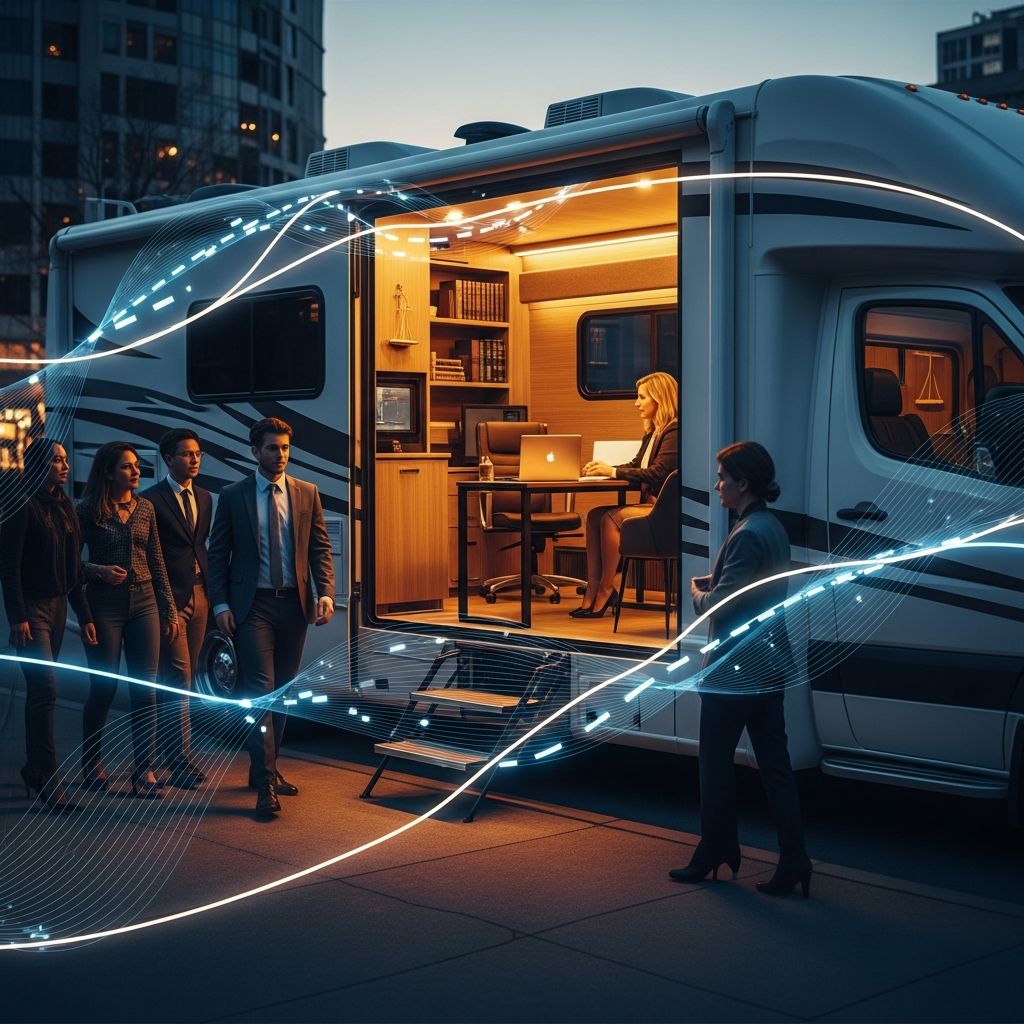
Innovative attorneys are increasingly exploring unconventional workspaces to cut costs and reach clients more effectively. Operating a legal practice from a mobile unit, such as a converted van or truck, raises intriguing questions about compliance with professional conduct rules. This approach promises flexibility but demands careful navigation of ethical standards on office requirements, client confidentiality, and public perception.
Understanding Professional Office Requirements in Legal Practice
State bar associations impose specific guidelines on how lawyers maintain their practices. While no universal rule mandates a traditional brick-and-mortar office, attorneys must ensure their setup supports core ethical duties. For instance, rules often require a physical location for client meetings that safeguards sensitive discussions.
Many jurisdictions emphasize accessibility and reliability. A lawyer must be reachable during business hours and capable of secure consultations. Mobile setups can meet these if equipped with reliable internet, locking storage for files, and noise-proofing for privacy. However, parking in public spaces or operating from vehicles parked curbside could violate local zoning laws or zoning ordinances unrelated to ethics but impacting practice viability.
- Accessibility: Clients must easily contact and meet lawyers without undue barriers.
- Security: Physical safeguards prevent unauthorized access to case files.
- Professionalism: The workspace must convey competence to uphold public trust in the legal profession.
Solo practitioners, who comprise a significant portion of the bar, often face high overhead costs. Mobile offices appeal as a cost-saving measure, potentially allowing lower fees and broader service to underserved communities.
Client Confidentiality: The Core Ethical Challenge
Rule 1.6 of the Model Rules of Professional Conduct, adopted widely across states, mandates lawyers protect client information. Mobile environments heighten risks of inadvertent disclosure. Conversations in a vehicle could be overheard by passersby, and digital devices might lack robust encryption.
| Risk Factor | Mobile Office Issue | Mitigation Strategy |
|---|---|---|
| Overhearing | Thin walls, open windows | Soundproofing materials, private lots |
| Data Storage | Portable laptops, USB drives | Encryption software, secure cloud backups |
| Public Visibility | Branded vehicle attracting attention | Discreet signage, tinted windows |
Ethical opinions from bodies like the DC Bar highlight related concerns in third-party funding scenarios, where public exposure risks confidentiality. Similarly, mobile practices must avoid any setup that invites public scrutiny of client matters. Lawyers should conduct intake remotely via secure video and reserve in-person meetings for controlled settings.
State Variations in Attorney Workspace Regulations
Ethical standards differ by jurisdiction, complicating nationwide mobile practices. California, for example, permits virtual offices if correspondence includes a street address, not a P.O. box. New York requires a “bona fide” office, interpreted as a dedicated space for legal work, though home offices suffice.
Texas and Florida offer flexibility for transient workspaces, provided client funds are held in compliant trust accounts accessible regardless of location. Attorneys planning mobile operations must review local rules:
- Consult state bar ethics hotline for advisory opinions.
- Ensure IOLTA accounts link to a verifiable address.
- Document compliance in engagement letters.
Interstate practice adds layers; a mobile lawyer crossing state lines may trigger unauthorized practice prohibitions under Rule 5.5.
Practical Advantages and Real-World Examples
Mobile legal services shine in accessibility. Imagine serving rural clients, immigrants, or gig workers who avoid traditional offices due to time or stigma. A lawyer parked at community events could offer on-site consultations for family law or immigration matters.
Precedents exist in pro bono vans used by legal aid groups, demonstrating feasibility with modifications like generators for power and satellite internet. Cost savings are substantial: a customized trailer might cost $50,000 versus $2,000 monthly rent, freeing funds for marketing or pro bono work.
- Rural Outreach: Travel to clients unable to journey to cities.
- Event-Based Services: Quick wills at festivals or advice at job fairs.
- Crisis Response: Immediate aid post-disaster from a mobile base.
Potential Pitfalls and Public Perception Risks
Not all view mobility favorably. Opposing counsel might challenge competence, filing motions questioning representation quality. Judges could perceive instability, impacting case credibility. Marketing a “truck law” brand risks misleading clients about resources under Rule 7.1.
Insurance complicates matters; standard malpractice policies assume fixed offices. Custom riders may be needed for mobile risks like theft or vehicular accidents during consultations. Zoning battles loom: cities restrict commercial vehicles in residential areas, potentially forcing constant relocation.
Alternatives to Full Mobile Operations
For risk-averse lawyers, hybrids balance innovation and compliance:
- Co-Working Spaces: Day passes for meetings, $25-50 each.
- Virtual Offices: Mail handling and conference rooms on demand.
- Home Offices: Zoned properly, with client areas separated.
- Shared Suites: Affordable prestige without full lease commitment.
Technology enables much remotely: e-signatures, secure portals, and AI transcription reduce physical needs. Firms like LegalZoom paved the way for non-traditional delivery, though as lawyer-directed services, ethics tighten.
Frequently Asked Questions
Can any lawyer use a vehicle as their primary office?
No, it depends on state rules. Most require a stable address for service of process and client trust. Check your bar’s opinions for guidance.
What if a client demands in-person meetings?
Offer secure alternatives first, like rented conference rooms. Document refusals to show diligence in protecting confidentiality.
Does mobile practice lower malpractice insurance costs?
Not necessarily; it may increase premiums due to perceived risks. Shop specialized carriers familiar with innovative setups.
Are there successful mobile lawyer examples?
Yes, legal aid organizations operate mobile clinics successfully, focusing on high-privacy modifications and targeted outreach.
How does this affect firm naming or advertising?
Avoid implying larger operations. Per NYSBA Ethics Opinion 1233, don’t misuse “associates” if solo; ensure ads reflect true capabilities.
Navigating Ethics with Innovation
While full food-truck-style lawyering stretches boundaries, thoughtful mobile elements enhance practice without violation. Attorneys must prioritize ethics committees, tech safeguards, and client-centric design. As legal tech evolves, bars may formalize guidelines, fostering accessible justice.
Consulting peers via bar sections or ethics hotlines proves invaluable. Ultimately, the test is whether the setup upholds duties of competence, confidentiality, and communication.
References
- Ethics Opinion 375: Ethical Considerations of Crowdfunding — DC Bar. 2022. https://www.dcbar.org/for-lawyers/legal-ethics/ethics-opinions-210-present/ethics-opinion-375
- Ethics Opinion 1233: Law firm associates and the phrase “and Associates” — New York State Bar Association. 2021-10-12. https://nysba.org/ethics-opinion-1233/
- Model Rules of Professional Conduct — American Bar Association. 2023 (last updated). https://www.americanbar.org/groups/professional_responsibility/publications/model_rules_of_professional_conduct/
- Rule 5.5: Unauthorized Practice of Law; Multijurisdictional Practice — ABA Model Rules. 2023. https://www.americanbar.org/groups/professional_responsibility/publications/model_rules_of_professional_conduct/rule_5_5_unauthorized_practice_of_law_multijurisdictional_practice_of_law/
- California Rules of Professional Conduct, Rule 1.6 — State Bar of California. 2024-01-15. https://www.calbar.ca.gov/Attorneys/Conduct-Discipline/Rules/Rules-of-Professional-Conduct/Current-Rules/Rule-1-6-Confidentiality-of-Information/
Similar Articles








Read full bio of medha deb




