
Minimum Wage Requirements: 2025 Compliance Guide For Employers
Navigate federal and state minimum wage rules to ensure compliance and avoid penalties for your business.
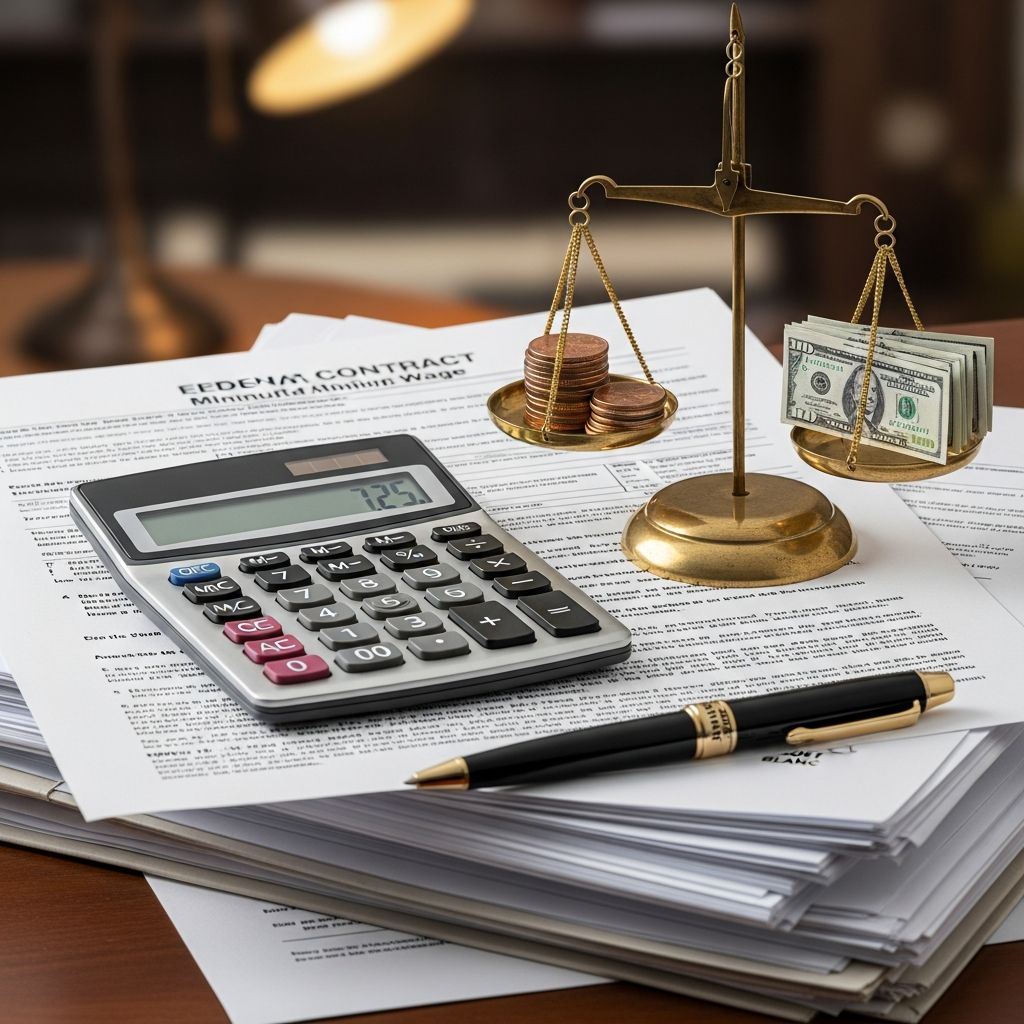
Understanding minimum wage requirements is crucial for any employer to maintain legal compliance, protect workers, and sustain business operations. The federal baseline stands at $7.25 per hour under the Fair Labor Standards Act (FLSA), but many states mandate higher rates, creating a complex landscape for business owners.
Core Principles of Federal Minimum Wage Law
The FLSA, enforced by the U.S. Department of Labor’s Wage and Hour Division (WHD), sets the national minimum wage at $7.25 per hour for covered nonexempt employees. This rate applies to all hours worked, regardless of payment method—hourly, salary, piecework, or otherwise—as long as the total compensation meets or exceeds this threshold.
For instance, a salaried employee working 40 hours weekly must receive at least $290 to satisfy the minimum ($7.25 x 40). Overtime kicks in beyond 40 hours at 1.5 times the regular rate, minimum $10.88 per hour federally.
- Universal Coverage: Nearly all employers fall under FLSA if annual sales exceed $500,000 or interstate commerce is involved, such as online sales or calls across state lines.
- Nonexempt Workers: Most hourly and some salaried employees qualify for minimum wage protections.
- Payment Flexibility: Salaries or commissions count if they average to at least $7.25 hourly.
State-Specific Minimum Wage Variations
States can and often do exceed the federal minimum. Employers must pay the higher of federal or state rates. As of recent updates, rates range widely: Alaska at $13.00, Connecticut $16.94, Delaware $15.00, District of Columbia $17.95, Florida $14.00, Maryland and Massachusetts $15.00, Missouri $15.00, Rhode Island $16.00, and California climbing to $16.50 in 2025 with potential further increases.
| State/Territory | Basic Minimum Wage (per hour) | Notes |
|---|---|---|
| California | $16.00 (rising to $16.50 in 2025) | Potential Prop 32 hike to $17-$18 |
| Connecticut | $16.94 | Premium pay after 40 hours |
| District of Columbia | $17.95 | Annual adjustments |
| Florida | $14.00 | N/A |
| Maryland | $15.00 | Premium after 40 hours |
| Massachusetts | $15.00 | At least $0.50 above federal |
Georgia’s state rate is $5.15 but defers to federal $7.25 for FLSA-covered jobs. Missouri exempts some small retail/service firms under $500,000 sales. Always verify via DOL resources for the latest.
Special Rules for Tipped Employees
Tipped workers, like servers, present unique challenges. Federally, employers may pay a cash wage as low as $2.13 per hour, claiming a ‘tip credit’ up to $5.12 if tips bring total earnings to $7.25 or more. If tips fall short, employers must cover the difference.
- Tip Credit Conditions: Tips must be reported; credit cannot exceed actual tips.
- State Differences: Some states prohibit tip credits or require higher base wages. Compare federal vs. state calculations.
- Youth Exception: Employees under 20 in first 90 days may receive less than $7.25 temporarily.
Precise tracking ensures compliance; pooled tips must benefit only tipped staff.
Exemptions and Exceptions for Small Businesses
Not all workers or businesses face full FLSA mandates. Small operations may qualify for relief:
- Enterprise Exemption: Businesses under $500,000 annual sales without interstate activity might evade coverage, though digital commerce often triggers it.
- Worker Categories: Independent contractors, freelancers, small farm laborers, and certain switchboard operators (under 750 stations) are exempt from minimum wage.
- FLSA Non-Coverage: Applies broadly, but states like Missouri exempt tiny retail/service firms.
Even exempt businesses should weigh ethical and competitive wage standards.
Compliance Strategies and Recordkeeping
Accurate payroll demands meticulous records: hours worked, wages paid, tip reports, for at least 3 years. Use timesheets, payroll software, and post required notices.
- Audit Pay Practices: Calculate effective hourly rates for all compensation types.
- Monitor State Changes: Rates adjust annually; track via DOL site.
- Train Managers: Ensure supervisors understand overtime, breaks.
- Handle Classifications: Distinguish employees from contractors via IRS/DOL tests.
Violations risk back wages, fines up to $1,000+ per infraction, and legal fees. Voluntary compliance via DOL self-audit tools prevents escalation.
Navigating Wage Increases and Future Trends
Minimum wages rise periodically; California’s trajectory to $16.50+ signals national upward pressure. Small businesses should budget 5-10% annual hikes, adjust pricing, or boost efficiency.
Proposition-style ballots, like California’s Prop 32, could differentiate large vs. small employer rates ($18 vs. $17). Prepare via scenario planning.
Frequently Asked Questions
What is the federal minimum wage?
The federal minimum wage is $7.25 per hour under the FLSA, unchanged since 2009, for all nonexempt covered employees.
Do small businesses have minimum wage obligations?
Yes, if sales exceed $500,000 or interstate commerce occurs; most qualify. Pay the higher of federal or state rates.
How do tipped employee wages work?
Cash wage minimum $2.13/hour federally; tip credit up to $5.12 if totals hit $7.25. Employer covers shortfalls; state rules may differ.
What records must employers keep?
Hours worked, wages, tips for 3 years; post notices. Noncompliance invites penalties.
Which state has the highest minimum wage?
District of Columbia at $17.95; others like Connecticut ($16.94) follow. Check DOL for updates.
Practical Tools for Wage Compliance
Employ DOL’s state wage map, WHD helpline (1-866-4-USA-DOL), and free webinars. Payroll providers automate calculations, flagging issues.
For multi-state ops, harmonize highest standards. Consult attorneys for edge cases like youth workers or seasonal hires.
References
- Do small businesses have to pay minimum wage? — GoCardless. 2022. https://gocardless.com/en-us/guides/posts/do-small-businesses-have-to-pay-minimum-wage/
- Federal Employment Law Basics for Small Businesses — NFIB. N/A. https://www.nfib.com/news/legal-blog/federal-employment-law-basics-for-small-businesses/
- Minimum Wage by State: Updated Guide for Small Businesses — My Valuable Business. 2025. https://myvaluablebusiness.com/insights/minimum-wage-by-state
- Minimum Wage Law Requirements for Employers — Wolters Kluwer. N/A. https://www.wolterskluwer.com/en/expert-insights/minimum-wage-law-requirements-for-employers
- State Minimum Wage Laws — U.S. Department of Labor. 2026. https://www.dol.gov/agencies/whd/minimum-wage/state
- Minimum wage — Employer.gov (U.S. DOL). N/A. https://www.employer.gov/pay-and-benefits/minimum-wage/
- New and Small Businesses — U.S. Department of Labor. N/A. https://www.dol.gov/agencies/whd/compliance-assistance/small-business
Similar Articles








Read full bio of Sneha Tete




