
Military Intervention In Elections: Legal Limits, What To Know
Exploring constitutional limits and legal barriers preventing armed forces from influencing contested presidential elections.
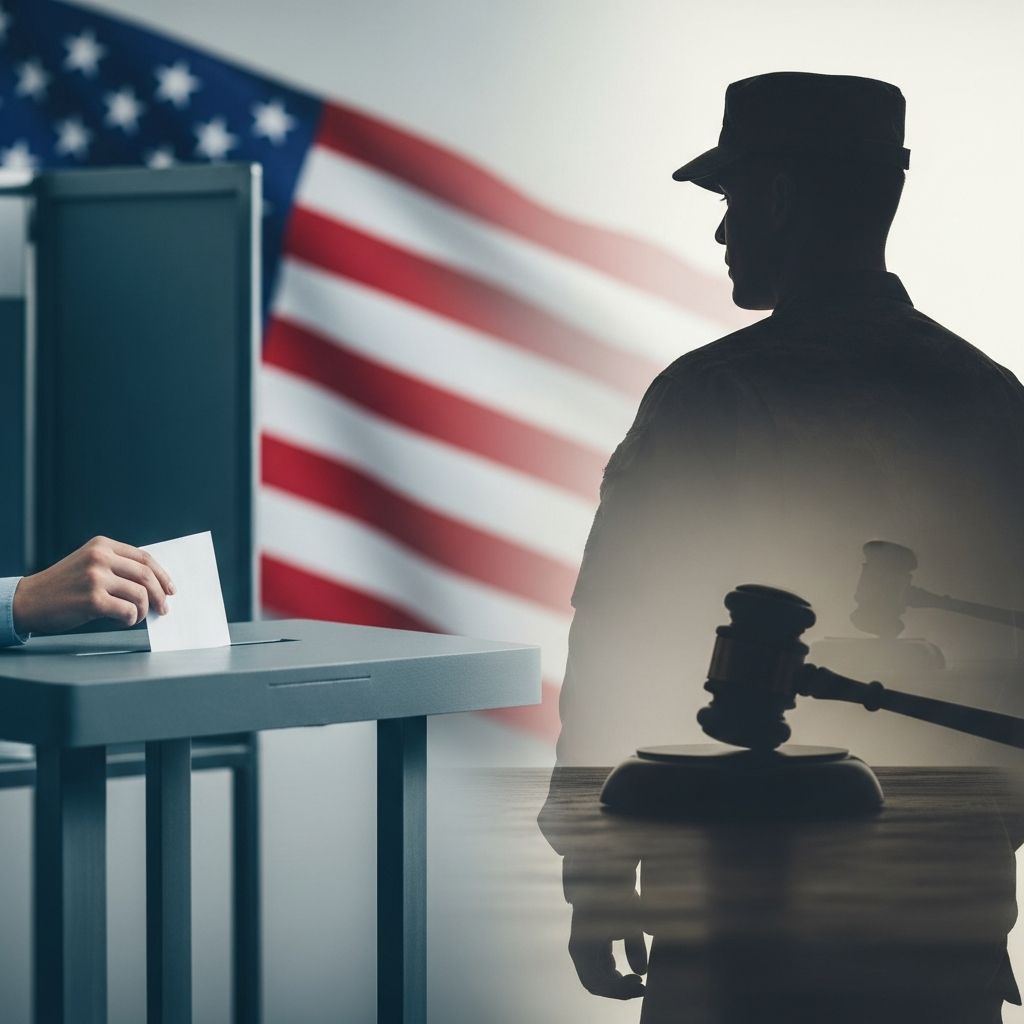
The United States prides itself on a stable democratic process where elections determine leadership without external coercion. However, in times of close or contested results, questions arise about the role of the armed forces. Can the military step in to resolve disputes? This article delves into the constitutional framework, statutory restrictions, and historical precedents that firmly limit military involvement in electoral matters. Drawing from established legal principles, it clarifies why such intervention remains highly improbable and unlawful.
Constitutional Foundations Limiting Military Power
The U.S. Constitution establishes clear boundaries on domestic military deployment, prioritizing civilian control. Article I, Section 8 grants Congress exclusive authority to call forth the militia to execute laws, suppress insurrections, and repel invasions. This provision underscores that the legislative branch, not the executive, defines when and how military forces may operate within the nation’s borders.
Presidential powers over the military are significant but constrained domestically. While the commander-in-chief role allows oversight of armed forces, it does not extend to unilateral interference in elections—the cornerstone of republican governance. Any attempt to deploy troops to influence voting or certification would subvert these constitutional allocations, inviting judicial scrutiny.
Key Legislation Prohibiting Election Interference
Several statutes explicitly bar military participation in elections, reinforcing constitutional limits. The Posse Comitatus Act of 1878 stands as a cornerstone, imposing criminal penalties for using the Army or Air Force as a law enforcement auxiliary without express constitutional or congressional approval. This law targets willful misuse of federal troops for domestic policing, including around polling sites.
Complementing this are targeted election-specific prohibitions:
- 18 U.S.C. § 592: Criminalizes the presence of armed federal agents, military or civilian, at polling places.
- 18 U.S.C. § 593: Forbids military members from interfering with elections, such as intimidating voters or obstructing officials.
- 18 U.S.C. § 595: Prevents federal employees from leveraging official authority to sway electoral outcomes.
These laws, rooted in post-Civil War efforts to protect voting rights, now serve as bipartisan safeguards against any armed meddling.
The Insurrection Act: A Narrow Exception Under Scrutiny
One potential avenue for domestic military use is the Insurrection Act, which permits presidential deployment of troops when states request aid or federal laws cannot be enforced. Enacted in statutes from 1792 and refined over time, it overrides Posse Comitatus in extreme cases like widespread unrest.
However, its application to elections is fraught. The Act presumes neutral pacification, not partisan advantage. Courts have historically deferred to presidential discretion, as in early Supreme Court rulings, but modern separation-of-powers doctrine demands judicial review for abuses. States or cities could challenge invocations as exceeding statutory bounds or acting in bad faith, especially if tied to electoral manipulation.
| Aspect | Insurrection Act Allows | Election Context Restrictions |
|---|---|---|
| Trigger | Insurrection, domestic violence, or unenforced laws | Cannot justify poll interference or vote suppression |
| Oversight | Presidential proclamation | Subject to judicial review for constitutionality |
| Purpose | Restore order | Prohibited if influencing election outcomes |
Military Leadership’s Stance on Apolitical Neutrality
Top military officials have repeatedly affirmed the armed forces’ nonpartisan tradition. Joint Chiefs Chairman Gen. Mark Milley stated there is “zero chance” of intervention in disputed elections, emphasizing no role in determining outcomes. This 240-year apolitical stance relies on courts, Congress, and local authorities to handle contests, as in past disputes.
Such declarations reflect institutional commitment to the rule of law, deterring any executive overreach. Military oaths bind personnel to the Constitution, not individual leaders, further insulating elections from undue influence.
Historical Contexts and Precedents
U.S. history offers lessons on military restraint during electoral tensions. Post-Civil War Reconstruction saw troops enforce voting rights, but subsequent laws curtailed federal overreach to prevent abuse. In modern times, no president has successfully deployed active-duty forces to sway elections, despite rhetoric.
Recent events, like 2020 concerns over potential unrest, saw preemptive clarifications from defense leaders. These instances highlight evolving norms prioritizing democratic processes over militarized solutions.
Potential Legal Challenges to Unauthorized Deployments
Should a president attempt military involvement, multiple avenues for recourse exist. States could sue for violations of the Insurrection Act or election statutes, arguing factual distortions or ulterior motives. Federal courts, enforcing separation of powers, would likely intervene to protect electoral integrity.
Criminal liability under Posse Comitatus and related laws would attach to both issuers and executors of unlawful orders. This deterrent structure ensures accountability, preserving civilian governance.
Broader Implications for Democratic Stability
Maintaining military non-involvement in elections bolsters public trust. Any perception of partisanship risks eroding confidence, potentially inciting unrest. Robust legal frameworks, combined with institutional norms, safeguard against such scenarios, allowing disputes to resolve through ballots, courts, and legislatures.
Looking ahead, reforms could further clarify Insurrection Act scope, mandating congressional notification akin to the War Powers Resolution for overseas actions. This would align domestic military use with checks and balances.
Frequently Asked Questions (FAQs)
What is the Posse Comitatus Act?
The Posse Comitatus Act prohibits using federal military personnel for domestic law enforcement without specific authorization, with criminal penalties for violations.
Can the president use the Insurrection Act during elections?
While it allows troop deployment for unrest, it cannot be used to interfere with voting or certification, subject to judicial limits.
Has the military ever intervened in U.S. elections?
No modern precedents exist for partisan intervention; historical uses focused on order restoration, not outcome influence.
Who handles disputed election results?
Courts, Congress, and state officials resolve contests, with the military explicitly excluded.
What penalties apply for military election interference?
Criminal charges under 18 U.S.C. §§ 592-595 and Posse Comitatus, plus civil suits.
(Word count: 1678)
References
- Trump Can’t Lawfully Use Armed Forces to Sway the Election — Just Security. 2020-10-26. https://www.justsecurity.org/72500/trump-use-armed-forces-legal-boundaries/
- ‘Zero’ Chance of Military Intervention in Disputed Election Results, Milley Says — Military.com. 2020-10-12. https://www.military.com/daily-news/2020/10/12/zero-chance-of-military-intervention-disputed-election-results-milley-says.html
- The Election and the Military — Lawfare. 2020-11-02. https://www.lawfaremedia.org/article/election-and-military
- War Powers Resolution — Wikipedia (informational; primary source: U.S. Code). 1973-11-07. https://en.wikipedia.org/wiki/War_Powers_Resolution
Similar Articles








Read full bio of Sneha Tete




