
Mental Preparation Strategies for Court Success
Master your courtroom nerves with evidence-based psychological techniques and preparation strategies.
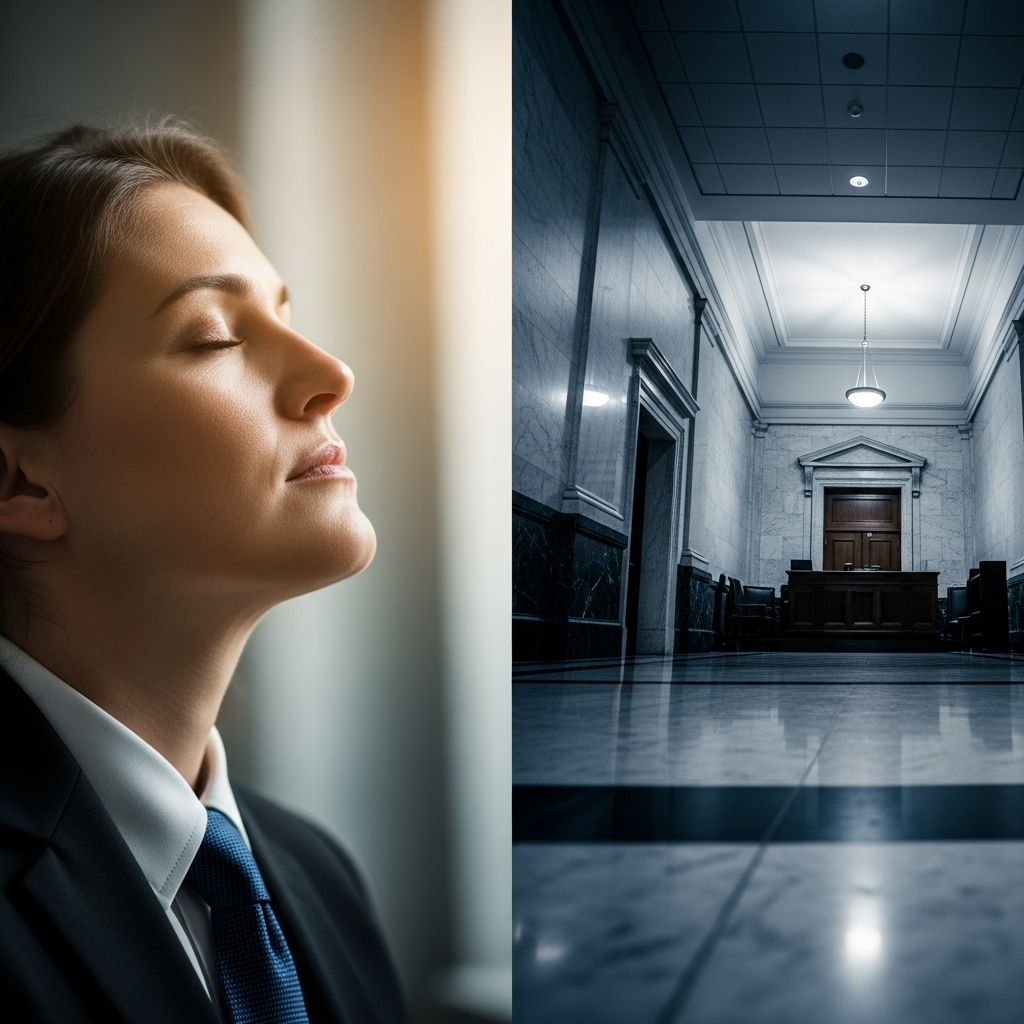
Understanding the Psychology of Courtroom Performance
Stepping into a courtroom presents significant psychological challenges that extend far beyond simply knowing the facts of your case. The unfamiliar environment, formal procedures, and high stakes create a natural stress response that can interfere with clear thinking and effective communication. Research in performance psychology demonstrates that how you mentally prepare before entering the courtroom directly influences your ability to present yourself favorably to judges and juries.
The courtroom environment activates what psychologists call the “fight or flight” response, flooding your system with cortisol and adrenaline. When unmanaged, these physiological reactions can cause you to speak too quickly, forget important details, or display nervous body language that undermines your credibility. Understanding this biological reality is the first step toward developing effective mental preparation strategies that work with your body’s natural responses rather than against them.
Establishing a Pre-Court Mental Framework
Before you ever set foot in the courtroom, your mindset has already begun shaping how you’ll perform. Successful courtroom participants recognize that mental preparation begins days or even weeks before their appearance. This extended preparation period allows you to gradually reduce anxiety while building genuine confidence through knowledge and familiarity.
Creating a structured mental framework involves several interconnected elements. First, clearly define your role and objectives for the proceeding. Whether you’re representing yourself, testifying as a witness, or appearing before a judge, having crystal-clear understanding of what you’re trying to accomplish helps focus your mental energy productively. Second, separate legitimate concerns from catastrophic thinking patterns. While preparation addresses real challenges, anxiety often amplifies imagined disasters that rarely materialize. Third, develop specific mental anchors—phrases or visualizations you can return to when anxiety rises.
The Role of Thorough Case Preparation
Your confidence in the courtroom directly correlates with your preparation level. This isn’t merely about memorizing facts; it’s about achieving deep familiarity with your case that allows you to respond flexibly to unexpected questions or developments. When you truly know your material, your brain can operate from a place of knowledge rather than fear.
Comprehensive preparation includes reviewing all relevant documents, understanding the legal issues involved, and discussing strategy with your attorney. This preparation serves a dual purpose: it ensures you have substantive knowledge, and it creates a sense of control and mastery that naturally reduces anxiety. The act of preparation itself becomes a confidence-building tool.
Managing Physical Responses to Court Anxiety
Mental preparation cannot be separated from physical management techniques. Your body and mind operate as an integrated system, and calming your physical state directly influences your mental clarity and emotional regulation.
Breathing Techniques for Immediate Anxiety Relief
Among the most effective tools for managing courtroom anxiety, controlled breathing provides immediate physiological benefits. When anxious, people naturally shift toward shallow, rapid breathing that actually increases anxiety. Intentional breathing patterns, by contrast, activate your parasympathetic nervous system—your body’s natural calming mechanism.
The 4-7-8 breathing technique offers particular utility in courthouse waiting areas. Breathe in through your nose for a count of four, hold for a count of seven, and exhale through your mouth for a count of eight. This pattern signals safety to your nervous system and can be practiced discreetly while sitting in a courtroom bench. Even simple deep breathing—taking three to five deliberately slow, deep breaths—reduces physical tension and clarifies mental focus before you approach the witness stand or stand before the judge.
Physical Positioning and Body Language
How you physically position yourself communicates volumes about your mental state to everyone observing you. Slumped shoulders, crossed arms, and downward gaze signal defensiveness or lack of confidence, while an upright posture with open body language conveys composure and credibility. This isn’t superficial performance; research in embodied cognition demonstrates that adopting confident physical positions actually influences your internal psychological state.
Before entering the courtroom, take a moment to adopt what researchers call a “power pose.” Standing with your shoulders back, chest open, and chin level for just two minutes measurably increases confidence-associated hormones. This physical preparation influences not just how others perceive you, but how you perceive yourself.
Cognitive Strategies for Maintaining Focus
Your ability to think clearly under pressure determines how effectively you communicate in court. Several cognitive techniques help maintain mental clarity when anxiety threatens to overwhelm you.
Cognitive Reframing and Perspective Management
Anxiety often stems from catastrophic thinking patterns where your mind races to worst-case scenarios. Cognitive reframing involves consciously shifting these thought patterns. Rather than thinking “Everyone will judge me harshly,” reframe to “The judge and jury are interested in understanding the facts.” Instead of “I’ll forget everything I prepared,” reframe to “I’ve prepared thoroughly, and I can reference my notes if needed.”
This isn’t positive thinking for its own sake; it’s replacing inaccurate threat assessments with realistic appraisals. Most courtroom situations resolve more mundanely than anxiety suggests. Judges and jurors expect nervousness and judge credibility based on consistency, respect for the process, and factual accuracy—not perfect composure.
Attention Control and Present-Moment Focus
Anxiety pulls your attention toward imagined future disasters. Grounding techniques return your focus to the present moment where you actually have agency. When you notice your mind spiraling into worry, deliberately shift your attention to immediate sensory experiences: the weight of your feet on the floor, the texture of your clothing, sounds in the courtroom, the specific words being spoken to you right now.
This practice of present-moment awareness, familiar from mindfulness research, prevents your mind from being hijacked by anxiety-driven narratives. In the courtroom specifically, this means listening carefully to each question, absorbing the actual words rather than your internal anxiety commentary, and responding to what was actually asked rather than what you feared might be asked.
Preparation Rituals and Pre-Appearance Routines
The days and hours immediately before your court appearance significantly influence your mental state. Establishing consistent routines provides structure that counteracts anxiety’s destabilizing influence.
Planning and Logistical Certainty
Much courtroom anxiety stems from uncertainty about logistics rather than the proceeding itself. Eliminate this source of stress by planning every detail of your court day in advance. Know the courthouse location, confirm the courtroom number, plan your route accounting for traffic and parking, and arrive substantially early. Rushing to court in a panic ensures you’ll be emotionally dysregulated before the proceedings even begin.
Arriving early provides crucial psychological benefits beyond simple punctuality. It allows you to familiarize yourself with the physical space, reducing the unfamiliarity that triggers anxiety responses. Sitting in the courtroom before your appearance begins lets your nervous system habituate to the environment. You can locate restrooms, identify where you’ll sit, and observe how the courtroom actually functions rather than relying on anxious imagination.
Sartorial Confidence
What you wear influences both how others perceive you and your own psychological state. Clothing that aligns with courtroom norms and makes you feel personally confident provides a subtle but real boost to your mental state. Business-appropriate attire isn’t merely about creating a good impression; wearing clothes that reflect respect for the proceeding helps you embody that respect internally.
Choose clothing in which you feel comfortable and confident, that fits properly, and that won’t distract you during the proceedings. When you’re not worried about your appearance, your mental resources remain available for the actual legal matter at hand.
Communication Techniques for Projecting Confidence
How you speak in the courtroom communicates your confidence level as clearly as your words themselves. Mastering communication technique reduces anxiety while simultaneously making your testimony or arguments more persuasive.
Pacing and Deliberation
Anxiety typically accelerates speech rate. Speaking too quickly undermines clarity and signals nervousness to observers. Intentionally slower, measured speech serves multiple functions: it gives your mind time to formulate accurate responses, allows listeners to absorb your words fully, and projects calm authority.
Practice pausing before responding to questions. This isn’t awkward hesitation; it’s deliberate thought. A two-second pause before answering conveys that you’re considering your response carefully rather than speaking reflexively. This pause also prevents verbal stumbling and improves accuracy. In the high-pressure courtroom environment, deliberately slowing down paradoxically helps you perform better.
Vocal Control and Emotional Neutrality
Courtroom persuasion depends on content, but also on how that content is delivered. Maintaining a steady, calm tone regardless of the emotional content of your testimony preserves credibility. When describing distressing events, emotional volatility can make observers question your reliability or perceive you as not thinking clearly.
This doesn’t mean suppressing genuine emotion; it means maintaining vocal control even when describing emotionally charged events. Practice speaking about your case material in a measured, professional tone until this delivery feels natural. Record yourself testifying or presenting arguments, then listen critically to your pacing, volume, and emotional tone. This self-monitoring develops awareness you can apply in the actual courtroom.
Managing Cross-Examination and Challenging Questions
For those who will testify or face questioning, anticipating difficult moments helps prevent panic responses. Cross-examination deliberately introduces pressure; preparing mentally for this dynamic reduces its destabilizing impact.
Reframing Adversarial Questioning
Opposing counsel’s role is to test your testimony and explore alternative interpretations. This is expected and normal, not a personal attack. Reframing cross-examination as a standard procedure rather than an assault on your credibility prevents the defensive emotional responses that undermine your effectiveness.
Before testifying, discuss anticipated difficult questions with your attorney. Knowing what’s coming removes the element of surprise that amplifies anxiety. Practice answering challenging questions in a calm, measured manner. The more familiar these exchanges feel through preparation, the less destabilizing they become in the actual courtroom.
Techniques for Remaining Composed Under Pressure
When faced with aggressive questioning or questions designed to provoke emotional reactions, several techniques maintain your composure. First, pause before responding—this prevents reactive statements you’ll regret. Second, listen to the actual question being asked rather than anticipating attacks. Third, if you don’t understand a question, ask for clarification rather than guessing at what was meant. Fourth, answer only what was asked rather than volunteering additional information that might be problematic.
Physical grounding techniques work in the moment: pressing your feet firmly into the floor, maintaining steady eye contact with the questioner, keeping your hands visible and relatively still. These physical anchors prevent anxiety from fully hijacking your system when confronted with hostile questioning.
The Night Before and Day-Of Strategies
The final hours before your court appearance determine your psychological and physical state during the proceeding. Strategic choices during this period optimize your performance.
The night before, avoid excessive preparation that creates last-minute panic. You’ve either prepared or you haven’t; additional cramming creates fatigue and anxiety without meaningful benefit. Instead, review key points briefly, then deliberately shift your mind toward calming activities. Adequate sleep is genuinely crucial—sleep deprivation impairs judgment, emotional regulation, and cognitive processing exactly when you need these capacities most.
On the morning of your appearance, eat a balanced breakfast and stay hydrated. Hunger and dehydration compromise cognitive function and exacerbate anxiety symptoms. Avoid caffeine in excess, which can amplify nervousness. Allow extra time in your morning so you’re not rushed and stressed before you even leave home.
Collaborative Support and Professional Guidance
Mental preparation doesn’t occur in isolation. Your attorney plays a crucial role in your psychological readiness for court. Meet with your attorney before your appearance, discuss your case thoroughly, and explicitly address any concerns or questions. Knowing your attorney understands your situation and has a clear strategy provides genuine security rather than false reassurance.
If anxiety significantly interferes with your functioning, consider speaking with a mental health professional who can teach anxiety management techniques tailored to your specific situation. Some people benefit from cognitive-behavioral therapy techniques or other professional anxiety management approaches.
Frequently Asked Questions
Q: Is it acceptable to appear nervous in court?
A: Yes, nervousness is completely normal and expected. Judges and jurors understand that court appearances create stress. What matters is managing that nervousness so it doesn’t prevent clear communication or accurate testimony. Some nervousness actually enhances credibility by demonstrating you take the proceedings seriously.
Q: What should I do if I become overwhelmed during my court appearance?
A: Request a brief recess if you need time to compose yourself. Inform your attorney or the judge that you need a moment. Taking a few deep breaths, sipping water, or using a restroom break can help you regain composure. Remember that showing you need a moment to gather yourself is far preferable to speaking while emotionally dysregulated.
Q: How far in advance should I begin mental preparation?
A: Begin as soon as you know your court date. Ideally, dedicate several weeks to preparation that includes both substantive case review and psychological preparation. However, even brief focused preparation is better than none, so don’t delay beginning your preparation regardless of how close your appearance date is.
Q: Can I use notes or reference materials during my testimony?
A: This varies by jurisdiction and court type. Discuss this specifically with your attorney. Having reference materials available can reduce anxiety by providing security, even if you rarely need them. The knowledge that you can verify details if needed often means you won’t need to reference materials because your prepared knowledge is sufficient.
References
- Mastering Testifying: 5 Tips for Confident Court Performance — Punch Work Law. Accessed April 2026. https://punchworklaw.com/blog/mastering-testifying-tips-for-success/
- Preparing for Your Court Hearing: Strategies for Success — The Halliday Center. Accessed April 2026. https://thehallidaycenter.com/blog/how-prepare-court-hearing/
- 6 Tips on How to Be Confident in Court — Professional Business Institute. Accessed April 2026. https://www.pbi.org/blog/building-rock-solid-confidence-in-the-courtroom/
- 5 Tips for Your First Court Appearance — Attorneys On Demand. Accessed April 2026. https://www.attorneysondemand.net/tips-for-first-court-appearance.cfm
- Five Things To Do Before Your First Court Appearance — Our Family Wizard. Accessed April 2026. https://www.ourfamilywizard.com/blog/five-things-do-your-first-court-appearance
- Tips for your day in court — California Courts Self Help Guide. Accessed April 2026. https://selfhelp.courts.ca.gov/tips-your-day-court
Similar Articles








Read full bio of Sneha Tete




