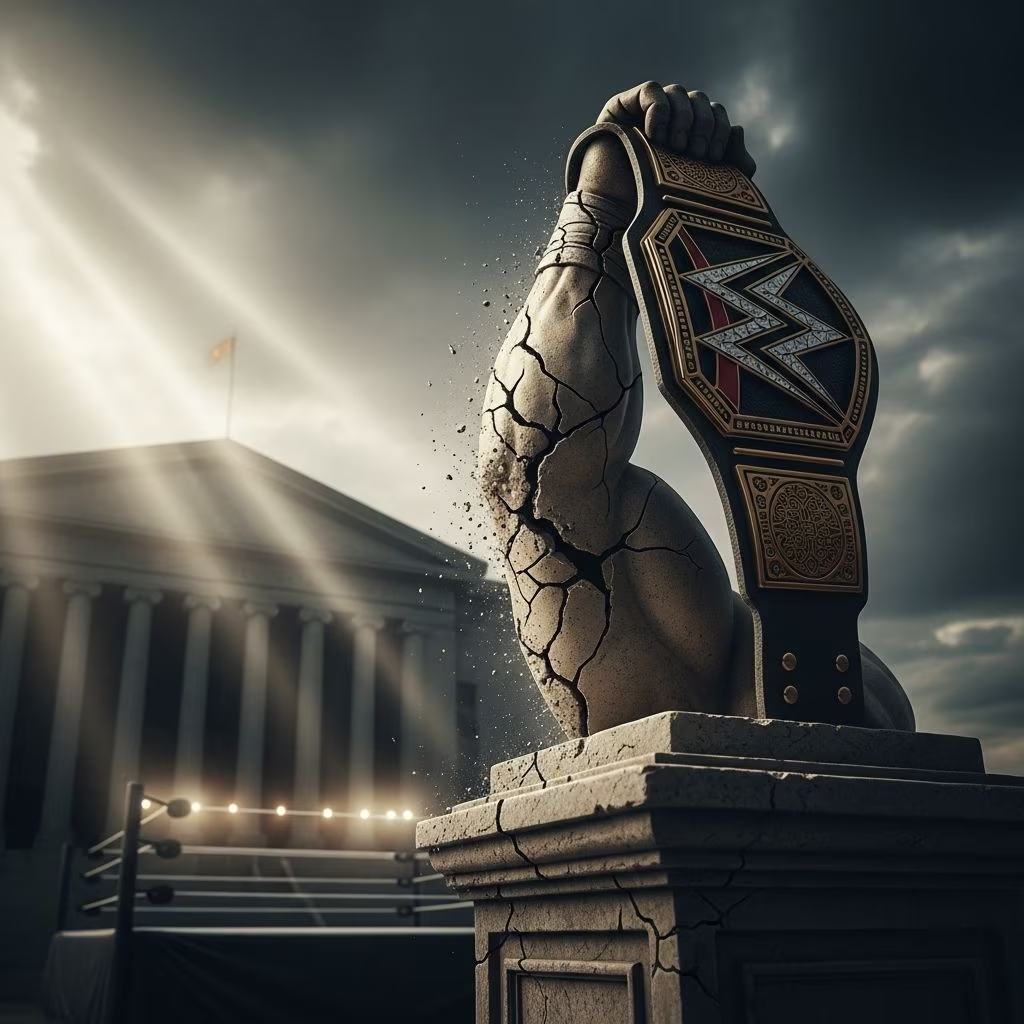
Unraveling a Wrestling Icon: The McMahon Family Legal Crisis
The McMahon family has long been synonymous with professional wrestling, building a global entertainment empire through decades of innovation and aggressive business practices. However, a series of serious allegations and lawsuits have fundamentally altered the family’s public image and corporate standing. What began as isolated complaints decades ago has evolved into comprehensive legal actions that challenge the very foundations of how the organization operated during its formative years. These developments represent far more than typical celebrity scandals—they constitute fundamental questions about corporate responsibility, duty of care, and institutional accountability.
The legal proceedings have exposed troubling patterns within WWE’s organizational culture, raising questions about whether leadership deliberately ignored misconduct or failed to implement adequate protective measures. Multiple lawsuits spanning different jurisdictions and involving various accusers paint a picture of systemic issues that extended beyond isolated incidents to suggest organizational awareness and potential complicity.
Understanding the Historical Ring Crew Abuse Allegations
Among the most serious accusations facing the McMahon family are allegations stemming from the 1980s involving young “ring boys” employed by WWE. These individuals, some as young as twelve or thirteen years old, were hired to perform various support functions at wrestling events. According to court filings, a ringside announcer allegedly used his position to systematically exploit vulnerable youth, offering them access to famous wrestlers and prime event experiences as enticement.
The accused individual allegedly engaged in inappropriate conduct with these young workers on multiple occasions, sometimes reportedly in view of wrestlers and executives within the facility’s backstage areas. The predatory behavior was not limited to isolated incidents but allegedly represented a sustained pattern of abuse facilitated by the work environment.
A significant aspect of these allegations concerns whether leadership possessed knowledge of the misconduct. Court documents indicate that Vince McMahon allegedly became aware of the accused individual’s “peculiar and unnatural interest” in young boys as early as the 1980s. Despite this awareness, the individual continued employment at WWE. When the employee was eventually terminated, he was rehired within six weeks with instructions merely to avoid contact with minors—a measure critics argue was inadequate given the severity of the underlying allegations.
The 1992 Investigation and Its Aftermath
Public awareness of these allegations emerged in 1992 when the matter attracted significant media attention. Federal law enforcement subsequently investigated the circumstances, examining available evidence including videotape documentation of the accused individual’s interactions with young workers. Investigators reportedly concluded that the accused individual displayed inappropriate sexual proclivities directed toward minors.
Despite the investigative findings, criminal charges were not pursued. Court filings attribute this outcome to the reluctance of alleged victims to formally admit to or describe the sexual nature of their experiences with the accused individual. This investigative outcome illustrates how trauma, shame, and fear can prevent prosecution even when substantial evidence exists.
For decades following the 1992 investigation, these allegations remained largely outside public discourse. The accused individual eventually passed away in 2021, though this did not prevent the emergence of new legal actions. The extended timeline between the alleged abuse and contemporary lawsuits reflects both the psychological impact of childhood trauma and legislative changes that have begun to address historical barriers to accountability.
Linda McMahon’s Role Under Legal Scrutiny
Recent litigation has increasingly focused on Linda McMahon’s involvement in WWE’s operations during the period when the alleged abuse occurred. Court documents characterize Linda McMahon as far more than a passive bystander or figurehead, instead alleging she functioned as a co-architect of WWE’s business strategy and operational decisions. Legal filings describe her as “in the thick of it, acting as Vince’s wife, confidante, co-leader in running the business, and the leader in trying to conceal the sordid underbelly of WWE’s sexual abuse culture.”
This characterization is significant because it positions Linda McMahon as potentially bearing direct responsibility for institutional decisions regarding workplace safety and the treatment of abuse allegations. The allegations suggest that efforts to minimize the impact of these revelations on WWE’s operations involved deliberate concealment rather than inadvertent oversight.
Linda McMahon’s public career has extended well beyond WWE, including service in the Trump administration. Her contemporary involvement in government positions has drawn additional public and legal scrutiny to these historical allegations, as courts and advocates have questioned whether past conduct and institutional decisions should inform current public assessments.
The Contemporary Sexual Misconduct Allegations
Beyond the historical ring crew abuse allegations, the McMahon family has faced serious recent accusations of misconduct. In January 2024, a former WWE employee filed a federal lawsuit alleging sexual trafficking and assault by Vince McMahon and other company executives. The complainant alleged that she was sexually assaulted multiple times, coerced into sexual acts with multiple individuals, and subjected to humiliating treatment during her employment with the organization.
The lawsuit alleged that company executives actively recruited individuals to engage in sexual relations with the complainant, suggesting institutional involvement in the alleged misconduct. The complainant claims that misconduct continued until 2024 when a family member discovered the relationship and threatened separation. Following negotiations, WWE and the accused parties agreed to a confidential settlement reportedly valued at three million dollars.
This case represents a different legal landscape than historical allegations, as it involves contemporary misconduct occurring in the modern era with documented evidence including text messages and photos. The complainant further alleged that multiple WWE employees were aware of the conduct and actively sought to conceal it rather than report it through appropriate channels.
Legal Developments and Judicial Assessments
In 2025, a Maryland district court judge examined motions to dismiss the historical ring crew abuse allegations and determined that the case should proceed. The judge noted in a comprehensive 48-page decision that the plaintiffs had “credibly alleged that the adults surrounding them, including Vincent and Linda McMahon, possessed relevant knowledge at pertinent times and that they could and should have acted to avert the abuse and the resulting damage.” This judicial determination represents a significant hurdle for the defendants, as courts have accepted that sufficient factual allegations exist to warrant trial proceedings.
The judge’s decision emphasized that while not all allegations might ultimately be substantiated to the degree required for judgment, the plaintiffs’ filings justified allowing the case to proceed through litigation rather than being dismissed on preliminary grounds. This decision reflects judicial skepticism of the defendants’ arguments that they bore no responsibility for the alleged abuse.
Legislative Changes Enabling Historical Accountability
An important factor enabling contemporary lawsuits involving decades-old allegations is legislative reform. Maryland passed a law in 2023 that eliminated the statute of limitations for child sexual abuse claims, a development that transformed the legal landscape for potential plaintiffs. Prior to this legislative change, many individuals who experienced childhood abuse during the 1980s would have been barred from pursuing legal remedies due to the passage of time.
This legislative development reflects evolving societal understanding of childhood trauma’s impact on victims’ capacity to come forward. Abuse survivors often require substantial time to process their experiences, achieve emotional stability, and develop the psychological resources necessary to pursue legal action. Statutes of limitations that fail to account for this psychological reality can shield perpetrators and enabling institutions from accountability.
The Broader Corporate Accountability Question
The McMahon family allegations raise fundamental questions about corporate leadership’s obligations regarding workplace safety and employee protection. When organizational leaders become aware of misconduct, what responsibility do they bear for responding adequately? Does merely terminating an offender and subsequently rehiring that individual with limited restrictions constitute satisfactory corporate response?
Legal and ethics experts argue that institutional accountability requires more comprehensive approaches, including investigation, victim support, policy implementation, and sustained monitoring. The allegations against the McMahons suggest that WWE’s leadership chose less aggressive approaches, a decision that courts are now evaluating through the lens of contemporary corporate responsibility standards.
These cases also highlight the tension between institutional reputation protection and genuine accountability. When organizations prioritize concealment over transparency, they may temporarily shield themselves from reputational damage but simultaneously create conditions for future misconduct and institutional complicity. The costs of this approach—legal fees, settlement expenses, reputational destruction, and the human toll on victims—often substantially exceed the costs of immediate, transparent response.
Impact on WWE’s Institutional Structure
The accumulating legal challenges have precipitated significant structural changes within WWE and its corporate environment. Vince McMahon stepped down from executive leadership positions as allegations escalated, and the organization transitioned to new leadership. These institutional changes reflect how legal and reputational pressures can fundamentally reshape corporate governance, even when legal liability remains contested.
The transition also illustrates how historical institutional problems can constrain contemporary leadership and organizational direction. New leaders inherit not only operational responsibilities but also the legal and reputational consequences of predecessor decisions, creating incentives for transparency and accountability that may not have existed previously.
Implications for the Entertainment Industry
The McMahon family cases emerge within a broader context of institutional accountability across the entertainment industry. High-profile revelations in recent decades have demonstrated that many entertainment organizations tolerated or concealed misconduct involving abuse of power, sexual harassment, and assault. These cases have established that institutional responses to such misconduct significantly influence both legal liability and public trust.
Organizations that attempt to conceal misconduct face compounding legal exposure, as concealment itself can constitute actionable conduct independent of the underlying misconduct. Additionally, victims’ advocates emphasize that transparent institutional response facilitates healing and prevents future victimization more effectively than concealment strategies.
Current Status and Ongoing Litigation
As of early 2025, legal proceedings involving the McMahon family continue through multiple jurisdictions. The Maryland lawsuit involving historical ring crew abuse allegations remains active despite initial motions to dismiss. The federal case involving contemporary sexual misconduct allegations continues in Connecticut federal court. A federal judge recently paused portions of the Maryland proceedings, illustrating the complex procedural landscape surrounding these cases.
The outcomes of these legal proceedings will likely influence how organizations across the entertainment industry address historical misconduct allegations and contemporary abuse concerns. Courts’ decisions regarding corporate leadership accountability and institutional responsibility may establish precedents affecting how future cases are evaluated.
Frequently Asked Questions Regarding These Allegations
Q: What is the timeline of the ring crew abuse allegations?
A: The alleged abuse occurred primarily during the 1980s involving young ring boys employed by WWE. The matter received public attention in 1992 when an FBI investigation was initiated. Contemporary lawsuits were filed decades later, enabled by legislative changes eliminating statutes of limitations for child sexual abuse claims.
Q: What is Linda McMahon’s role in these allegations?
A: Legal filings characterize Linda McMahon as a co-leader in WWE’s operations during the relevant periods and allege she participated in efforts to conceal misconduct. She is named as a defendant alongside Vince McMahon and WWE in the ring crew abuse lawsuit.
Q: How did the 1992 investigation conclude?
A: The FBI investigation documented evidence of misconduct but did not result in criminal charges, primarily because alleged victims were unwilling to formally describe the sexual nature of their experiences with the accused individual.
Q: What legislative changes enabled contemporary lawsuits?
A: Maryland’s 2023 law eliminated the statute of limitations for child sexual abuse claims, allowing individuals to pursue legal remedies decades after abuse occurred, a significant change from previous legal barriers.
Q: What compensation are plaintiffs seeking?
A: The ring crew abuse lawsuit seeks damages exceeding $30,000 per victim. The contemporary misconduct case resulted in a reported three-million-dollar confidential settlement.
Q: Has Vince McMahon maintained his position at WWE?
A: Vince McMahon stepped down from executive chairman roles at WWE and its parent company TKO Group Holdings as allegations escalated and new leadership assumed control.
References
- New Abuse Lawsuit Alleges McMahon Knew Employee Was Sexually Abusing Children — Rheingold Law. 2024. https://www.rheingoldlaw.com/sex-trafficking/vince-mcmahon-sued-for-failure-to-stop-sexual-abuse-of-children/
- Vince McMahon sex trafficking scandal — Wikipedia. 2024. https://en.wikipedia.org/wiki/Vince_McMahon_sex_trafficking_scandal
- What’s in the Lawsuit That Alleges Linda McMahon Failed to Protect Children — Education Week. December 2024. https://www.edweek.org/policy-politics/whats-in-the-lawsuit-that-alleges-linda-mcmahon-failed-to-protect-children/2024/12
- WWE sexual abuse case against Trump Secretary Linda McMahon — Axios. December 2025. https://www.axios.com/2025/12/11/wwe-sexual-abuse-lawsuit-trump-linda-mcmahon
- Linda McMahon lawsuit: Sex abuse case involving Donald Trump’s Education Secretary pick — ABC 7 Chicago. 2025. https://abc7chicago.com/post/linda-mcmahon-lawsuit-sex-abuse-case-involving-donald-trumps-education-secretary-pick-husband-vince-wwe-is-paused/15627874/
- Ex-WWE executive to help accuser in suit vs. Vince McMahon — ESPN. 2024. https://www.espn.com/wwe/story/_/id/45373798/ex-wwe-executive-agrees-help-accuser-suit-vs-vince-mcmahon