
Juror Questions: Practical Strategies For Attorneys During Trial
Essential strategies for attorneys to effectively manage and respond to juror inquiries during trials for optimal outcomes.
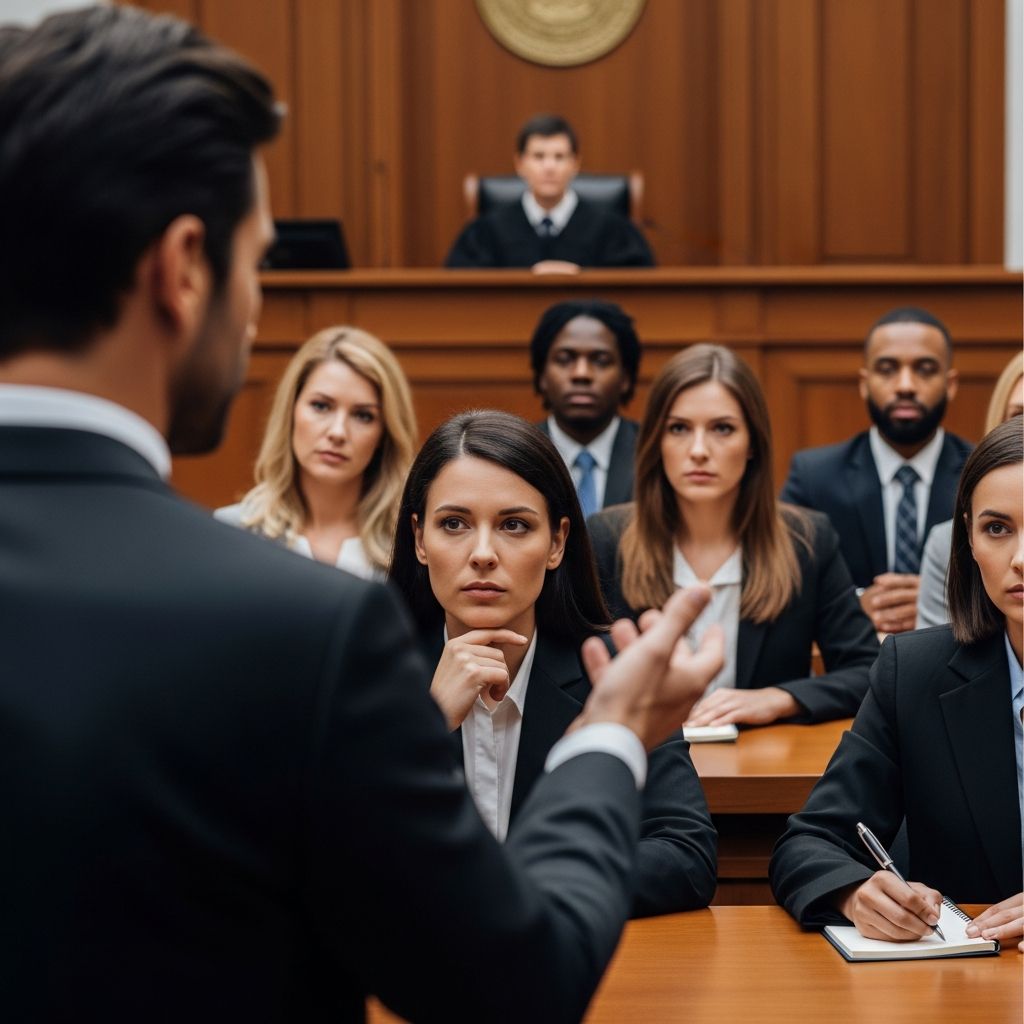
In high-stakes trials, jurors often seek clarification on complex testimony, legal concepts, or evidence presentation. Effectively managing these inquiries can significantly influence case outcomes by fostering understanding and trust. This article delves into comprehensive strategies for attorneys to navigate juror questions seamlessly, drawing from judicial best practices and trial expertise.
Understanding the Dynamics of Juror Inquiries
Jurors ask questions when they encounter ambiguity in witness statements or arguments. Allowing such interactions promotes active participation, helping jurors process information more deeply. Research shows that jurisdictions permitting juror questions report higher comprehension levels among panel members, reducing deliberation confusion.
Key benefits include immediate clarification of facts while witnesses are available, minimizing misinterpretations that could sway verdicts. However, unmanaged questions risk introducing bias or prolonging proceedings. Attorneys must balance encouragement with control to maintain trial integrity.
Pre-Trial Preparation for Juror Engagement
Anticipating juror questions begins long before opening statements. Develop a juror profile based on demographics from jury pools, incorporating data on age, background, and attitudes toward legal issues. This informs tailored voir dire questions that probe potential biases early.
- Conduct thorough jury research: Analyze local jury pools to predict common concerns, such as attitudes toward damages or liability.
- Draft targeted questionnaires: Sequence questions logically—from demographics to case-specific views—ensuring ample space for explanations.
- Prepare mini-openings: Introduce trial themes during voir dire to frame discussions and preempt confusion.
Practice mock trials with diverse panels to simulate question scenarios, refining responses that educate without lecturing.
Implementing Structured Question Protocols
Judges often facilitate juror questions via written notes passed discreetly, reviewed at sidebar to filter inappropriate inquiries. Attorneys should advocate for clear protocols upfront, emphasizing written submissions to avoid disruptions.
| Protocol Step | Purpose | Attorney Role |
|---|---|---|
| Collect written questions post-examination | Ensure orderly process | Review for relevance at sidebar |
| Judge assesses legality | Prevent bias introduction | Object if question assumes facts |
| Pose approved questions | Clarify testimony | Follow up neutrally |
| Document all exchanges | Maintain record | Preserve for appeals |
This structure, common in many courts, streamlines interactions while safeguarding procedural fairness.
Techniques for Responding to Juror Questions
When addressing inquiries, prioritize clarity and brevity. Rephrase questions to confirm understanding, then direct witnesses to answer factually without speculation.
- Use open-ended prompts initially to gauge depth of confusion.
- Avoid leading responses that bias the witness.
- Thank jurors for questions to build rapport and encourage further engagement.
For complex topics, employ analogies relatable to everyday life, transforming legal jargon into accessible language. Monitor non-verbal cues like furrowed brows or shifting postures to identify unspoken concerns.
Navigating Challenges and Objections
Not all questions merit direct answers. Object if inquiries venture into inadmissible areas, such as attorney-client privilege or excluded evidence. Frame objections respectfully to avoid alienating the jury.
Common pitfalls include jurors assuming facts not in evidence or probing deliberations prematurely. Judges mitigate this by instructing panels to maintain open minds. Attorneys can request curative instructions reinforcing neutrality.
“The key is turning potential disruptions into opportunities for reinforcement.” – Judicial best practice.
Leveraging Technology and Visual Aids
Modern trials integrate tools like digital displays for jury questions, enhancing efficiency. Provide written jury instructions aligned with verdict forms, allowing jurors to reference during inquiries.
Incorporate visuals—charts, timelines—to preempt questions on sequences or data. For millennial-heavy panels, concise multimedia keeps attention sharp, blending storytelling with evidence.
Building Rapport Through Voir Dire and Beyond
Voir dire sets the tone for juror-attorney relations. Ask provocative, open-ended questions to elicit honest responses, focusing on biases without confrontation. Acknowledge candid answers to foster trust.
- Make eye contact and use names for personal connection.
- Discuss case weaknesses candidly to gauge reactions.
- Thank participants, especially those revealing biases, to encourage others.
Avoid rushing; embrace silences by politely directing questions to reticent jurors.
Post-Trial Analysis: Learning from Juror Feedback
After verdicts, seek court permission for juror interviews to uncover question impacts. Structure sessions with openers on overall experience, progressing to specifics like influential testimony.
- Key inquiries: “What confused you most?” “How did witness clarity affect deliberations?”
- Avoid aggressive probing; build rapport for honest insights.
- Use findings to refine future strategies.
These debriefs reveal if unanswered questions lingered, informing improvements in presentation.
Frequently Asked Questions (FAQs)
What if a juror question reveals bias?
Politely note it for potential challenge; use it to educate the panel on impartiality without arguing.
Can jurors ask questions during opening statements?
Typically no; questions follow witness testimony to preserve opening integrity.
How do written vs. oral questions differ?
Written methods reduce disruption and allow pre-screening, preferred in most protocols.
Should attorneys encourage more questions?
Yes, within bounds, as engagement aids comprehension and verdict alignment.
What role do jury instructions play?
They frame questions; reference them in closings to guide deliberations.
Advanced Strategies for Seasoned Litigators
For complex cases, train witnesses on juror question protocols, emphasizing concise, truthful replies. Collaborate with judges on question phrasing to neutralize traps. Track patterns across trials to predict recurring inquiries, preempting them in arguments.
Incorporate storytelling to humanize evidence, making abstract concepts memorable. Humor, used judiciously, lightens tension around tough questions.
Empirical studies affirm juror questioning enhances satisfaction and accuracy, with federal experiments showing 20-30% better retention. Adopt these methods to elevate your trial craft.
References
- Point-Counterpoint: Jurors Asking Questions — Judicature (Duke University). 2018-10-15. https://judicature.duke.edu/articles/jurors-asking-questions/
- Do’s and Don’ts of Jury Selection — Advocate Magazine. 2017-01-01. https://www.advocatemagazine.com/article/2017-january/do-s-and-don-ts-of-jury-selection
- Drafting and Using Jury Questionnaires Effectively — Plaintiff Magazine. N/A. https://plaintiffmagazine.com/recent-issues/item/drafting-and-using-jury-questionnaires-effectively
- Trial Tips from the Judiciary — Haynes Boone. 2023-01-09. https://www.haynesboone.com/-/media/project/haynesboone/haynesboone/pdfs/practice-group-pdfs/litigation/trial-tips-from-the-judiciary_january-9.pdf
- Post-Trial Juror Interviews: Best Practices — U.S. Legal Support. 2024-05-15. https://www.uslegalsupport.com/blog/post-trial-juror-interviews/
Similar Articles








Read full bio of medha deb




