
Mastering Your Deposition: Essential Preparation Guide
Unlock proven strategies to confidently navigate your deposition, protect your case, and deliver impactful testimony under pressure.
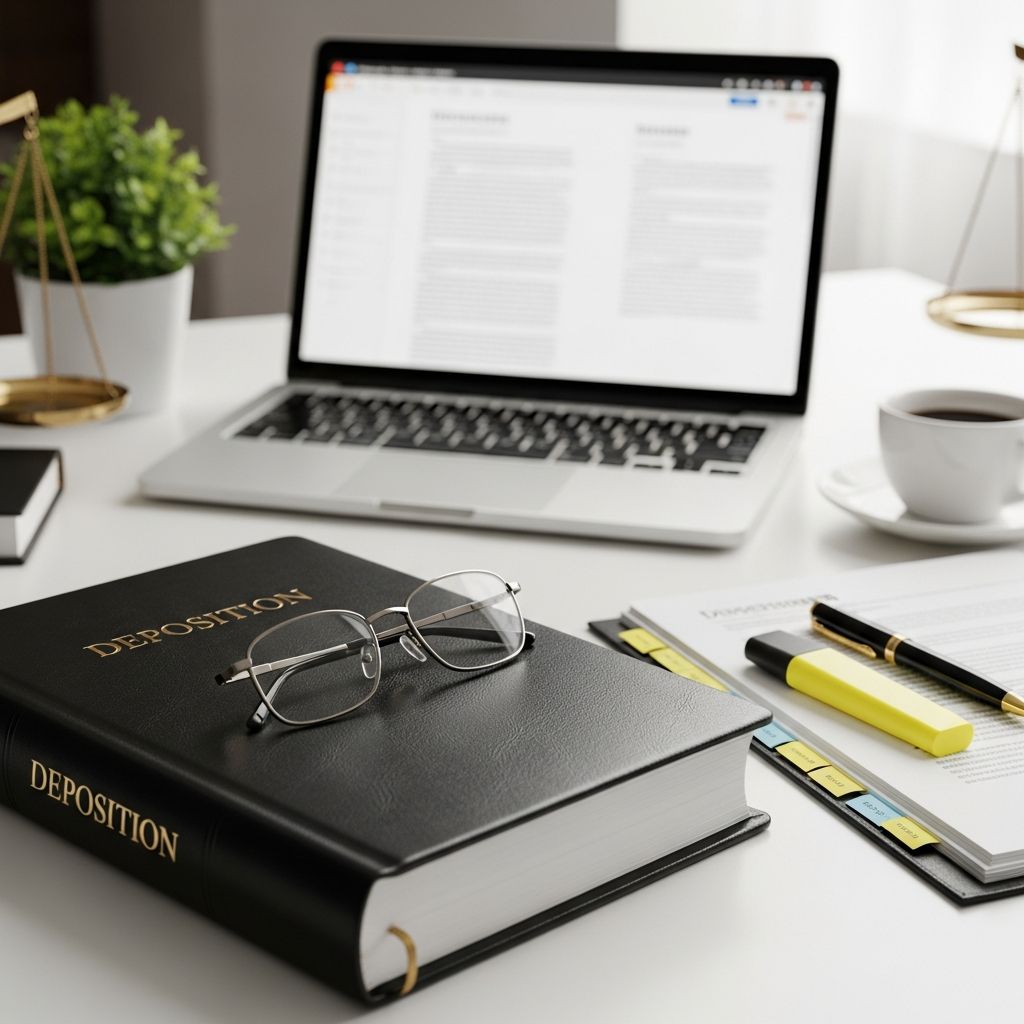
A deposition represents a pivotal moment in personal injury litigation, where your sworn testimony can shape the trajectory of your case. Unlike courtroom drama, this out-of-court proceeding allows opposing counsel to probe your account under oath, often in a conference room setting. Success hinges on meticulous preparation, mental composure, and strategic communication. This guide equips you with actionable strategies drawn from legal experts to transform anxiety into assurance.
Grasping the Fundamentals of a Deposition
Depositions serve as a key discovery tool, enabling attorneys to evaluate witness credibility, uncover facts, and assess case strengths before trial. You will be sworn in, much like in court, with a court reporter transcribing every word and possibly video recording your responses. Expect sessions lasting several hours, featuring questions from the opposing side while your attorney observes and objects as needed.
Understanding this process demystifies it. Review your state’s rules—such as those in the Federal Rules of Civil Procedure Rule 30 for federal cases—which outline procedures like notice periods and limits on examination duration. High-quality preparation aligns your narrative with evidence, mitigating surprises.
Building a Rock-Solid Foundation Through Preparation
Effective preparation begins with immersing yourself in your case details. Collaborate closely with your attorney to dissect timelines, key events, involved parties, and pertinent legal principles. This foundational step ensures factual recall under scrutiny.
- Review All Documentation: Scrutinize medical records, accident reports, witness statements, emails, and photographs. Mark exhibits in advance to verify contents independently before responding.
- Chronicle the Timeline: Construct a precise sequence of events to spot inconsistencies and reinforce your story’s coherence.
- Mock Sessions: Simulate the deposition with your lawyer, practicing responses to anticipated queries. This builds familiarity with questioning styles and bolsters confidence.
Dedicate at least two hours per case facet in attorney conferences, adjusting for complexity. Such diligence, as emphasized by experienced litigators, prevents memory lapses and projects forthrightness.
Cultivating Composure: Techniques for Mental Resilience
Depositions test emotional fortitude amid potentially adversarial questioning. Opposing counsel may employ tactics to unsettle you, making self-regulation essential.
| Stress Trigger | Counter-Strategy |
|---|---|
| Rapid-fire questions | Pause 2-3 seconds before replying; deep breaths restore clarity. |
| Silence after answers | Resist filling voids—wait for the next query. |
| Confrontational tone | Focus on facts, not delivery; maintain neutral posture. |
Prioritize sleep, hydration, and light exercise beforehand. Visualization—rehearsing calm responses—further anchors poise. Confident demeanor enhances perceived reliability, influencing settlement prospects.
The Art of Precise and Truthful Testimony
Truthfulness forms the bedrock: perjury carries severe penalties, including fines or imprisonment. Deliver responses one fact at a time, avoiding speculation with phrases like “I don’t recall” or “I don’t know” when appropriate.
Key principles include:
- Listen Actively: Ensure full comprehension; rephrase if unclear (e.g., “Are you asking if…”).
- Respond Concisely: Limit to the question’s scope—yes/no suffices where possible, elaborating only if prompted.
- Correct Assumptions: Challenge implied falsehoods politely (e.g., “The document doesn’t state that; it indicates…”).
- Use Plain Language: Shun jargon or absolutes like “always/never”; opt for qualifiers like “typically”.
Your attorney can object to improper queries, signaling you to pause. Never confer mid-question without a break.
Navigating Documents and Exhibits Effectively
Documents often anchor questions—demand to review them fully, including fine print, before answering. Organize personal copies beforehand, noting relevance. If counsel misinterprets, reference specifics: “On page 2, line 5, it confirms…” This precision safeguards accuracy and thwarts manipulation.
Prepare a checklist for exhibits: identify introduction order, copies for all parties, and linkages to testimony objectives. Such organization keeps proceedings efficient and your responses evidence-based.
Leveraging Your Attorney’s Expertise Throughout
Your lawyer provides indispensable guidance—from prepping case theory to real-time cues. Heed objections, which highlight problematic phrasing. For sidebar consultations, request breaks discreetly (e.g., restroom) to avoid record notations.
Post-mock reviews refine strategies, addressing weak spots. Attorneys like those at specialized firms stress client-attorney synergy as pivotal to testimony efficacy.
Practical Logistics for Deposition Day
Treat the event with courtroom gravity:
- Attire: Business professional—conservative suit, minimal accessories.
- Arrival: 30 minutes early; bring water, notepad (use sparingly).
- Conduct: Verbalize actions (e.g., “Nodding yes”); avoid gestures alone.
- Breaks: Utilize as needed for fatigue or strategy huddles.
Post-deposition, review the transcript promptly for errata via addendum, ensuring fidelity.
Common Pitfalls and How to Sidestep Them
Avoid these frequent errors:
- Volunteering excess details, inviting traps.
- Arguing or emoting—stick to stoic facts.
- Guessing—honest uncertainty trumps fabrication.
- Ignoring fatigue—request breaks proactively.
By anticipating these, you maintain control, preserving case integrity.
Frequently Asked Questions (FAQs)
What if I don’t remember something during the deposition?
Say “I don’t recall” truthfully—it’s acceptable and preferable to guessing. Preparation minimizes such instances.
Can I refuse to answer questions?
Generally no, except on privilege grounds (your attorney objects). Answer post-objection if instructed.
How long does a deposition last?
Typically 3-7 hours, varying by case; federal rules cap at 7 hours without stipulation.
Is the deposition recorded on video?
Often yes—treat it as a lasting impression of your demeanor and words.
What happens after my deposition?
Transcript is produced for review; it may inform motions, settlements, or trial prep.
Empowering Your Case Through Deposition Mastery
Depositions, while daunting, offer opportunities to solidify your position. Diligent preparation, disciplined responses, and attorney partnership yield compelling testimony that resonates. Approach with preparation as your shield and truth as your sword—your case’s future may depend on it.
References
- 5 Tips to Use at Your Deposition — Parker & McConkie Injury Lawyers. 2023. https://www.parkerandmcconkie.com/blog/5-tips-to-use-at-your-deposition/
- Preparing for a Deposition | 16 Helpful Tips — Mayor Law. 2024. https://www.mayorlaw.com/helpful-deposition-preparation-tips/
- Deposition Do’s and Don’ts: Tips for Success — Lommen Abdo Law Firm. 2023. https://lommen.com/deposition-dos-and-donts-tips-for-success-in-your-legal-case/
- Deposition Preparation: Tips for Attorneys and Witnesses — Rev. 2024. https://www.rev.com/blog/deposition-preparation
- How to Prepare for a Deposition: Tips for Preparing Clients — US Legal Support. 2023. https://www.uslegalsupport.com/blog/how-to-prepare-for-a-deposition-tips-for-preparing-clients/
- 18 Deposition Tips, Traps, & Tricks — Talkov Law. 2024. https://talkovlaw.com/deposition-tips-traps-tricks/
- Three-Minute Legal Tips: Preparing for a Deposition — University of Washington School of Law. 2022-10-12. https://www.law.uw.edu/news-events/news/2022/preparing-for-a-deposition/
Similar Articles








Read full bio of Sneha Tete




