
Marrying Third Cousins: Legal Rules Across America
Unravel the legal landscape of third-cousin marriages in the US: universally permitted, yet first-cousin laws create confusion.
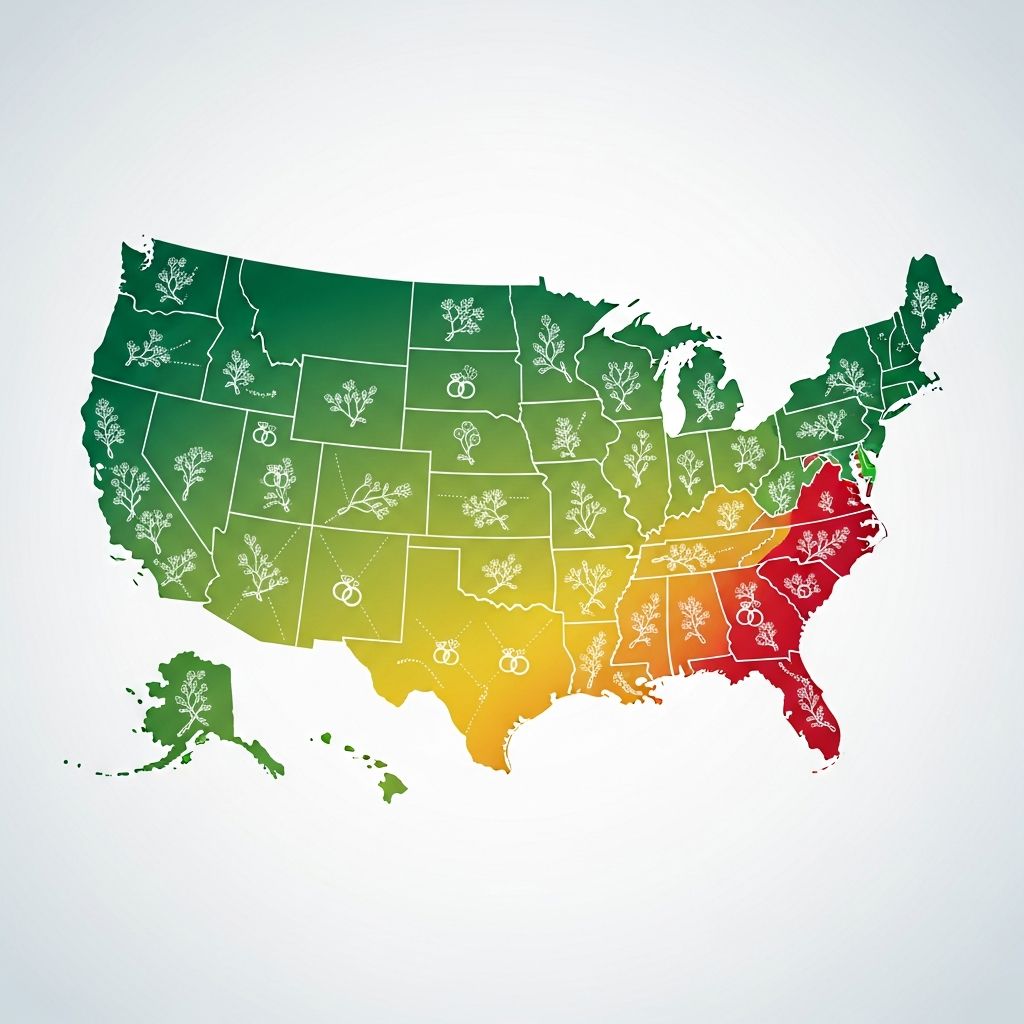
Marriages between third cousins are permitted in every U.S. state, standing in stark contrast to the patchwork of restrictions on closer relatives like first cousins. This legal uniformity stems from the distant genetic relationship, which poses minimal health risks compared to nearer kin unions. While public perception often blurs these distinctions, understanding state statutes clarifies that third-cousin partnerships face no barriers to legality or recognition.
Defining Family Connections: From First to Third Cousins
To grasp marriage laws, one must first define cousin relationships precisely. First cousins share grandparents, representing a close bond with shared DNA around 12.5%. Second cousins connect through great-grandparents, dropping shared genetics to about 3.13%. Third cousins, the focus here, link via great-great-grandparents, sharing merely 0.78% DNA on average—a figure akin to unrelated individuals from the same ethnic group.
These degrees matter because U.S. laws hinge on consanguinity levels. Most statutes target first or second cousins, leaving third cousins untouched. For instance, Washington’s Revised Code of Washington (RCW) 26.04.020 prohibits marriages nearer than second cousins but explicitly allows third cousins and beyond. This civil law computation ensures clarity in licensing.
- First cousins: Grandparent-shared; banned in 25 states.
- Second cousins: Great-grandparent-shared; restricted in few states like Washington.
- Third cousins: Great-great-grandparent-shared; legal everywhere.
State-by-State Breakdown: A Nationwide Green Light for Third Cousins
Unlike first-cousin marriages, which 25 states outright ban as of 2025, third-cousin unions encounter zero prohibitions. Even in restrictive jurisdictions like Nevada or Mississippi, where first-cousin marriages are criminalized, third cousins proceed unimpeded. Seven states impose conditions on first cousins—such as age 65+ or infertility proofs in Arizona, Indiana, Utah—but these never extend to third cousins.
Consider Kentucky: second-cousin marriages are barred, yet third cousins are fine, as confirmed in legal forums. This pattern holds universally, affirming that no state voids, criminalizes, or restricts third-cousin marriages. Out-of-state recognitions also pose no issue for such distant ties.
| Relationship | States Banning | Conditions in Some States | Genetic Share |
|---|---|---|---|
| First Cousin | 25 | 7 (e.g., age/infertility) | ~12.5% |
| Second Cousin | ~5 (e.g., WA) | Rare | ~3.13% |
| Third Cousin | 0 | None | ~0.78% |
This table highlights the sharp legal drop-off after second cousins.
Genetic Perspectives: Why Third Cousins Pose Little Risk
Health concerns drive many cousin-marriage laws, rooted in recessive disorder risks. First-cousin offspring face 3-4% added risk over the baseline 2-3%, per studies. Second cousins see this halve; third cousins align with general population risks, negligible at under 0.5% elevation.
Modern genomics reinforces this: shared DNA dilutes exponentially. The National Society of Genetic Counselors notes no routine screening needed for third cousins or beyond. Thus, states focus restrictions narrowly, preserving adult autonomy for low-risk pairings.
Historical Roots of Consanguinity Bans
U.S. cousin-marriage laws trace to 19th-century eugenics movements, blending religious taboos with pseudoscience. Early colonies drew from English canon law banning up to fourth cousins, later relaxed. Post-Civil War, 30+ states enacted first-cousin bans amid immigration fears and ‘racial purity’ rhetoric.
By the 20th century, genetics debunked blanket dangers, prompting reforms. Today, bans persist culturally, though third cousins escaped scrutiny due to remoteness. Wikipedia’s compilation shows evolution: from widespread prohibitions to today’s nuanced map.
Practical Steps: Obtaining a Third-Cousin Marriage License
Securing a license mirrors any marriage: visit county clerk, provide ID, age proof, and swear no impediments. No blood tests required anywhere since the 1980s. Genealogy tools like Ancestry.com verify relationships if needed, but clerks rarely probe beyond affidavits.
Immigration angles, like spousal visas, treat third-cousin marriages as standard, with no incest flags. Kentucky example: third-cousin union supports visa despite second-cousin ban. Ceremonies, officiants, and records proceed normally.
- Verify mutual eligibility (age 18+, unmarried).
- Gather documents (birth certificates optional).
- Apply in-person or online where available.
- Wait 0-5 days; marry within 60.
Common Misconceptions and Cultural Views
Myths abound: ‘All cousin marriages are illegal!’ or ‘Third cousins are too close genetically.’ Media amplifies first-cousin drama, overshadowing legality of distant ties. Rural areas may stigmatize via tradition, but law protects privacy.
Globally, 10%+ marriages involve cousins; U.S. rates hover below 1%, mostly first cousins where legal. Third-cousin unions, rarer, evade notice.
Related Family Marriages: Beyond Third Cousins
Once-removed third cousins (e.g., your third cousin’s child) share even less DNA (~0.39%) and face no hurdles. Half-cousins, sharing one great-great-grandparent, mirror full third cousins legally. Adopted cousins? Treated as unrelated unless blood ties proven.
States like California allow all; restrictives like Arkansas void first-cousin but affirm distant ones.
Frequently Asked Questions About Third-Cousin Marriages
Is marrying a third cousin illegal anywhere in the US?
No, it’s legal in all 50 states and territories without restrictions.
Do third cousins need genetic testing?
Not required; risks are population-average.
Can third-cousin marriages help with immigration visas?
Yes, treated as any non-incestuous marriage.
What if we’re second cousins once removed?
Still legal everywhere, as not first/second cousins.
Does religion affect third-cousin legality?
Civil law governs; religious ceremonies optional.
Are children of third cousins at higher disease risk?
No significant increase over unrelated couples.
Navigating Family Dynamics in Distant Cousin Unions
Even legal, such marriages can stir family talks. Open dialogue on genealogy builds support. Counselors note emotional benefits: shared heritage without closeness pitfalls. Legally secure, focus shifts to relational health.
In multicultural U.S., third-cousin ties span ethnicities, enriching unions. DNA tests confirm bonds, dispelling doubts.
Future Trends: Evolving Marriage Laws
Challenges to first-cousin bans grow, citing privacy rights (e.g., Loving v. Virginia precedent). Third cousins, unchallenged, symbolize liberalization. As genetics advances, expect further relaxation, prioritizing consent over archaic fears.
By 2026, no shifts anticipated for third cousins—solidly permitted.
References
- Cousin marriage law in the United States — Wikipedia. 2025-02. https://en.wikipedia.org/wiki/Cousin_marriage_law_in_the_United_States
- Can I marry my 3rd cousin and him be able to get his visa? — Avvo. N/D. https://www.avvo.com/legal-answers/can-i-marry-my-3rd-cousin-and-him-be-able-to-get-h-5986048.html
- Can you marry a cousin? — Gettysburg College. N/D. https://public.gettysburg.edu/~dperry/Class–Methods/Cross-Cousins.pdf
- RCW 26.04.020: Prohibited marriages — Washington State Legislature. 2012. https://app.leg.wa.gov/rcw/default.aspx?cite=26.04.020
Similar Articles








Read full bio of medha deb




