
Managing March Madness: Workplace Policies Guide
Essential strategies for employers to harness March Madness excitement while avoiding legal pitfalls and boosting morale.
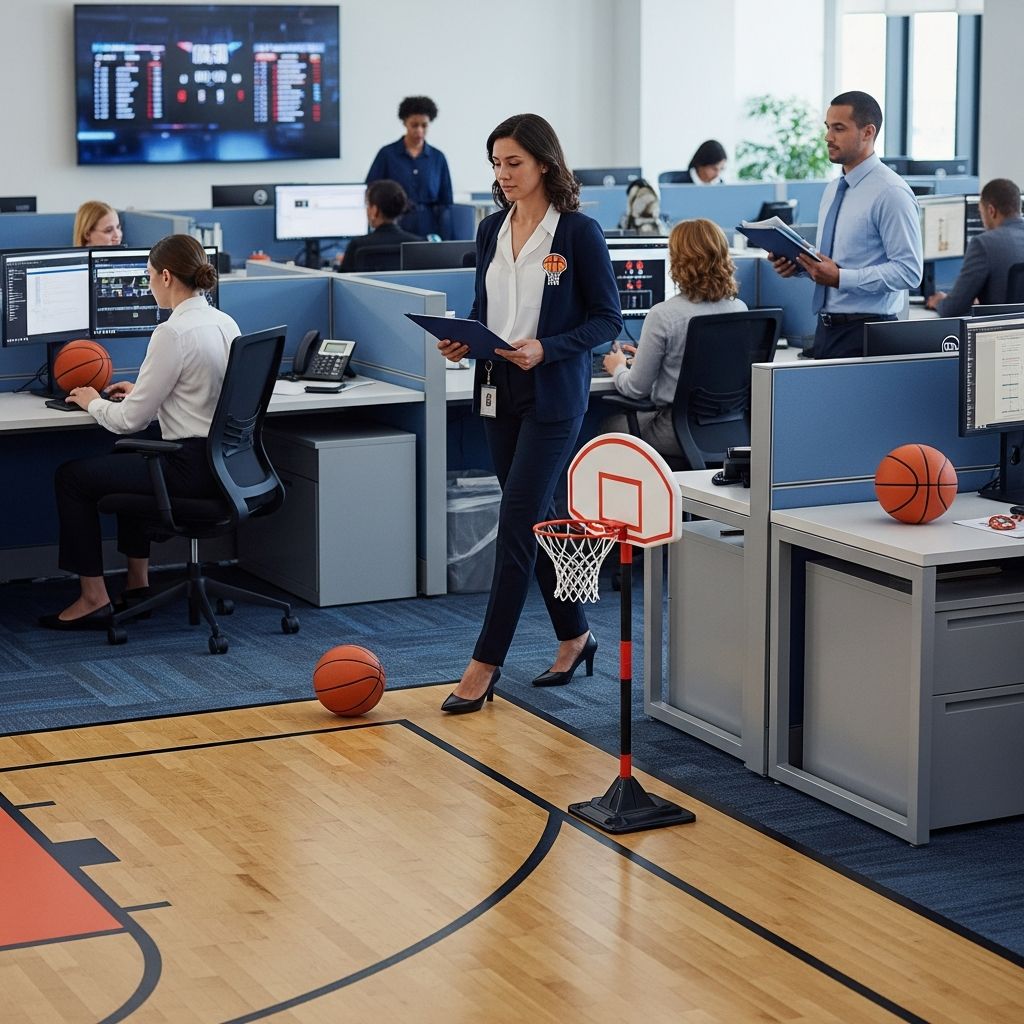
The NCAA basketball tournament, popularly known as March Madness, captivates millions annually, injecting excitement into workplaces across the nation. However, this frenzy can challenge employers with dips in productivity, potential legal exposures, and interpersonal dynamics. This guide explores practical policy frameworks to embrace the event’s energy responsibly, fostering team spirit without compromising operations or compliance.
Understanding the Impact on Business Operations
March Madness coincides with peak distraction periods, as employees follow games, update brackets, and engage in related discussions. Estimates suggest substantial economic costs from reduced focus, with reports indicating billions in lost productivity nationwide.
- Challenger, Gray & Christmas estimated the 2024 tournament led to nearly $10 billion in workplace productivity losses.
- This figure accounts for time spent streaming games, checking scores, and participating in informal contests.
Employers must anticipate these effects and implement proactive measures to maintain workflow.
Developing a Comprehensive Tournament Engagement Policy
A dedicated policy outlines permissible activities, ensuring consistency and fairness. Key components include guidelines on time usage, resource allocation, and participation options.
- Define Scope: Specify what constitutes approved engagement, such as break-time viewing or virtual bracket challenges.
- Enforce Uniformly: Apply rules to all staff levels to prevent perceptions of favoritism.
- Communicate Early: Distribute via email or meetings before the tournament begins.
Such policies transform potential chaos into structured fun, signaling employer attentiveness to employee interests.
Navigating Legal Risks in Bracket Challenges
Office pools are a staple, but they intersect with gambling statutes. Most states classify activities as gambling if they involve consideration (entry fee), chance, and prize.
| Element | Description | Workplace Implication |
|---|---|---|
| Consideration | Payment or fee to participate | Avoid fees; use free entry to sidestep illegality |
| Chance | Outcome not fully skill-based | Bracket predictions inherently involve chance |
| Prize | Monetary or valuable reward | Opt for non-cash prizes like gift cards under limits |
Consult state-specific regulations; for instance, recent sports betting expansions add layers of scrutiny. Free-entry sweepstakes generally pose fewer issues but require official rules disclosure.
- Ogletree Deakins notes businesses must review local laws before launching pools.
Safeguarding Productivity During Peak Excitement
Maintaining output demands clear boundaries on diversions. Strategies include:
- Blocking non-work sites via IT filters during hours.
- Scheduling brief update breaks in communal areas.
- Assigning priority tasks with deadlines to refocus efforts.
Managers should model behavior, participating judiciously while upholding standards. Flexible arrangements, like adjusted hours for remote viewing, can accommodate without full disruption.
Preventing Harassment and Fostering Inclusivity
Tournament fervor can spark banter turning inappropriate, risking discrimination claims based on protected characteristics. Robust anti-harassment protocols are essential.
- Reinforce zero-tolerance for derogatory remarks tied to race, gender, or origin.
- Train supervisors on swift complaint resolution.
- Promote inclusive events welcoming non-fans.
A harassment-free environment enhances morale; proactive reminders during this period reinforce culture.
Alcohol Policies for Watch Events
If hosting viewing parties, alcohol introduces liability for impaired conduct. Prohibit consumption during work hours and limit off-site events.
- Designate drivers or provide rideshares.
- Partner with venues holding liquor licenses.
- Document attendee agreements on responsible behavior.
Clear prohibitions mitigate dram shop laws holding hosts accountable for third-party injuries.
Dress Codes and Appearance Guidelines
Team apparel boosts spirit but must align with professionalism. Temporary relaxations require parameters.
| Category | Allowed | Prohibited |
|---|---|---|
| Office Attire | Team jerseys over business casual | Offensive logos or distracting items |
| Virtual Meetings | Neutral backgrounds with subtle gear | Full fan costumes |
| Client Interactions | Conservative team colors | Any branded items |
Announce durations to avoid extended deviations.
Boosting Morale Through Safe Alternatives
Cash-free contests build camaraderie without risks. Examples: leaderboards with bragging rights, small trophies, or extra break time.
- Integrate with team-building, like prediction discussions.
- Encourage cross-departmental participation.
- Share winner spotlights in newsletters.
These approaches yield retention benefits amid labor challenges.
Technology and Resource Management
Company devices must prioritize business. Update acceptable use policies.
- Monitor bandwidth for streaming.
- Disable gambling apps on networks.
- Audit usage post-event if needed.
Consistent enforcement prevents disparate treatment claims.
State Variations in Gambling Oversight
Laws differ; post-PASPA, many states legalized sports betting, heightening office pool vigilance. Check .gov sites for updates.
- U.S. Department of Interior ethics guidelines prohibit federal employee gambling on duty.
Implementation Timeline
Roll out policies weeks ahead:
- Week 1: Draft and review internally.
- Week 2: Train leaders; announce to staff.
- Tournament Week: Monitor and adjust.
Frequently Asked Questions (FAQs)
Can we run a bracket pool with small entry fees?
No, fees risk violating gambling laws; stick to free participation with non-monetary prizes.
How much productivity loss is typical?
Estimates reach $10 billion nationally, per Challenger, Gray & Christmas, varying by workforce engagement.
What if an employee complains about exclusion?
Ensure voluntary involvement and inclusive alternatives to accommodate all preferences.
Is alcohol ever okay at work events?
Generally not during hours; for after-hours, enforce strict responsibility measures.
Do dress code exceptions invite issues?
Only if temporary, defined, and applied evenly across groups.
Conclusion: Balanced Approach Wins
Strategic policies allow employers to leverage March Madness for engagement while shielding against liabilities. By prioritizing clarity, equity, and compliance, businesses create positive experiences year after year.
References
- March Madness Mayhem: Navigating Employment Law Issues in the Workplace — SWFL Business and IP Blog. 2023-03. https://www.swflbusinessandipblog.com/2023/03/march-madness-mayhem-navigating-employment-law-issues-in-the-workplace/
- March Madness Bracket Pools in the Workplace: Legal Compliance Tips Before Tip-Off — Ogletree Deakins. 2024 (approx.). https://ogletree.com/insights-resources/blog-posts/march-madness-bracket-pools-in-the-workplace-legal-compliance-tips-before-tip-off/
- Quick Ethics Reminder on March Madness® and Rules on Misuse of Position — U.S. Department of the Interior. 2024 (annual). https://www.doi.gov/ethics/quick-ethics-reminder-march-madnessr-and-rules-misuse-position-0
- Your Workplace Guide to Making March Madness a Morale Boost — Fisher Phillips. 2024 (approx.). https://www.fisherphillips.com/en/insights/insights/workplace-guide-march-madness
- Taming March Madness in the Workplace — SHRM. Recent update. https://www.shrm.org/topics-tools/news/employee-relations/taming-march-madness-workplace
Similar Articles








Read full bio of medha deb




