
How Long Can A Traffic Stop Last: Rights, Limits, What To Do
Understand when a routine traffic stop crosses into unlawful territory and your rights during police encounters on the road.
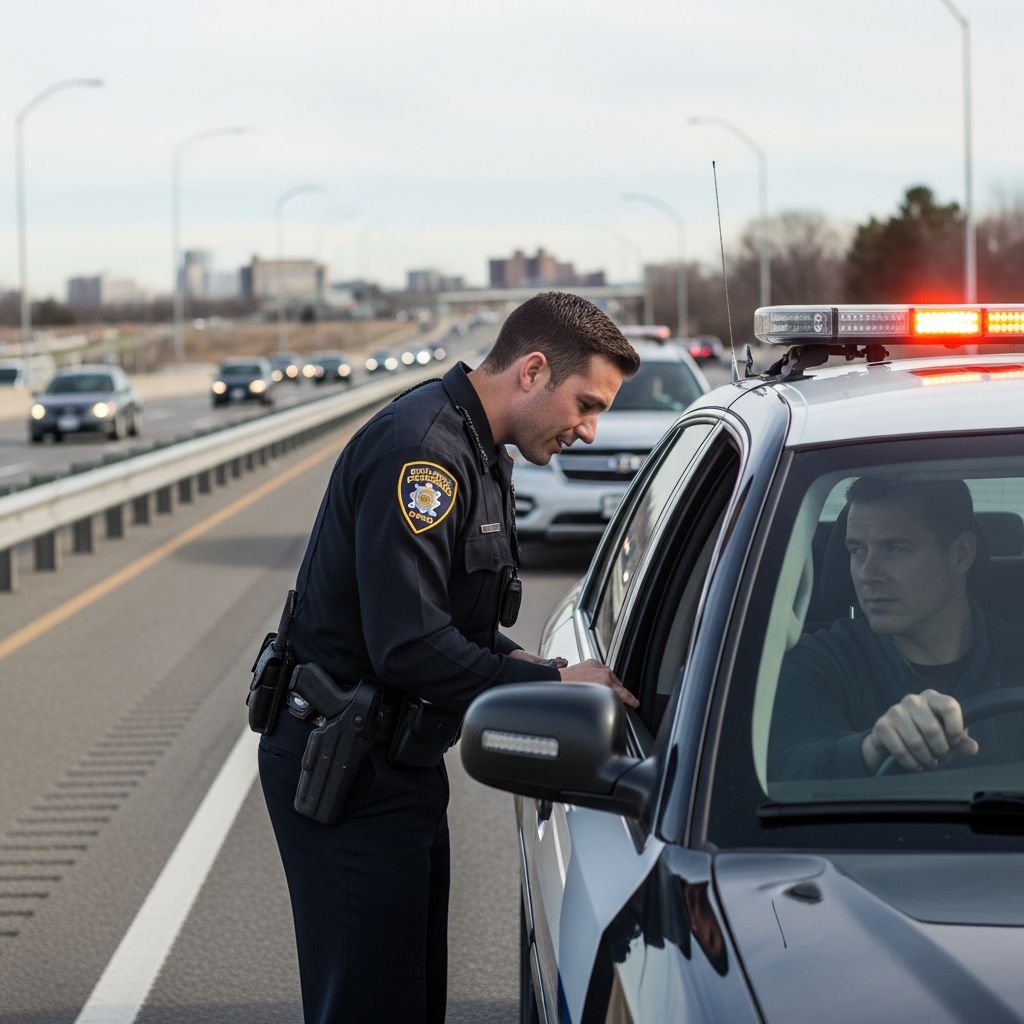
Police traffic stops are common encounters that can escalate if they extend beyond what is legally permissible. The core principle governing these interactions is reasonableness under the Fourth Amendment, which protects against unreasonable searches and seizures. A stop begins the moment an officer activates lights or signals a driver to pull over, initiating a seizure that must remain tied to its original purpose.
Core Legal Standard for Stop Length
The U.S. Supreme Court established a clear benchmark in Rodriguez v. United States (2015), ruling that a traffic stop for a observed violation cannot exceed the time needed to address that violation. This includes routine tasks like verifying a driver’s license, checking registration and insurance, and deciding on a ticket or warning. Any prolongation without additional justification transforms the stop into an unconstitutional detention.
In practice, routine stops average 15-20 minutes, but variations occur based on circumstances. Officers may perform safety checks, such as asking drivers to exit vehicles for officer protection, without violating this rule, provided these actions do not add measurable time.
Permissible Activities During Initial Phase
During the initial phase, officers are authorized to conduct several standard inquiries:
- License, registration, and insurance verification.
- Warrant checks via radio or computer.
- Issuing citations or warnings.
- Basic questions about the violation’s context, like speed or lane usage.
These steps ensure public safety and enforcement efficiency. Courts recognize that multitasking, such as running checks while conversing, is allowable if it aligns with the stop’s mission.
When Can Officers Extend a Stop?
Extensions require independent legal grounds, primarily reasonable suspicion of other crimes. This standard, lower than probable cause, demands specific, articulable facts suggesting criminal activity—not mere hunches.
Common scenarios justifying prolongation include:
- Observed nervous behavior combined with inconsistent travel stories.
- Visible drug paraphernalia or odors.
- Information from warrant checks revealing prior offenses.
Once reasonable suspicion arises, officers may detain longer to investigate, such as awaiting a drug-detection dog. However, delays must be reasonably necessary; excessive waiting without progress can still be challenged.
Supreme Court Precedents Shaping the Rules
The landmark Rodriguez decision addressed a seven-to-eight-minute delay for a dog sniff after routine tasks concluded. The Court held this unlawful, emphasizing that dog sniffs are not part of the stop’s mission absent suspicion.
Subsequent cases refined this:
| Case | Key Holding | Delay Duration |
|---|---|---|
| Rodriguez v. U.S. (2015) | Stop prolonged 7-8 min for dog sniff after ticket tasks done: unlawful. | 7-8 minutes |
| U.S. v. Hayes (recent appellate) | 5-second delay for dog alert deemed negligible; permissible. | ~5 seconds |
| U.S. v. Cole (7th Cir. 2021) | 9-minute inquiry developed suspicion before dog sniff; lawful extension. | 45 minutes total |
These rulings illustrate a spectrum: minimal delays may pass muster, but unrelated extensions fail scrutiny.
Role of Drug Dogs and K-9 Units
Drug-detection dogs introduce complexity. A positive alert provides probable cause for searches, but summoning a dog cannot independently justify delay. If suspicion develops early, waiting 10-20 minutes for a K-9 unit is often upheld, as in Florida practices where averages hover around 20 minutes for routines but extend with cause.
Drivers retain rights: politely declining consent searches absent warrants or alerts. Officers cannot compel exit solely for dog sniffs post-mission completion.
Challenging Unlawful Prolongations in Court
If a stop exceeds limits, evidence obtained may be suppressed via a motion to suppress. Courts examine body camera footage, timestamps, and officer testimony to assess:
- Completion time of routine inquiries.
- Timing of new suspicions.
- Overall duration relative to justification.
Successful challenges often hinge on proving no reasonable suspicion justified the hold. For instance, in Rodriguez, the officer’s unfinished paperwork did not excuse the dog wait.
Driver Rights and Best Practices
Knowledge empowers during stops:
- Remain calm and compliant: Politeness aids de-escalation.
- Produce documents promptly: Delays from non-compliance invite extensions.
- Ask if free to leave: If tasks end, request release verbally.
- Decline consent searches: “No” is lawful without admission.
- Record if safe: Many states permit filming officers.
Post-stop, note details like time pulled over, tasks discussed, and release time for potential attorney review.
State Variations and Evolving Laws
While federal precedents bind states, nuances exist. Florida emphasizes investigation time “within reason,” while circuits like the 7th allow brief stalling if suspicion builds quickly. Always consult local counsel, as state courts interpret Rodriguez variably.
Frequently Asked Questions
Is there a strict time limit for traffic stops?
No fixed limit exists; duration must match the time needed for the stop’s purpose plus any justified extensions based on reasonable suspicion.
What if an officer asks unrelated questions?
Brief, non延長 inquiries (e.g., travel plans) are often okay if parallel to checks, but diversions adding time risk suppression.
Can police search my car without consent?
Not without probable cause, a warrant, or exceptions like dog alerts or plain view evidence.
How long is too long for a dog sniff wait?
Courts tolerate 15-30 minutes if suspicion justifies it, but longer needs strong proof of ongoing need.
Does completing the ticket mean I can leave?
Yes, per Rodriguez; further detention requires new grounds.
Protecting Yourself from Prolonged Detentions
Prolonged stops heighten risks of escalations or discoveries. Awareness of Rodriguez equips drivers to assert rights confidently. If detained unduly, document and seek legal aid promptly—unlawful evidence often gets tossed, potentially dismissing charges.
In summary, traffic stops demand balance: officer diligence without overreach. Understanding these boundaries fosters safer, fairer interactions.
References
- Rodriguez v. United States, 575 U.S. 348 — Supreme Court of the United States. 2015-04-21. https://www.supremecourt.gov/opinions/14pdf/13-997_1q7d.pdf
- United States v. Cole, 21 F.4th 421 — United States Court of Appeals for the Seventh Circuit. 2021-12-14. https://law.justia.com/cases/federal/appellate-courts/ca7/21-2688/21-2688-2021-12-14.html
- Fourth Amendment Overview — Legal Information Institute, Cornell Law School. 2023-01-15. https://www.law.cornell.edu/wex/fourth_amendment
- Police Traffic Stops: Rights and Time Limits — Freeburg Law (summarizing Rodriguez). 2022-06-10. https://tetonattorney.com/how-long-can-a-traffic-stop-last
- When Can Police Extend a Traffic Stop? — Lexipol (analyzing Hayes case). 2023-05-22. https://www.lexipol.com/resources/blog/the-5-second-rule/
Similar Articles








Read full bio of Sneha Tete




