
Libel vs Slander: Key Defamation Differences
Understand the crucial distinctions between libel and slander in defamation law, and how they impact legal claims and remedies.
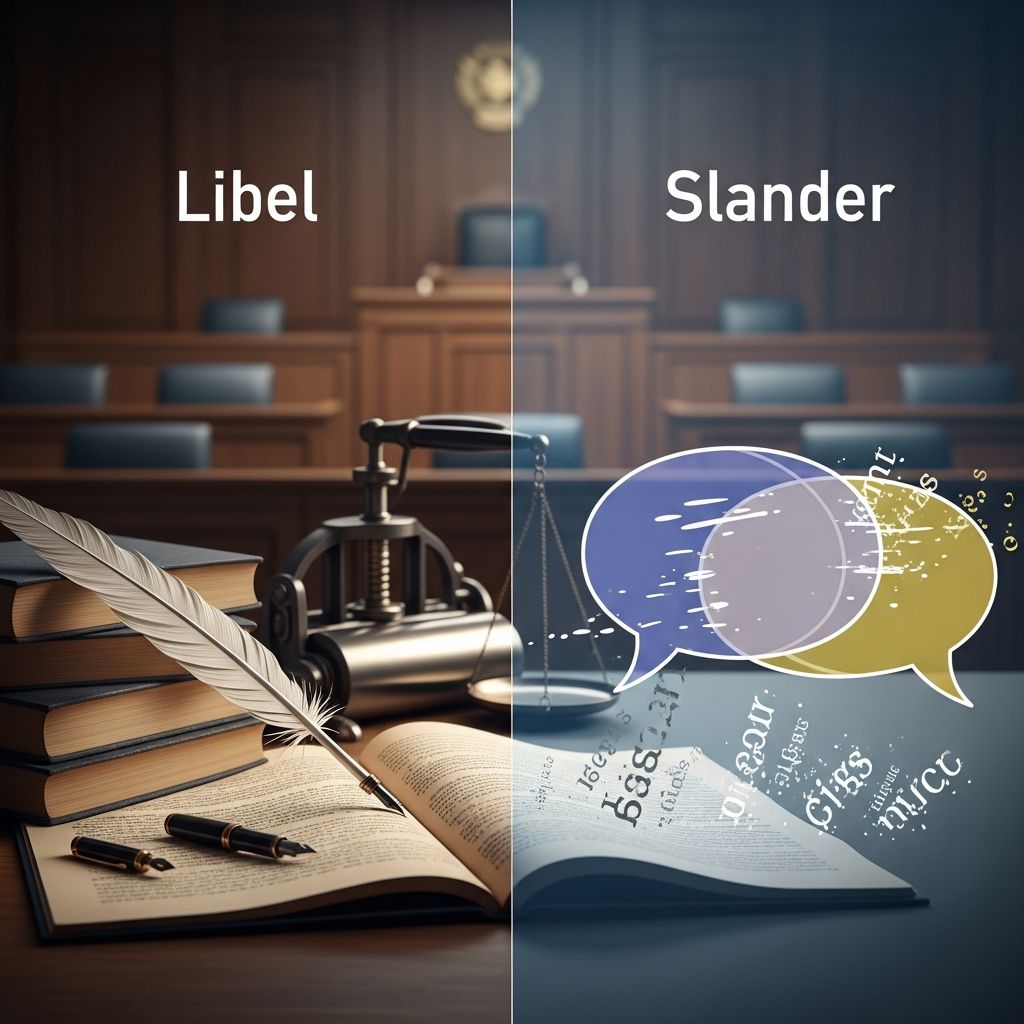
Defamation law protects individuals from false statements that harm their reputation, dividing into
libel
for written forms andslander
for spoken ones. These distinctions influence how cases are pursued, evidence is gathered, and damages are awarded.Defining Defamation and Its Core Categories
Defamation occurs when a false statement of fact is communicated to a third party, causing reputational harm. It requires the statement to be presented as truth, not mere opinion, and to damage character or standing.
Historically, courts treated libel and slander differently due to writing’s permanence versus speech’s transience. Modern U.S. law often unifies standards, but the medium still matters for classification.
- Libel: Fixed in writing, images, or visuals like articles, social media posts, or videos with transcripts.
- Slander: Temporary oral expressions, such as conversations, speeches, or untranscribed broadcasts.
Essential Elements to Prove a Defamation Claim
To succeed in court, plaintiffs must establish specific elements, varying slightly by jurisdiction and whether the target is a public or private figure.
| Element | Description | Libel Example | Slander Example |
|---|---|---|---|
| False Statement | Verifiably untrue fact, not opinion | Blog claiming fraud | Speech alleging theft |
| Publication | Shared with third party | Online post | Public accusation |
| Fault | Negligence or malice | Reckless reporting | Knowing lie |
| Damage | Harm to reputation | Lost business | Social ostracism |
Public figures face a higher bar: proving ‘actual malice’—knowledge of falsity or reckless disregard. Private individuals need only show negligence.
Libel in the Digital Era: Permanent and Pervasive
Libel’s enduring nature amplifies harm, as online content spreads rapidly and lingers indefinitely. Social media posts, reviews, or emails qualify if defamatory.
Courts recognize libel per se categories needing no damage proof: crimes, diseases, professional incompetence, or chastity imputations. For instance, a tweet accusing embezzlement harms inherently.
- Permanence increases injury likelihood.
- Easier evidence collection via screenshots.
- Broadcasts blur lines if transcribed.
Slander: The Fleeting Yet Damaging Spoken Word
Slander involves verbal falsehoods, harder to prove without witnesses or recordings. Examples include workplace gossip or public rants.
Like libel, slander per se skips damage proof for grave accusations. Oral claims of criminality or unfitness for duty presumptively injure.
Challenges include memory fade and lack of records, making corroboration essential.
Public vs Private Figures: Shifting Burdens
U.S. Supreme Court rulings mandate stricter proof for public figures. Private plaintiffs benefit from lower thresholds.
- Public Figures: Celebrities, officials must show malice (New York Times v. Sullivan legacy).
- Private Figures: Everyday people prove negligence suffices.
- Limited Public Figures: Those famous in one field, hybrid standard.
Key Defenses Against Defamation Allegations
Defendants wield strong protections rooted in free speech.
- Truth: Absolute defense; verify facts rigorously.
- Opinion: Subjective views like ‘incompetent’ if non-factual.
- Privilege: Absolute (court testimony) or qualified (fair reporting).
- Consent: Plaintiff authorized statement.
Retraction offers can mitigate damages in some states.
Remedies and Damages Available to Victims
Successful claimants seek compensation or injunctions.
- Compensatory Damages: Actual losses (income, emotional distress).
- Presumed Damages: Per se cases.
- Punitive Damages: Malice punishment, capped variably.
- Injunctive Relief: Content removal, rare due to First Amendment.
Average awards vary; high-profile cases reach millions.
Navigating Defamation in Social Media and Online Spaces
Digital platforms complicate matters. User-generated content on Twitter or Facebook often constitutes libel; live streams may be slander until recorded.
Section 230 shields platforms, not posters. Victims pursue individuals, facing anonymity hurdles.
Strategies: Preserve evidence, send cease-and-desist, consult counsel promptly—statutes of limitations (1-3 years) apply.
State Variations in Libel and Slander Laws
While federal standards guide, states differ. Illinois merges libel/slander rules; others retain distinctions.
- California: Retracts mitigate.
- New York: Strict per se definitions.
- Texas: Broad anti-SLAPP protections.
Research jurisdiction-specific nuances.
Practical Steps for Defamation Victims
Act swiftly:
- Document everything: Screenshots, recordings, witnesses.
- Avoid retaliation—worsens position.
- Notify platform for removal.
- Hire attorney experienced in media law.
- Weigh costs: Litigation expensive, time-consuming.
Frequently Asked Questions (FAQs)
What qualifies as libel versus slander?
Libel is written or visual defamation (posts, articles); slander is spoken (conversations, speeches).
Do I need a lawyer for a defamation case?
Yes, complexities like proving fault demand expertise.
Can opinions be defamatory?
No, if provably subjective; factual implications may qualify.
How long to file a claim?
1-3 years typically; check state law.
What about workplace defamation?
Often protected unless malicious outside duties.
Protecting Your Reputation Proactively
Monitor online presence, respond professionally to falsehoods, build positive digital footprint. Insurance (directors/officers) covers risks for executives.
Understanding libel and slander empowers informed action against reputational threats.
References
- What’s the Difference Between Libel and Slander? — Britannica. 2023-10-15. https://www.britannica.com/story/whats-the-difference-between-libel-and-slander
- What’s the Difference Between Libel, Slander, and Malicious Falsehood — BC-LLP. 2024-05-20. https://bc-llp.com/whats-the-difference-between-libel-slander-and-malicious-falsehood/
- Libel vs. Slander: What’s the Difference? — World Insurance Associates. 2023-11-08. https://www.worldinsurance.com/blog/libel-vs-slander
- What is defamation? What is slander and libel? — New York Courts Ask a Law Librarian. 2024-02-14. https://askalawlibrarian.nycourts.gov/legalresearch/faq/367713
- Libel vs. Slander vs. Defamation – What are the Differences? — The Business Litigators. 2023-07-12. https://www.thebusinesslitigators.com/business-commercial-litigation/defamation-libel-slander-and-cyber-smear/libel-vs-slander-vs-defamation-what-are-the-differences/
Similar Articles








Read full bio of medha deb




