
Ice-Related Car Accidents: Liability, Evidence, What To Do Now
Unraveling fault in winter road crashes: driver duties, road maintenance failures, and paths to compensation amid icy perils.
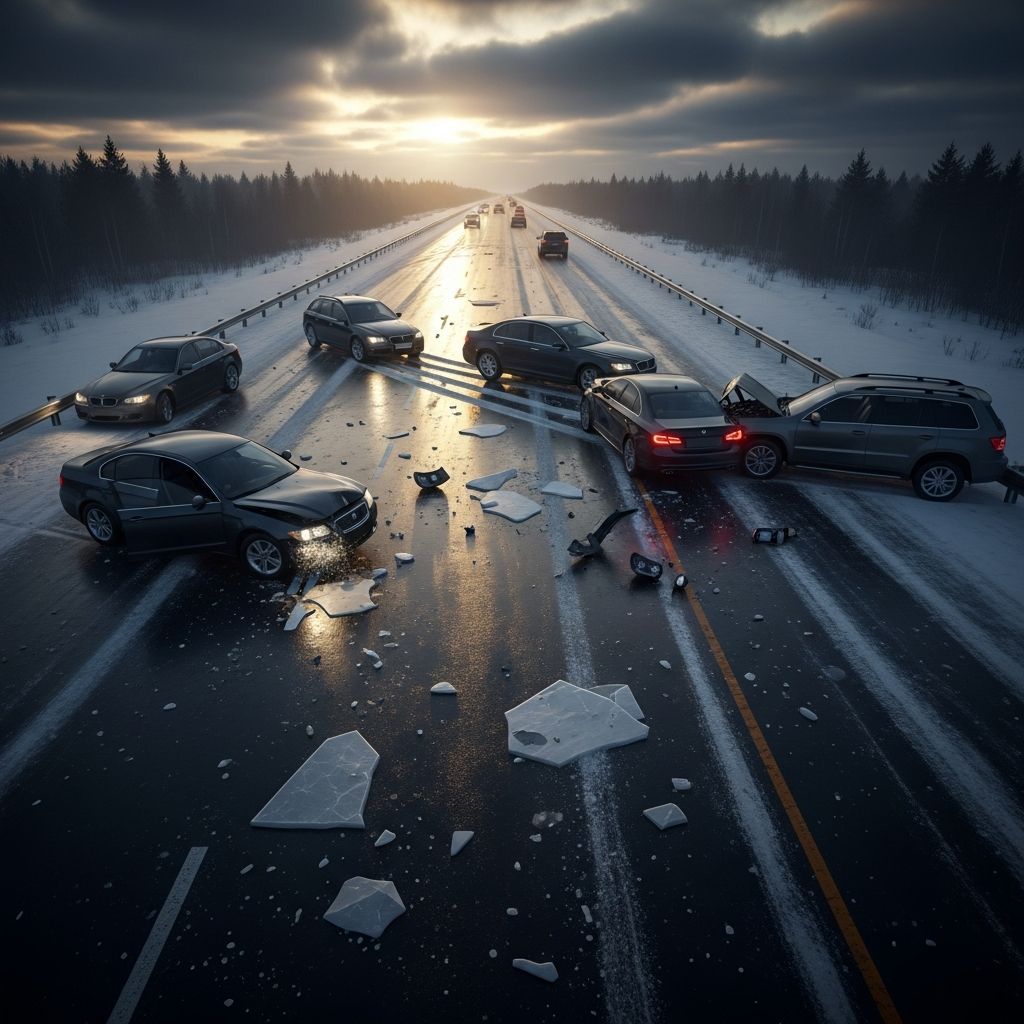
Icy conditions transform familiar roads into treacherous paths, where a thin glaze of black ice or piled snow can send vehicles spinning into chaos. Each winter, thousands of collisions occur due to these hidden hazards, raising critical questions about accountability. Who pays when a skid on unseen ice leads to injury or property loss? This article delves into the legal principles governing fault in such incidents, empowering drivers and victims with knowledge to navigate claims and defenses.
Understanding Ice Hazards on Roads
Black ice, a transparent coating nearly indistinguishable from wet pavement, forms when moisture freezes rapidly, often on bridges, shaded areas, or after temperature drops. Snow accumulation exacerbates risks, reducing traction and visibility. According to legal precedents, drivers must anticipate these dangers in cold climates, adjusting speed and following distance accordingly. Failure to do so often shifts blame squarely onto the operator, regardless of the ice’s invisibility.
Statistics from transportation authorities highlight the severity: icy roads contribute to over 150,000 crashes annually in the U.S., with black ice implicated in multi-vehicle pileups. These events demand meticulous investigation to apportion responsibility, blending weather data, vehicle maintenance records, and witness accounts.
Driver Responsibilities in Winter Conditions
At the core of ice-related liability lies the duty of reasonable care. Courts consistently rule that motorists bear primary responsibility for controlling their vehicles, even amid adverse weather. This includes:
- Speed management: Exceeding posted limits or advisories in icy weather constitutes negligence, as drivers must reduce velocity to match grip levels.
- Vehicle readiness: Operating with worn tires, faulty brakes, or inadequate wipers invites fault attribution.
- Safe spacing: Tailgating amplifies collision risks when sudden skids occur, making the rear driver liable.
- Avoiding abrupt maneuvers: Hard braking or sharp turns on suspected ice trigger loss of control, often deemed preventable.
In pure comparative negligence states, fault percentages dictate recovery amounts. For instance, a driver 40% responsible for a $50,000 damage claim recovers only $30,000. Insurance adjusters scrutinize dashcam footage and telematics to quantify these shares precisely.
When Flying Snow and Ice Create Danger
Beyond skids, dislodged snow or ice from vehicles poses unique threats. Large chunks catapulted from roofs or truck beds can shatter windshields, induce swerves, or pierce cabins. Statutes in numerous states mandate clearing accumulations from mirrors, lights, and tops before departure. Non-compliance renders the operator liable for downstream wrecks.
| Scenario | Potential Liability | Preventive Action |
|---|---|---|
| Snow flies from roof, cracks windshield | Owner of snow-laden vehicle | Full exterior clearing |
| Ice chunk causes pileup | Negligent driver failing to secure load | Pre-drive inspections |
| Repeated debris incidents | Fleet operators or commercial haulers | Employee training protocols |
Victims pursue property damage and injury claims through the at-fault party’s insurer, often bolstered by traffic cam evidence.
Government and Road Authority Accountability
While drivers shoulder much blame, public entities overseeing highways face scrutiny for lapses. Municipalities or contracted firms may incur liability if:
- Roads remain untreated despite forecasts or complaints.
- Sanding or plowing delays create persistent hazards.
- Inadequate signage fails to alert on overpasses or curves.
Government immunity laws cap claims, requiring proof of gross negligence within strict notice periods—often 120 days. Successful suits hinge on maintenance logs and weather reports demonstrating foreseeability.
Third-Party Culprits: Property and Infrastructure Issues
Not all ice stems from nature. Runoff from malfunctioning gutters, leaking sprinklers, or poor drainage on adjacent lots can spawn isolated patches. Property owners neglecting these breaches owe a duty to prevent road incursions. Engineering flaws in road design, like insufficient slopes allowing ponding, may implicate contractors or designers.
Determining these sources demands forensic analysis: hydrological experts trace water origins, while civil engineers assess infrastructure adequacy. Liability extends to commercial entities if negligence foreseeably endangers motorists.
Navigating Insurance and Claims Post-Crash
Post-collision, prompt actions solidify positions. Document scenes with photos of ice, skid marks, and damage; obtain police reports noting conditions. Notify insurers immediately, but consult attorneys before statements, as admissions can undermine claims.
Coverage types matter: liability pays for others’ losses; collision/uninsured motorist handles your vehicle and hit-and-runs. In shared-fault scenarios, subrogation battles ensue between carriers. Personal injury protection (PIP) in no-fault states bridges gaps for medical bills.
Proving Negligence: Evidence Essentials
Reconstructing ice crashes requires multifaceted proof:
- Weather logs: Confirm advisories ignored by the at-fault party.
- Tire forensics: Tread depth measurements expose maintenance failures.
- Expert testimony: Accident reconstructionists model speeds and reactions.
- Witness corroboration: Accounts of pre-crash behaviors like weaving or speeding.
These elements counter defenses claiming ‘act of God,’ affirming human agency prevails over elemental excuses.
Frequently Asked Questions About Ice-Related Crashes
Can I be blamed for sliding on black ice I couldn’t see?
Yes, if evidence shows you exceeded safe speeds or ignored warnings; courts expect adaptation to winter norms.
Does my insurance cover ice-induced damage?
Comprehensive policies typically do; collision covers impacts. Review exclusions for weather perils.
How long to sue a city for poor road maintenance?
Notice requirements vary—often 30-180 days. Strict deadlines demand swift legal engagement.
Am I liable if snow from my truck causes a wreck?
Absolutely; laws require secure loads and clearings. Pre-trip checks are mandatory.
What if multiple drivers skid in a chain reaction?
Comparative fault apportions shares; each pays proportionally to negligence degree.
Safety Strategies to Minimize Winter Risks
Prevention trumps litigation. Equip vehicles with winter tires meeting traction standards; pack emergency kits with blankets, flares, and chains. Drive defensively: increase following distances to four seconds, avoid cruise control on ice, and heed closures. Apps delivering real-time road reports enhance preparedness.
For professionals, fleet policies mandating tire rotations and driver training reduce exposures. Communities benefit from advocacy for better salting budgets and drainage upgrades.
Seeking Justice: When to Call a Specialist
Complex ice cases warrant seasoned personal injury counsel. They dissect police files, depose witnesses, and negotiate robust settlements—often exceeding insurer offers. Contingency fees align incentives, pursuing medicals, lost wages, pain, and punitive awards where recklessness prevails.
In summary, ice crashes distill to reasonableness: did parties exercise due vigilance? Victims armed with this framework secure accountability, transforming tragedy into restitution.
References
- Car Accidents in Snow or on Black Ice: Who Is At Fault? — Marcy R. Law. 2023. https://www.m-n-law.com/blog/who-is-at-fault-snow-black-ice-accident/
- How to Determine Liability in Ice-Related Car Accidents — Simons Goldner. 2024. https://www.simonsgoldnerlaw.com/ice-related-car-accidents/
- Understanding Liability & Legal Recourse in Black Ice Accidents — Pringle Law. 2023-12-15. https://www.pringlelaw.net/black-ice-accidents-understanding-liability-legal-recourse-for-injured-drivers/
- Determining Liability for Accidents Caused by Black Ice — Chopin Law Firm. 2022. https://www.chopinlawfirm.com/blog/determining-liability-for-accidents-caused-by-black-ice/
- In a Car Accident on Icy Roads, Who’s at Fault? Legally, It Can Be Complicated — Smith LaCien. 2021-12. https://www.smithlacien.com/blog/2021/12/in-a-car-accident-on-icy-roads-whos-at-fault-legally-it-can-be-complicated/
- Who Is At Fault in a Black Ice Accident — Rob Levine Law. 2024. https://roblevine.com/faqs/liability-in-black-ice-car-accidents/
Similar Articles








Read full bio of Sneha Tete




