
Carpool Liability: Key Legal Rules, Evidence, And Recovery Tips
Unraveling fault in carpool accidents: drivers, passengers, employers, and insurance roles explained for maximum clarity.
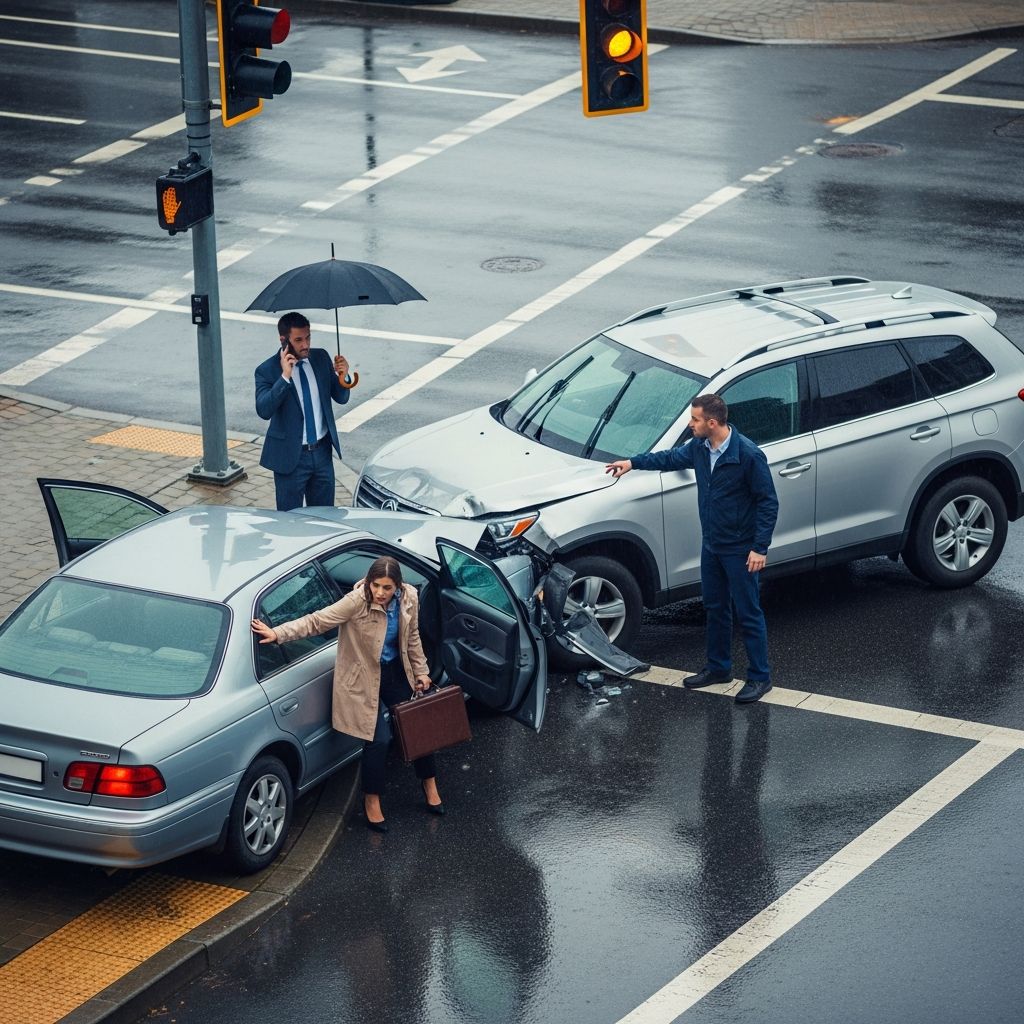
Carpool accidents raise unique questions about fault because multiple people share a vehicle, often blurring lines of responsibility. Typically, the at-fault party compensates for injuries and damages, but factors like passenger conduct, employment ties, and state laws complicate determinations. This article explores key players, legal principles, evidence gathering, and recovery paths.
Core Principles of Fault in Shared Rides
Negligence forms the foundation of liability in any vehicle collision, including carpools. It occurs when someone fails to act as a reasonable person would, such as by speeding, ignoring signals, or driving impaired. In carpool scenarios, this principle applies to drivers first but can extend further.
Drivers hold primary accountability since they control the vehicle. Their auto insurance usually covers initial claims, with minimum requirements varying by state—for instance, Missouri mandates $25,000 per person for bodily injury. Exceeding these limits often requires pursuing additional assets or underinsured coverage.
- Speeding or reckless maneuvers: Common driver errors leading to crashes.
- Distracted operation: Using phones or adjusting navigation while moving.
- Impaired driving: Alcohol, drugs, or fatigue reducing reaction times.
Can Passengers Share Blame?
While drivers bear most responsibility, passengers aren’t always innocent bystanders. Under comparative negligence—adopted in states like New York, Massachusetts, and California—fault percentages are assigned to all contributors. Distracting actions, such as grabbing the wheel, yelling directions, or causing chaos, can implicate riders.
For example, if a jury deems a passenger 80% at fault in a $10,000 damage case in New York, they owe $8,000, leaving the driver liable for $2,000. Courts evaluate based on evidence like witness accounts of passenger behavior.
| State | Fault Rule | Recovery Threshold |
|---|---|---|
| New York | Comparative Negligence | Any % fault allows recovery, reduced by share |
| California | 50% Bar Rule | Recover if ≤50% at fault |
| Missouri | Pure Comparative Fault | Recover regardless of fault %, reduced proportionally |
This table highlights variations; always check local statutes for precise rules.
Employer Accountability in Organized Carpools
Company-sponsored carpools introduce vicarious liability via respondeat superior, holding employers responsible for employee actions within job scope. If a worker drives colleagues during paid duties or using firm vehicles, the business may cover damages.
A Texas Supreme Court ruling illustrated this: a drilling firm paid a driver $50 daily incentives for team transport, deeming it job-related despite disputes. Factors include compensation, employer benefit (e.g., timely arrivals), and policy integration. Routine commutes typically exempt employers unless special circumstances apply, like after-hours errands.
Companies must screen drivers, maintain vehicles, and follow regulations to mitigate risks. Neglecting these can amplify liability.
External Factors: Third-Party Involvement
Not all carpool crashes stem from vehicle occupants. Other drivers, road conditions, or defects shift blame:
- Opposing motorists: Rear-enders or signal-runners target their insurers first.
- Infrastructure issues: Potholes or poor signage may implicate municipalities or contractors.
- Vehicle flaws: Brake failures trace to manufacturers if maintenance records clear owners.
In multi-vehicle pileups, fault splits across parties, with insurers negotiating shares.
Gathering Proof to Establish Responsibility
Strong evidence strengthens claims amid disputes. Essential items include:
- Police documentation: Official narratives of events and citations.
- Witness testimonies: Independent accounts clarifying sequences.
- Maintenance logs: Proving or disproving vehicle readiness.
- Video recordings: Dashcams or traffic cams providing irrefutable visuals.
- Professional analyses: Reconstructing dynamics or defects.
Act swiftly—evidence degrades, and statutes of limitations (often 2-3 years) apply.
Navigating Insurance in Carpool Claims
Claims start with the at-fault driver’s policy, but passengers tap personal coverage if needed (e.g., medical payments or uninsured motorist). Multi-passenger injuries strain limits, prompting stacked policies or lawsuits.
Shared-fault states prorate payouts: 60% other-driver fault in a $50,000 injury means $30,000 recovery from them, adjusted for your share. Consult attorneys for complex apportionments.
Special Considerations for Family or School Carpools
Parent-led rides for kids heighten stakes due to vulnerability. Negligent drivers face claims via insurance, not personal assets usually. Suing acquaintances feels awkward but prioritizes child care costs like therapy or rehab.
Missouri’s pure comparative system ensures recovery scaled to fault, e.g., 40% driver blame yields 60% from the other party. Document everything, from ER visits to lost school time.
Steps After a Carpool Collision
- Ensure safety and call emergency services.
- Exchange details without admitting fault.
- Photograph scene, vehicles, and injuries.
- Notify all insurers involved.
- Seek medical evaluation promptly.
- Contact a personal injury lawyer for evaluation.
Frequently Asked Questions
Can I sue a friend for a carpool crash?
Yes, target their insurance policy for injuries; personal suits are rare unless coverage lacks. Settlements often resolve amicably.
Does my insurance cover me as a carpool passenger?
Possibly via med-pay or UM/UIM if the driver is underinsured. Review your policy details.
Is a company liable for employee carpools?
If job-related, like paid incentives or company vehicles, yes under respondeat superior.
What if a passenger caused the distraction?
They may share fault percentage via comparative negligence, payable from personal assets or insurance.
How do states differ on fault sharing?
Pure comparative (e.g., Missouri) allows recovery at any fault level; modified bars high-fault parties (e.g., California 50%).
References
- Carpool Passengers May Be Liable for Accidents in New York — Stenger, Glass, Hagstrom, Lindars & Iuele LLP. Accessed 2026. https://www.stengerglass.com/articles/carpool-passengers-may-be-liable-for-accidents-in-new-york/
- Passengers Can Be Liable in Carpool Accidents — Dane Shulman Law. Accessed 2026. https://www.daneshulmanlaw.com/media-articles-and-events/passengers-can-be-liable-in-carpool-accidents/
- Who’s Liable in a Company Carpool Accident? — Garmo Law. Accessed 2026. https://garmolaw.com/whos-liable-in-a-company-carpool-accident/
- Is an Employer Liable for Carpool Crashes? — Crosley Law Firm. Accessed 2026. https://crosleylaw.com/blog/is-an-employer-liable-for-carpool-crashes/
- Carpool Accidents: Who’s Liable When Another Parent Crashes? — Aramjoo Law Firm. Accessed 2026. https://aramjoolawfirm.com/carpool-accidents-whos-liable-when-another-parent-crashes/
Similar Articles








Read full bio of Sneha Tete




