
Supreme Court History: Unexpected Chapters And Key Insights Now
Discover surprising historical facts about the U.S. Supreme Court that few people know.
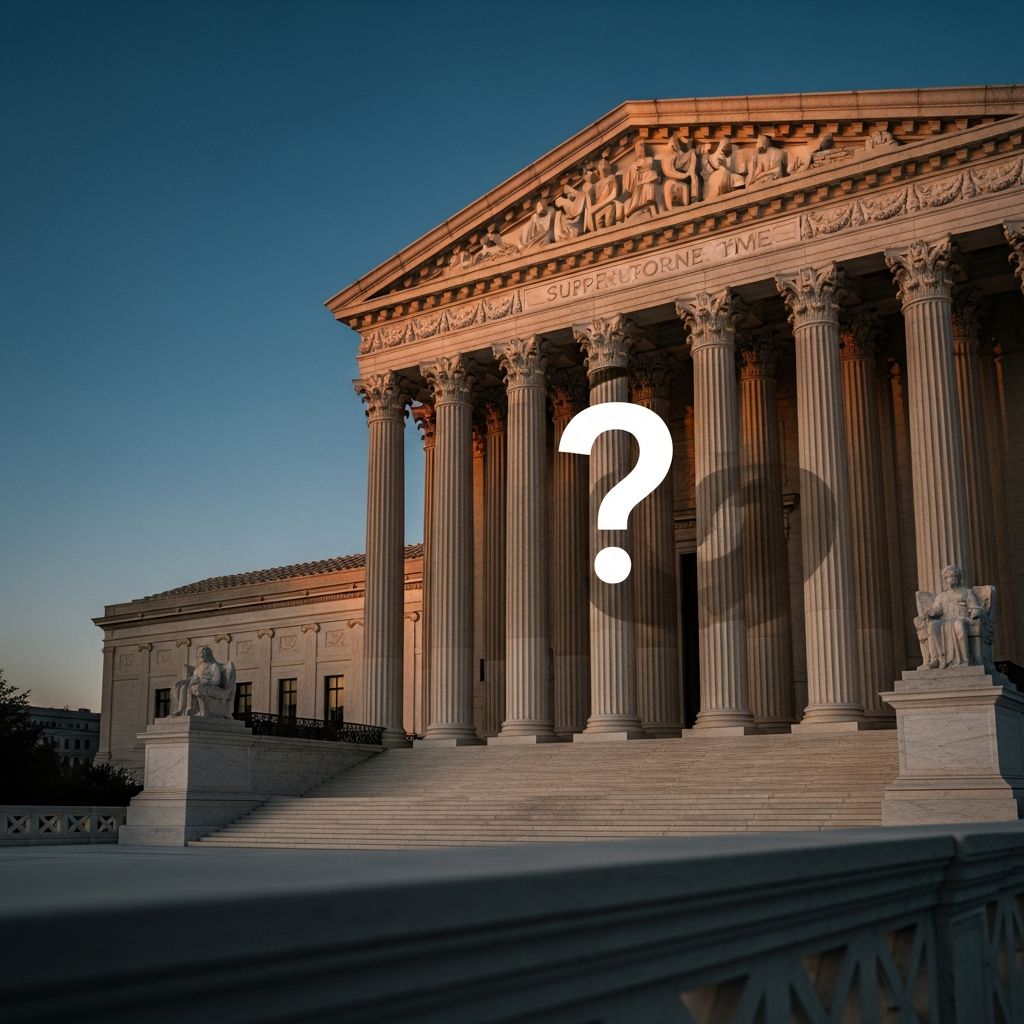
Unexpected Chapters in Supreme Court History
The United States Supreme Court stands as one of the most significant institutions in American governance, yet many aspects of its history remain shrouded in obscurity. While the Court’s landmark decisions shape the nation’s legal landscape, the stories behind the justices and the institution itself often escape public attention. Understanding these lesser-known details provides valuable context for appreciating how the Court evolved into its modern form and reveals the colorful personalities who have shaped American jurisprudence.
The Founding and Early Composition
When Congress established the Supreme Court through the Judiciary Act of 1789, the chamber was considerably smaller than today’s familiar nine-member body. The initial composition consisted of one Chief Justice and five Associate Justices, creating a bench of six total members. This relatively modest starting point would undergo significant transformation over the following decades, as Congress repeatedly adjusted the Court’s size to accommodate political shifts and administrative needs.
The number of justices fluctuated dramatically throughout the nineteenth century, ranging from a low of six members to a high of ten justices. These changes reflected broader political struggles, as the party in power attempted to influence the Court’s ideological balance. It wasn’t until 1869 that Congress settled on the nine-member configuration that persists today. This decision ultimately proved durable, establishing a standard that has remained consistent for over 150 years.
Justices Without Formal Legal Training
Modern expectations dictate that Supreme Court justices possess law degrees from prestigious institutions. Today’s bench exclusively comprises graduates of Harvard and Yale Law Schools. However, this requirement represents a relatively recent development in American legal history. A surprising number of early Supreme Court justices never attended formal law school at all. In fact, 64 justices throughout the Court’s history operated without law degrees.
The last justice to assume office without a law degree was James F. Byrnes, who demonstrated an even more unconventional path to the bench by not completing high school. Despite his lack of formal education, Byrnes taught himself law and developed sufficient expertise to serve on the nation’s highest court. This trajectory would be virtually unimaginable in contemporary times, reflecting how dramatically the standards and expectations for judicial qualification have evolved.
Incomplete Attendance at Historic Gatherings
When the Supreme Court first convened, the proceedings achieved minimal quorum in an embarrassing demonstration of prioritization. Of the original six justices, only three actually appeared for the Court’s inaugural meeting. The absence of half the bench raises intriguing questions about the justices’ other commitments and their apparent reluctance to participate in this momentous occasion. This inauspicious beginning stands in stark contrast to the ceremonial gravity with which the Court is now regarded.
Mandatory Circuit Riding Requirements
Early Supreme Court justices faced an obligation that would strike modern jurists as extraordinarily burdensome: the requirement to “ride the circuit” by presiding over federal circuit courts scattered throughout the country. Each justice was mandated to conduct at least one annual sojourn to these lower courts, creating significant logistical and personal hardships. For justices accustomed to the intellectual environment of the nation’s capital, this requirement demanded extensive travel and exposure to unfamiliar locales.
This practice generated considerable resentment among members of the bench, particularly those who viewed the frequent travel as an impediment to their primary judicial responsibilities. Despite the justices’ objections, the requirement remained in force for decades, not formally eliminated until 1891. The abolition of this practice represented a significant modernization of the Court’s operations and acknowledged the impracticality of maintaining such demanding physical obligations alongside the Court’s primary docket.
Architectural Displacement and Cramped Quarters
One of the most surprising facts about the Supreme Court involves the institution’s long struggle to secure adequate physical space. The Court occupied various temporary locations before settling into more permanent facilities. From the end of the Civil War until 1935, the justices conducted their business in the Old Senate Chamber, a decidedly unglamorous and restrictive environment. The chamber’s limited space created numerous practical difficulties, forcing justices to eat lunch in the robing room rather than enjoying separate dining facilities.
This decades-long accommodation in borrowed quarters stands in sharp contrast to the imposing Neoclassical building that now represents the Court to the public. Chief Justice William Howard Taft spearheaded the drive for a dedicated Supreme Court building during the 1920s, recognizing that the nation’s highest judicial body deserved purpose-built accommodations. The construction and opening of the current Supreme Court building in 1935 represented a significant milestone in the institution’s development, symbolizing the Court’s elevated status and providing practical improvements to its operations.
Presidential Connections to the Bench
The intersection of executive and judicial power takes on particular significance when examining justices with presidential connections. William Howard Taft achieved a unique distinction as the only sitting U.S. president to later serve as a Supreme Court justice. Even more remarkably, Taft attained the rank of Chief Justice, occupying the most prestigious position on the bench. His trajectory from the White House to the judiciary represents an exceptional path in American political history.
While Taft remains the sole president-turned-justice, other prominent political figures came tantalizingly close to the presidency while serving on the Court. Charles Evans Hughes, who resigned from the Supreme Court to challenge Woodrow Wilson for the presidency in 1916, nearly achieved this transition. Though Hughes’s 1916 campaign fell short, he later returned to the Court in the 1930s and assumed the role of Chief Justice, replacing Taft. These examples demonstrate the fluid boundaries between judicial and executive authority in American governance.
Justices Appearing on Currency
The honor of appearing on United States currency has been bestowed upon remarkably few Supreme Court justices. John Marshall, the legendary Chief Justice who shaped the Court’s early jurisprudence, graced the $500 bill, while Salmon P. Chase appeared on the $10,000 bill. These exceptional recognitions highlighted the profound influence these justices exerted on American law and governance. However, neither currency denomination remains in circulation today, making these historical artifacts collectors’ items rather than common medium of exchange.
Familial Dynasties and Remarkable Connections
The Supreme Court has occasionally welcomed justices connected by family ties, creating dynastic elements within the institution. John Marshall Harlan II served on the Court from 1955 to 1971, following in the footsteps of his grandfather, the legendary John Marshall Harlan, who occupied the bench from 1877 to 1911. The elder Harlan earned the sobriquet “the Great Dissenter” for his principled opposition to rulings that perpetuated Jim Crow segregation in the American South.
An equally remarkable connection involved Justice David J. Brewer, whose biographical background included an unexpected international dimension. Brewer was born in the Ottoman Republic in 1837 to missionary parents. His uncle, Steven Johnson Field, lived with the family and subsequently became a Supreme Court justice himself. Both relatives ultimately served together on the bench, creating an unusual circumstance where relatives shared the responsibility of interpreting American constitutional law.
Brief Tenures and Rapid Departures
Not all justices achieved lengthy service records. John Rutledge holds the distinction of serving as Chief Justice for a remarkably abbreviated period. Appointed as a recess appointment in 1795 to replace John Jay, Rutledge’s tenure proved exceptionally short-lived. His public criticism of Congress in a speech drew significant controversy, leading the Senate to reject his permanent nomination just months after his initial appointment. This rapid dismissal demonstrates the vulnerability of justices to political pressure and public opinion in the early Republic.
Impeachment and Acquittal
Only one Supreme Court justice has ever faced impeachment proceedings. Samuel Chase became the target of impeachment efforts in 1805, driven by President Thomas Jefferson’s political opposition. The House approved impeachment articles, but Chase’s Senate trial resulted in acquittal, with the proceedings helped substantially by Aaron Burr, then serving as Vice President. Chase thus avoided removal from the bench and continued his judicial service, maintaining his position despite the extraordinary constitutional challenge.
Simultaneous Swearing-In and Seniority Protocols
Unusual situations occasionally arise when multiple justices join the bench on the same day. On January 7, 1972, Lewis F. Powell Jr. and William H. Rehnquist were sworn in during a special sitting of the Court. When justices take their oath simultaneously, the Court’s established protocols determine seniority based on age rather than other considerations such as alphabetical order or order of oath-taking. This provision ensures that senior justices maintain appropriate precedence in matters requiring hierarchical ordering among justices of equivalent tenure.
State Court Cases Dominating the Docket
A widespread misconception portrays the Supreme Court primarily as a monitor of federal circuit courts and resolver of circuit conflicts. In reality, state supreme courts provide a substantial portion of the Court’s caseload. During the 2019 term, state supreme courts provided more cases than any individual federal circuit court, with 11 cases representing approximately 17 percent of the Court’s docket. By contrast, the Ninth Circuit, which generated the most cases among federal courts, contributed only 10 cases, equating to 14 percent of the merits docket.
Cases originating from lower state courts have consistently comprised approximately 10 to 20 percent of the Roberts Court’s docket since its inception. Notably, state-originated cases tend to be predominantly criminal in nature, comprising nearly 73 percent criminal and 27 percent civil in the 2019 term. This distribution reflects the Court’s particular interest in constitutional questions arising from state criminal prosecutions and the appellate opportunities these cases present.
Chief Justices and the Named “Courts”
Supreme Court historians organize the institution’s chronological history by reference to the chief justice presiding during each era. Seventeen chief justices have served throughout the Court’s existence, corresponding to seventeen distinct “Courts” in historical nomenclature. The Roberts Court represents the seventeenth iteration, while the Jay Court marked the beginning of this system. The Marshall Court achieved particular longevity, operating continuously from 1801 until 1835, spanning 34 years.
Chief Justice Roberts assumed office at age 50 in 2005, whereas John Marshall was only 45 when he assumed the chief justiceship. Despite their different ages upon appointment, both leaders left indelible marks on the Court and shaped constitutional jurisprudence during their respective tenures. The naming convention serves as a useful historical shorthand, enabling scholars and legal professionals to situate specific rulings and doctrinal developments within the appropriate judicial era.
Circuit Conflicts and Case Selection
The Supreme Court’s certiorari process emphasizes disagreement among lower courts as a critical factor in case selection. Approximately 80 percent of cases the Court agrees to decide involve a circuit conflict—a question about which different federal courts of appeals have reached contradictory conclusions. This focus on conflict resolution serves a crucial function in maintaining uniformity in federal law across geographical regions. When lower courts disagree on constitutional interpretation or statutory meaning, the Supreme Court’s intervention becomes essential to prevent the nation from operating under incompatible legal standards.
Frequently Asked Questions
Q: How many justices originally served on the Supreme Court?
A: The original Supreme Court consisted of six justices—one Chief Justice and five Associate Justices—as established by the Judiciary Act of 1789.
Q: Did early Supreme Court justices have law degrees?
A: No, many early justices lacked formal legal education. Sixty-four justices throughout history never attended law school, with James F. Byrnes being the last to serve without a law degree.
Q: Was William Howard Taft the only president to serve as a Supreme Court justice?
A: Yes, Taft uniquely served as both President and Supreme Court Justice, ultimately becoming Chief Justice—an unparalleled achievement in American history.
Q: When did the Supreme Court get its own building?
A: The Supreme Court moved into its dedicated building in 1935, after spending decades in the Old Senate Chamber since the Civil War.
Q: What percentage of the Supreme Court’s docket comes from state courts?
A: State supreme courts provide approximately 10 to 20 percent of the Supreme Court’s docket, with cases predominantly involving criminal law issues.
References
- A Sometimes-Forgotten Link: The Importance of State Court Cases — Empirical SCOTUS. 2020-09-01. https://empiricalscotus.com/2020/09/01/a-sometimes-forgotten-link/
- 10 Fascinating Facts on the Supreme Court’s Birthday — Constitution Center. https://constitutioncenter.org/blog/10-fascinating-facts-on-the-supreme-courts-birthday
- (Slightly) Astounding Facts About the Supreme Court — NBC News. https://www.youtube.com/watch?v=7nJIPA3OCPA
- Six Common Mistakes about the Supreme Court — National Council for the Social Studies. https://www.socialstudies.org/system/files/publications/articles/se_700606337.pdf
Similar Articles








Read full bio of medha deb




