
Legality of Joining Anonymous: Myths and Realities
Unravel the legal truths behind associating with Anonymous: freedom of speech vs. cybercrime risks in the digital age.
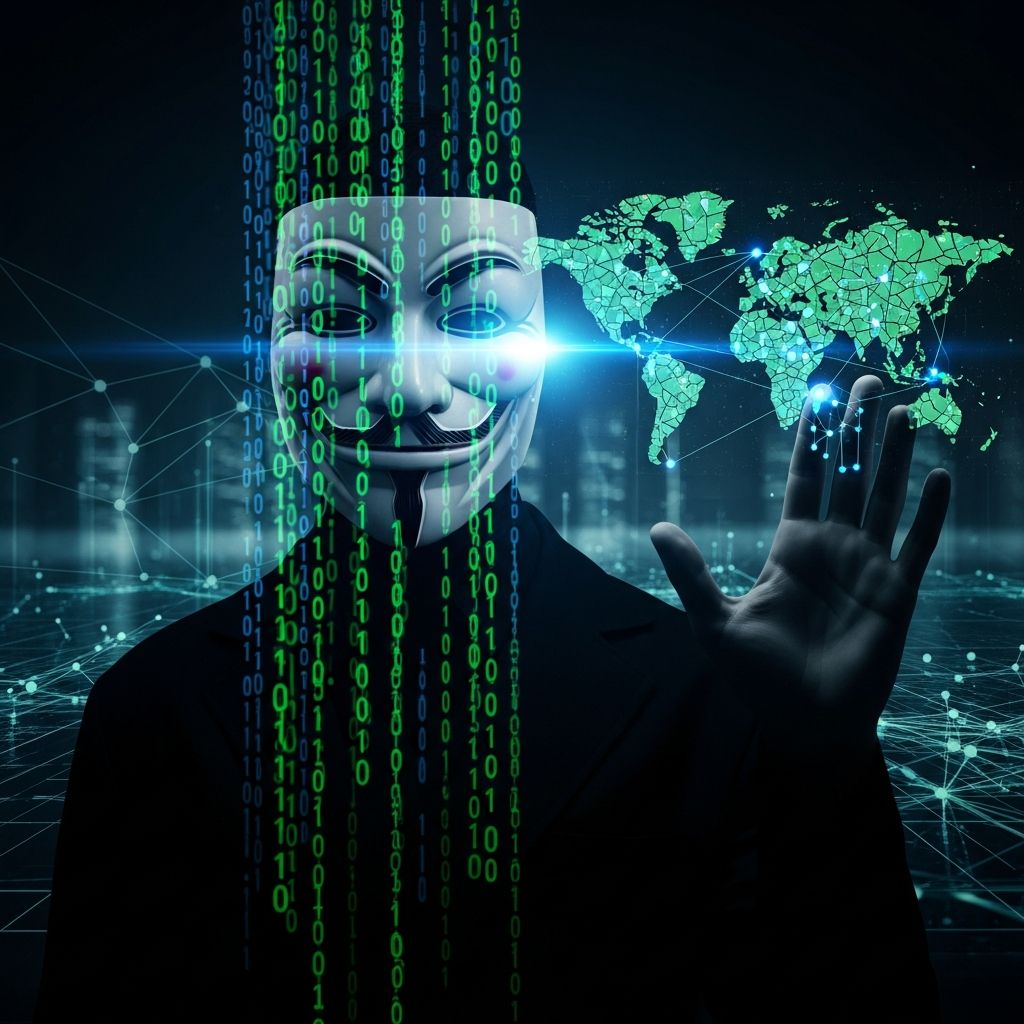
Anonymous, the decentralized hacktivist collective, has captivated global attention for its bold operations against perceived injustices. But a pressing question lingers: does simply aligning with this group cross legal lines? The answer hinges on a critical distinction between ideological sympathy and active participation in unlawful acts. Membership itself carries no inherent criminality, yet engaging in cyber disruptions can lead to severe repercussions. This comprehensive guide dissects the legal landscape, drawing from established precedents and statutes to clarify where free expression ends and cybercrime begins.
Understanding Anonymous: A Decentralized Collective
Anonymous emerged from online forums in the mid-2000s, evolving into a fluid network of individuals united by opposition to censorship, corruption, and authority overreach. Unlike traditional organizations, it lacks formal leadership, membership rolls, or hierarchies—anyone can claim affiliation by adopting its iconic Guy Fawkes mask symbolism or participating in online discussions. This leaderless structure fosters resilience but blurs lines of accountability.
Supporters rally around core principles like digital privacy, government transparency, and anti-corporate activism. Operations range from peaceful protests, such as #OpPayback against financial institutions, to more aggressive tactics. While the group’s ethos promotes justice, its methods often venture into legally fraught territory, prompting debates on the boundaries of activism.
Core Legal Principle: Association Is Not a Crime
Under foundational legal doctrines in democratic nations, mere association with a group does not constitute criminality. The U.S. First Amendment safeguards freedom of speech and assembly, protecting ideological alignment without requiring endorsement of every action. Similarly, the European Convention on Human Rights Article 10 and Article 11 enshrine expression and association rights. Simply donning a virtual mask or voicing support on social media platforms remains firmly legal.
High courts have repeatedly affirmed this. For instance, the U.S. Supreme Court in NAACP v. Claiborne Hardware Co. (1982) ruled that non-violent advocacy, even for controversial causes, cannot be penalized. Applying this to Anonymous, chatting in IRC channels or retweeting manifestos poses no legal threat. Authorities target specific unlawful deeds, not passive sympathy.
When Support Turns to Criminal Participation
The legal peril arises with direct involvement in prohibited activities. Anonymous campaigns frequently employ tactics criminalized worldwide:
- Distributed Denial-of-Service (DDoS) Attacks: Flooding servers to render sites inaccessible violates anti-hacking laws like the U.S. Computer Fraud and Abuse Act (CFAA) of 1986, punishable by up to 10 years imprisonment for aggravated cases.
- Unauthorized System Access: Breaching networks for data theft or defacement contravenes statutes such as the UK’s Computer Misuse Act 1990, with penalties including unlimited fines and life sentences for severe offenses.
- Data Leaks and Doxxing: Releasing private information exposes participants to privacy torts and federal wire fraud charges.
Tools like the Low Orbit Ion Cannon (LOIC), popularized in early operations, exemplify risks. Users believed it anonymous, but IP tracing led to arrests. Prosecutors prove intent through logs, downloads, or coordination evidence.
Global Prosecutions: Lessons from Real Cases
Numerous individuals have faced justice for Anonymous-linked actions. In 2011, Operation Payback against PayPal saw 14 U.S. arrests under CFAA, with sentences up to 13 months. LulzSec, an offshoot, dismantled after FBI infiltration; leader Hector Monsegur cooperated, leading to global takedowns.
Internationally, the UK convicted six in 2013 for DDoS on the Serious Organised Crime Agency site, imposing suspended sentences. Australia’s 2013 case against Joshua John Miller for anti-Scientology attacks resulted in a two-year term. Turkey arrested seven in 2023 for suspected Anonymous ties in cyber probes. These underscore that borders mean little in cyber jurisdiction—extradition treaties enable cross-national pursuit.
| Case | Country | Activity | Outcome |
|---|---|---|---|
| Operation Payback | USA | DDoS on PayPal | 14 arrests, prison terms |
| LulzSec Takedown | USA/UK | Hacking, leaks | Multiple convictions, years in prison |
| UK SOCA Attack | UK | DDoS | Suspended sentences |
| Australian OPC | Australia | Defacement | 2-year sentence |
Navigating Legal Risks as a Supporter
For those drawn to Anonymous ideals, safer alternatives abound. Legal activism channels include petitions via Change.org, encrypted advocacy on Signal, or FOIA requests for transparency. Groups like the Electronic Frontier Foundation (EFF) offer lawful paths to digital rights defense.
Key precautions if engaging online:
- Use VPNs and Tor for privacy, but note they don’t shield illegal acts.
- Avoid downloading attack tools like LOIC or BO2K.
- Steer clear of calls to coordinate disruptions.
- Document non-involvement if questioned.
Civil liabilities compound risks—victims sue for damages under negligence or trespass to chattels, as in the 2014 eBay class action against DDoS participants.
Hacktivism vs. Cybercrime: The Ethical Gray Zone
Anonymous frames actions as moral imperatives against oppression, targeting entities like ISIS recruiters or human traffickers. Operation Darknet disrupted child exploitation sites legally via exposure. Yet, collateral damage—disrupting hospitals or innocent users—undermines claims, inviting charges.
Law draws firm lines: ends do not justify illegal means. Courts reject “hacktivism defense,” treating digital intrusions akin to physical break-ins. Evolving laws, like the EU’s NIS2 Directive (2023), heighten penalties for critical infrastructure attacks.
Future Outlook: Regulation and Activism Evolution
As cyber threats grow, governments bolster responses. The U.S. Cyber Incident Reporting Act mandates breach disclosures, aiding Anonymous tracing. AI-driven forensics and blockchain analysis erode anonymity.
Yet, protected speech endures. Post-2021 U.S. Capitol riot probes distinguished legal protest from crimes. Anonymous may pivot to hybrid models, blending code with courts for legitimacy.
Frequently Asked Questions
Can I legally wear an Anonymous mask at a protest?
Yes, in most jurisdictions, as it symbolizes ideas, not crimes—protected under free expression rights, barring specific bans like UK’s COVID mask rules.
Is downloading LOIC illegal?
Possession alone isn’t criminal, but deploying it for attacks is, per CFAA and equivalents; avoid to stay safe.
What if I’m just in their IRC chat?
Legal—mere presence proves nothing; prosecution requires evidence of participation in felonies.
Has Anonymous ever done fully legal operations?
Yes, like data dumps from public sources or social media campaigns without hacks.
Can companies sue Anonymous supporters?
Potentially, if harm is traced, via civil claims for economic losses from disruptions.
Empowering Safe Digital Activism
Anonymous illuminates tensions between liberty and order in cyberspace. While joining poses no legal bar, wisdom demands discernment—champion causes lawfully to evade pitfalls. Consult attorneys for jurisdiction-specific advice, prioritizing ethics alongside efficacy.
References
- Computer Fraud and Abuse Act (CFAA) — U.S. Department of Justice. 1986 (amended). https://www.justice.gov/archives/jm/criminal-resource-manual-1043-computer-fraud-and-abuse-act-18-usc-1030
- Computer Misuse Act 1990 — UK Legislation.gov.uk. 1990 (current). https://www.legislation.gov.uk/ukpga/1990/18/contents
- Annual Report on Cybercrime — Federal Bureau of Investigation (FBI). 2023. https://www.fbi.gov/investigate/cyber
- NAACP v. Claiborne Hardware Co. — U.S. Supreme Court. 1982-07-02. https://supreme.justia.com/cases/federal/us/458/886/
- NIS2 Directive — European Union EUR-Lex. 2022-12-14. https://eur-lex.europa.eu/eli/dir/2022/2555/oj
- Operation Payback Prosecutions — U.S. Department of Justice Press Release. 2013-12-03. https://www.justice.gov/usao-sdny/pr/four-members-computer-hacking-group-anonymous-plead-guilty-participation-2010
Similar Articles








Read full bio of Sneha Tete




