
Legality of Blocking Traffic: Laws and Protests
Uncover the legal boundaries of blocking traffic during protests, from state penalties to First Amendment rights and recent legislative shifts.
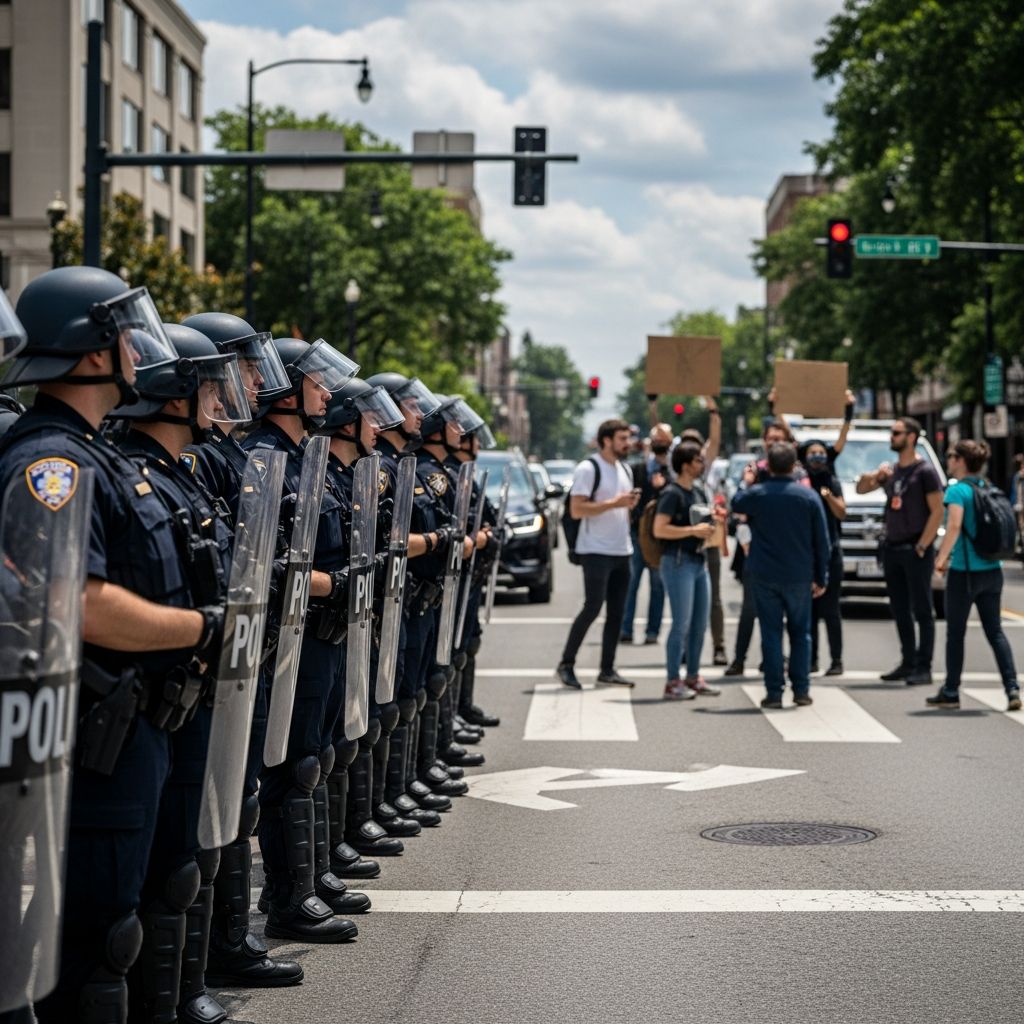
Blocking traffic, particularly during protests, raises complex legal questions balancing public safety, free speech rights, and roadway access. In most U.S. jurisdictions, intentionally obstructing roadways constitutes a violation, often escalating to felonies when tied to demonstrations. This article delves into federal and state regulations, constitutional considerations, penalties, and practical implications for activists and authorities.
Foundational Traffic Obstruction Laws Across the U.S.
Core statutes in every state prohibit interference with normal traffic flow on public roads, sidewalks, and highways. These rules stem from vehicle codes designed to ensure safety and commerce. For instance, Florida Statute §316.1945 explicitly bans stopping, standing, or parking in ways that block driveways, hydrants, crosswalks, or bridges, classifying violations as noncriminal infractions unless aggravated. Similar provisions exist nationwide, treating deliberate blockages as misdemeanors or worse.
Local ordinances amplify these, such as Hollywood, Florida’s code forbidding vehicles within 20 feet of crosswalks or intersections to prevent obstructions. Pedestrian-focused rules also apply, criminalizing actions that impede sidewalks or building access. During protests, even temporary sit-ins can trigger these if they hinder passage unreasonably.
Escalating Penalties in Protest Contexts
Recent years have seen heightened scrutiny on highway blockades, prompting tougher laws. South Dakota’s 2017 statute punishes standing on highways with up to one year in jail and $2,000 fines, a direct response to protest disruptions. Tennessee quadrupled fines from $50 to $200 that year, signaling a trend toward deterrence.
States like Florida and Texas followed with immunity for drivers injuring blockers, prioritizing motorist safety. West Virginia’s HB2892 bans impeding traffic with bodies or objects, advancing unanimously in the House. These measures address risks to emergency responders and commerce delays from blockades.
State-Specific Felony Enhancements
Numerous bills elevate traffic blocking to felonies during riots or disorderly conduct. Tennessee’s SB 672 / HB 729 upgrades street obstructions to Class E felonies (up to 6 years) and highways to Class D (up to 12 years). New Jersey’s S 763 / A 737 and S 2397 / A 298 impose up to 18 months and $10,000 fines for reckless road blockages amid broad “disorderly conduct” definitions.
| State | Bill | Penalty | Key Provision |
|---|---|---|---|
| Tennessee | SB 672 / HB 729 | Class D/E Felony (2-12 years) | Blocks highways or streets |
| New Jersey | S 763 / A 737 | 18 months, $10K fine | During riot/disorderly conduct |
| Florida | General Statute | Misdemeanor/Infraction | Driveway/crosswalk blocks |
| Utah | HB 331 | 3rd-degree felony (5 years) | Deprives right to travel |
| South Dakota | 2017 Law | 1 year jail, $2K fine | Standing on highway |
This table summarizes key examples, showing a patchwork of escalating punishments.
Federal Proposals Targeting Highway Protests
Congress has considered nationwide measures like HR 4015 / S 2115, criminalizing purposeful highway blockages affecting commerce with up to 5 years in prison, including attempts or conspiracies. Reintroduced from prior sessions, it underscores federal interest in interstate disruptions. Such bills aim to protect supply chains and emergency access, potentially overriding lenient local enforcement.
Constitutional Tensions: Free Speech vs. Public Order
The First Amendment protects expressive conduct like protests, but not at the expense of public safety. Courts distinguish time, place, and manner restrictions, allowing content-neutral rules on roadways if ample alternatives exist. Blocking traffic often fails this test, as seen in cases upholding arrests for impeding flow. However, peaceful assemblies on sidewalks may receive more leeway unless they “unreasonably inconvenience” passage.
Permits mitigate risks; unpermitted events intending “public inconvenience” can become “aggravated disorderly conduct” under bills like South Dakota’s S 534. Racketeering ties in Utah’s HB 331 add civil liabilities for organized blockades. Balancing act: speech rights yield to imminent harms like delayed ambulances.
Emergency Vehicle and Public Safety Priorities
Laws uniformly prioritize first responders. New Jersey’s proposals felony-charge blockages of “exceptionally busy” rights-of-way if they could hinder emergency vehicles, even hypothetically. Tennessee escalates penalties for impeding responder access to Class E felonies. Florida requires obedience to police under §316.072, with second-degree misdemeanor penalties for non-compliance.
These reflect data on protest-related delays costing lives; drivers gain immunity in Alabama and others for unavoidable collisions.
Defenses and Mitigation Strategies for Protesters
- Obtain Permits: Many cities require them for street marches, reducing obstruction charges.
- Use Sidewalks: Stay off roads to avoid core traffic laws.
- Monitor Duration: Brief stops may skirt “willful” intent thresholds.
- Document Police Actions: Excessive force claims can counter arrests.
- Seek Legal Observers: Groups like ACLU provide on-site guidance.
Protesters should consult attorneys pre-event, as intent to “annoy” or “alarm” elevates charges.
Recent Case Studies and Enforcement Trends
Enforcement spiked post-2020 protests. Oklahoma and Louisiana shield drivers from liability when blockers cause accidents. Arizona’s HB2534 defines body-blocking as “rioting,” risking 5 years and $125,000 fines. Trends show bipartisan support for deterrence, with 5+ states acting in recent sessions.
Civil suits for economic losses (e.g., delayed shipments) are rising, per ICNL tracking.
Comparative International Perspectives
While U.S. emphasizes speech, nations like France impose immediate fines for road blockages during gilets jaunes protests. UK’s Highways Act 1980 criminalizes obstructions with unlimited fines. These inform U.S. debates but defer to constitutional uniqueness.
Future Legislative Outlook
With pending bills in committees (e.g., New Jersey S3103 boosting fines to $10,000), expect more felonization. Federal commerce-focused laws could standardize penalties amid climate and social justice actions. Public opinion favors safety, per polls, pressuring lawmakers.
Frequently Asked Questions (FAQs)
Is blocking traffic always illegal?
Yes, in most cases under state vehicle codes, though brief or permitted actions may have defenses.
Can protesters block sidewalks legally?
No, if it unreasonably impedes passage; many states elevate to felonies.
What happens if an ambulance is delayed?
Felony charges often apply, with driver immunity in some states.
Does the First Amendment protect road blockades?
Limited; courts prioritize public safety over disruptive speech.
Are there federal penalties for highway protests?
Proposed but not enacted; bills target commerce impacts up to 5 years prison.
Practical Advice for Organizers and Drivers
Organizers: Plan routes avoiding arterials, notify police. Drivers: Exercise caution, document blockages for reports. Both: Prioritize de-escalation to avert escalations.
References
- US Protest Law Tracker — International Center for Not-for-Profit Law (ICNL). 2024. https://www.icnl.org/usprotestlawtracker/?location=&status=pending&issue=12&date=&type=
- Five States Consider Bills to Deter Highway Protests — Land Line Media. 2024. https://landline.media/five-states-consider-bills-to-deter-highway-protests/
- Traffic Obstruction — Wikipedia (informational, primary sources preferred). N/A. https://en.wikipedia.org/wiki/Traffic_obstruction
- Hollywood Code §72.032 — American Legal Publishing. 2024. https://codelibrary.amlegal.com/codes/hollywood/latest/hollywood_fl/0-0-0-53086
- Florida Statute §316.1945 — Florida Legislature. 2025. https://www.leg.state.fl.us/statutes/index.cfm?App_mode=Display_Statute&URL=0300-0399%2F0316%2FSections%2F0316.1945.html
- Florida Statute §316.072 — Florida Legislature. 2025. https://www.leg.state.fl.us/Statutes/index.cfm?App_mode=Display_Statute&URL=0300-0399%2F0316%2FSections%2F0316.072.html
Similar Articles








Read full bio of medha deb




