
Legal Recourse for Failed Emergency Contraception
Understanding your rights when emergency contraceptives like Plan B fail: Explore potential claims, legal hurdles, and steps for pursuing justice.
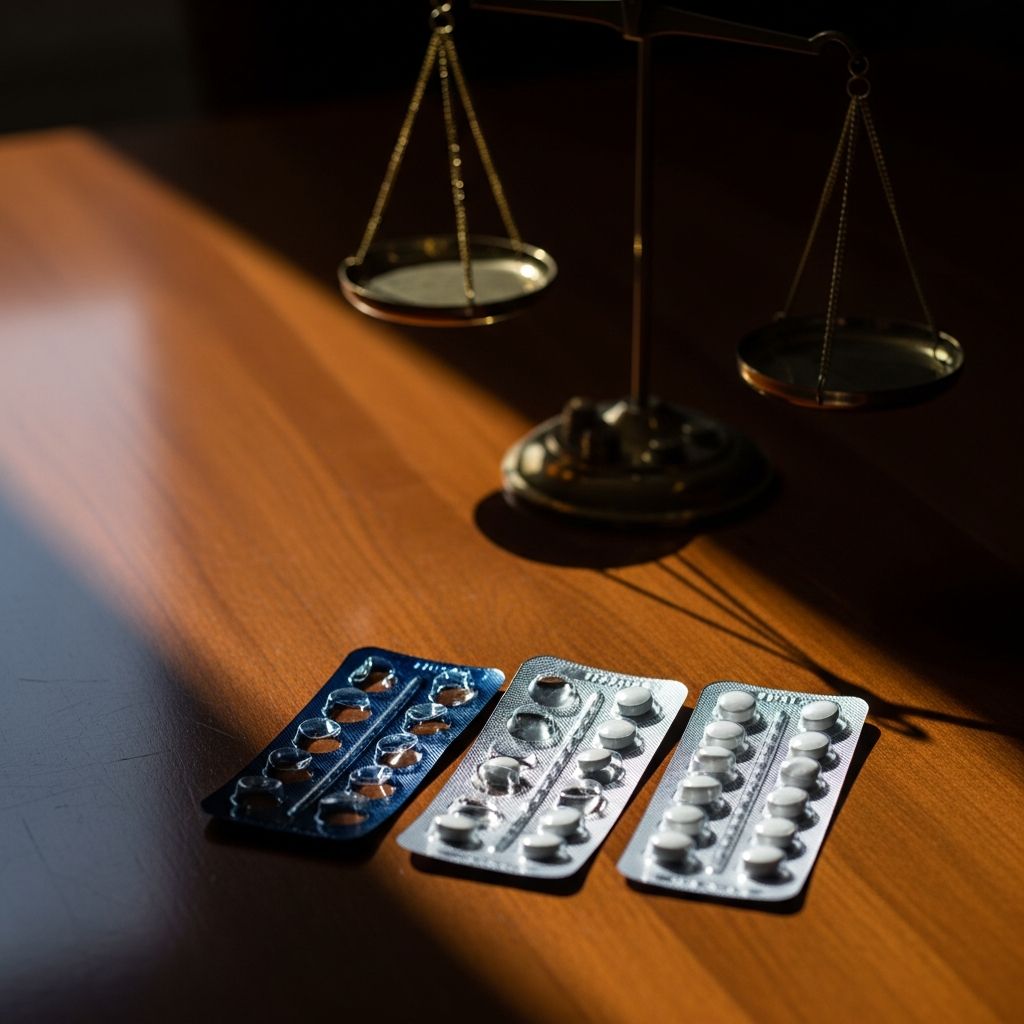
Emergency contraceptives such as Plan B are marketed as reliable backup options after unprotected intercourse, yet their failure rates raise questions about accountability. While no method guarantees 100% effectiveness, individuals experiencing unexpected pregnancies often wonder if legal action is viable against manufacturers or healthcare providers. This article delves into the complexities of such claims, highlighting key legal doctrines, jurisdictional differences, and actionable steps.
Understanding Emergency Contraception and Its Limitations
Emergency contraception, often referred to by brand names like Plan B One-Step, functions by delaying ovulation to prevent fertilization. Official labeling emphasizes its role as a backup, not a substitute for routine birth control, with effectiveness diminishing over time post-exposure—up to 89% if taken within 72 hours. Despite this, real-world failures occur due to factors like body weight, timing, or interactions with other medications.
Courts consistently recognize that no contraceptive is infallible. For instance, legal experts note that Plan B’s warnings explicitly state it should not be relied upon regularly, undermining claims of absolute prevention. This disclaimer plays a pivotal role in dismissing lawsuits centered solely on pregnancy occurrence without additional harm.
Core Legal Barriers to Suing Over Unplanned Pregnancies
The primary obstacle in these cases is the doctrine that views childbirth as a benefit, not a harm. Jurisdictions across the U.S. hold that the ‘miracle of life’ precludes damages for child-rearing costs in healthy birth scenarios. Without compensable injury, claims falter, as affirmed by multiple legal analyses: ‘There is never a viable claim for an unwanted pregnancy because the law does not view an unwanted child as causing you to suffer a compensable damage.’
- Benefit Rule: Courts offset pregnancy expenses against the joy of parenthood.
- No Damages Threshold: Routine costs of raising a child are non-recoverable.
- Product Warnings: Clear labels on efficacy limits shield manufacturers.
When Claims Gain Traction: Beyond Simple Failure
Viable lawsuits emerge when negligence, defects, or inadequate warnings cause extraordinary harm. For permanent methods like implants (e.g., Nexplanon), improper insertion can lead to malpractice suits if below the standard of care. A case involved a device misplaced during implantation, resulting in pregnancy; the plaintiff pursued wrongful birth against the clinic and maker after carrying to term.
Similarly, mislabeled packaging has triggered class actions. One incident saw birth control pills rotated incorrectly, exposing active placebo days during fertile periods, leading to unintended pregnancies and suits for child-rearing costs up to age 18.
| Scenario | Potential Claim Type | Key Evidence Needed | Example Outcome |
|---|---|---|---|
| Defective Implantation | Malpractice/Product Liability | Medical records showing error | Compensation for pregnancy costs |
| Mislabeled Product | Failure to Warn | Packaging proof, pregnancy timing | Class action settlements |
| Side Effect Injury | Strict Liability | Diagnosis linking to product | Damages for health harms |
| Standard Failure (Healthy Birth) | None Viable | N/A | Dismissed |
State Variations in Wrongful Birth and Pregnancy Laws
Laws on wrongful birth—claims for failed sterilization or contraception—differ widely. Some states permit recovery only if the child has disabilities, compensating extraordinary medical expenses. Others allow broader claims for procedural failures like vasectomies or tubal ligations. Federal oversight applies to drug approvals, but personal injury falls under state tort law.
For emergency options like Plan B, over-the-counter status complicates matters, as users assume risks per FDA-approved labels. However, if a provider misadministers or fails to advise properly, negligence may apply.
Building a Strong Case: Evidence and Timelines
Success hinges on proving breach of duty, causation, and damages. Steps include:
- Consult Immediately: Statutes of limitations vary (e.g., 2 years from discovery in some states).
- Gather Records: Prescriptions, usage logs, pregnancy tests, medical histories.
- Expert Testimony: Link failure to defect or error.
- Quantify Harms: Medical bills, lost wages, emotional distress (if allowable).
For product issues, mass torts against manufacturers allege defective design or hidden risks, as in ongoing suits over IUDs or injectables causing severe side effects. Even post-removal, claims persist if injuries linger.
Manufacturer Liability and Failure-to-Warn Claims
Pharmaceutical companies face strict liability if products are unreasonably dangerous without adequate warnings. Suits claim firms knew risks (e.g., reduced efficacy in certain weights) but downplayed them. Plaintiffs must show:
- Duty to warn of all foreseeable risks.
- Breach via incomplete labels.
- Direct causation of injury.
In birth control litigation, recoveries cover surgeries, hospitalizations, or cancers allegedly linked to long-term use.
Practical Steps to Evaluate Your Situation
If facing this issue:
- Document everything chronologically.
- Seek a personal injury attorney specializing in products liability.
- Avoid social media posts that could undermine claims.
- Consider if government facilities were involved, triggering shorter notice periods.
Firms guide through evidence collection, filings, and negotiations.
Frequently Asked Questions
Can I sue Plan B’s maker just for getting pregnant?
No, courts reject such claims absent defects or negligence, viewing healthy births as non-damaging.
What if my implant was inserted wrong?
Yes, malpractice or liability claims may succeed with proof of improper procedure causing failure.
Is there a time limit to file?
Yes, state statutes apply—often 1-3 years from discovery. Act quickly.
Can I recover child-rearing costs?
Rarely; only in cases like labeling errors, not standard failures.
What about side effects like blood clots?
Separate injury claims are possible if warnings were inadequate.
Emerging Trends in Contraceptive Litigation
Recent years see rising suits over long-acting reversibles (LARCs) like Depo-Provera, linked to tumors or migrations. MDLs consolidate claims for efficiency. As of 2026, ongoing cases highlight evolving standards.
Individuals must weigh emotional tolls against legal viability. While pure failure claims falter, documented negligence opens doors.
References
- How can I sue plan b? — Avvo Legal Answers. 2015-08-01. https://www.avvo.com/legal-answers/how-can-i-sue-plan-b–5543364.html
- Can i sue for malpractice if the contraceptive we used was administered wrong or failed? — Justia Answers. 2022-08-03. https://answers.justia.com/question/2022/08/03/can-i-sue-for-malpractice-if-the-contrac-916388
- Wrongful Birth Laws as Applied to Failed Contraceptives and Birth Control — Malpractice Team Blog. 2015-12-01. https://www.malpracticeteam.com/blog/2015/12/wrongful-birth-laws-as-applied-to-failed-contrac/
- Birth Control Lawsuit [2026 Guide] — Robert King Law Firm. 2026-01-01. https://www.robertkinglawfirm.com/mass-torts/birth-control-lawsuit/
- Birth Control Lawsuits: Depo-Provera & Paragard IUD Injury Claims — Motley Rice. 2023-01-01. https://www.motleyrice.com/medical-devices/birth-control-lawsuits
- The Risks of Long-Term Contraceptive Use & Your Legal Options — KNR Legal. 2023-01-01. https://www.knrlegal.com/contraceptive-risks-legal-options/
- Common Reasons for Birth Control Lawsuits — Gladstein Law Firm. 2023-01-01. https://gladsteinlawfirm.com/birth-control-lawsuits/
Similar Articles








Read full bio of Sneha Tete




