
Condom Failure Lawsuits: Legal Options, How To Proceed, A Guide
Exploring your rights and potential claims when a condom breaks, from product liability to consent violations.
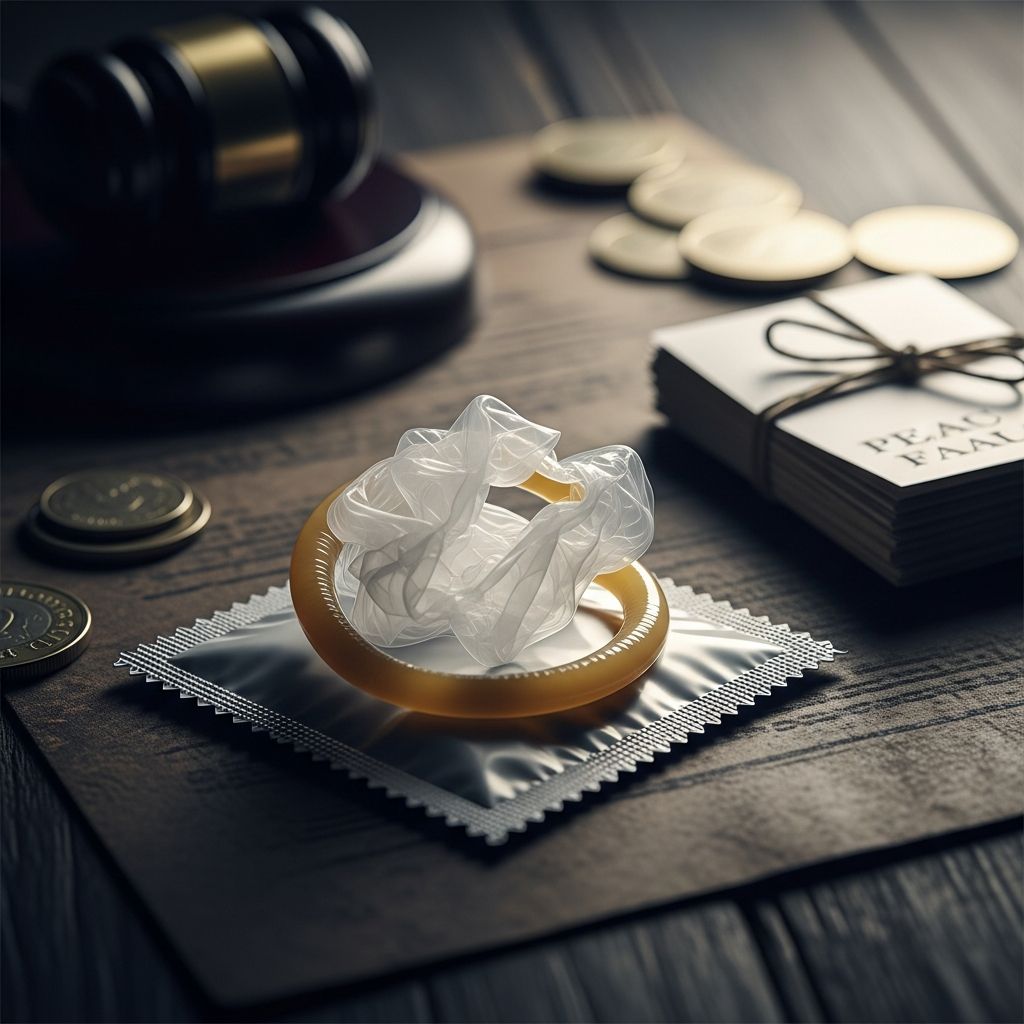
Condom failure, whether due to manufacturing defects or intentional tampering, raises complex legal questions about liability, consent, and compensation. Individuals affected may pursue claims under product liability, sexual assault statutes, or civil remedies, depending on circumstances and jurisdiction. This article delves into these options, drawing from real-world cases and evolving laws to provide clarity on when and how to seek justice.
Understanding Condom Failure and Its Consequences
Condoms are designed as reliable barriers against unintended pregnancies and sexually transmitted infections (STIs). However, failures occur, leading to significant physical, emotional, and financial repercussions. A breakage might result from a defect in the latex or material, improper use, or sabotage. Victims often face unwanted pregnancies, medical testing costs, therapy needs, and relationship breakdowns.
Proving the cause is crucial. For instance, scientific testing can reveal manufacturing flaws, as seen in cases where faulty sheaths were preserved and analyzed. Beyond immediate health risks, long-term impacts include child-rearing expenses and psychological trauma, forming the basis for damages claims.
Product Liability: Holding Manufacturers Accountable
When a condom breaks due to a defect, affected parties can target the manufacturer under strict product liability laws. These laws hold companies responsible for defective products that cause harm, regardless of negligence. Key elements include:
- Defect Proof: Evidence like retained condom fragments tested for weaknesses.
- Causation: Linking the failure directly to pregnancy or STI transmission.
- Damages: Quantifiable losses such as medical bills, lost wages, and child support costs.
Challenges abound. Manufacturers often include disclaimers limiting liability to replacements, arguing no guaranteed effectiveness. Legal experts note that without substantial damages, suits rarely succeed, as mere inconvenience doesn’t suffice. A notable example involved a woman suing for £120,000 after a Durex condom allegedly split, claiming pregnancy pains, birth costs, and child-rearing expenses—potentially groundbreaking at the time.
| Claim Type | Requirements | Potential Outcomes |
|---|---|---|
| Manufacturing Defect | Lab-tested evidence of flaw | Compensation for damages |
| Design Defect | Proven safer alternatives exist | Product recalls, payouts |
| Failure to Warn | Inadequate usage instructions | Limited refunds or replacements |
Success hinges on expert testimony and documentation. Consult a defective product attorney early to assess viability.
Stealthing and Non-Consensual Removal: A Growing Legal Frontier
Distinct from mechanical failure, stealthing—secretly removing or tampering with a condom—violates consent and is increasingly criminalized. This act transforms consensual sex into non-consensual exposure to risks like pregnancy and STIs. Alexandra Brodsky’s research highlights it as sexual violence, arguing for assault classifications due to inherent dangers.
Globally, responses vary:
- Canada: Supreme Court upheld convictions for poking holes in condoms (*R v. Hutchinson*, 2014) and non-use despite requests (2022).
- Netherlands: 2023 coercion conviction for removal, with probation and fine.
- Switzerland: Mixed rulings; rape in one case (2017), not illegal in another (2019).
- UK: Falls under Sexual Offences Act 2003 if consent is absent.
In the US, states are acting:
- California (2021): Sexual battery for non-consensual removal.
- Maine (2023): Civil remedies.
- Washington (2023, effective 2024): Civil offense for tampering with protective devices.
Federal efforts lag, but documentation via police reports strengthens cases. Victims should prioritize STI testing post-incident.
Building a Viable Personal Injury Claim
To sue effectively after condom failure:
- Preserve Evidence: Save the condom, packaging, and receipts.
- Seek Medical Care: Document pregnancies, STIs, or therapies.
- Identify Cause:
- Gather Witnesses: Partner statements or communications on condom agreement.
- Calculate Damages: Include tangible (bills) and intangible (pain) losses.
Differentiate defect from misuse or sabotage.
Attorneys emphasize causation proof as pivotal; without it, claims falter. Emotional distress claims require therapy records. For pregnancies, ‘wrongful conception’ suits seek rearing costs, though defenses like parental joy may reduce awards.
State Variations in US Laws
Laws differ by state. Product liability is widespread, but stealthing statutes are nascent. California’s bill explicitly bans removal without consent, while Washington’s broadens to all devices. Always check local statutes; some treat stealthing as battery or assault generally.
| State | Stealthing Law Status | Key Provisions |
|---|---|---|
| California | Enacted 2021 | Sexual battery for removal |
| Maine | Enacted 2023 | Civil remedies |
| Washington | Effective 2024 | Civil offense, inclusive devices |
| Others | No specific law | May fall under assault/battery |
Practical Steps Post-Incident
Immediate actions mitigate harm and bolster legal positions:
- Get comprehensive STI panels after incubation periods.
- File police reports for stealthing.
- Consult therapists for trauma.
- Avoid further contact with the involved party.
- Contact product liability lawyers for defects.
Brands like Trojan face suits, but disclaimers limit wins without damages.
Frequently Asked Questions (FAQs)
Can I sue a condom manufacturer if it breaks?
Yes, if you prove defect, causation, and damages like pregnancy costs. Preserve evidence and consult a lawyer.
Is stealthing illegal in the US?
In states like CA, ME, WA—yes, as battery or civil wrong. Elsewhere, it may qualify as assault.
What damages can I claim?
Medical bills, child-rearing, lost income, emotional distress—backed by records.
How do I prove condom sabotage?
Use witness statements, communications, medical evidence of exposure.
Do condom warranties cover lawsuits?
Typically limited to replacements; lawsuits need separate tort claims.
Emerging Trends and Future Protections
Laws are evolving amid #MeToo influences. More states may criminalize stealthing, and international precedents pressure reforms. Advocacy pushes for federal standards on consent in protected sex. Meanwhile, education on condom integrity testing advances prevention.
In summary, while suing over broken condoms is possible, success demands robust evidence. Victims deserve support through legal, medical, and emotional channels. Stay informed on jurisdiction-specific rights.
References
- Can I sue Trojan condoms? — Avvo Legal Answers. Accessed 2026. https://www.avvo.com/legal-answers/can-i-sue-trojan-condoms–1353419.html
- Non-consensual condom removal — Wikipedia. Accessed 2026. https://en.wikipedia.org/wiki/Non-consensual_condom_removal
- Mother sues for $1.5m over ‘split condom’ — South China Morning Post. 2002-01-01. https://www.scmp.com/article/306527/mother-sues-15m-over-split-condom
- Stealthing & Sabotaging Condoms: What You Need To Know — STDcheck.com. Accessed 2026. https://www.stdcheck.com/blog/stealthing-legal-what-to-do-after/
- I was wondering if I could sue the condom company? — Lawyers.com Ask a Lawyer. Accessed 2026. https://ask-a-lawyer.lawyers.com/product-liability/i-was-wondering-if-i-could-sue-the-condom-company-402909.html
Similar Articles








Read full bio of medha deb




